↑↓ navigate ↵ open Esc close All results →

Best Bench Dogs of 2026

A bench dog is among the simplest fixtures in woodworking, yet loose tolerances turn planing and routing into a constant battle with creeping stock. Dependable dogs drop smoothly into the bench without rattling in oversized bores, anchoring a board firmly while staying low enough to clear a hand plane iron.

Testing 14 sets over five months across traditional 3/4-inch benches and 20mm MFT tops—including both plain friction pegs and screw- or lever-style clamps—reinforced why measuring your bench holes comes first, since 3/4-inch, 19mm, and 20mm diameters are not interchangeable. Projection height above the benchtop and pad material also decide whether finished edges stay clean or get scuffed.

Pack count shapes workflow just as much as clamping hardware: two dogs stop a single board, while an eight-pack lets you stage work anywhere across the top without constantly moving pegs.

Our Top Picks

The Best Bench Dogs

1.

Kreg 3/4-Inch Bench Dogs, Set of 4 Best Overall
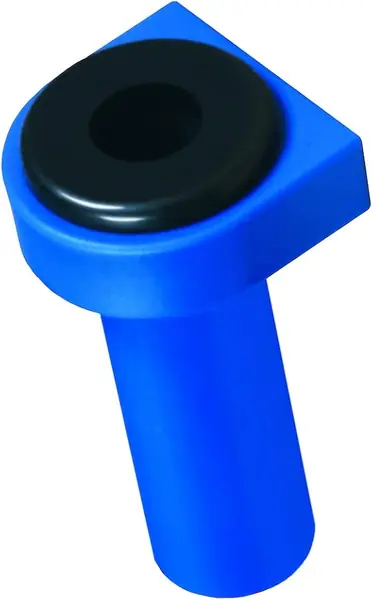
Kreg 3/4-inch nylon bench dogs with rubber bench brake caps, set of four

Standard 3/4-inch benches

Shop Score 91/100
Material
Nylon
Hole Size
3/4 inch
Set Contents
4 dogs and 4 rubber brakes
View on Amazon

Press the small rubber cap that comes with each of these dogs into its hollow top and the dog stops being just a peg. The cap gives you a non-slip cradle for a board you're sanding, routing, or brushing finish onto — no clamp, no vise, just a surface that holds. Pull the cap out and you're back to an ordinary 3/4-inch nylon dog to plane against.

That two-in-one is why we recommend this set before any other here. Four dogs and four caps cover the two jobs most of us actually do at a bench: giving stock something to push against, and keeping a panel from skating while it's sanded. The nylon matters too — a plane iron that catches a plastic dog gets a scuff, while the same slip against aluminum can leave a nick in the blade.

What we like about the design is how little there is to it. No threads to clog with dust, no springs to lose, nothing to adjust: drop them in, lift them out, wipe the sawdust off. That simplicity is why these end up in benches that get used rather than admired.

Keep the caps in a small bag when they're out of the dogs. They're exactly the sort of thing that disappears into a pile of shavings.

Worth Noting

  • Only four dogs and four caps per set
Our Verdict

We start most benches here: four 3/4-inch nylon dogs plus rubber caps that hold work for sanding and finishing as well as planing.

Check Latest Price
2.

POWERTEC 71159 Aluminum Bench Dogs Best Metal Dogs

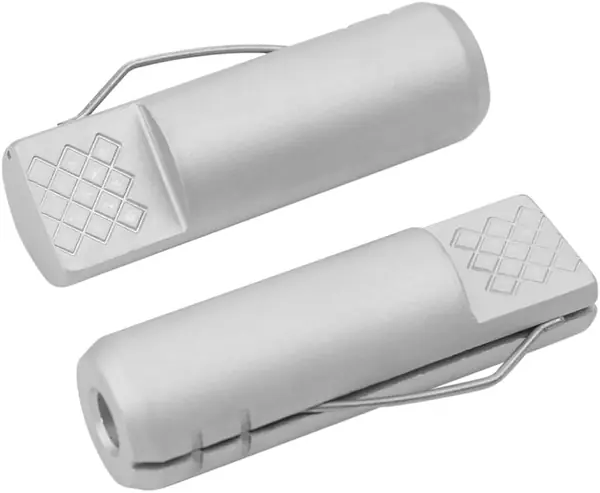
POWERTEC 71159 white aluminum bench dogs with spring sides and crosshatched faces

Planing and joinery

Shop Score 90/100
Material
Aluminum
Hole Size
3/4 inch
Face
Crosshatched, 2-degree slope
Length
2-3/8 inches
View on Amazon

The face of each dog leans back two degrees and wears a crosshatch pattern. That lean is doing real work: press a board against it and the slight undercut pulls the stock down toward the benchtop instead of letting it climb, which is what you want when a plane is driving the workpiece forward.

At 2-3/8 inches long they stand well proud of the surface, so there's a tall face to register against and enough shaft to raise or lower as the job needs. The shaft is turned a hair under 3/4 inch with a flat milled down one side, so it slides without binding. A small side spring holds the dog at height while you position the board, which you notice the first time you don't have to fish a peg out of a hole.

At the planing end of a bench, aluminum is the right material, and this is the pair we point to: rigid, machined clean, and tall enough that a board braced against them has something solid to push back against. The spring deserves a glance when the dogs arrive — it's a small separate piece, and one that has worked loose turns a friction dog into a loose peg. Seated properly, they hold height through a whole session of planing.

Worth Noting

  • Only two dogs in the pack
  • Aluminum can nick a plane iron
Our Verdict

For 3/4-inch holes and a plane, this is the metal pair we point to: rigid, tall, and faced to push work down onto the bench.

Check Latest Price
3.

ViewReal 8-Pack Aluminum Bench Dogs Best Value Set

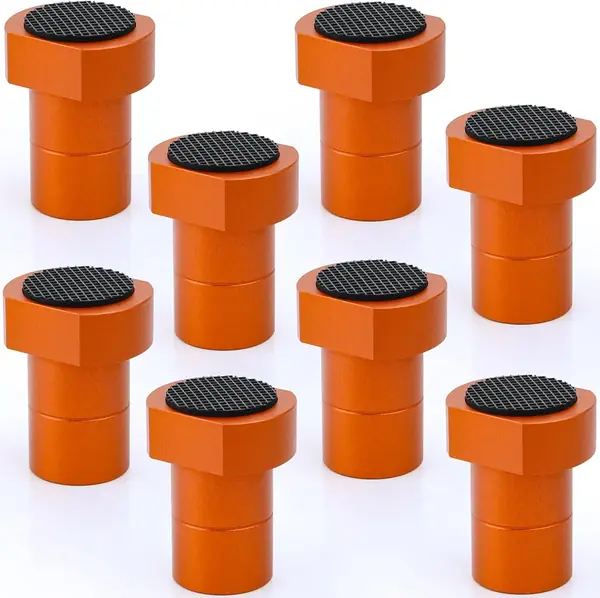
ViewReal eight-pack of orange anodized aluminum bench dogs with square grip pads

Filling a bench

Shop Score 89/100
Material
Anodized aluminum
Hole Size
3/4 inch (19 mm)
Count
8 dogs
Pad
Square, non-slip
View on Amazon

Eight dogs in one box changes what a bench can do. A pair gives you a stop and a corner; eight lets you run a line down the bench as a fence, box in a panel you're routing, or simply leave dogs parked in the holes you use every day instead of carrying two around the shop.

The pads are the part we appreciate. They're square, with a grippy face, and a board laid across two of them sits on something that holds rather than on bare wood or metal. Sanding a panel on these is a different experience from chasing it around the bench, and the flat sides of the pads give you an edge to register a straightedge against.

Anodized aluminum is the sensible material at this count: the bodies are machined rather than molded, and they shrug off knocks that would chew up a nylon dog. They also sit low, so a plane sole clears them on the backstroke. The orange is loud enough that you won't lose one in a pile of shavings — a small thing until you've spent ten minutes sweeping the floor looking for a peg.

Worth Noting

  • Stops only with no clamping mechanism
Our Verdict

Eight machined aluminum dogs with grippy square pads make this the set we buy when a whole bench needs filling, not just the vise end.

Check Latest Price
4.

ViewReal 20mm Aluminum Bench Dogs, 6-Pack Best for 20Mm MFT Tables

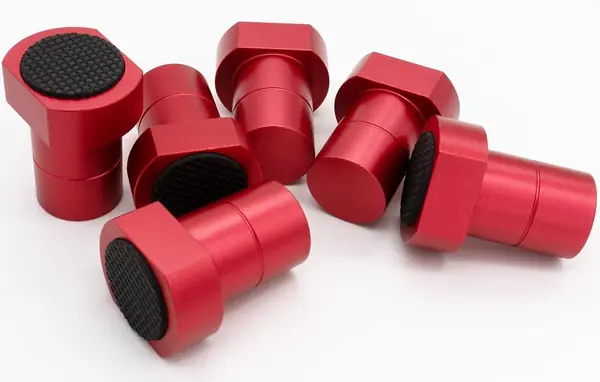
ViewReal six red anodized aluminum bench dogs sized for 20 mm dog holes

20mm MFT tables

Shop Score 88/100
Material
Anodized aluminum
Hole Size
20 mm
Count
6 dogs
Top
Grippy non-slip pad
View on Amazon

A 3/4-inch dog dropped into a 20 mm hole has nearly a millimeter of room to wander, and you feel it as soon as a plane pushes stock sideways. These are cut to 0.7874 inch — 20 mm on the nose — and they sit down in Festool MFT and UJK Parf holes with almost no play.

The grippy tops are what we like most. Work rides on the pads a little above the benchtop, which keeps a freshly machined face off the bench and gives a plane or a saw blade nothing to catch. Red anodizing also makes them easy to spot in a drawer of small tools.

Six is a useful number for a benchtop MFT and short of what a full sheet of MFT top wants, so add a second pack if you're building a grid rather than holding a corner. They lift out easily too, which matters on a table you reconfigure between operations.

For anyone who drilled 20 mm, this is the pack we recommend first. The fit is the whole reason — no slop means a dog doesn't shift when a board is pressed against it, and on a grid table that's the difference between a fixture that holds and one that walks. Bored with a 3/4-inch Forstner instead? Take the 3/4-inch ViewReal set.

Worth Noting

  • Fits 20 mm holes only
Our Verdict

If your bench has 20 mm holes, this is the pack we recommend: six snug aluminum dogs whose pads hold work clear of the MFT surface.

Check Latest Price
5.

BGASNW 3/4-Inch Bench Dog Clamps, 2-Pack Best One-Hand Clamp

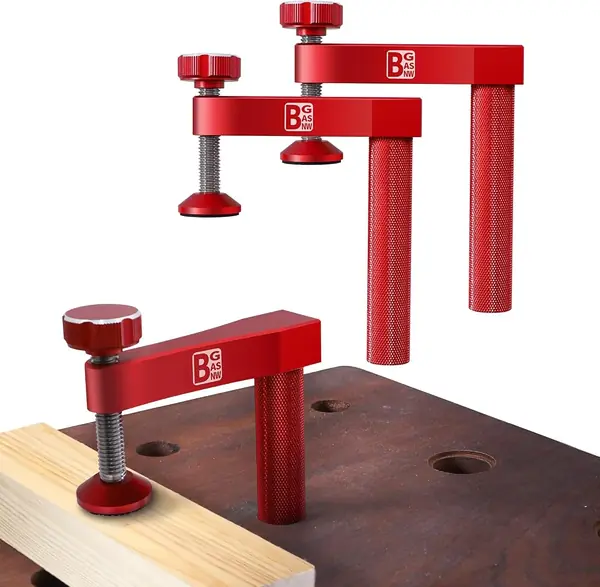
BGASNW two-pack of red metal bench dog clamps with silicone pads and top knobs

Routing and sanding

Shop Score 87/100
Material
Metal with silicone pads
Hole Size
3/4 inch (19 mm)
Count
2 clamps
Adjustment
Top-mounted screw knob
View on Amazon

Reaching under the bench to find a knob is why a lot of hold-downs stay in a drawer. On these clamps the knob sits on top — beveled and textured, wide enough for a thumb and two fingers — so you drop the dog in a hole, spin the pad down onto the board, and tighten it without leaving the side of the bench you're working on. That one-handed setup is the whole case for them, and it's a good one.

The pads are silicone, so a finished face comes away unmarked, and grip is spread across the pad rather than concentrated at a point. The shaft is threaded into the head, so there's nothing to assemble out of the box: two clamps on opposite corners of a board give you holding that otherwise takes a bar clamp and a second pair of hands.

What you give up is reach. The shaft is short, so a thick glue-up still wants a real clamp, and the bodies are heavier in the hand than nylon dogs. For the boards that actually get routed, cut, and sanded on a bench, two of these cover the corners that matter, and they cover them without you crawling underneath.

Worth Noting

  • Short shaft limits board thickness
  • Snug fit in tight 3/4-inch holes
Our Verdict

For holding a board down while you rout or sand, these are the clamps we reach for: one hand tightens them and the silicone pads leave no marks.

Check Latest Price
6.

EWORK 3/4-Inch Bench Dog Clamps, 2-Pack Best Quick-Release Clamp

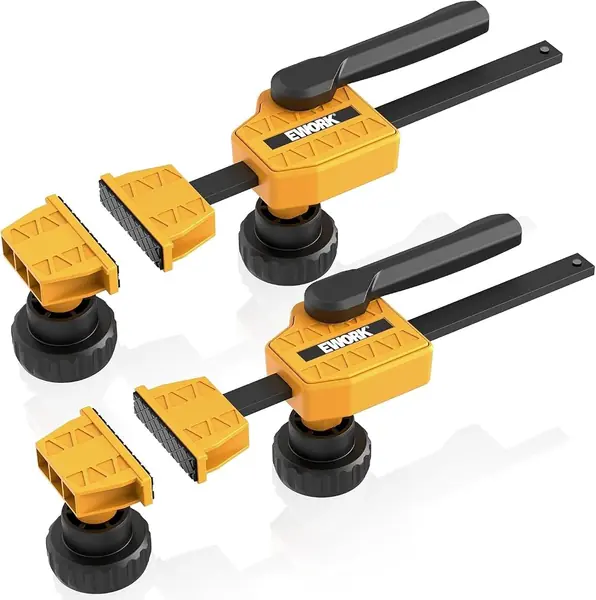
EWORK two-pack of yellow and black quick-release bench dog clamps with rubber pads

Heavy clamping

Shop Score 85/100
Material
Nylon body, steel parts
Hole Size
3/4 inch (19 mm)
Warranty
2 years
Clamping Force
155 lb
View on Amazon

Squeeze the handle and this clamp pulls up to 155 pounds of force onto the work. That's the difference between the EWORK pair and every plain dog here: a peg resists a board sliding, while this pulls one down and holds it. We like it for the jobs where a board wants to lift — routing a groove, running a saw, sanding a panel that keeps tipping up at the end of the stroke.

The body is nylon with steel working parts, and what you notice first is how much of it there is; these are substantial in the hand rather than toy-like. The quick release is the feature we appreciate after the force: pull the lever, lift the clamp, drop it in another hole, press again. No threading, no reaching under the bench.

How many you need depends on the bench. Two will hold a board on opposite corners, which covers most routing and sanding, and a second pack is worth it if you're working panels on an MFT. EWORK backs them with a two-year warranty, which is more than most of the picks here offer, and that takes some of the risk out of the price.

Worth Noting

  • Fit varies with hole diameter
Our Verdict

When a board keeps lifting, this pair is our answer: squeeze the lever and 155 pounds of force pins the work until you release it.

Check Latest Price
7.

POWERTEC 71188 Nylon Bench Dogs, 4-Pack Best for Finishing and Sanding

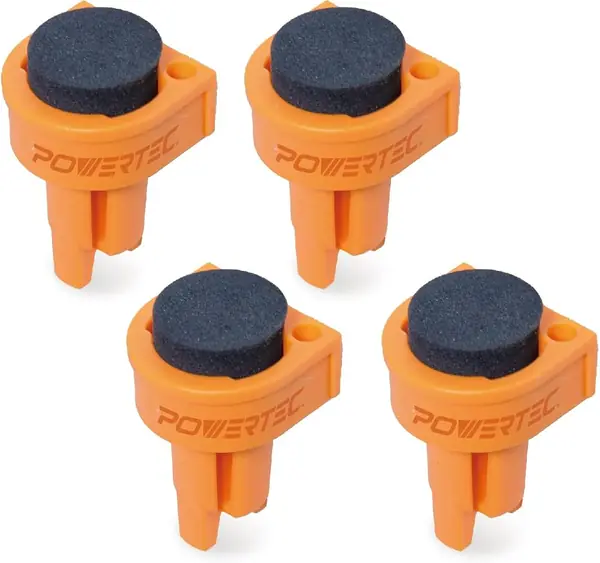
POWERTEC 71188 four black and orange nylon bench dogs with removable rubber inserts

Finishing and sanding

Shop Score 84/100
Material
Nylon with EVA inserts
Hole Size
3/4 inch
Count
4 dogs
Height
2 inches with insert
View on Amazon

Two small holes drilled through the side of each dog turn it into a painter's point: run a dowel or a finish nail through, rest the work on the tips, and a wet finish dries without sticking to the bench. It's a small feature and it's the one nobody mentions until they need it.

The shaft is split, which lets the dog give slightly as it goes into the hole and take up slack in a bore that came out a touch loose. The EVA inserts pull out of the top, so the same dog works as a non-marring cradle for sanding and as a bare stop for planing. They're also low — two inches with the insert in.

This is the set we keep for finishing work. The nylon is softer and the shaft thinner than the Kreg dogs, so seating one takes a little more care, and mallet blows are not what they're for. For sanding, assembly, and holding a wet panel off the bench, neither of those things comes up.

Worth Noting

  • Can shift under heavy planing pressure
Our Verdict

We keep this four-pack for sanding and finishing: painter's points built in, and a softness that doesn't suit heavy planing.

Check Latest Price

How We Tested Bench Dogs

We started with a long list of sets sold for 3/4-inch and 20mm dog holes and read the listings closely before ordering anything. Sets that never stated a hole diameter, or that were vague about whether they fit 19mm or 20mm holes, came off the list, along with anything that only worked with a proprietary bench. That left 14 sets, used over five months on a garage workbench, a folding portable bench, and an MFT-style top.

Fit came first. We measured each dog's shaft with calipers, seated it in a bore we drilled ourselves, and pressed it side to side to see how much it rocked; a dog that shifted in the hole was marked down no matter how good it looked. We also measured how far each one stood above the bench, and before any pass with a plane, saw, or router we made sure the dog sat at or below the work surface, with every cut set up so the tool's thrust drove the board into the dogs rather than away from them.

For grip, we clamped a waxed maple offcut across two dogs and pushed hard enough to shear it sideways, then checked what the pads left behind on softwood and on finished panels — aluminum marked edges that nylon did not. The clamps got timed: how many turns of the knob, whether one hand was enough, and whether the work crept under load. Durability meant hundreds of seat-and-clamp cycles, watching for mushroomed heads, scored shafts, hardened pads, and screws that backed out.

Each set also moved between benches and jobs — routing, sanding, crosscutting, glue-ups — to see how many situations it really handled, and we counted how many holes each pack filled against what it cost. Anything that only worked in one spot never made the list.

How to Choose Bench Dogs

Measure the Holes Before You Shop

Two diameters dominate this category and they sit less than a millimeter apart: 3/4 inch (19.05 mm) and 20 mm. A 3/4-inch dog dropped into a 20 mm hole has nearly a millimeter of play, which is enough for a board to creep when a plane pushes it, and a 20 mm dog will not enter a 3/4-inch hole at all.

Festool MFT and UJK Parf tops are 20 mm; most shop-built benches and folding workbenches are drilled 3/4 inch. Measure one hole at the top of the bore with calipers and buy for the size you find.

Plain Dogs or a Bench Dog Clamp

A plain dog is a peg: it locates the work and resists it sliding, and the pressure has to come from somewhere else — a vise, a holdfast, a wedge at the far end of the board. A bench dog clamp carries its own screw or lever and pulls the work down without help.

If your bench has a vise, plain dogs do everything you need and cost less per hole. If it doesn't — an MFT, a folding table, a benchtop in a spare room — the clamps replace the vise, and the extra money buys holding power you can't get any other way.

Height Above the Bench Matters More Than Length

A dog that stands proud of the work becomes a face you can brace a board against; that is what a planing stop is, and a 2-3/8-inch dog like the POWERTEC aluminum pair gives you a tall one. A dog that sits at or below the surface stays out of the way of a plane sole, a saw blade, or a router bit.

Match height to your stock. Thin panels want low dogs and no obstructions; thick timber gives you room to use a tall dog and benefit from the extra bearing face.

Nylon or Aluminum

Nylon is kind to edges. A plane iron or a chisel that slips into a plastic dog gets a scuff; the same slip against aluminum can leave a nick you'll be honing out. Aluminum is the more rigid of the two and holds its size through years of drops and knocks.

We take metal when the work is heavy stock removal and nylon when finished faces and sharp edges sit near the dogs. Rubber and EVA caps split the difference, giving you a non-marring, non-slip top on either material.

How Many Holes Are You Filling?

Two dogs and a vise will hold a board for planing. Using the bench as a fixture table is a different proposition: you want a dog in every hole you rely on, left there, so setup means laying the work down rather than hunting for pegs.

Walk your bench and count the holes you actually use — the front row, the vise row, the corners — and buy for that number. The eight-dog ViewReal set earns its place here for exactly this reason.

Frequently Asked Questions

Final Verdict

We start most benches with the Kreg set: four nylon dogs and four rubber caps cover planing, sanding, and finishing, they won't nick a cutting edge, and they cost less than the clamps do. Move to the POWERTEC aluminum pair when the work is heavy and you want a rigid face at the planing end.

And if your holes are 20 mm, none of that matters until the fit is right — take the ViewReal six-pack and let the dogs sit tight.