↑↓ navigate ↵ open Esc close All results →

Best Foam for Tool Boxes of 2026

Loose wrenches rattling in a drawer turn every quick repair into a hunt, and custom foam cutouts solve the clutter by locking each tool in place and exposing missing gear at a glance. The catch is that foam behaves differently once a utility knife hits it: resin type and pre-scoring decide whether a cutout reads as a crisp shadow or crumbles into a ragged pocket.

Polyethylene holds sharp, clean walls and keeps its cavities intact over time, while polyurethane compresses and rebounds around fragile instruments. Across four months of fitting 12 packs into rolling chest drawers, a deep travel case, and a truck box, sheet thickness and footprint mattered just as much—a one-inch layer leaves deep socket rails proud, and an off-size sheet wastes material along the edges.

Between pre-scored pick-and-pluck grids and solid layered sheets cut to drawer width, each option favors either fast tool-free layout or cleaner long-term durability.

Our Top Picks

The Best Foam for Tool Boxes

1.

ONREVA Tool Box Foam Organizer Best Overall
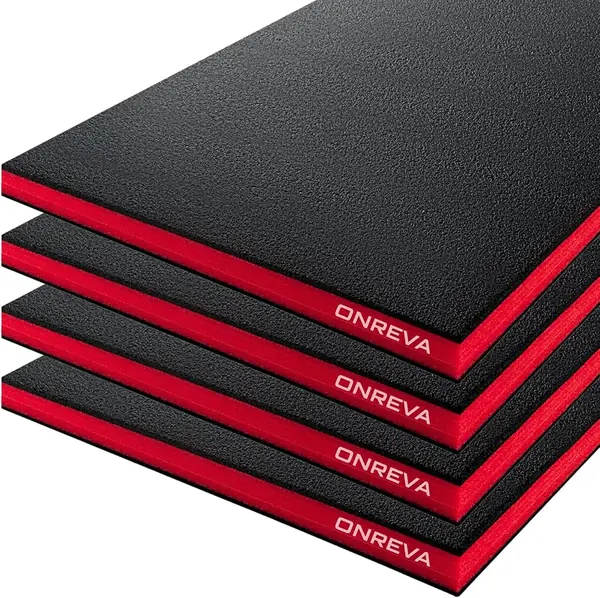
ONREVA polyethylene tool box foam inserts, black with red layer, four 16 by 12 inch sheets

Flat tools in drawers

Shop Score 90/100
Thickness
1 inch
Sheet Size
16 x 12 inches
Pack
4 sheets
Material
High-density polyethylene
View on Amazon

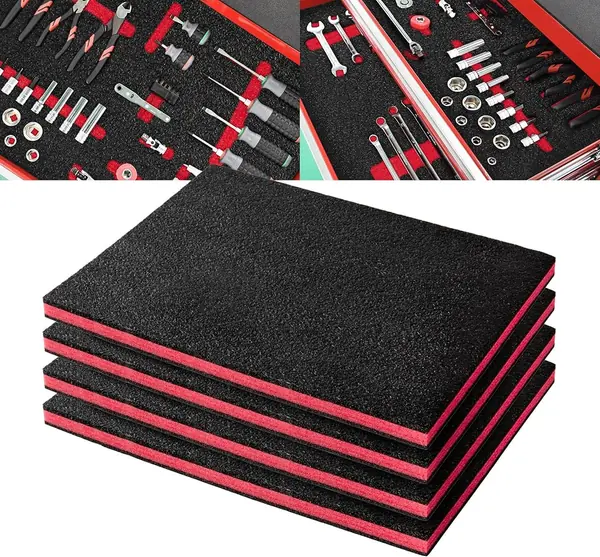
Each sheet carries a red base under a black cutting layer, and that two-tone construction is the whole trick: trace a tool on the black face, excavate down to the red, and an empty cavity reads as a red hole from across the shop. High-density polyethylene holds the wall of a cut instead of rounding over, so a chisel slot stays a slot after a season of hard use.

We recommend this set first for a working drawer. Four 16 by 12 sheets cover a chest's top drawer and a couple of shallow trays, the foam is firm enough that sockets and wrenches stay where you put them when the drawer slams, and the color contrast does real work — a missing tool is obvious before you finish counting.

Depth is the thing to plan around. At 1 inch, these sheets take flat tools beautifully — squares, rules, wrenches, chisel blades — while a screwdriver handle that stands 2 inches tall sits proud of the surface. Cut with a fresh serrated blade and several light passes; a hot knife also works if you want a sealed edge along a long straight run.

Worth Noting

  • Top layer can separate raggedly
Our Verdict

We recommend these color-coded polyethylene sheets first: the foam holds a crisp tool shadow and the red base makes a missing tool impossible to miss.

Check Latest Price
2.

FoamJoy Pick and Pluck Foam Best Pick-And-Pluck

FoamJoy black polyethylene pick-and-pluck foam sheets with scored grid, four 16 by 12 inch pieces

Deep cases

Shop Score 89/100
Thickness
2 inches
Sheet Size
16 x 12 inches
Material
Polyethylene
Grid
0.6-inch pre-scored cells
View on Amazon

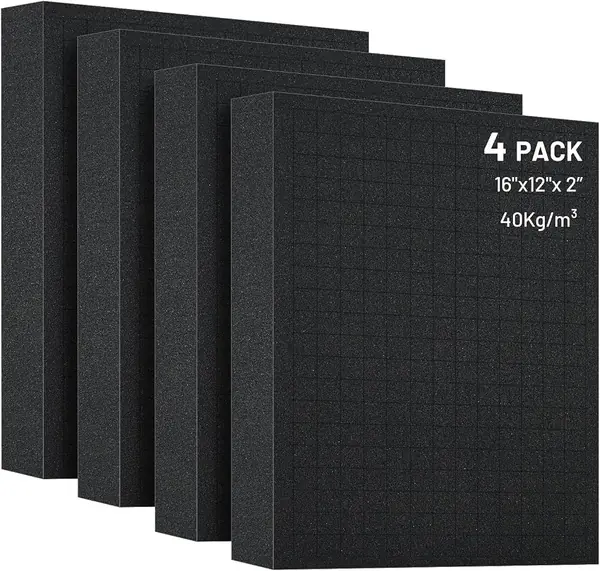
The grid does the work: 0.6-inch cells, pre-scored into four 16 by 12 sheets, so a cavity is a matter of pressing a tool into the face, pulling blocks out with your fingers, and carrying on without a knife. At 2 inches thick, the pocket is deep enough to swallow a block plane or a router bit case rather than just dimple the surface.

The grid is also the ceiling. Curves do not come out of a grid — a mallet handle or a curved scraper leaves a stair-stepped hole, and anything that isn't roughly square wants a blade. The foam sits on the softer side of polyethylene, so it cushions a tool rather than gripping it the way our top pick does.

For cases and deep drawers we still reach for it, because a rough outline stopped being a problem the moment we stopped carving and started plucking. The 16 by 12 sheets also trim into Milwaukee drawer systems with little waste, which makes a rolling box a natural home for them.

Worth Noting

  • Perforations vary from sheet to sheet
Our Verdict

When a tool's outline is awkward, pluck foam beats a blade — and these 2-inch sheets are the ones we reach for in cases and deep drawers.

Check Latest Price
3.

Precision Defined Tool Box Foam Best Value

Precision Defined black and red polyethylene foam inserts, four 16 by 12 inch sheets

Budget drawer shadowing

Shop Score 88/100
Thickness
1 inch
Sheet Size
16 x 12 inches
Pack
4 sheets
Material
Polyethylene
View on Amazon

Set this against our top pick and the difference is mostly money: same 16 by 12 footprint, same black-over-red layer trick, a good deal less spent. That matters for a first foam layout, where the honest risk is getting an outline wrong and wasting a sheet — here a misfire costs you a sheet rather than a project. We rate it the value pick of this group.

What you give up is some finish. The colored top layer fights a thumbnail until you lift a corner with a blade, and the peel lines are not as crisp as on the denser sets here, so a complicated outline takes longer than you expect. Work with light passes and a sharp blade and the edges come out tidy enough for a drawer bottom.

Worth Noting

  • One-inch sheets lose shape at corners
Our Verdict

A shadowed drawer for far less than our top pick, and we like that the peel layers forgive a first attempt.

Check Latest Price
4.

YIENFBEV Polyurethane Foam Inserts Best for Cushioning

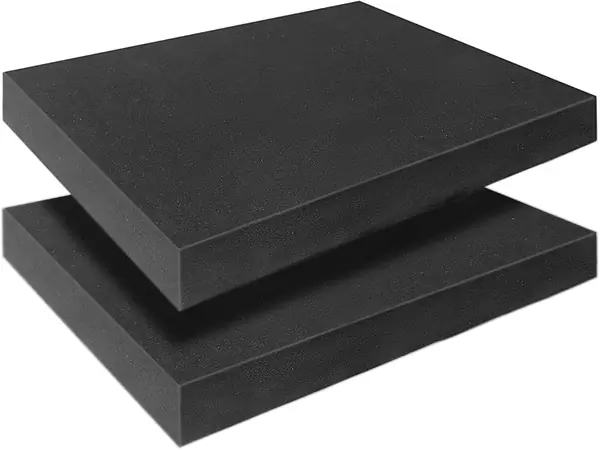
YIENFBEV black polyurethane foam sheets for tool cases, two 16 by 12 inch pieces

Travel cases

Shop Score 87/100
Thickness
2 inches
Sheet Size
16 x 12 inches
Pack
2 sheets
Material
Polyurethane
View on Amazon

A hand plane riding in a truck bed is the case this foam was made for. Two inches of open-cell polyurethane is enough depth that a plane, a mallet, or a router in its base sinks below the surface and stays there once the lid closes, and the foam gives under a tool instead of fighting it.

We keep this one for transport rather than for shadowing. The softness is the point — it absorbs a dropped lid and will not scratch a polished sole — but the same give means a cavity wall leans rather than stands, so an outline cut here looks more like a depression than a silhouette. If you want the drawer to read like a diagram, choose polyethylene.

Vacuum packing flattens these on the way, so open the bag a day before you plan to cut and let them come back to a full 2 inches; measure first if the depth matters. A sharp utility blade goes through cleanly, and two sheets disappear quickly into a full case.

Worth Noting

  • Only two sheets per pack
Our Verdict

We choose this soft 2-inch polyurethane when tools travel, because cushioning a heavy plane matters more than carving a crisp silhouette.

Check Latest Price
5.

MYFAMIREA Foam Sheets Best for Whole-Chest Lining

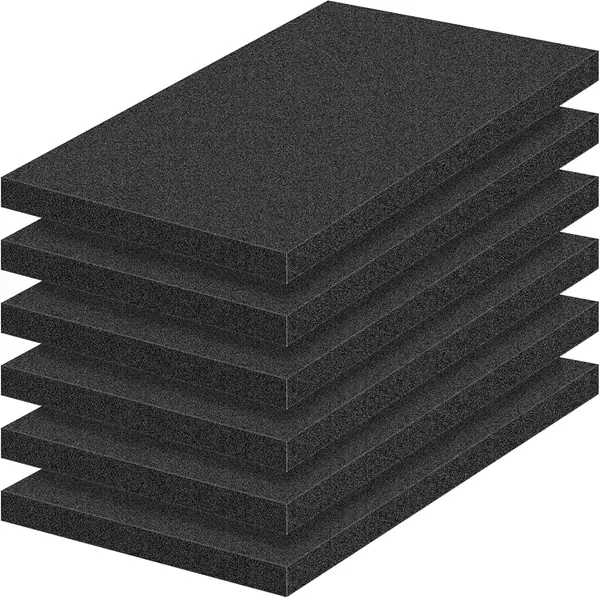
MYFAMIREA black polyurethane foam sheets, six 16 by 12 inch pieces for tool box drawers

Lining multiple drawers

Shop Score 86/100
Thickness
1 inch
Sheet Size
16 x 12 inches
Pack
6 sheets
Material
Polyurethane
View on Amazon

If a chest has more drawers than your budget has foam, start here. Six 16 by 12 sheets is close to 8 square feet of 1-inch foam, enough to line five or six drawer bottoms or to double up a deep one, and it works out to the lowest cost per sheet of anything in this group — which matters when you are cutting practice outlines and expect to waste some.

It is polyurethane, so it is padding first. A chisel pressed into a 1-inch sheet leaves a pocket with rounded edges that will not grip a blade the way firmer polyethylene does; for drawer bottoms, delicate tools, and anything you would rather cushion than lock down, that softness is exactly right. The sheets cut and hold their shape well enough that a traced template is easy to repeat.

Worth Noting

  • Utility blades dull after a few cuts
Our Verdict

Six sheets at the lowest cost per sheet here — we use this set to line a whole chest, as long as you want padding first.

Check Latest Price
6.

DECOHS Pick Apart Foam Insert Best for Small Drawers

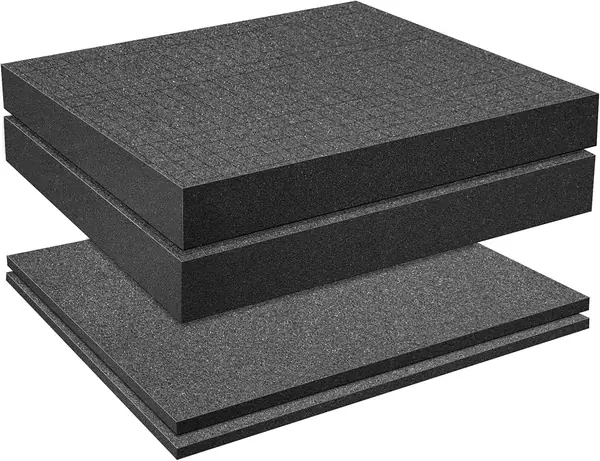
DECOHS pick-apart foam inserts with cube grid, two 12 inch squares and two thin base sheets

Small drawers

Shop Score 85/100
Thickness
2 in and 0.4 in
Sheet Size
12 x 12 inches
Pack
4 pieces
Grid
0.4 x 0.4 inch cubes
View on Amazon

Twelve-inch squares are the practical size for a machinist's chest, a deep tray, or a small hard case, where a 16-inch sheet means trimming away a third of what you paid for. You get two gridded 2-inch squares and two thin 0.4-inch base sheets, which lets you lay a pad down first and build depth only where a tool needs it.

The grid pulls apart by hand — 0.4-inch cubes — so an outline is a matter of pressing the tool into the face and picking out blocks, and the base sheets stop a cavity from running through to the drawer. The foam is soft and elastic, so a tool sits snugly, though the walls will not stand as sharply as a denser sheet's.

For a first layout in a small drawer, this is the set we point people to, because it costs little and the grid forgives a bad outline — pick out too many blocks and you press them back in. Start from the deepest tool you own and work outward, and save the base sheets for the second attempt.

Worth Noting

  • Two-inch thickness won't fit shallow trays
Our Verdict

Small drawers and shallow trays are where we use these gridded 12-inch squares, and the price makes a first experiment easy.

Check Latest Price
7.

DGSL Tool Box Foam Inserts Best for Deep Tool Drawers

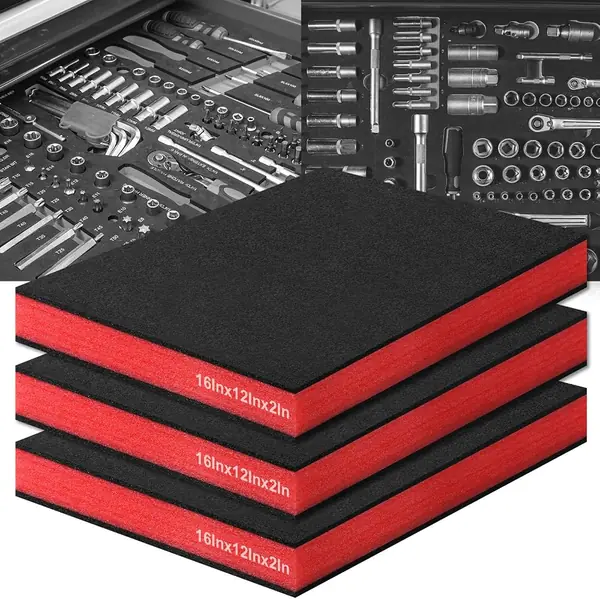
DGSL black polyethylene tool box foam sheets with red layer, three 16 by 12 inch pieces

Deep tool drawers

Shop Score 83/100
Thickness
2 inches
Sheet Size
16 x 12 inches
Pack
3 sheets
Material
Polyethylene
View on Amazon

The peel lines are where this set lives or dies. Three 16 by 12 sheets at 2 inches give you real depth for planes, hammers, and bulky specialty tools, and the red underlayer does the same job as our top pick's — but on the sheets we handled, one separated at a thumbnail and the next had to be cut apart with a blade.

We rate it a solid choice when a single deep drawer is the target and three sheets is enough foam to fill it; the density holds a cavity and the black-on-red layout is easy to read at a glance. If a whole chest needs lining, the six-sheet polyurethane pack covers far more ground for less.

Worth Noting

  • Only three sheets per pack
Our Verdict

We rate these three sheets for one deep drawer of bulky tools, provided you are ready to work around the peel lines.

Check Latest Price

How We Tested the Best Tool Box Foam

We started by pulling every foam insert we could find, then filtering by material, thickness, footprint, pack size, and whether the sheet was solid or pre-scored into a pick-and-pluck grid. Twelve packs made the cut, and we spent four months with them in a working garage, cutting, fitting, and refitting as the drawers changed.

Cutting happened at the bench with a utility knife; the one time we tried a hot knife, we did it outdoors with a fan moving the fumes away. For each sheet we cut a straight line, then a wrench-shaped cavity, then looked at the edge — a clean cut with no tearing or fuzzy bearding was the bar. Pre-scored sheets got the same treatment along their grid lines, and we noted whether the cubes separated cleanly or tore a chunk out of the layer underneath.

Firmness we judged by pressing a thumb in and by dropping a socket rail back into its slot over and over, watching for sheets that slumped or went shiny where tools landed. We also measured how much tool depth each sheet swallowed — a two-inch sheet burying a deep socket, a one-inch sheet leaving a ratchet proud of the surface — and weighed each one to get a read on density. Vacuum-packed sheets were unbagged and left on the bench overnight to see how much thickness came back.

Sheets per pack got counted against realistic drawer counts, and the last check was the one that matters on a Tuesday morning: whether a missing tool showed from a few feet back, which is where black sheets with a contrasting top layer separated themselves. The deep case rode along on weekend jobs, packed and unpacked each time, which is how we caught the sheets that lost their shape around the heaviest socket. The picks below held their edges and their cavities through all of it.

How to Choose Foam for Tool Boxes

Polyethylene Holds a Shadow, Polyurethane Cushions

Polyethylene is the denser, springier plastic behind most Kaizen-style tool shadow layouts, and it is what we look for when a drawer has to keep a chisel exactly where it belongs: it holds a cut wall, resists tearing, and shows a clean gap when something is missing. Polyurethane is softer and open-celled, so it absorbs shock and protects finished surfaces but rounds off at the edges of a cutout.

Choose by what the box does. A drawer in the shop wants polyethylene, as in our ONREVA and Precision Defined picks. A case that rides in a truck or under a bench wants polyurethane, which is why we keep the YIENFBEV sheets for transport. A shallow tray that only needs a non-slip bottom wants neither, and a thin liner costs less.

Match Thickness to the Tallest Tool

One inch takes flat tools — squares, rules, wrenches, chisel blades — and leaves the handles standing proud of the surface. Two inches swallows a mallet head, a plane, or a router in its base. Measure the tallest tool you plan to recess, then measure the drawer's inside height with that tool lying in place: a 2-inch sheet in a drawer with 2 inches of clearance leaves nothing for the tool itself.

When a single sheet is not deep enough, moving up to a 2-inch sheet is usually simpler than layering two 1-inch pieces, and it keeps the cavity walls continuous for the full depth of the tool.

Knife-Cut Sheets or Pick-and-Pluck Grids

Pre-scored pick-and-pluck foam gets you a rectangular pocket in minutes without a blade, which is why it suits cases and odd-sized cavities in a hurry. The grid cannot follow a curve, and it leaves a stepped edge. Solid sheets need a traced outline and a sharp knife but cut any shape you can draw, which is why every shadow layout here is a solid sheet.

For a clean cut on polyethylene, a fresh serrated blade or a hot knife beats a dull utility blade, and several light passes beat one deep one. Hot-knife work needs ventilation, since melting foam gives off fumes.

Sizes, Packs, and What Comes Out of the Bag

Sixteen by twelve inches is the standard sheet in this group and covers most drawer bays with trimming; twelve-inch squares suit a machinist's chest or a small case, as our DECOHS pick does. Count sheets against drawers rather than square footage, since cutouts waste more than you expect on a first layout.

Most of these ship vacuum-compressed, so a sheet can come out of the bag visibly thin. Give it a day to recover before you measure or cut, or you will set your depths against foam that has not finished expanding.

Frequently Asked Questions

Final Verdict

We recommend ONREVA's four-sheet set to most people building a tool drawer: high-density polyethylene that holds a crisp shadow, a red base layer that makes a missing tool obvious, and a 16 by 12 footprint that trims to fit. It is the most expensive 1-inch sheet here, and worth it when the drawer is a working one.

Choose FoamJoy's pick-and-pluck sheets instead when tools have awkward outlines or the box needs 2 inches of depth, and YIENFBEV's soft polyurethane when the case travels and cushioning matters more than a crisp silhouette.