↑↓ navigate ↵ open Esc close All results →

Best Center Mount Drawer Slides of 2026

Unlike paired side hardware that splits a drawer's weight across two rails, a center-mount slide carries the entire box on a single track underneath. Saving side clearance for shallow or period furniture brings a clear trade-off: track rigidity, load rating, and mounting screw alignment decide whether a drawer glides smoothly or sags off its rail halfway open.

Four months of fitting 16 zinc-plated steel, ball-bearing, and solid-wood runners into kitchen cabinets, a restored dresser, a bathroom vanity, and shop-built boxes showed how much existing hole patterns matter on replacements. Matching an antique dresser runner often hinges as much on screw spacing as on rail length.

Top-and-bottom gap plus rear depth must all clear the frame before strength ratings even come into play. Spanning period furniture repairs, new cabinet builds, and shallow drawers without side room, the six slides ahead match each clearance profile.

Our Top Picks

The Best Center Mount Drawer Slides

1.

Knape & Vogt 1175P Single Track Slide Best Overall
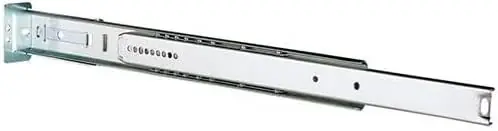
Knape & Vogt zinc-plated single track drawer slide with front rollers and rear mounting bracket

Kitchen cabinet drawers

Shop Score 90/100
Load Capacity
50 lb
Track Length
22-5/8 in.
Maximum Drawer Width
18 in.
Side Clearance
1/8 in. per side
View on Amazon

Pull out a kitchen drawer in a house built before the 1980s and there is a fair chance a single zinc-plated track is doing the work underneath. The 1175P is that track: the front rollers go on the underside of the drawer, the rail runs down the center of the cabinet floor, and the rear guide keeps the box from wandering. Mount it with staples or screws, and the drawer finds its own center every time you close it.

Clearance is the first thing we check on a retrofit, and the numbers here are forgiving: 1/8 inch on each side of the drawer, 1-1/2 inches between the back of the drawer and the cabinet, and a drawer box 3/8 inch shallower than its opening. We like that it asks so little of a cabinet built before anyone thought about slide specifications. The 50-pound capacity and the 18-inch maximum drawer width set the ceiling.

At 22-5/8 inches the rail suits a standard base cabinet, and a hacksaw takes it down for anything shallower; run a file over the cut end so the rear guide does not catch. Drawers lift straight up and out, with no release clip to find by feel in a dark cabinet. The included #6 x 1/2-inch screws are short for a thin plywood drawer bottom, though, so keep a few longer ones on the bench.

Drawers wider than 18 inches sit outside this slide's rating, and a wide chest is one place a single center track has to work hard to keep a heavy box square, which is a job for the wooden runners below. For a standard cabinet run, this is the least fiddly repair in the article.

Worth Noting

  • Needs 1-1/2 inches of rear clearance
Our Verdict

We recommend the 1175P for any standard-width cabinet drawer that already runs on a center track: 50 pounds of capacity, a track you can cut to length, and hardware that matches what is already screwed to your cabinet.

Check Latest Price
2.

lamxxyoo Beech Wood Drawer Slides Best for Vintage Wood-On-Wood Dressers

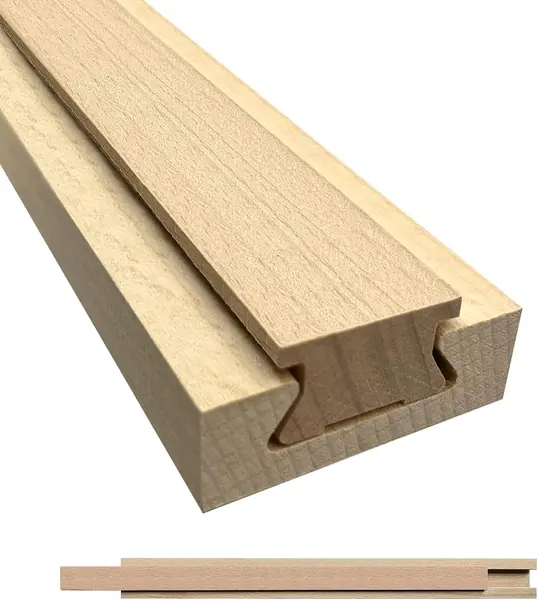
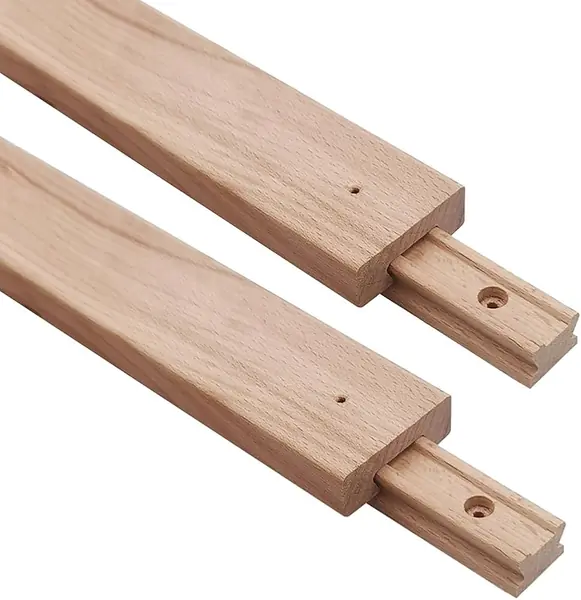
lamxxyoo solid beech top and bottom drawer tracks with a milled center channel

Vintage wood-on-wood dressers

Shop Score 89/100
Length
15.75 in.
Material
Solid beech
Width
1.85 in.
Included
Top and bottom track
View on Amazon

The first thing you notice picking one up is that it is real beech: 15.75 inches of solid stock with a milled channel, no plastic, no stamped steel. In a dresser whose drawers have been dragging wood against wood for sixty years, replacing both halves of the joint is what actually fixes the drag, and sanding the old runner buys you a season at best. That is why we keep a pair of these on the shelf.

Fitting is carpentry rather than hardware. Trim to length, notch the top track to match the original configuration, and drill pilot holes before a screw goes anywhere near end grain. Countersink the heads so they sit below the wear surface. Once it is in, rub a block of paraffin along the new runner; waxed beech glides where raw beech stutters, and you feel the difference on the first pull.

Width is the measurement people skip. These are 1.85 inches wide and 0.83 inch thick, and a channel a sixteenth narrower will bind no matter how carefully you cut for length. Set the old runner on the bench beside the new one before the saw comes out.

Worth Noting

  • Length is 15.75 inches despite the 16-inch title
  • Sold as a single pair
Our Verdict

A real beech pair that notches and cuts like the runner it replaces; we reach for these when a vintage dresser's wood-on-wood glide has worn a groove.

Check Latest Price
3.

Btibpse Classic Wood Center Mount Slide Best for New Builds

Btibpse unfinished beech wood center mount drawer slide with steel glides

New drawer boxes

Shop Score 88/100
Length
17-3/4 in.
Material
Beech hardwood
Glides
Steel
Drilling
Undrilled
View on Amazon

Nothing on this slide is pre-drilled, and that is the whole idea. It arrives as a male and female beech blank with steel glides fitted to the wood, 17-3/4 inches long, so you position the holes to match the drawer box you already built instead of drilling fresh holes to match a factory pattern.

The beech is kiln-dried, which is the specification that matters over a few humid summers, since a runner that still holds moisture will cup and bind by the second season. Surfaces come smooth and square, and 45 centimeters trims easily with a fine-tooth saw when the cabinet is shallower than the runner. The steel glides are what keep the box tracking straight in the channel; without them the joint is wood rubbing on wood.

We think it is the stronger of the two beech options for a build rather than a repair. The extra length covers deeper casework than the 15.75-inch pair, and undrilled stock forgives a hole pattern that has already been bungled once. The fit ends up yours to control, which is worth the layout time on a piece you are making from scratch.

Worth Noting

  • Every hole must be laid out and drilled
Our Verdict

For a drawer box you drill yourself, these undrilled beech blanks are easier to place than anything pre-punched, and the included steel glides take the drag out of the joint.

Check Latest Price
4.

Accuride 1029 Center Mount Slide Best for Drawers With No Side Clearance

Accuride 1029 zinc-plated steel center mount drawer slide with ball bearings

Shallow dresser drawers

Shop Score 87/100
Load Capacity
35 lb
Maximum Drawer Width
16 in.
Extension
3/4 extension
Drawer Depth Range
12-5/8 to 14-1/2 in.
View on Amazon

Side clearance is the reason center-mount slides exist, and it is the reason the 1029 is here. In a chest with almost no room to spare on either side, a pair of side slides simply will not go in; a single zinc-plated slide down the center will, and the steel ball bearings inside it give a pull the roller tracks in this group cannot match.

We like the mechanism more than the numbers. The bearings run with a steady, low-effort pull, the kind you notice on a drawer you open twenty times a day. The numbers are the honest part: 35 pounds and a maximum drawer width of 16 inches put this in the light-duty class, for silverware and socks rather than a drawer of hand tools.

Installation is fussier than the drawing suggests. The friction disconnect needs a firm tug to separate the halves, and the printed instructions are close to useless, so measure instead: drawer depth should fall between 12-5/8 and 14-1/2 inches, cabinet depth between 15 and 16-1/2 inches.

That same disconnect is what holds the two halves together, and a hard yank on an overloaded drawer can pop them apart. Keep the load light and the pull smooth and it stays put, which is the deal this slide offers: a bearing-smooth center track in exchange for treating the drawer gently.

Worth Noting

  • Three-quarter extension hides the back of the drawer
Our Verdict

The one we choose when an antique drawer has no side clearance at all: ball bearings in a 15-inch center slide, with a 35-pound ceiling that suits vanity and dresser drawers.

Check Latest Price
5.

Maitys Wooden Drawer Slide 8-Pack Best for Full Dresser Restorations

Maitys eight-piece wooden drawer slide set with metal glides and log finish

Full dresser restorations

Shop Score 86/100
Length
15.75 in.
Material
Wood with metal glides
Quantity
8 pieces
Thickness
0.67 in.
View on Amazon

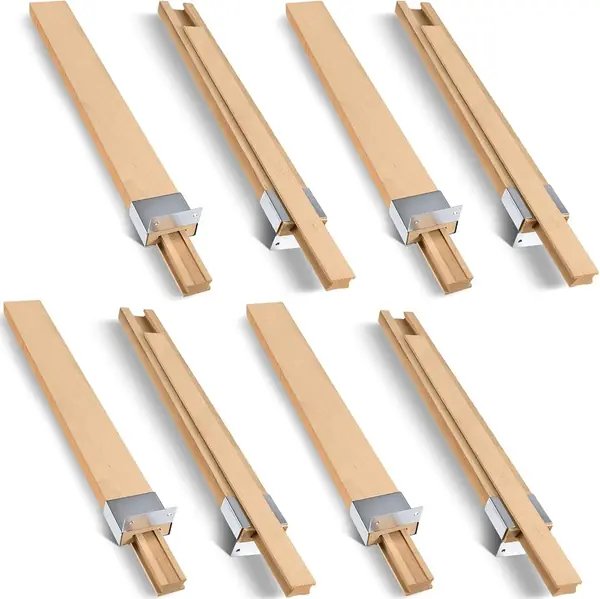
Eight wooden runners in one box is the pitch, and for a six- or seven-drawer chest it is the right shape of purchase. Each piece is 15.75 inches long, 1.85 inches wide, and 0.67 inch thick, with a metal glide fitted to keep the drawer tracking in its channel, and the natural log finish sits closer to old casework than a galvanized rail ever will.

The pieces cut to length with a fine saw, so odd-sized drawers are not a problem. Predrill every hole: this is thin stock, and a screw driven cold will split a runner along the grain, after which it will not hold its line. A pilot hole and a countersink take half a minute and save the piece.

Where the pack earns its place is a full restoration on a budget, at roughly what two ball-bearing slides cost for eight drawers. Where it does not is a single drawer in a good dresser, since you will spend the same fitting time on one runner as on eight, and the beech pair above is the better-matched repair for a piece you care about.

Worth Noting

  • Runs tight and needs sanding to fit
Our Verdict

Buy the eight-pack when a whole chest needs runners at once; it is the cheapest way to redo every drawer here, provided you are willing to fit each one.

Check Latest Price
6.

Prime-Line R 7137 Mono-rail Drawer Slide Kit Best for Small Vanity Drawers

Prime-Line mono-rail drawer slide kit with galvanized track and tri-roller assemblies

Small vanity drawers

Shop Score 85/100
Load Capacity
20 lb
Track Length
22-5/8 in.
Clearance
1-1/4 in. top or bottom
Roller System
Tri-roller mono-rail
View on Amazon

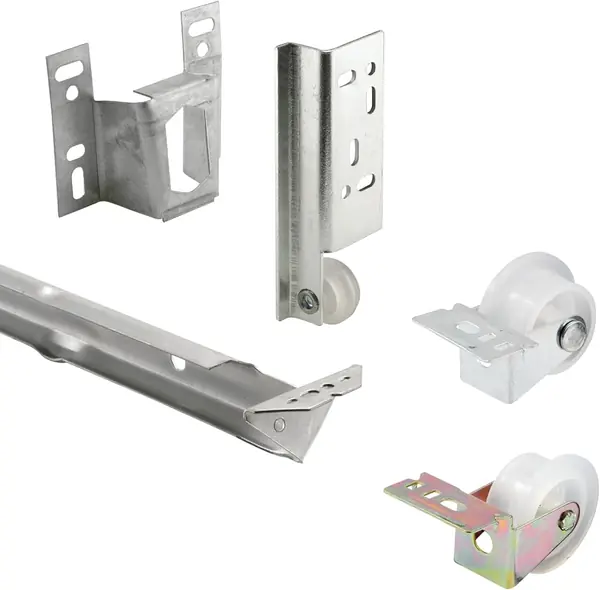
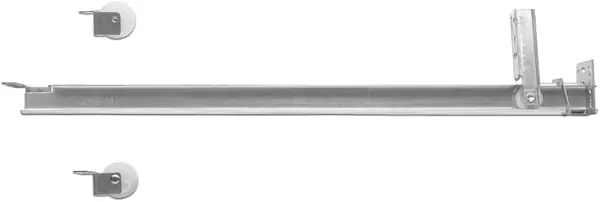
Twenty pounds is the load rating, and it decides who this kit is for before anything else does: the small drawers in a vanity, a side cabinet, or a built-in desk, not the kitchen drawer you keep the cast iron in. What we like is the completeness, since a 22-5/8 inch galvanized rail, two tri-roller assemblies, the guide, and the back plate all come in the box.

The rail cuts down for a shallower cabinet, and the roller brackets mount at the front corners of the drawer opening to replace the worn guide buttons that make old drawers sag and scrape. Watch the clearance: 1-1/4 inches top or bottom is more than most modern slides ask for, and a drawer box that is too tight will drag on the rail. Measure the opening before the order goes in.

Worth Noting

  • 20-pound load limit restricts use to small drawers
  • Requires 1-1/4 inches of top or bottom clearance
Our Verdict

The complete kit for an old cabinet whose drawers ran on a center rail with roller guides; a 20-pound ceiling keeps it to small drawers, so weigh yours before you commit.

Check Latest Price

How We Tested Center Mount Drawer Slides

We started by sorting the category into its three formats — zinc-plated steel roller tracks, solid wood runners, and ball-bearing steel — then filtered by track length, load rating, maximum drawer width, and whether a listing sold one slide or a multi-pack. Listings that never stated real dimensions fell to the bottom of the pile, no matter how good the product photos looked.

All told, we tested 16 slides over four months. They went into kitchen cabinet drawers that get yanked open all day, a spare-bedroom dresser restoration, a small bathroom vanity, and fresh drawer boxes in the shop, so we were watching them under daily use rather than on a bench.

Installation is where most of them separated themselves. We took the halves apart wherever the hardware allowed it, timed a solo install, and noted whether holes came predrilled and which screws or clips were actually in the box. Tracks that had to be shortened got cut to fit and then run past the cut to be sure the roller still traveled clean, and we measured side, rear, and top or bottom clearance against the drawer box before driving a screw.

Then we loaded each drawer and lived with it, pulling it open and shut through ordinary daily use, always within the slide's rated capacity and stated drawer width. We watched for wobble, sag, and whether the drawer stayed on the rail under a full load, and noted how far it traveled — some stop well short of the back of the cabinet. For replacements, we laid each new track against the old one to compare screw pattern and roller height, and we did the cost-per-drawer math on the multi-packs.

How to Choose Center Mount Drawer Slides

Match the Track You Already Have

Center mount means one track down the middle of the cabinet, with the drawer balanced on it. Furniture built that way usually leaves an eighth of an inch or less on each side of the drawer box, which is why converting to a pair of side-mount slides means rebuilding the box rather than screwing on new hardware.

Before you shop, check what is actually broken. If the metal track is sound and only the plastic guides or rollers are shot, you need the guides alone; if the track is bent, missing, or worn through, you need a complete assembly. Half of the returns in this category come from buying the wrong half of the system.

Choose the Format: Steel Roller, Wood Runner, or Ball Bearing

Three formats cover almost every center-mount job. A zinc-plated steel roller track is the kitchen-cabinet standard, inexpensive and rated around 50 pounds. Solid wood runners are what a pre-war dresser came with, and beech replacements keep the wood-on-wood feel a metal track destroys. Ball-bearing steel slides give the smoothest pull of the three, at the lowest load rating.

Pick the format the piece was built around. A modern bearing slide in a 1920s dresser looks wrong and rarely lines up with the old screw holes, while a galvanized rail under a hand-cut wooden drawer reads as a repair rather than a restoration.

Measure Four Numbers Before You Order

Track length, maximum drawer width, load rating, and clearance. Measure the old rail in place rather than the drawer, since rails often stop short of the cabinet back. Check the drawer width against the slide's maximum, which runs 18 inches on many steel tracks and 16 on ball-bearing slides, and check the box against the stated clearances.

The trap here is depth. Our top pick wants a drawer box 3/8 inch shallower than its opening; a box that is too deep scrapes the face frame no matter how well the slide is installed, and no adjustment fixes it.

Cut, Predrill, and Free the Halves

Most center tracks ship longer than you need and cut with a hacksaw or a fine-tooth saw, so buy the nearest length above your cabinet depth and file the cut end smooth. Wooden runners get predrilled and waxed; steel tracks get nothing but that file.

On a ball-bearing slide, separate the two halves before you pick up a screwdriver, because the drawer half mounts to the box and the cabinet half to the carcass. Keep the old slide beside you as a template for the screw pattern, even when you are drilling fresh holes.

Frequently Asked Questions

Final Verdict

For a standard kitchen or vanity cabinet, the Knape & Vogt 1175P is the pick we keep coming back to: 50 pounds of capacity, an 18-inch width limit that covers ordinary cabinet drawers, and clearances small enough to fit a cabinet that was never designed for modern hardware.

If the furniture is older than the hardware era, the lamxxyoo beech pair restores a wood-on-wood joint properly, and the undrilled Btibpse blanks are the same idea for a box you are building. Where a chest has no side clearance at all and you want a bearing pull, the Accuride 1029 is the light-duty answer.