↑↓ navigate ↵ open Esc close All results →

Best Lubricants for Drawer Slides of 2026

A sticking drawer turns a routine reach into a shuddering yank that sends everything inside sliding forward. Every slide comes down to two surfaces rubbing under load, and restoring smooth travel takes nothing more than a thin, dry-enough film of wax, grease, or silicone that stays put without trapping shop dust or household lint.

Picking the right lubricant starts with the slide format itself: paste wax stays where you wipe it on bare wood runners, grease cushions metal ball-bearing carriages, and spray reaches tight rollers as long as it cures fully before clothes or utensils go back in. Over four months across 14 formulas on wood, metal, and plastic hardware, plenty felt slick on day one while the weaker ones turned gummy within weeks.

Long-term glide, low odor, and food-contact labeling for kitchen drawers mattered far more than bottle price when narrowing down these seven formulas.

Our Top Picks

The Best Lubricants for Drawer Slides

1.

Impresa Wood Drawer Wax Paste Best Overall
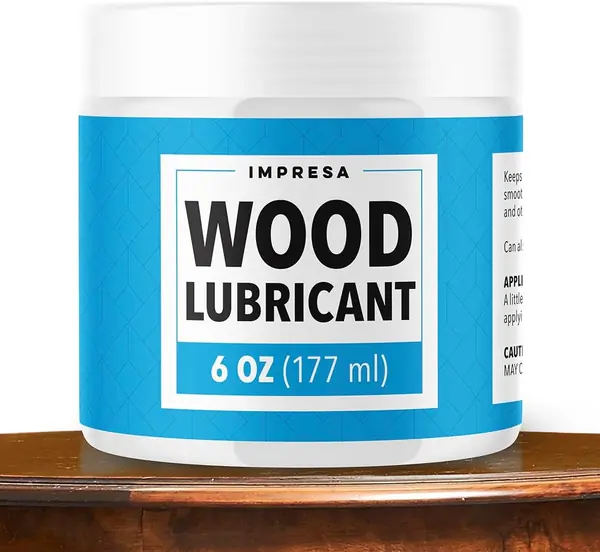
Impresa wood drawer wax paste in a six-ounce jar with lid

Wood drawer runners

Shop Score 97/100
Item Form
Paste wax
Container Size
6 oz jar
Compatible Surfaces
Wood
Viscosity
Medium
View on Amazon

A sticky wooden drawer usually does not need new hardware; it needs a thin film of wax on the runners. That is what this jar provides, and it is the one we reach for first when a dresser or cabinet has started to fight back. The paste is medium-bodied, soft enough to load onto a rag and firm enough that it does not run down the inside of a cabinet while you work.

Application is about as simple as furniture maintenance gets. Wipe the track down, rub the paste into the runners, work the drawer in and out a few times, and buff off whatever has not soaked in. A four-drawer chest takes less time than emptying it did. There is no odor to air out and no discoloration on bare or finished wood, so a bedroom dresser does not have to sit empty overnight.

What sold us was the staying power. Two pulls after the first coat, the drawer came out with one finger instead of a yank, and the squeak that had been riding along with it did not come back. Six ounces is a lot of drawer wax for one chest; the jar keeps, so a single purchase covers every sticky cabinet, desk, and workshop drawer in the house.

The tin from Miss Abi's below is just as effective on old wood and feels more like a furniture product than a workshop one, but you get far more paste here for about the same money. For a whole house rather than one treasured piece, that is the trade we make.

Worth Noting

  • Formulated for wood runners not metal slides
Our Verdict

Our first recommendation for wood-on-wood drawers: the Impresa paste is odorless, will not stain a finish, and keeps a runner quiet long after the first coat.

Check Latest Price
2.

Miss Abi's Drawer Lubricant Best for Antique Furniture

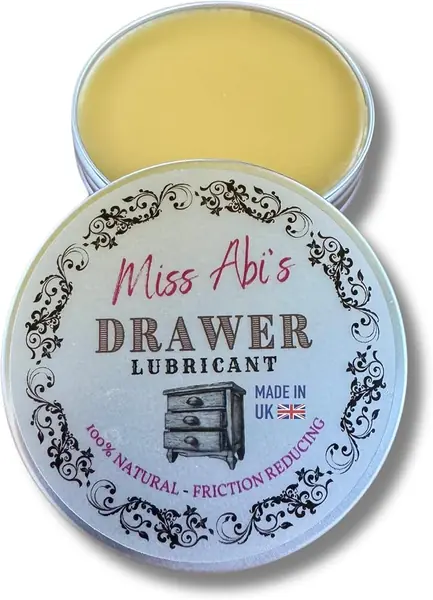
Miss Abi's drawer lubricant beeswax paste in a small lidded tin

Antique wood furniture

Shop Score 96/100
Item Form
Beeswax paste
Container Size
2.03 fl oz tin
Compatible Surfaces
Wood and metal hinges
Materials
Beeswax and oils
View on Amazon

Beeswax and oils, in a small tin, made in batches: this is the paste that smells faintly of honey while you work and then does not smell at all by the next morning. On a dresser that has been fighting you for years, that is a fair trade.

The texture is what sets it apart from harder furniture waxes. It softens under a fingertip, so you can work it into a dry runner without heat or much muscle, and it sinks in slightly rather than sitting on the surface as a slippery coat. We used it on parched old runners that had gone pale where the drawer bottom rubbed, and the pull came back smooth without the track looking wet or waxed.

Coverage is the pleasant surprise, and it is where this tin earns its place in the drawer. A thin coat goes a long way, so a small amount handles several dressers, and it leaves no stain on bare or finished wood. Metal hinges get the same treatment, and the clicking that had been coming from a worn cabinet hinge quieted down with a dab.

Where it earns its keep is furniture that has already survived a few decades. It is the least risky thing we have put on a finish we cared about, and the tin is small enough to keep in the drawer with the furniture polish.

Worth Noting

  • Small tin for a kitchen's worth of drawers
Our Verdict

Buy this tin for antique furniture you care about; the soft beeswax paste brings dried-out runners back without staining or darkening a finish.

Check Latest Price
3.

Super Lube Synthetic Grease Best for Metal Slides

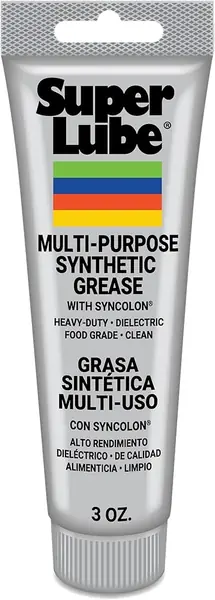
Super Lube synthetic grease in a translucent three-ounce squeeze tube

Metal ball-bearing slides

Shop Score 95/100
Item Form
Synthetic grease
Container Size
3 oz tube
Certification
NSF H1 food grade
Temperature Rating
Up to 450 °F
View on Amazon

Ball-bearing slides are a different problem from wood runners, and wax is the wrong answer for them because steel wants something with body that clings. Super Lube's synthetic grease is exactly that: thick, translucent, and stubborn. On a vertical track it stays where you put it instead of creeping down onto the cabinet floor.

The three-ounce tube is the right size for drawer duty. A dab on each roller race and a thin film along the channel is all it takes, and one tube goes a very long way; we have kept the same one in rotation through several pieces of furniture. It resists water and does not run, drip, or separate, which matters for a bathroom vanity or the cabinet under a kitchen sink.

The food-grade rating is a practical advantage, not a marketing line. Super Lube is NSF H1 registered, meaning it is acceptable where incidental food contact can happen: the slides on a utensil drawer, or the swivel on a kitchen cart. It is Kosher certified as well, which some households will care about.

The one thing to watch is quantity. A heavy bead squeezes out of a narrow track and then holds the dust that lands on it, so keep the smear thin and wipe the excess off the visible face of the slide. Beyond that there is little here to fault; for metal slides, cabinet hinges, and the rollers on a file cabinet, we have not found anything we prefer.

Worth Noting

  • Overapplication squeezes out and traps dust along narrow tracks
Our Verdict

Super Lube is what we put on metal ball-bearing slides: it clings to steel, resists water, and carries the food-grade rating kitchen drawers deserve.

Check Latest Price
4.

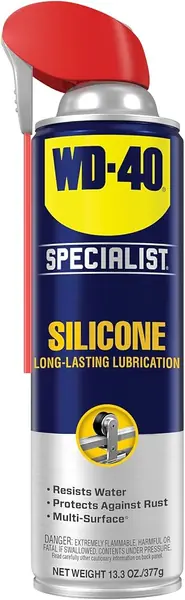
WD-40 Specialist Silicone Lubricant Best Spray for Rolls and Hinges

WD-40 Specialist silicone lubricant aerosol can with spray nozzle

Rollers and hinges

Shop Score 94/100
Item Form
Aerosol spray
Container Size
13.3 oz can
Compatible Materials
Metal, rubber, vinyl, plastic
Finish
Dry, clear film
View on Amazon

Anything that rolls rather than rubs is a job for a spray, and this is the can we keep on the shelf. Silicone goes on wet, dries to a clear film, and leaves nothing tacky behind, so a drawer roller or a cabinet hinge keeps working without turning into a lint magnet.

The bigger can is why we reach for this one over the small aerosol tins. One pass down every track in a kitchen, taking in rollers, hinges, and the glide rail on a pull-out shelf, barely dents it, and the straw gets into the channel where the roller actually rides. It is also safe on the rubber bumpers and plastic rollers that a lot of modern drawers use, which is more than we can say for a general-purpose oil.

Silicone is a light-duty lubricant, so expect another pass sooner than you would need with wax on wood or grease on steel. That is the trade for something that never gums up and never leaves a stain on the clothes folded above it.

Two things to know before you spray. The can has to be held roughly upright to work properly, so pull a low drawer all the way out and treat the slides where you can see them rather than fighting the can inside the cabinet. And WD-40 rates this one for metal, rubber, vinyl and plastic rather than wood, so bare wood runners want a wax instead.

Worth Noting

  • Not rated for bare wood runners
Our Verdict

When a drawer runs on rollers, hinges, or plastic rather than wood, this is the silicone spray we keep on the shelf for a clean, dry film.

Check Latest Price
5.

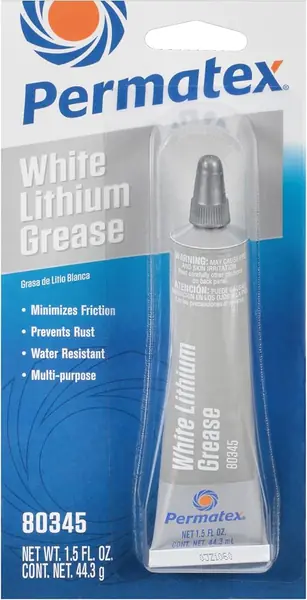
Permatex White Lithium Grease Best Budget Pick

Permatex white lithium grease in a small pointed squeeze tube

Budget metal slides

Shop Score 93/100
Item Form
White lithium grease
Container Size
1.5 oz tube
Compatible Materials
Metal-to-metal and metal-to-plastic
Heat Rating
Up to 1,100 °F
View on Amazon

The cheapest tube here is the one that lives in the toolbox rather than the shop cabinet. White lithium grease, 1.5 ounces, rated for metal-to-metal and metal-to-plastic contact; the applications Permatex names are hinges, latches, seat tracks and door tracks, which is a fair description of where it earns its keep around drawers.

On a metal drawer slide, a bead down each channel and a dab at each roller kills a squeak in one pass, and the quiet holds. We have also used it on garage-door track and hinge pins, where it shrugs off damp air in a way a plain oil does not. The grease stays put rather than creeping, so you are not wiping oil off the cabinet face a week later.

For the money, this is the tube we buy in pairs. It does most of what a premium grease does on hinges and tracks, the pointed tip reaches into a channel without smearing the surrounding wood, and there is no brush, rag or can to manage. One lives in the kitchen drawer and one in the shop.

The small tube is deceptive. A bead goes a long way, and a single one covers every hinge, latch and slide in a typical house before it runs out, which is why we have never bothered buying the larger tub.

Worth Noting

  • White grease shows on the track if over-applied
Our Verdict

The Permatex tube is the cheapest fix here and the one we restock without thinking, ideal for squeaky metal slides and hinge pins.

Check Latest Price
6.

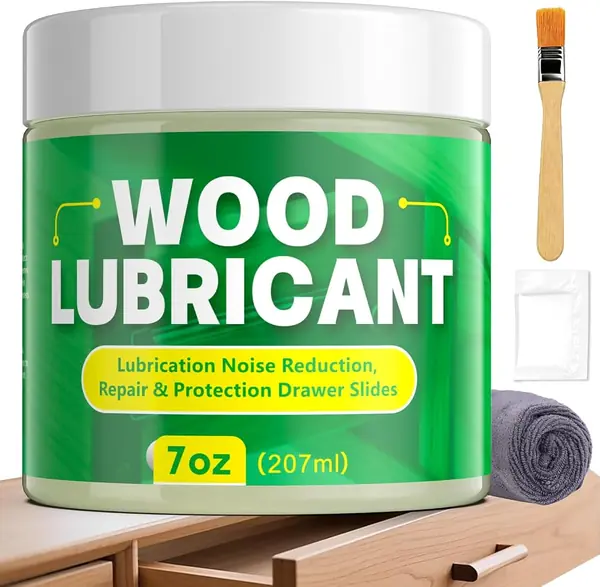
HONKID Wood Lubricant Wax

HONKID wood lubricant wax in a seven-ounce paste jar

Value wood wax

Shop Score 92/100
Item Form
Paste wax
Container Size
7 oz jar
Compatible Surfaces
Wood
Odor
Odorless formula
View on Amazon

Seven ounces of pale paste in a plain jar, with nothing else in the box. That is the entire pitch, and it is a good one: the same treatment the better-known drawer waxes sell, in the largest jar of any wax here.

We ran it on a set of kitchen cabinet drawers that had been catching halfway, and the honest verdict is that we cannot tell the difference between this and the paste in our top spot: a quieter pull, no squeak, and no smell in a small kitchen. It goes on soft, wipes into the runner easily, and the instructions are the ones you want, which amount to smearing it on, working the drawer, and wiping off the excess.

The multi-purpose claim holds up too. Window tracks and door hinges both responded to it, and the maker's odorless, non-toxic formulation is the kind of thing you want in a nursery dresser. If you would rather buy once and use one product around the house, this is a sensible way to do it.

While we have not had this one in service long enough to vouch for a second season on the same track, nothing in the first months suggests it will quit early.

Worth Noting

  • Multi-season durability on a single application is not yet proven
  • Plain jar includes no applicator or wiping cloth
Our Verdict

We point budget-minded wood-drawer owners to the HONKID jar: the odorless paste works like the premium waxes and you get more of it.

Check Latest Price
7.

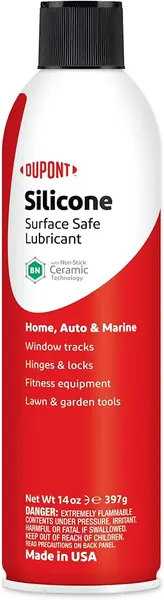
DuPont Silicone Lubricant Best for Mixed-Surface Tracks

DuPont silicone lubricant aerosol can with ceramic additive

Mixed-surface tracks

Shop Score 91/100
Item Form
Aerosol spray
Container Size
14 fl oz can
Certification
NSF H-2
Temperature Range
-40 °F to 392 °F
View on Amazon

Wood, metal, vinyl, rubber, leather: few sprays claim as wide a range of surfaces as DuPont's silicone, and the film it leaves is genuinely non-staining. That range is the reason it earns a place here, because it is the can to grab when you are not certain what a track is made of.

The formula carries nano-ceramic boron nitride, which is the maker's way of saying the film hangs on longer and stands up to water better than a plain silicone spray. On sliding glass door tracks, window channels and garage-door rollers we got an easy glide from one pass, and the fourteen-ounce can went a long way.

The listed working range runs from -40°F to 392°F, which covers a cold garage as well as a hot one. It carries an NSF H-2 rating, which covers use where the lubricant will not touch food; for a drawer that holds utensils, Super Lube's H1 grease is the safer call.

Where that leaves us: this is the most versatile can in the group, the one we grab for a mixed bag of jobs, whether that is a sliding door, a window channel, or the rollers under a bench. Nothing else here covers that range in a single pass.

Worth Noting

  • Strong solvent odor lingers indoors
Our Verdict

DuPont's silicone covers more surfaces than anything else here, which makes it the forgiving choice when you are not sure what a track is made of.

Check Latest Price

How We Tested the Best Lubricants for Drawer Slides

We built the shortlist by sorting the market by slide type rather than by brand. Paste waxes for bare wood, greases for ball-bearing carriages, sprays for the rollers and hinges you can't reach with a finger — anything whose labeled use didn't match one of those jobs got dropped before testing.

That left 14 lubricants, and we spent four months living with them in a house full of sticking drawers: a bedroom dresser on bare wood runners, kitchen drawers beside the stove, a garage workbench on metal ball-bearing slides, a bathroom vanity on plastic rollers, and one antique dresser we'd been fighting with for years.

Each container was dated and assigned to specific drawers so we could see how far one tin, tube, or can actually stretched. We applied every one the way its label directed — thin coats, buffed-in paste, sprays held at the distance the can specified and checked for drips and overspray — then sniffed each drawer right after application and again the next morning. Sprays were timed until they felt dry to the touch, and a dark sock pressed into the track showed whether any film came off. Every drawer got the same pull-and-listen check at two weeks and then monthly: a squeak, a drag, or a track fuzzy with lint and crumbs counted against it.

Food storage got its own set of drawers. We read the registration on every label before anything went near a utensil drawer, allowed only the products rated for incidental food contact in, and then only after the film had dried. Cleanup was noted the same way, whether a smear wiped off with a dry cloth or needed solvent.

How to Choose a Lubricant for Drawer Slides

Start With What the Drawer Slides On

Pull a drawer all the way out and look at the runner before you buy anything. A wooden drawer on a bare or waxed wood track needs a paste wax worked into the wood; a drawer on metal ball-bearing slides needs a grease that clings to steel; a drawer running on plastic rollers wants a silicone spray that will not attack the plastic. The mismatch is the most common mistake here: wax pushed along a steel ball race does nothing, and grease smeared on a bare wood runner collects dust and darkens the track.

Some drawers mix the two, with wood sides running in a metal channel. Treat the surface that carries the load, which is usually the metal.

Paste, Grease, or Spray: Match the Format to the Access

Paste in a jar is the easiest thing to control on a flat wood runner: a rag, a thin coat, a wipe-down afterward. A tube with a pointed tip is better for a channel where you cannot get a finger, because the grease goes exactly where the roller rides. Aerosols cover long tracks and a dozen hinges in one pass, but the can has to be held upright, which is why they are awkward for the underside of a fixed shelf. Coverage follows the format: a six- or seven-ounce jar of drawer wax lasts a household a long time, a three-ounce tube of grease handles dozens of slides, and a large aerosol is the fastest way to treat every track in a house.

What Stays Slick, and What Turns Gummy

The worst outcome is not a lubricant that wears off; it is one that turns tacky and starts holding lint, pet hair, and sawdust. Wax pastes and dry silicone films stay clean because they do not leave a wet layer behind. Grease is the opposite: it stays exactly where you put it, which is what you want on a vertical metal slide and what you do not want on an open shelf in a dusty workshop.

Whatever you choose, a thin coat beats a thick one, and wiping the surplus off the visible surfaces is part of the job rather than an optional last step.

Odor, Staining, and Drawers That Hold Food

A drawer in a bedroom or a kitchen shares air with everything in the room, so smell matters more than it does on a garage door. Wax pastes are effectively odorless; solvent-based sprays are not, and they need the room aired while the film dries. Staining is the other consideration on antique or unfinished wood, so test any new product on a hidden patch of runner first.

If the drawer holds utensils or food, check the rating. Super Lube's NSF H1 grease is cleared for incidental food contact, while DuPont's silicone is H-2 and is not.

Frequently Asked Questions

Final Verdict

Most people with a sticking drawer need one thing: the Impresa wood drawer wax. It is odorless, it will not stain a finish, and a single jar covers every wood-runner cabinet and dresser in the house, which is why it holds the top spot. Move to Miss Abi's beeswax tin if the furniture is old enough that risking a finish is not worth it, and step away from wax entirely if your drawers roll on metal, because Super Lube's grease is the one that stays on steel.