↑↓ navigate ↵ open Esc close All results →

Best Inset Cabinet Hinges of 2026

An inset cabinet door has nowhere to hide: because it sits flush inside the frame with a narrow reveal on all four sides, even a hairline sag makes the door edge scrape the stile. Most boxes and doors remain sound long after a tired thirty-year-old hinge spring lets the alignment drop.

Installing 15 hinges across kitchen cabinets, a bathroom vanity, a laundry closet, and a shop cabinet—then cycling them daily for four months—proved that existing screw-hole patterns often dictate how smoothly a face-frame retrofit goes. Careful buyers also separate self-closing from soft-close mechanisms before ordering: one uses spring tension to snap the door shut, while the other relies on a damped piston to catch the final inch quietly.

Both closing actions and both cabinet architectures—surface-mount face-frame and concealed frameless cup hinges in finishes from matte black to antique brass—are covered for full-kitchen refreshes or single problem doors.

Our Top Picks

The Best Inset Cabinet Hinges

1.

Ravinte 3/8-Inch Inset Hinges Best Overall
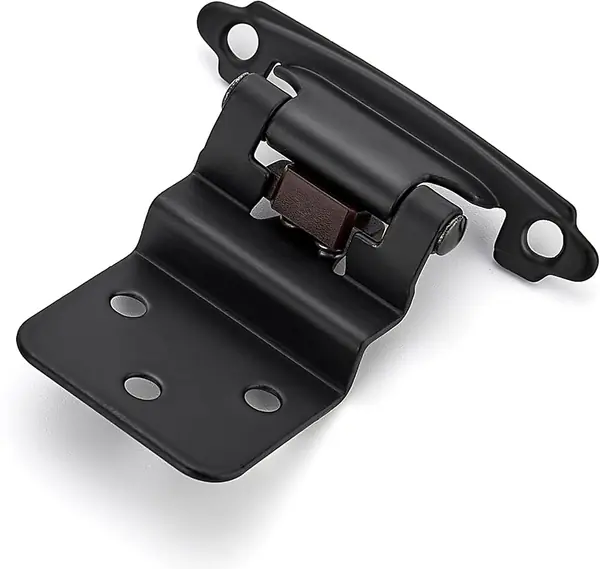
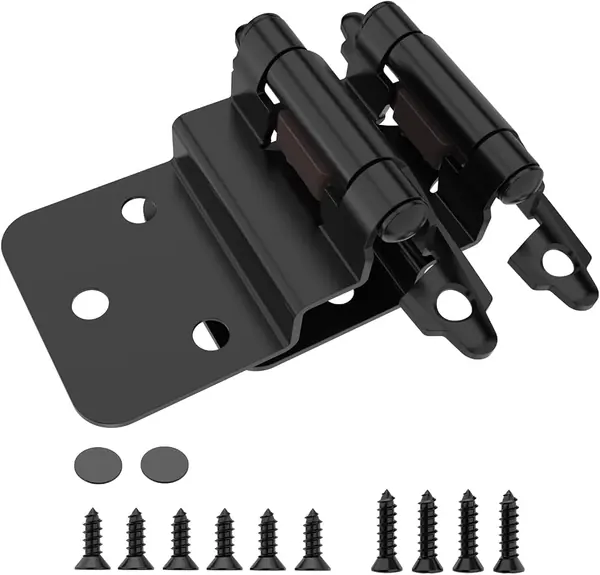
Ravinte matte black 3/8-inch inset cabinet hinges with mounting screws in a 60-pack box

Face-frame kitchen refreshes

Shop Score 92/100
Pack Size
60 hinges (30 pairs)
Hinge Type
3/8 in inset, surface mount
Closing Action
Self-closing under 30 degrees
Material
1.5 mm stainless steel
View on Amazon

Thirty pairs in one box is what puts this Ravinte set first: a whole kitchen's worth of inset doors in a single order instead of five small ones. It's a 3/8-inch offset hinge, the classic American pattern that screws to the face frame and lets the door sit down inside the opening — no mortise to cut, no cup to bore, five screws per hinge. If your cabinets are painted, square, and older than you are, this is the shape of hinge already on them.

Replacement is where they earn their keep. The wings measure 2-3/4 inches, long enough that you can drill fresh pilot holes an inch away from the old ones and still cover the scars with the leaf, which is what we do on doors whose original holes have wallowed out. Pre-drill everything, and expect to supply your own screws: the included ones have heads soft enough to cam out under a driver, and a small box of decent replacements is money well spent before you start.

The spring takes over somewhere around 30 degrees and finishes the swing for you, and the bumpers keep the door from knocking against the frame. We pushed a few doors shut harder than we needed to, just to see what the bumpers would absorb; they soften the landing without erasing it.

Finish is the quiet win. The matte black is evenly laid on and flat rather than chalky, so the hardware disappears against a dark cabinet instead of looking painted on, and the 1.5 mm steel leaf doesn't flex when you snug a screw down. Buy one box for the kitchen and you'll still have spares for the doors you inevitably miss on the first pass.

Worth Noting

  • Self-closing spring, not a damped soft close
Our Verdict

For face-frame cabinets with 3/8-inch inset doors, this is the box we buy: thirty pairs, screwdriver-only installation, and a spring that closes the door for you.

Check Latest Price
2.

KONIGEEHRE Soft-Close Inset Hinges Best Soft-Close

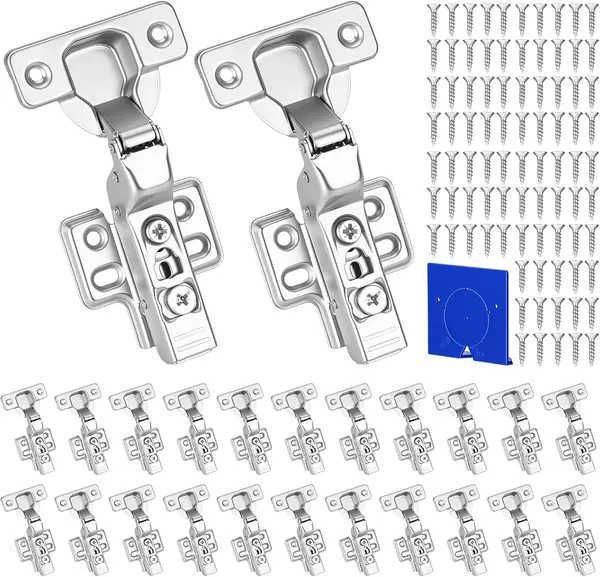
KONIGEEHRE stainless steel concealed inset cabinet hinges with 35mm cups and clip-on mounting plates

Frameless European cabinets

Shop Score 91/100
Pack Size
20 hinges
Hinge Type
Frameless concealed inset, 35 mm cup
Adjustment
6-way
Opening Angle
105 degrees
View on Amazon

This is the pick that won't fit half the cabinets in this guide, and that's the first thing to settle. The KONIGEEHRE is a European concealed hinge — a 35 mm cup bored into the back of the door, a plate that clips to the cabinet side, an arm that carries the door — built for frameless boxes only. On a face frame with surface-mounted leaves it has nothing to grab.

Where it belongs, it has the best closing action in this group. The integrated damper takes over near the end of the swing so the door settles home instead of clicking, and the six-way adjustment is what makes an inset door livable: you can raise it, slide it sideways, and tilt it until the gap at the top matches the gap at the bottom. We hung a door, disliked the reveal, and had it even a couple of minutes later without touching a screwdriver to the frame.

Twenty hinges arrive with screws, bumpers, and instructions, and the nickel plating is bright rather than brassy. The adjustment plates are the lightest-feeling part of the assembly, so treat the cams gently and they'll hold a setting. Boring the cups is the real work here: a 35 mm Forstner bit and a jig turn a fiddly afternoon into a quick one.

Worth Noting

  • Damper can be outrun by heavy solid doors
Our Verdict

Our pick for frameless cabinets: a true damped soft close and six-way adjustment that lets you dial an inset door flush after it's already hung.

Check Latest Price
3.

Vallecloud 3/8-Inch Inset Hinges Best for Small Repairs

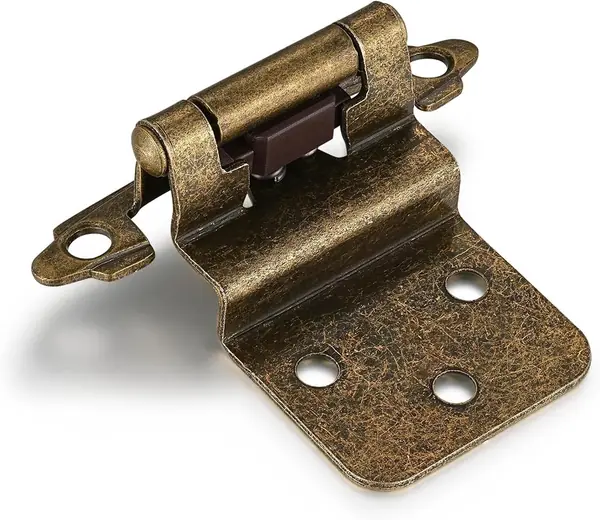
Vallecloud antique brass 3/8-inch inset face-frame cabinet hinges, four pieces with screws

Single-door repairs

Shop Score 90/100
Pack Size
4 hinges (2 pairs)
Hinge Type
3/8 in inset, face frame
Finish
Antique brass
Closing Action
Self-closing under 30 degrees
View on Amazon

Old brass is the hardest thing to match on a repair, and this four-pack gets close enough that a replaced door doesn't announce itself. The tone is warm and slightly darkened, closer to a cabinet that has spent fifty years in a kitchen than to the bright yellow lacquer a lot of budget hardware ships with. On painted cabinets with original brass pulls, it settles into the run.

We treat a pack like this as a repair kit rather than a remodel: two pairs is enough for a single door or a small vanity, and it works out to the highest cost per hinge of anything here even though the outlay is tiny. Count doors and double it before you order — a full kitchen will have you buying this listing five times over, and at that point a bulk box makes more sense.

Function is honest rather than fancy. The spring pulls the door closed from about 30 degrees, the steel doesn't twist when you tighten the leaf down, and Vallecloud is upfront that these aren't soft-close, so the landing is audible. What we appreciated most is the screws — longer than the stubby ones most packs include, which is exactly what you need when fifty-year-old holes have opened up.

Worth Noting

  • Packs hold only two pairs
Our Verdict

Two pairs of antique brass for the door you can't match anywhere else — the right buy for a repair, not for a whole kitchen.

Check Latest Price
4.

Chibery 3/8-Inch Inset Hinges Best for Whole-Kitchen Rehangs

Chibery matte black 3/8-inch inset cabinet hinges with door bumpers and screws, 50 pack

Whole-kitchen rehangs

Shop Score 89/100
Pack Size
50 hinges (25 pairs)
Hinge Type
3/8 in inset, surface mount
Finish
Matte black
Included
50 bumpers and 250 screws
View on Amazon

Twenty-five pairs, a bumper for every hinge, and 250 screws is the shape of a job in a box: dump it on the bench and you can re-hinge a full run of face-frame doors without a hardware-store trip in the middle. The pattern is the same 3/8-inch surface mount as the Ravinte set, so it drops onto the same cabinets, and the matte black sits close enough that the two read alike on a door.

Installation is the same screwdriver job: hold the door in the opening, mark, pre-drill, drive. The long wings give you room to shift the screw line when the old holes are ragged, and the bumpers go on before you hang anything, so there's no fumbling with pads at the end of the job.

Closing action is where we noticed the price. These snap shut with a firm, positive click rather than gliding — Chibery sells them as self-closing, not soft-close, and that's exactly what they are. For a rental, a workshop, or a run of utility cabinets, that's a fair trade, and the matte black is evenly applied on every hinge we've pulled out of the box.

Worth Noting

  • No adjustment cams, so alignment is by hand
Our Verdict

Twenty-five pairs of matte black with screws and bumpers in the box — our pick when a whole run of face-frame doors needs new hinges at once.

Check Latest Price

How We Tested Inset Cabinet Hinges

We started with the one measurement that rules out most of the shelf: the cabinet picks the hinge, not the other way around. Face-frame doors with a flush inset take a surface-mount hinge; frameless European boxes take a concealed cup hinge bored into the door, and the two do not swap. From there we filtered by pack count against the size of the job, cost per hinge, available finishes, and whether screws and door bumpers came in the box, then ordered 15 hinges to test.

Installation got the most attention because it is where inset doors go wrong. We pulled doors off existing cabinets and hung each new hinge on the original stile, noting whether the old screw holes lined up or we had to drill fresh ones, whether the included screws bit and held or spun in stripped wood, and whether a surface mount saved the mortise work a cup hinge demands. Every door went back on at least two hinges, and a tall pantry door and a heavy oak door each got a third so nothing could pull loose.

Then we lived with them. Doors were opened and closed throughout the day, and we watched where the spring took over, whether a door drifted back open, and whether a soft-close hinge landed with a click or a whisper. After installation we tried to true up the gaps and noted which hinges allowed real correction. Finishes were held against existing pulls in daylight, screws were rechecked for loosening over four months, and we compared cost per hinge to see what the extra money actually bought.

How to Choose Inset Cabinet Hinges

Face frame or frameless: identify the cabinet first

Open a door and look at the inside edge of the opening. A face-frame cabinet has a solid wood border an inch or two wide, and an inset door on one hangs from a surface-mounted leaf screwed to that frame — the 3/8-inch pattern, often sold simply as an offset hinge. A frameless cabinet is a plain box, and its inset doors hang on a European concealed hinge with a 35 mm cup bored into the door. The two do not interchange, and no amount of adjustment rescues the wrong one.

Before ordering, measure the old hinge's wing and note where the screw holes sit. Count the holes too: a five-hole leaf and a three-hole leaf will not swap without filling and re-drilling.

Self-closing and soft-close are not the same thing

Nearly everything in this category is self-closing: a spring takes over somewhere around 30 degrees and pulls the door the rest of the way. Soft-close adds a damper that slows the last stretch so the door settles rather than clicks. Listings blur the two, and a bumper — the little pad that keeps the door from knocking the frame — gets marketed as soft-close when it is nothing of the kind.

We think the damper is worth paying for on a kitchen you use every day and easy to skip on a utility cabinet. If quiet matters, buy a hinge that names a damper or an integrated soft-close mechanism in the specifications, not one that just promises a quiet close.

Adjustment is what saves an inset door

An inset door has to sit flush in the opening with an even gap on all four sides, and cabinet boxes are never as square as the drawing. A European hinge with two- or six-way cams lets you move the door up, sideways, and in and out after it is hung. A surface-mount offset hinge gives you slots and patience: you line the door up by eye and tighten.

If the opening was cut by hand or the box is out of square, the adjustable hinge justifies the fuss of boring cups. On a cabinet that is genuinely square, a surface-mount hinge is faster and needs no special bit.

Screws, holes, and the rest of the small print

Reusing the old screw holes separates a twenty-minute job from an afternoon of filling and re-drilling. Offset hinges are not standardized, so a replacement leaf may sit a fraction off from the old one even when the offset is right — check hole spacing against the door before you buy.

Pre-drill every hole, and do not assume the screws in the box are the best ones; soft heads cam out and leave you with a stripped stile. A five-dollar box of quality screws is the cheapest insurance in the project.

Match the pack to the job

A four-pack and a fifty-pack look similar on a shelf and cost wildly different amounts per hinge. Small packs are for repairs, and for sampling a finish before committing to a kitchen; bulk boxes are how you avoid paying several times as much for the same steel.

Our habit is to buy the small pack first when the color has to match something already on the cabinet, then order bulk once we've held one in our hand and seen it against the door.

Frequently Asked Questions

Final Verdict

Our default is the Ravinte 3/8-inch set: thirty pairs, no mortising, and a spring that closes the door, which is what most face-frame kitchens actually need. If your cabinets are frameless, none of that applies — the KONIGEEHRE is the one to buy, with a real damper and six-way adjustment that forgives a box that is not square.

And when a single door is the whole problem, the Vallecloud four-pack is the smallest order that will make an old brass hinge disappear.