↑↓ navigate ↵ open Esc close All results →

Best Leather Tool Belts of 2026

A leather tool belt behaves much like a pair of work boots during its first week on the job. Too stiff and it digs into your hips; too wide and it rides like a saddle; too narrow and a loaded pouch twists your pants sideways every time you climb a ladder. Broken in properly, it stays flat and keeps a hammer, tape, and fasteners within easy reach.

Across eight months of framing, electrical rough-ins, drywall hangs, and weekend repairs, we wore 12 bare belts and full rigs over jeans and work pants, loading naked belts with our own pouches to check how waist sizing landed over layers. Wider straps spread weight differently than narrow ones, and a pre-loaded rig only saves trips if stitching, rivets, buckle hardware, and pocket depth hold real tools without sagging — priorities that shaped the six belt-only and belt-and-pouch setups below.

Our Top Picks

The Best Leather Tool Belts

1.

Occidental Leather 3-Inch Ranger Work Belt Best Overall
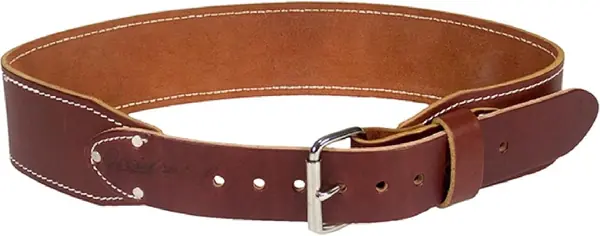
Occidental Leather brown bridle leather ranger work belt with nickel roller buckle

Framing and installs

Shop Score 93/100
Leather
12-14 oz bridle leather
Belt Width
3 inches
Buckle
Nickel-plated steel roller
Sizes
Small to XX-Large (Large shown)
View on Amazon

Twelve to fourteen ounces of bridle leather, cut three inches wide and stitched along both edges, is the whole argument. Load two pouches onto this belt and it stays flat against your hips instead of curling at the edges the way thinner straps do, and the two-inch leather tongue gives the nickel-plated roller buckle something solid to bite. Snugging it one-handed with gloves on is not a fight.

We recommend it as the default for anyone who carries tools most days. It is the heaviest leather in this group, and the one we point to when someone is tired of belts that fold over under a loaded pouch. Occidental cuts and stitches these in Sonoma County and backs the belt with a two-year limited warranty. The edge stitching is what keeps the leather layers from separating after a season of hard use.

No pouches come with it, which for woodworking is exactly the point: you pick the chisel roll, tape holder, and hammer loop that fit the work instead of accepting someone else's layout. The first week is stiff, because bridle leather wants a little body heat and bending before it drapes, and then it stops being something you notice.

Worth Noting

  • Runs small; size up from your pants waist
Our Verdict

We tell anyone who carries tools every day to start here: the three-inch bridle leather holds loaded pouches flat, and the roller buckle needs no second look.

Check Latest Price
2.

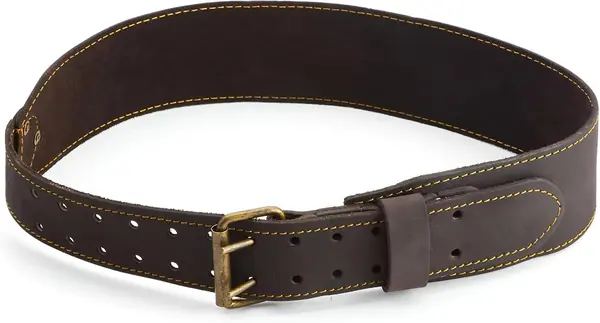
STRONGLAD Leather Tool Belt Best Value

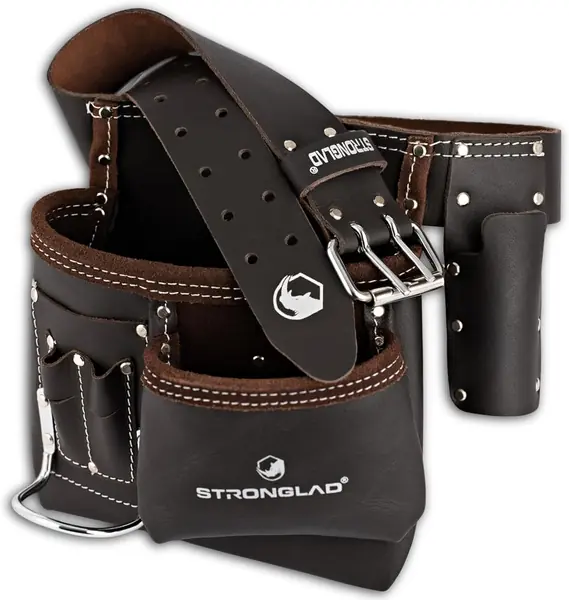
STRONGLAD dark brown oil-tanned leather tool belt with six-pocket pouch and buckle

DIY and repairs

Shop Score 92/100
Leather
Oil-tanned leather
Waist Range
29 to 46 inches
Pockets
6
Pouch Size
8 x 9 inches
View on Amazon

Six pockets, oil-tanned leather, and a strap that adjusts anywhere from a 29- to a 46-inch waist: this is the one purchase that gets a new woodworker working. A deep main pocket swallows a drill or a block plane, and around it sit a nail pocket, two pencil sleeves, and a flat slot sized for a utility knife. For the money, we think it is the easiest place to start on this page.

The build is honest. Rivets and reinforced stitching sit at the corners where a pouch tears first, and the oil tanning means the leather darkens and softens instead of cracking along the fold. What we noticed most is the adjustable strap: you cinch it over a t-shirt in July and over a flannel in January, which the fixed-size belts here simply cannot do.

The trade-off is scope. Six pockets cover home repair, trim, and light framing; this is not the rig for a carpenter hauling a full day of fasteners and a framing hammer, and if that is your work, the Occidental set below is the honest answer. For everyone else there is a lot of belt here.

Worth Noting

  • Buckle can work loose under a heavy load
Our Verdict

We point beginners and home woodworkers here: one purchase gets you a leather belt and six pockets with an adjustable strap that fits nearly any waist.

Check Latest Price
3.

Occidental Leather FatLip Tool Bag Set Best Premium Rig

Occidental Leather FatLip tool bag set in brown with belt, fastener bag and hammer holder

Production carpenters

Shop Score 91/100
Included
Fastener bag, tool bag, hammer holder, 3-inch belt
Bag Depth
10 inches
Set Weight
5.2 lb
Pockets And Holders
25
View on Amazon

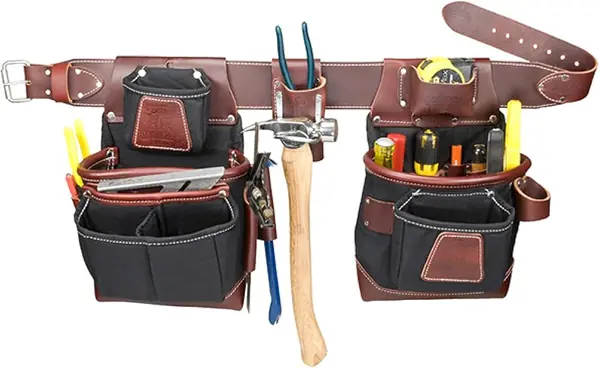
Twenty-five pockets and holders, ten-inch-deep bags, and five pounds on the scale before a single tool goes in. The FatLip is built for a carpenter carrying a full day's kit, and the bags hold their shape because they are two-ply padded with a full leather boot at the bottom. The riveted mouths stay open, so a handful of nails goes in without a look.

Everything hangs off the same three-inch Ranger belt we recommend on its own, which means the foundation is proven before you add weight. Copper rivets reinforce the main bags, and the holders are hand-specific: nails, squares, and nail sets on the left, hammer, pencils, and chisels on the right, exactly where your hands go without thinking about it.

What sold us is the shape retention. A bag that sags shut costs a second every time you reach for a chisel, and across a working day those seconds are the difference between finishing and not. Occidental builds this Pro series from top-grain hides tanned with oils and waxes for weather, and it is the small construction choices that separate a working rig from a bag with pockets sewn on.

It is the most expensive product here by a wide margin, and for full-time trade work the math works out across years rather than months. For weekend projects, buy the Ranger belt on its own and add the two pouches your work actually calls for.

Worth Noting

  • Snug tape holder barely fits a fat 25-foot tape
Our Verdict

We keep this set in mind for full-time carpenters: 25 holders on the Ranger belt, bags that stay open, and leather that takes years of daily wear.

Check Latest Price
4.

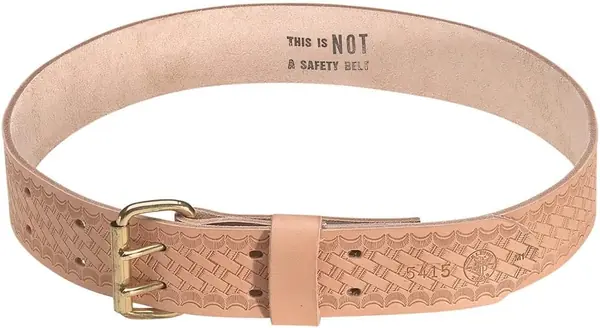
Klein Tools 5415 Embossed Tool Belt Best Budget Belt

Klein Tools tan leather work belt with basket-weave embossing and double-tongue buckle

First tool belt

Shop Score 90/100
Leather
Embossed heavy-duty leather
Belt Width
2 inches
Buckle
Double-tongue
Waist Range
36 to 44 inches
View on Amazon

Two tongues instead of one is the detail that makes this belt work. With a loaded pouch hanging off one hip, a single-prong buckle lets the belt rotate; the double-tongue holds it flat against you all day. The leather is thick, cut two inches wide, and embossed with a basket-weave pattern that hides the scuffs and glue drips a shop puts on everything.

We reach for this one when someone wants real leather and cannot justify the Occidental price. Klein has been at hand tools for more than 160 years, and the work belt has the dense, heavyweight feel of the premium straps here at a fraction of the cost.

It is a belt, not a rig, so it takes standard two-inch pouches, including Klein's own, and it slips through jeans loops on the days you want a tape, a square, and nothing else. Two inches of width is the limit worth knowing: for a few chisels and a hammer it is comfortable all morning, but a pouch loaded for framing wants more belt.

Worth Noting

  • Stated size range runs small in practice
Our Verdict

A budget belt we trust: thick embossed leather, a double-tongue buckle that stops pouch roll, and enough left over to buy the pouches.

Check Latest Price
5.

OX Tools 3-Inch Leather Tool Belt

OX Tools wide brown full-grain leather tool belt with riveted ends and buckle

Budget back support

Shop Score 88/100
Leather
Full-grain oil-tanned leather
Belt Width
3 inches
Size
Large
Construction
Perimeter stitching and rivets
View on Amazon

Three inches of full-grain, oil-tanned leather for roughly what the two-inch belts here cost. That is the pitch, and the belt backs it up: perimeter stitching runs the full length, rivets sit at the ends, and the leather is thick enough to stand up on its own before you have worn it once. We think it is the value pick for anyone who wants wide-belt support without paying Occidental prices.

The oil tanning is worth calling out. Instead of a dry finish that cracks where the belt folds, the leather drinks oil and darkens where your hands and pouches rub, so a plain-looking strap ends up looking like a tool you have used hard. The wide face spreads a loaded pouch across the hips rather than digging a line into one side, and that is the entire reason to go wide.

What you do not get is a rig. This is the belt alone, so pouches are a separate purchase, and good leather pouches are not cheap. Pair it with two pouches you choose yourself and you have a setup built around your work instead of someone else's pocket layout.

Worth Noting

  • Waist sizing falls short of the listed range
Our Verdict

Here is the budget route to a wide belt: three inches of full-grain leather that steadies a loaded pouch without the premium-leather outlay.

Check Latest Price
6.

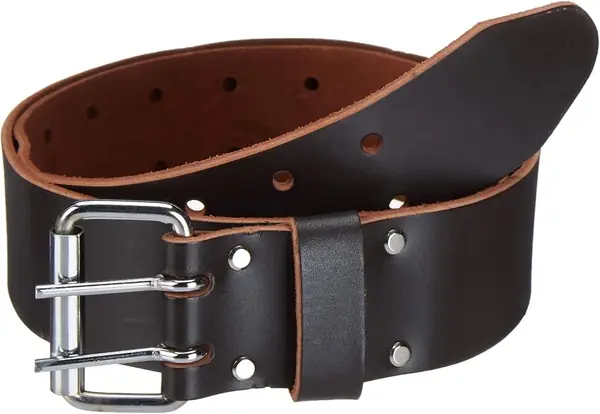
LAUTUS 2-Inch Leather Tool Belt Best for Light Duty Work

LAUTUS plain brown leather work belt with double-prong roller buckle

Light duty work

Shop Score 87/100
Leather
Top-grain leather
Belt Width
2 inches
Buckle
Double-prong roller
Waist Range
30 to 46 inches
View on Amazon

The least expensive leather belt on this page is also the plainest: a two-inch strap of top-grain leather, a double-prong roller buckle, and holes punched out to a 46-inch waist. No padding, no rivets, no embossing. If your pouches are light and the work is occasional, that is the whole job.

It does what it is built to do. The top grain starts firm and softens within a few days of wear, the second prong keeps the buckle from creeping, and at two inches wide it threads the loops on most standard pouches without an adapter.

We think of it as a second belt, the one that hangs in the garage next to the shop vac, rather than the one you wear forty hours a week. Keep the load to a tape, a square, a couple of chisels, and a pencil, and it stays comfortable and out of the way while you work.

Worth Noting

  • Can deform under a heavy pouch within weeks
  • Waists under 30 inches may need extra holes
Our Verdict

We recommend this belt for light and occasional work, where a plain two-inch leather strap is honestly all the job asks for.

Check Latest Price

How We Tested Leather Tool Belts

We started by pulling together leather belts and belt-and-pouch rigs that working tradespeople and weekend DIYers actually compare, then filtered the shortlist by width, leather grade, buckle style, waist range, and whether the belt came bare or loaded. That left us with 12 units to test over eight months.

We wore them through framing days, electrical rough-ins, drywall hangs, and weekend repair lists, over jeans and work pants. For sizing, we measured the stated waist range against a cloth tape over clothes, noted where the holes landed, and checked whether the tail stayed tucked when we bent, knelt, and climbed.

We weighed each rig empty and again with a full kit, then loaded every belt with a basic set of tools—hammer, tape, drivers, fasteners—hanging our own pouches on belt-only models and filling the built-in pockets on rigs. We compared wider and narrower belts under the same load, noting where the weight sat on the hips and whether the belt curled at the edges. Pockets got counted, measured, and filled until they sagged or held; we noted which ones swallowed tools and which buried them.

Buckles were checked under load: we crouched, climbed ladders, and twisted at the waist to see if the belt rolled, gaped, or came loose. We flexed the leather, noted thickness and stiffness, looked at edge stitching and rivets at stress points, and tracked pressure points and hot spots through the break-in period and full workdays. After eight months, we checked for stretched holes, cracked leather, pulled rivets, and hardware that had stopped sitting flat. We judged value on what each rig included relative to the others—not on which one looked like the best bargain, but on whether the leather and construction looked likely to outlast a season of real work.

How to Choose a Leather Tool Belt

Belt Only or Belt and Pouches

A belt alone lets you choose the pouch layout, and for woodworking that is usually the better call. Bench work, trim, and installs each want a different set of holders, and one deep pouch plus a tape holder often beats six built-in pockets. A rig makes sense when you want a single purchase and a layout you can see yourself using.

The trap is assuming a rig's pockets can be rearranged. Most ship with their bags fixed to the belt, so check the layout against the tools you actually reach for before you buy, because you will live with what is sewn on.

Two Inches or Three

Two-inch belts are lighter, easier to break in, and plenty for a tape, a square, and a couple of hand tools. Three-inch belts spread a loaded pouch across the hips and lower back, which is what you want when the pouch carries chisels, a hammer, and fasteners for hours at a stretch.

Width costs flexibility. A wide belt feels stiff for the first week and takes up more room at the waist, which matters if you work in a jacket or bibs. We lean toward three inches for anyone wearing the belt more than a few hours at a time and two inches for weekend and bench work.

Getting the Size Right

Measure your waist over the clothes you actually work in, a t-shirt in July and a flannel in January, and do not order your jeans size. Leather tool belts are cut to the waist they sit on, not the trouser waist, and several belts here run small against their stated ranges, so when you are between sizes, take the larger one.

If the belt is for one person in one season, a fixed-size belt is fine and cheaper. If you layer up through the year, an adjustable strap sized from roughly 29 to 46 inches removes the guesswork entirely.

Leather, Buckle, and Construction

Bridle and full-grain leathers are dense, take a break-in, and then hold their shape for years; suede is softer from day one and wears faster where it rubs. Look for stitching along both edges and rivets at the ends and stress points, since those are the places a cheap belt separates first.

Buckles matter more than they look. A double-tongue buckle keeps the belt from twisting when the weight hangs on one side, while a wide roller buckle is easier to snug one-handed with gloves on. A stiff belt out of the box is normal rather than a defect.

Pockets, Weight, and Pocket Depth

Every pocket you add is weight you carry. A full production rig runs about five pounds before a single tool goes in, and deep bags hold more but hide whatever sinks to the bottom. Hand-specific holders, with nails and squares on the left and hammer and chisels on the right, speed up a working day more than extra pockets do.

Comparing two rigs? Count the holders you will actually fill rather than the total pocket count. Twelve pockets you use beat twenty-five you don't.

Frequently Asked Questions

Final Verdict

If you carry tools most days, we recommend the Occidental Leather 3-Inch Ranger Work Belt. Three inches of bridle leather keeps loaded pouches flat, the roller buckle works with gloves on, and buying the belt alone means the pouches suit your work rather than someone else's pocket layout.

If you want everything in one purchase, the STRONGLAD rig covers a beginner's kit and adjusts to almost any waist. And for a first belt or a spare that lives in the garage, the Klein Tools 5415 gives you thick leather and a double-tongue buckle for budget money.