↑↓ navigate ↵ open Esc close All results →

Best Panel Clamps for Woodworking

A panel glue-up runs on a clock: a bead of glue, a row of boards, and roughly twenty minutes before the squeeze-out goes tacky, with the whole stack trying to slide into a parallelogram the entire time. Panel clamps are what hold it square. Bar clamps squeeze from two edges; four-way systems press from top, bottom, and both sides at once. We tested 12 clamps, sold both in pairs and in four-packs, through eight months of weekend glue-ups in a garage shop.

Clamping force is printed on the box and compared like horsepower, but a bar that bows under load tilts the jaws and cures a crown into your panel. Padded faces that don't dent softwood, and a handle you can work one-handed with glue on your fingers, matter just as much. And since most panels need more clamps than you own, cost per clamp counts as much as the price of the set.

The picks below cover everyday glue-ups, racking-prone panels, budget four-pack setups, and wide assemblies. None of them makes gluing up stress-free — they just keep the panel square while you reach for the next one.

Our Top Picks

The Best Panel Clamps for Woodworking

1.

Jorgensen 24-Inch Parallel Clamps Best Overall
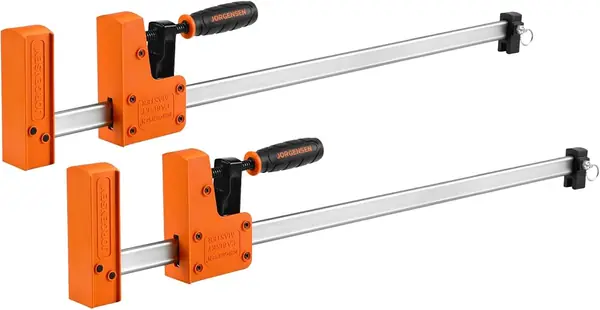
Jorgensen 24-inch orange steel parallel bar clamps two-pack with maple handles

Everyday panel glue-ups

Shop Score 95/100
Set Size
2 clamps
Clamping Force
1,500 lb
Opening Capacity
24 inches
Jaw Material
Steel
View on Amazon

A pair of 24-inch parallel clamps is our default panel-clamp purchase, and the Jorgensen set is the one we keep coming back to. The clamps arrive assembled, so there's no rail-building session before the first glue-up: lift the jaw, set it on the panel, and turn the maple handle. The 1,500-pound rating is more than we need for most cabinet and tabletop panels, and the steel jaws stay parallel as they tighten, which is the part that keeps seams from sliding out of alignment.

What we noticed in use is how planted they feel. The pair weighs 15 pounds, so it sits steady on a bench and stands up when you set it down, and the orange plastic on the jaws gives you a visible edge to line up against the panel. We also like that the head reverses to a spreader; it's not the reason to buy a panel clamp, but it saves a second tool when a cabinet box needs to be opened up. The 24-inch opening is the sweet spot for small to mid-size panels; for a wide tabletop, plan on two pairs or step up to longer bars.

The weight is part of why it stands so firmly, and we accept it for the stability it buys.

Worth Noting

  • Jaw lock can bind under heavy pressure
Our Verdict

We recommend the Jorgensen 24-inch pair as the default panel clamp: it is ready to use, pulls boards parallel, and offers the best balance of cost and everyday performance in this group.

Check Latest Price
2.

Peachtree 4-Way Panel Clamps Best 4-Way System

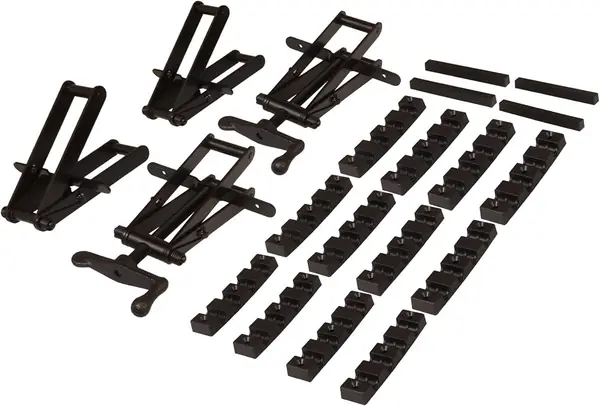
Peachtree black four-way panel clamps two-pack with plastic bars and screws

Racking-prone panels

Shop Score 90/100
Set Size
2 clamps
Rail System
2x2 lumber
Pressure Directions
Top, bottom, and sides
Maximum Stock Thickness
6 inches
View on Amazon

Racking is the reason a four-way panel clamp exists, and the Peachtree set is the one here that presses from the top, bottom, and both sides at once. A pair of ordinary bar clamps pulls the seam tight, but it can let one board climb over the other. The Peachtree bars lock the panel flat while the screws draw it together, which is exactly what we want on a tabletop or a wide cabinet side.

The system is clever because the clamp bodies attach to any length of 2x2 lumber with the included screws. That lets you build a clamp long enough for the panel instead of buying a fixed-length bar, and the four notches set the width capacity. It handles stock up to 6 inches thick, so it has room for laminations and thick aprons. We found the setup takes more thought than a parallel clamp: you need straight rails, and the clamps have to be squared before the glue goes on.

For a shop that regularly fights bowed panels, the four-way pressure is worth that extra preparation. We like the way the clamps stay put once the rails are set, and the 2x2 system lets us size the setup to the job instead of collecting several fixed bars. It is a specialty tool, not the first clamp we hand a beginner, but it solves a problem the straight bars cannot.

Worth Noting

  • Threads and handles can wear under hard use
Our Verdict

We reach for the Peachtree set when racking is the enemy: four-way pressure keeps a panel flat in a way ordinary bar clamps cannot.

Check Latest Price
3.

VEVOR 24-Inch Parallel Clamps Best Budget Set

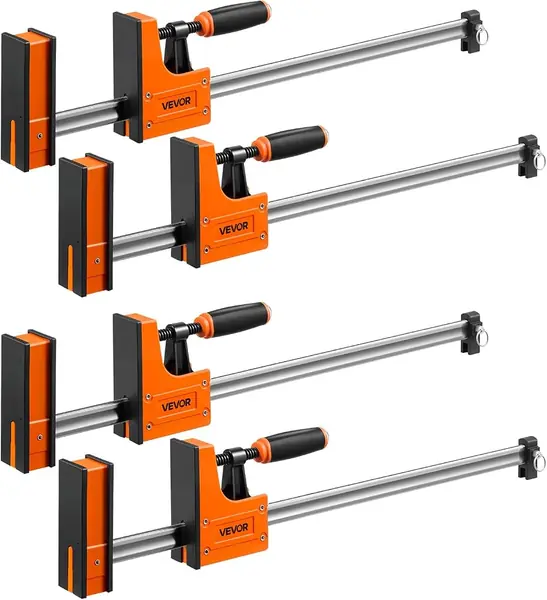
VEVOR orange and black 24-inch parallel bar clamps four-pack with rubber pads

Budget multi-clamp setups

Shop Score 89/100
Set Size
4 clamps
Clamping Force
1,500 lb
Opening Capacity
24 inches
Jaw Pads
Soft rubber
View on Amazon

Four 24-inch clamps in one box is the VEVOR set's argument, and it's a persuasive one for a shop that wants coverage across several seams without building a collection one pair at a time. The 1,500-pound rating matches the Jorgensen pair on paper, and the parallel faces and soft rubber pads are the right ingredients for panel work. What you get is a working set, not a boutique clamp.

We like the pads for softer woods because they spread contact and reduce dents, and the reversible jaws turn the clamps into spreaders for cabinet assembly. The handles are reinforced plastic rather than wood, which feels less refined in the hand but keeps the set easier on the budget. The 26.5-pound bundle is manageable to carry to a job, though four clamps at once take up bench space.

We check each clamp on scrap before a big glue-up and keep the best-feeling ones for the seam that matters most. That routine is worth having with any budget set, and it makes the VEVOR clamps predictable. If you need four usable clamps for occasional panels, this is the set we point to first.

Worth Noting

  • Some clamps need extra tightening on dense stock
Our Verdict

We like the VEVOR four-pack for budget-minded shops that need coverage across several seams without buying pairs one at a time.

Check Latest Price
4.

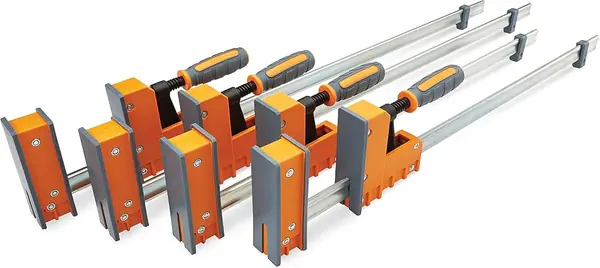
Bora Parallel Clamp Set Best for Wide Panel Assemblies

Bora orange parallel clamp set with four clamps and padded 3.5-inch jaws

Wide panel assemblies

Shop Score 88/100
Clamping Force
1,100 lb
Jaw Lock
Passive lock
Jaw Width
3.5 inches
Set Composition
2 x 24 in + 2 x 31 in
View on Amazon

The Bora set is the one here with a 3.5-inch jaw and both 24- and 31-inch bars, so it covers wider panels and spreads pressure across a broader face than the 24-inch pairs. The padded jaws are the detail we appreciate most: they sit flat on the workpiece and leave less of a mark than a narrow steel jaw. The passive-lock bottom jaw also holds position while you tighten, which makes one-handed positioning less of a fight.

The 1,100-pound rating is lower than the Jorgensen and VEVOR figures, but the wide jaw does more of the work on softwoods and wide glue-ups. The set is heavy, about 5 pounds per clamp, and the long bars can feel awkward when you're reaching across a tabletop. We like the ergonomic handle for controlled pressure; it's the kind of clamp that rewards a firm, even turn rather than a death grip.

For a shop that needs 31-inch reach and broad padded jaws, it earns a place. The 24-inch pair covers smaller panels, while the longer bars give you room to bridge a tabletop without stacking two clamps end to end. We treat it as the wide-panel specialist in this group, not the first set we hand a beginner.

Worth Noting

  • Clutch can slip or stick under load
Our Verdict

We see the Bora set as a premium choice for wide panels, with broad padded jaws and 31-inch reach that the 24-inch pairs cannot match.

Check Latest Price

How We Tested Panel Clamps Through Real Glue-Ups

We built the shortlist from spec sheets first, comparing opening capacity, jaw width, and set size, and noting whether each clamp was an edge-only bar clamp or a four-way rail system. Anything too short for the panels we actually build got dropped, and we worked out cost per clamp rather than cost per set so a four-pack wasn't rewarded for being big. That left 12 clamps, sold individually, in pairs, and in four-packs, which we put into rotation for eight months.

Testing happened during real glue-ups rather than on a bench rig: maple and walnut panels for a desk top, narrow door panels, and a bookcase side, some left to cure overnight and others checked twenty minutes in while the glue was still open. We assembled the rail-style system from 2x2 lumber and timed how long setup took alone, then loaded a panel and tightened it the way you would with glue on your hands.

At each glue-up we marked diagonals on the panel before tightening and measured them again after the clamps were snug, which is how racking shows up. We slid stock between the jaws to see whether the faces stayed parallel, cranked to full force and laid a straightedge along the bar to catch any bow, and checked softwood offcuts for dents left by the jaw pads. Grip got tested by tightening and releasing with one hand while the other held the panel in place.

The clamps stayed in rotation between projects so we could watch for the slow failures: threads galling or packing with dried glue, jaw locks and passive locks slipping after repeated cycles, pads compressing. We also counted how many clamps a 24-inch-wide panel actually needed before the seam closed, since that number, not the set price, is what a big glue-up really costs.

How to Choose Panel Clamps for Woodworking

Four-Way Pressure vs. Parallel Bar Clamps

A parallel bar clamp pulls from the edges. That is enough for many panel glue-ups, especially when you alternate clamps above and below the panel or add cauls. A four-way panel clamp adds pressure from the top and bottom as well, so it fights racking directly. We reach for the four-way system when a panel has a habit of bowing or when the stock is thick; we reach for parallel bar clamps when we want a clamp that also handles cabinet assembly and joinery.

The trade-off is setup. Four-way clamps need rails and a squaring step, while parallel bars are ready off the shelf. If you glue up panels occasionally, start with a pair of parallel bar clamps. If panel work is a steady part of your shop routine, the dedicated four-way set earns its space.

Capacity, Thickness, and Jaw Reach

Opening capacity is the distance between the jaws, not the length of the bar. A 24-inch clamp handles small and mid-size panels, but you want a few inches of adjustment left after the boards are in place; a clamp that is maxed out is hard to square and easy to knock over. For a wider tabletop, a 31-inch clamp gives you reach without joining bars. Check maximum stock thickness too: the Peachtree system takes boards up to 6 inches thick, which matters for laminations and thick aprons.

Jaw width is the other reach question. A 3.5-inch padded jaw spreads pressure across more surface than a narrow steel jaw, which helps on softwoods and wide glue-ups. If you work with thin panels, a narrower jaw can get into tighter spots. Match the jaw to the stock, not to the biggest number on the page.

Force, Jaws, and Flat Contact

Clamping force ratings here run from 1,100 to 2,200 pounds, but more force is not automatically better. A 1,100- to 1,500-pound clamp is enough for most cabinet and tabletop panels; the bigger risk is over-tightening and starving the joint or bowing thin stock. Parallel jaws matter more than the peak number because they keep the board faces aligned as the screw turns. Wide padded jaws add contact area and reduce dents.

We tighten until glue squeezes out evenly along the seam, then stop. If one end closes before the other, back off and check the clamp alignment or add a caul. A clamp with a high rating and a jaw that twists under load is less useful than a lower-rated clamp that stays flat.

Setup, Release, and Longevity

The jaw release is the part that separates a pleasant glue-up from a frantic one. Test every clamp on scrap before it goes near a glued panel: lift the jaw, slide it the full length, and tighten it until it just starts to load. A sticky jaw or clutch that slips is easier to deal with before the glue is open. Four-way systems add an assembly step, so build and square the rails first.

Keep steel bars clean and lightly waxed so glue squeeze-out does not bond to them. Avoid forcing a handle past its natural stop; threads and clutches are the wear points. With a little dry-run practice, even a budget set becomes predictable, and the clamps stay ready for the next panel.

Set Size and Cost per Clamp

A two-pack of long parallel bars is enough for a narrow panel, but four clamps give you room to spread pressure and keep a spare for a second glue-up. Compare the cost per usable clamp rather than the number on the box: a four-pack of shorter clamps can be the better value for small panels, while a two-pack of longer bars earns its price when reach matters. We prefer to add a clamp rather than stretch four across a wide tabletop.

Frequently Asked Questions

Final Verdict

For the widest range of panel glue-ups, the Jorgensen 24-inch pair is the set we recommend first. It arrives ready to use, pulls with 1,500 pounds of force, and its parallel steel jaws keep edges aligned without a rail-building project. That combination of ready-to-use convenience and steady pressure is what makes it the default here.

If racking is your recurring problem, the Peachtree four-way system is the better tool and worth the rail setup. For a budget-minded shop that needs four clamps, the VEVOR set covers more seams; the Bora set is the wide-panel specialist when 31-inch reach matters.