↑↓ navigate ↵ open Esc close All results →

Best Photochromic Safety Glasses of 2026

Moving constantly between a shaded shop and an outdoor sawhorse forces an awkward choice between carrying two pairs of glasses or squinting through glare. Photochromic safety lenses promise one frame that reads a tape measure indoors and darkens in sunlight, though weaker tints stall at a pale gray, frames fog when you look down, and windshield glass blocks the UV rays needed to trigger the shift.

Over six months wearing 14 ANSI-rated pairs on the miter saw, mower, bicycle, and evening drives, activation speed and maximum tint depth varied sharply. Because no photochromic safety lens replaces dedicated sunglasses under sustained midday glare, matching the darkening range to where you actually work matters more than catalog claims.

From slim everyday frames to full wraparound shields, the seven models ranked below stay optically crisp for close layout work and comfortable through a full day on the bench.

Our Top Picks

The Best Photochromic Safety Glasses

1.

UKNOW Photochromic Safety Glasses Best Overall
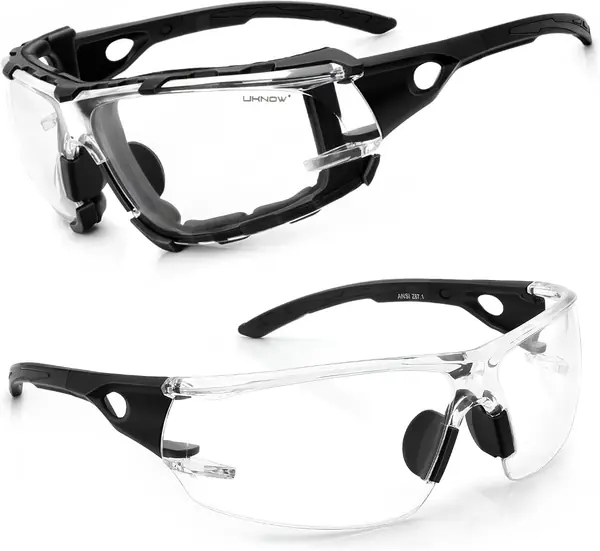
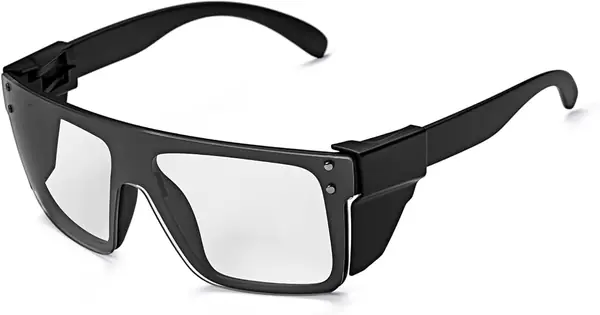
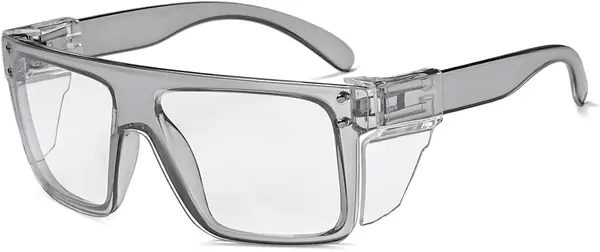
UKNOW photochromic safety glasses with black wraparound frame and removable foam gasket

Dusty woodshop work

Shop Score 84/100
Lens
Photochromic, scratch resistant
Impact Rating
ANSI Z87.1
Frame
Wraparound with removable foam gasket
Colors
Black, black with strap, pink
View on Amazon

The removable foam gasket is what earned these the top spot. It seals the gap between the wraparound lens and your cheekbones, which is exactly where sawdust and sanding grit get in, and it lifts out in a second when you head indoors and want air moving behind the lens. Rated ANSI Z87.1, and the lens coating shrugs off the small stuff that usually marks a pair in its first week.

What we appreciated most is how the lens handles both ends of a workday: near clear under fluorescent shop lights, then a solid gray within a minute or two of direct sun. Fit is the part to watch. The arms run snug, so if hats tend to be tight on you, order the version with the strap rather than hoping they stretch.

With the gasket in place, the inside of the lens fogs on a cold morning or when you're breathing hard behind a respirator, which is simply the price of a dust seal. Pull it out and the fogging stops along with the sealing. Most of our bench time is spent with the gasket out and the lens doing the work; it goes back in for routing, sanding and anything that fills the air.

Worth Noting

  • Tint stops short of true sunglass darkness
Our Verdict

We recommend the UKNOW as the best all-around pick: an ANSI Z87.1 wraparound that runs clear indoors and usefully gray outside, with a foam gasket you can pull out for dusty work.

Check Latest Price
2.

Global Vision Hercules 7 Best for All-Day Comfort

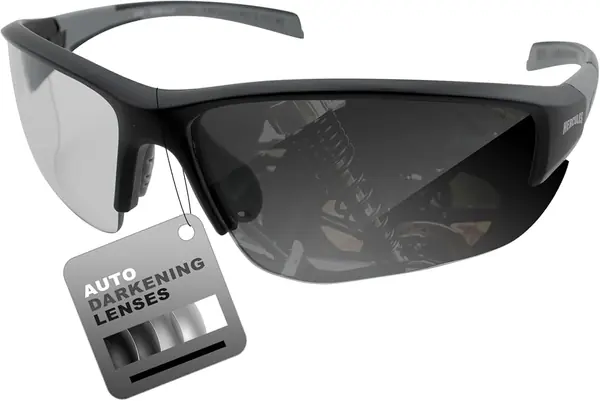
Global Vision Hercules 7 safety glasses with black frame and clear-to-smoke photochromic lens

Long days on site

Shop Score 83/100
Lens
Photochromic, clear to smoke
Impact Rating
ANSI Z87.1
Frame Colors
Black or white
View on Amazon

Safety glasses you forget about are the ones that stay on, and this is the pair we forget. Indoors the lens reads almost clear, with no gray wash over a pencil line or a measuring tape, and the rubber-tipped temples grip without squeezing, so nothing shifts when you tip your head down over a bench. That combination is why we rank the Hercules 7 as the most comfortable pair in this group.

Outside, the lens goes from clear to smoke. It's a real change, but not a dramatic one: expect a gray tint that takes a minute or two to build rather than a sudden flip to dark. On a bright morning at the bench or in the yard that's plenty; in hard noon sun you'll still want a cap. We think it's a fair trade for a lens this clean indoors.

It's one of the more expensive pairs here, and you can feel where the money went: clean optics, a finish that hasn't dulled, hinges that don't wander. Prescription wearers should assume these won't go over their glasses and plan on an over-the-glasses frame instead. For everyone else it's a well-built Z87.1 pair from a company that makes nothing but eyewear.

Worth Noting

  • Narrow frame pinches on wide heads
Our Verdict

We reach for the Hercules 7 when comfort decides whether the glasses stay on: a near-clear indoor lens, rubber-tipped temples that hold without squeezing, and ANSI Z87.1 protection.

Check Latest Price
3.

EYEGLAD REV Safety Glasses Best for Riding

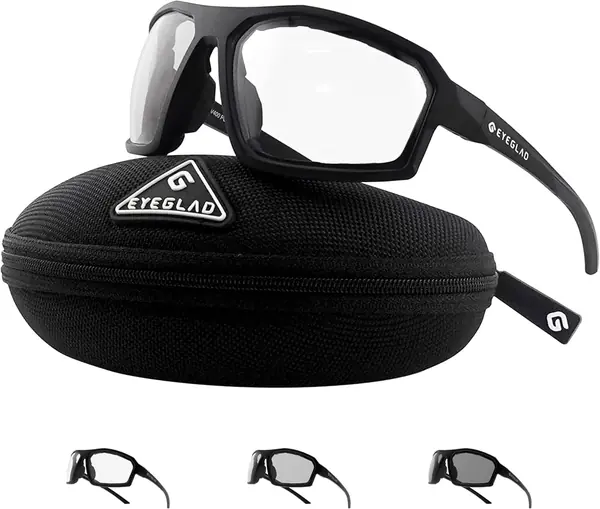
EYEGLAD REV wraparound motorcycle safety glasses in crystal black with photochromic shield lens

Motorcycle riding

Shop Score 82/100
Lens
Photochromic, UV400
Impact Rating
ANSI Z87+
Weight
1.06 oz
Frame Colors
Crystal black or cyber yellow
View on Amazon

One continuous shield, no separate lens rim, and a wrap that curls back past the temples: that shape is why the REV works at speed where an ordinary safety glass doesn't. The shield keeps wind and grit off the whole eye socket, and the arms sit far enough apart that a wide head fits without the pressure a narrower frame puts on your temples.

What we like best is how quickly it keeps up. Tree cover, tunnels and low winter sun all get handled before your eyes finish adjusting, which is the entire reason to pay for a photochromic lens on a bike. It does top out short of a true sunglass tint, so on a cloudless noon the shield reads dark gray rather than black.

It's the most expensive pair in the group, by a margin you'll notice. One shield instead of a clear pair plus a tinted pair is the counterargument, and for anyone riding most days that math works out. Weigh that against the price before you decide.

Worth Noting

  • Shield fogs when stopped in cold weather
Our Verdict

We hand the riding pick to the REV: one wraparound shield that keeps wind and grit out, a light frame that sits well under a helmet, and ANSI Z87+ impact protection.

Check Latest Price
4.

BINGKING Photochromic Safety Glasses Best Looking

BINGKING photochromic safety glasses with black sporty frame and light-to-dark gray lens

Everyday yard work

Shop Score 81/100
Lens
Photochromic, UV400, light to dark gray
Impact Rating
ANSI Z87
Frame
Large sport wrap
Colors
Seven frame options
View on Amazon

Most safety glasses announce themselves. These don't. The frame is a sporty wrap with a light-to-dark gray lens that reads as ordinary sunglasses at the lumber yard or the hardware store, and that small thing is why a pair like this gets worn instead of left on the dash.

The photochromic layer is real, and it does its best work in direct sun: step outside on a bright morning and the gray comes up, then fades back to near clear once you're under the shop lights again. On a flat, overcast day you'll see a hint of tint and not much else, which is the nature of the chemistry rather than a fault in this pair.

The sides sit wider open than the wraps here, so grit can reach your eyes from an angle a close-fitting frame would block; we keep these for yard work, errands and driving rather than grinding. What they do better than anything else in this group is pass as normal eyewear, and nobody at the counter assumes you're mid-shift.

Worth Noting

  • Tint reaches only a medium gray
Our Verdict

We like the BINGKING for anyone who refuses to wear something that looks like safety gear: a sporty wrap, ANSI Z87 impact-rated lenses, and UV400 filtering for a day outdoors.

Check Latest Price
5.

YIMI Polarized Photochromic Sunglasses Best for Driving and Dusk Glare

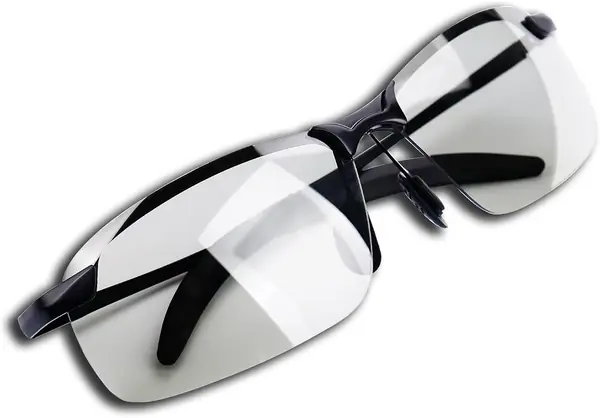
YIMI black-frame polarized photochromic driving sunglasses with a slim wrap lens

Driving and dusk glare

Shop Score 80/100
Lens
Polarized photochromic
Impact Rating
Z87
Options
Six frame and lens combinations
Weight
2.82 oz
View on Amazon

We keep a pair of these in the car, because nothing else here handles road glare for the money. The lens is polarized, so wet pavement and oncoming headlights flatten out instead of blooming, and it stays close to clear indoors and at dusk, which is what makes a driving pair like this work for a commute that runs past sunset.

The frame is slim, with narrower side coverage than the wraps here, and it doesn't sit over prescription glasses, so treat this as a driving pair rather than a shop pair. Where it earns its keep is low evening sun and wet roads, the hours when a clear lens is useless and a dark one is too much.

The lens itself is on the soft side, so fine scratches show up with ordinary handling and a case is worth the small hassle. We still reach for them when the sun drops.

Worth Noting

  • Barely darkens past a light tint
Our Verdict

We keep the YIMI in the car: polarized, photochromic and the least expensive pair here, as long as you want a light tint rather than deep sunglass darkness.

Check Latest Price
6.

BEASVFE Photochromic Safety Glasses

BEASVFE photochromic safety glasses with gray shield lens and matte wrap frame

Shop-to-street wear

Shop Score 79/100
Lens
Photochromic, clear to smoke, blue light blocking
Impact Rating
ANSI Z87.1
Frame
Gray shield wrap
Options
Ten color and lens combinations
View on Amazon

A single gray shield, a long list of frame and lens colors, and a blue-light filter: this is the pair in the group built for someone who wants protective eyewear that doesn't look clinical. The clear-to-smoke lens handles the walk from the bench to the truck and back, and the wrap keeps chips out of the corners of your eyes.

Indoors it's essentially clear, which is what you want when you're reading a pencil line. Outside, the smoke builds over a minute or so of direct sun and fades again when you step back in, and the change is smooth rather than abrupt.

Blue-light filtering is the add-on. We treat it as a mild convenience for evening sessions under a bright bench light, not a reason to buy on its own. The build is the better argument: solid hinges, a frame that feels made rather than molded, and a finish that hasn't dulled with use.

Our read: a good-looking, well-built Z87.1 pair for weekend projects and errands. Check the tint in direct sun the day it arrives, because a photochromic lens that stays clear is only doing half its job, and returning early is easier than living with it.

Worth Noting

  • Costs more than our top pick
Our Verdict

We like the BEASVFE for shop-to-sidewalk wear: a gray shield lens with blue-light filtering, a sturdy Z87.1 build, and styling that doesn't look borrowed from a lab.

Check Latest Price
7.

Awdchny Photochromic Safety Glasses Best for Cycling and Yard Work

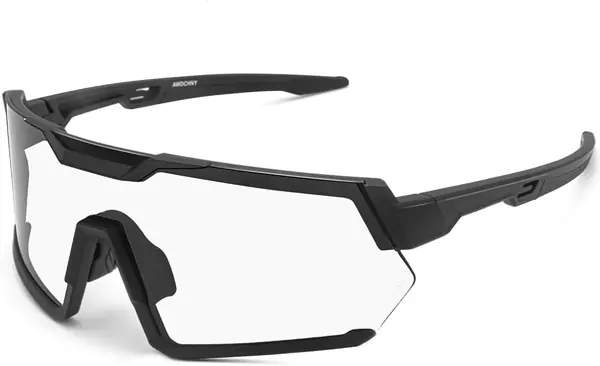
Awdchny photochromic safety glasses with matte black TR90 frame and gray lens

Cycling and yard work

Shop Score 78/100
Lens
Photochromic, UV400
Impact Rating
ANSI Z87
Frame
TR90 nylon
Options
Seven color combinations
View on Amazon

TR90 is a flexible nylon-family plastic, and it's why this frame gives instead of digging in at your temples, the difference you notice on a bike or a run when a rigid frame starts to bounce. UV400 protection and an ANSI Z87 rating cover the safety side.

The lens does the usual clear-indoors, gray-outdoors routine, and it needs direct sun to move: under a tree or behind a visor it stays near clear, and the change builds rather than snapping. Seven frame-and-lens combinations mean you can pick the color you'll actually wear.

Where it fits best is the bike bag and the mower shed: light on the face, rated for impact, and not so expensive that a scratch is a tragedy. We'd reach for it before a bare clear lens every time.

Worth Noting

  • Tint lands mid-gray rather than dark
Our Verdict

We treat the Awdchny as the sporty spare: a flexible TR90 frame, ANSI Z87 lenses with UV400 protection, and seven colorways at a middle-of-the-pack price.

Check Latest Price

How We Tested Photochromic Safety Glasses

We began with dozens of listings, dropped everything without a stated ANSI Z87 or Z87.1 impact rating, then sorted the rest by UV400 coverage, claimed tint depth, frame shape, and price. We bought 14 pairs, from slim frames that pass as ordinary eyeglasses to full wraparound shields, and wore them for six months in a woodshop, on the mower, on a bike, under a motorcycle helmet, and behind the wheel at dusk.

Transition came first. Each pair went outside at midday, and we timed how long the lens took to darken, how deep the tint actually went, and how long it took to clear back inside the shop. We also held them behind a windshield and a helmet visor to see how much darkening was lost. Clarity we checked by reading a tape measure and fine print indoors and hunting for distortion at the edges of the wrap.

Fit and comfort got a full workday. Two testers have wide heads and two wear prescription glasses underneath, so we logged pressure behind the ears, whether the arms pinched over a prescription temple, and how the nose piece felt by hour eight. Anyone who fogged up during a two-hour sanding session got marked down, and we pulled out the foam gasket to see whether airflow improved.

Over the months, pairs rode loose in a tool bag and got wiped with a shop rag, and we noted where the lenses hazed or scratched. We wore them into a coffee shop and a hardware store to see whether they read as safety gear or ordinary glasses, drove into a low sun to judge polarization against wet pavement, and checked a dashboard screen to be sure the tint wasn't blacking it out. All of it was weighed against price.

How to Choose Photochromic Safety Glasses

Start With the Impact Rating

ANSI Z87.1 is the mark to look for on the frame or lens, and Z87+ denotes the higher-velocity impact rating. Every pair we recommend carries one of those marks. What the mark doesn't tell you is coverage: a slim rated frame protects the front of the eye and very little else, while a wraparound adds the sides. For grinding, routing and anything that throws debris at an angle, we want the wrap.

How Dark They Actually Get

Photochromic lenses react to ultraviolet light, not to brightness, and that single fact explains most of the disappointment in this category. Outside on a sunny day the lens works; behind a car windshield, a helmet visor or shop glass it barely changes, because the glass is already absorbing the UV that drives the reaction. A transition lens also builds its tint over a minute or two and tops out lighter than a dedicated sunglass.

Choose by where you spend the day. If you move between a dim bench and a bright yard, a mid-range tint is exactly right and far handier than swapping pairs. If you face hours of fixed, hard sun, plan on real sunglasses for that stretch and keep the photochromic pair for everything else.

Fit, Coverage and Fogging

Three fit decisions shape daily comfort. Frame width decides whether the arms press; if hats always fit you tight, start with a wider wrap or a strap version. A foam gasket seals the gap at the cheekbones against dust, but it also traps warm air behind the lens, which is what fogs a pair on a cold morning, so removable is the feature to look for and we take ours out for anything but heavy dust. And if you wear prescription glasses, assume you need a frame sold specifically as over-the-glasses; the slim wraps here have no room for a second set of temples.

Polarized or Not

Polarization is worth paying for in a driving pair. It cuts the flat glare coming off wet pavement and the bloom around oncoming headlights, and it does that without making the lens any darker, so it stacks neatly with a photochromic layer. Not every safety lens here is polarized. If glare is your main complaint rather than brightness, check for it before you buy; if your problem is sawdust and chips at the bench, spend the money on coverage and a gasket instead.

Frequently Asked Questions

Final Verdict

We recommend the UKNOW photochromic safety glasses for most buyers: ANSI Z87.1 coverage, a foam gasket that seals out dust and comes out when you don't need it, and a lens that goes clear under shop lights and usefully gray in the yard. It's the pair that handles a mixed day without asking you to think about it.

If comfort decides whether the glasses ever come out of the case, the Global Vision Hercules 7 is the easier wear. If most of your hours are spent at speed, the EYEGLAD REV's wrap shield is worth the step up in price.