↑↓ navigate ↵ open Esc close All results →

Best Pocket Hole Screws of 2026

Pocket-hole joinery can make a beginner look like a cabinetmaker — until a screw strips its head halfway in or splits a board that a finer thread would have handled without complaint. The jig gets the credit, but the screw does the quiet work, pulling the head flush into the pocket and clamping two boards together while the glue sets.

We drove 16 packs of them through six months of shop projects — cabinets, a plywood bookcase, a side table, a cedar bench that lives outdoors — and the differences showed up within a few boards. What first-time buyers get wrong most often isn't the brand; it's thread and length. Coarse threads bite into softwood and plywood, fine threads are for oak and maple, and a screw sized wrong for your stock breaks through the face.

Our picks cover bulk boxes for a long run of cabinets, fine threads for hardwoods, coated screws for anything that sits outside, and organized multi-size kits for people who'd rather not keep five loose boxes on a shelf. Every one of them drove clean, sat flush, and cost something we could justify per screw.

Our Top Picks

The Best Pocket Hole Screws

1.

Kreg Zinc Pocket-Hole Screws SML-C125-100 Best Overall
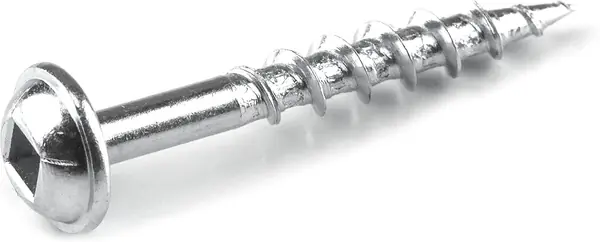
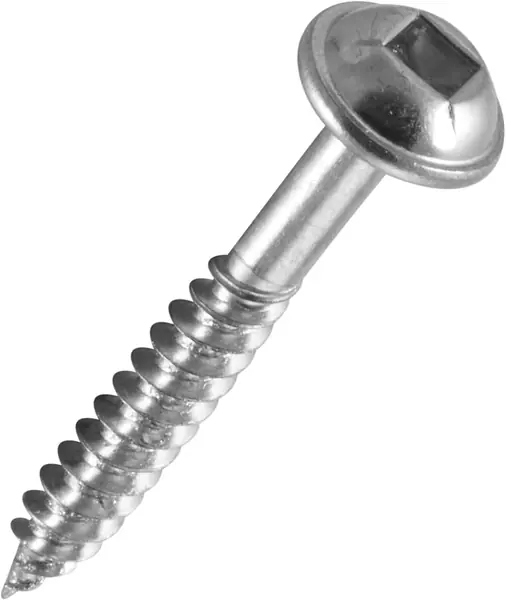
Kreg SML-C125-100 zinc pocket-hole screws, coarse thread, 100-count box

3/4-inch stock

Shop Score 96/100
Pack Count
100
Thread
Coarse
Screw Size
#8 x 1-1/4 inches
Head And Drive
Maxi-Loc washer head, square drive
View on Amazon

A hundred screws in a single length looks like thin value next to the 600-count boxes further down this list. Then you drive a few of each, and the arithmetic changes: Kreg cuts this screw around its own pocket geometry, with a Maxi-Loc washer head that lands flat on the pocket's bottom and a Type 17 auger point that starts biting without a pilot hole. The joint pulls tight because the screw and the jig were designed together, not because you got lucky with the clutch.

That fit is why these are our default. The square recess is deep enough to keep the bit engaged through the last quarter turn — the moment where a cheaper screw cams out and rounds its own head — and the shank is deliberately heavier than a hardware-store wood screw, so it takes driver torque instead of shearing. The steel is case-hardened, and the coarse thread pulls plywood and softwood closed without the splitting a generic screw can cause when the clutch is set high.

Thread is the other thing to know: this is the coarse screw, correct for plywood, particleboard and softwood, and not the one for oak. Kreg's fine-thread version covers that, and if your work is mostly hardwood, the Trend box below is the better buy. For cabinets, shop furniture and the 3/4-inch stock most of us build with, coarse is simply the right call — keep a small box of fine thread on the shelf for the oak.

Worth Noting

  • Costs more per screw than bulk boxes
Our Verdict

Our default: the Kreg geometry seats and holds in 3/4-inch stock, and a 100-count box is the least fussy way to get a joint that behaves.

Check Latest Price
2.

LIONMAX Pocket Hole Screws, 600 Pieces Best Value

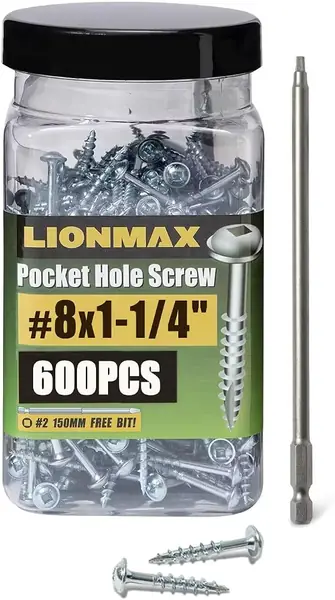
LIONMAX 600-piece #8 x 1-1/4-inch pocket hole screws with square drive bit

Bulk indoor builds

Shop Score 95/100
Pack Count
600
Thread
Coarse
Screw Size
#8 x 1-1/4 inches
Included
150mm square drive bit
View on Amazon

Six hundred screws in one length, a 150mm square-drive bit in the box, and a compartmented container with the size on the lid: this is pocket-hole joinery bought the way a shop buys fasteners, by the gross rather than the dozen.

We keep a box in this shape for volume work, and the appeal is that nothing about it needs thinking about. Coarse thread and a self-tapping tip are the right combination for plywood and softwood, the washer head bears on the pocket bottom instead of pulling through, and the square drive is cut deep enough to hold the bit. It is not a clever screw. It is a correct one, 600 times over, which is exactly what a run of cabinet boxes asks for.

What it isn't is an oak screw — fine thread is the right answer in dense hardwood, and this box is coarse through and through. What it is, beyond the count, is complete: the included 150mm bit is a genuine square-drive driver rather than a filler item, and having it in the box saves an order on day one.

Worth Noting

  • One length and one finish per box
Our Verdict

We buy these by the box for cabinet runs: 600 coarse-thread screws, a usable long bit, and no mid-build trips for fasteners.

Check Latest Price
3.

Milescraft 5200 Pocket Screw Kit Best Kit

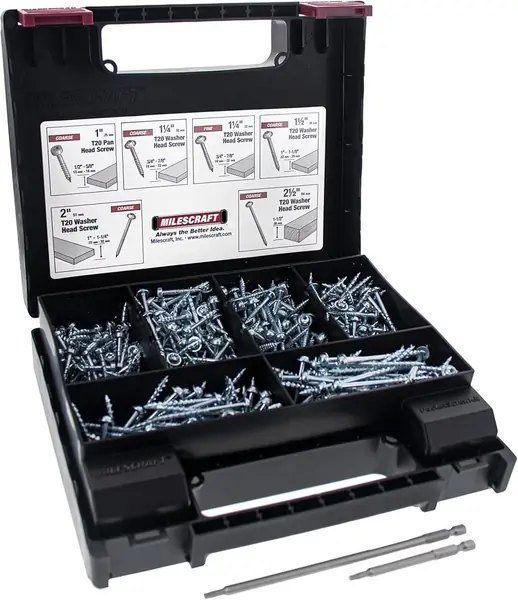
Milescraft 5200 pocket screw kit with 700 T20 screws and molded plastic case

Mixed-size projects

Shop Score 94/100
Pack Count
700
Included
3-inch and 6-inch T20 drivers
Screw Sizes
1, 1-1/4, 1-1/2, and 2 inches
Drive
T20 Torx
View on Amazon

The case does half the teaching. Open the Milescraft kit and the screws are sorted by job — 1-inch pan heads, 1-1/4-inch washer heads in both coarse and fine thread, then 1-1/2-inch and 2-inch washer heads — each in its own bay under a selection chart printed on the lid.

Milescraft builds the drive around T20 Torx rather than the square drive most jigs use, and there's a real argument for it: a star bit engages six flanks instead of four corners and takes more torque before it cams out. Two drivers come in the case, a short one and a 6-inch one, and the long one matters — it keeps the chuck clear of the jig body while you drive.

As a first kit we think it earns its place: the assortment ends the which-length guessing, and the coarse-and-fine split lets one case cover pine drawers and an oak face frame. The one thing to watch is shear — in dense stock a screw that bottoms out can snap, so keep the clutch low and drill a fresh pocket rather than forcing one home.

Worth Noting

  • Only 75 to 150 screws per type
Our Verdict

We hand this case to anyone who just bought a jig: five screw types, two T20 drivers, and a chart that ends the size guessing.

Check Latest Price
4.

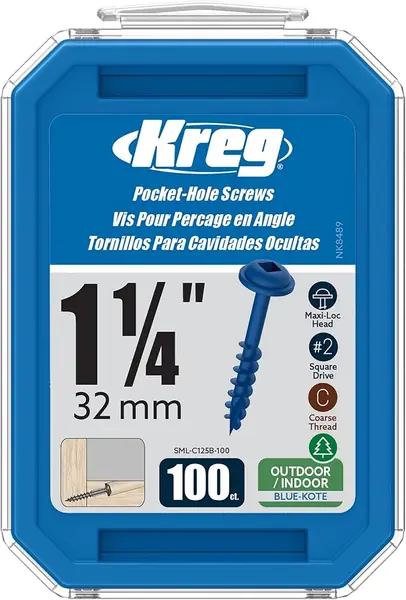
Kreg Blue-Kote Pocket-Hole Screws SML-C125B-100 Best for Exterior Work

Kreg Blue-Kote 1-1/4-inch pocket-hole screws, 100-count box, blue finish

Outdoor projects

Shop Score 93/100
Pack Count
100
Thread
Coarse
Screw Size
#8 x 1-1/4 inches
Finish
Blue-Kote
View on Amazon

A bench that lives outdoors is where plain zinc starts to show its limits — not in strength, in finish. The Blue-Kote version is the same 1-1/4-inch coarse screw as our top pick, with a coating meant to hold up when the joint sees damp.

That sameness is the appeal. Nothing changes at the jig: Maxi-Loc head, square drive, auger point, the same seating and the same pull. The coating is the only variable, which is how an upgrade to a consumable ought to work — you aren't relearning a joint, you're paying a little more for the same joint in a wetter place. Indoors, where the joint stays dry, the plain zinc box is the smarter buy.

For a garden bench, a planter-box frame or a shed shelf, that's the whole argument, and it's a good one. Just buy for the project rather than the weekend: 100 screws goes quickly on anything larger than a single piece.

Worth Noting

  • Costs more than the plain zinc version
Our Verdict

For a bench or planter frame that stays outdoors, we take the Blue-Kote over plain zinc: same joint, more corrosion protection.

Check Latest Price
5.

Trend Pocket Hole Screws for Hardwoods PH/7X30/500 Best for Hardwoods

Trend PH/7X30/500 fine-thread pocket hole screws, zinc plated, 500-pack

Oak and maple

Shop Score 91/100
Pack Count
500
Thread
Fine, self-cutting
Screw Size
#7 x 1-1/4 inches
Drive
No. 2 Robertson square
View on Amazon

Hardwood is where pocket-hole joints get fussy. A coarse thread tears at oak instead of biting it cleanly, and the torque it takes to close the joint finds every weak point in the screw. Trend's answer is a No. 7 gauge screw with a fine, self-cutting thread, a small parallel head with a square shoulder, and a No. 2 Robertson drive.

The 500-count box tells you who this is for: a shop that builds in oak, maple, cherry or walnut and doesn't want to reorder mid-project. We like the fine thread for what it does in dense stock — it cuts its way in rather than wedging the grain apart — and the square shoulder seats against the pocket bottom so the head isn't doing the locating.

What it isn't is an all-purpose box. Fine thread can spin and strip in plywood and softwood before the joint pulls shut, so the coarse screws elsewhere on this list are the ones for pine and ply. Buy it because your material is hard, and the quantity works in your favor: 500 at 1-1/4 inches covers a full set of cabinet doors without a second order.

Worth Noting

  • 500-screw commitment in a single length
Our Verdict

For oak, maple and cherry we reach for the fine thread: 500 screws cut for dense stock instead of softwood.

Check Latest Price
6.

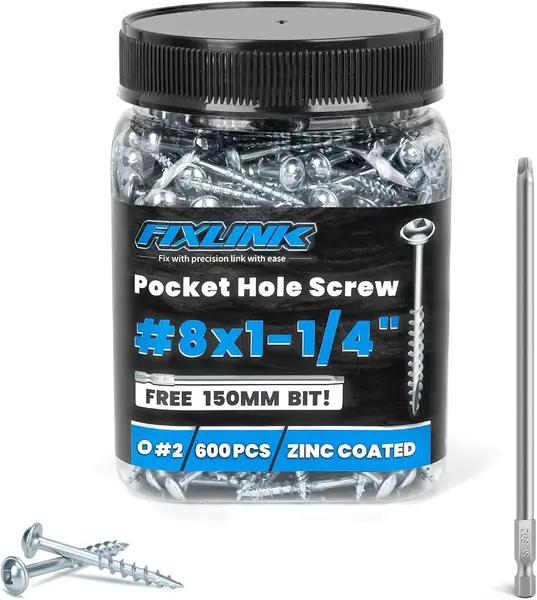
FIXLINK Pocket Hole Screws, 600 Pieces Best for Bulk Plywood Work

FIXLINK 600-piece #8 x 1-1/4-inch zinc pocket hole screws and driver bit

Bulk plywood work

Shop Score 90/100
Pack Count
600
Thread
Coarse
Screw Size
#8 x 1-1/4 inches
Included
150mm square drive bit
View on Amazon

Driving these is uneventful, which is the compliment that matters for a pocket screw: the washer head lands on the pocket bottom, the coarse thread bites and pulls, and the deep square drive keeps the bit from skating when you lean on the driver.

The proposition is the same as our value pick — 600 screws in 1-1/4 inches, coarse thread, zinc, with a 150mm square-drive bit in the box — so the choice between them comes down to stock and price on the day rather than anything you'd notice at the jig. Both are the right screw for 3/4-inch plywood and softwood, and neither asks you to change your setup.

The included bit is a starter item, and it's worth keeping a spare square-drive bit on the shelf — a worn bit rounds heads far more often than a screw fails on its own. Beyond that there's little to think about here: coarse thread, 1-1/4 inches, and 600 of them is the shape of a good working box.

Worth Noting

  • Single length, indoor zinc only
Our Verdict

A solid second bulk box: 600 coarse screws that grip plywood and drive clean, with a long bit included.

Check Latest Price
7.

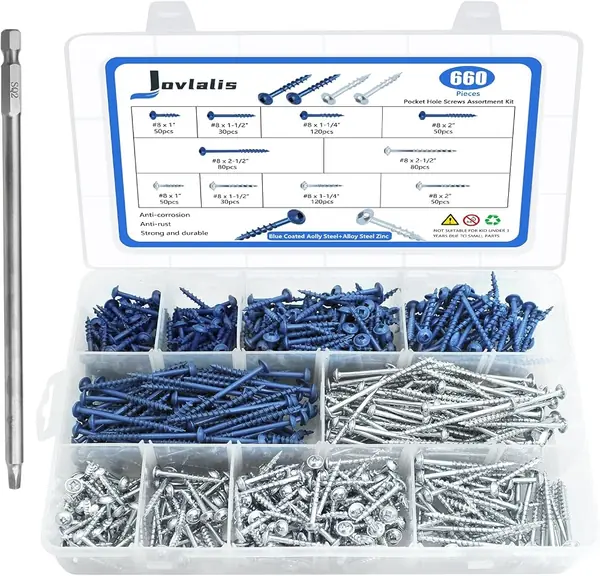
Jovlalis Pocket Hole Screws, 660 Pieces Best for Mixed Stock Thicknesses

Jovlalis 660-piece pocket hole screw assortment in a labeled storage case

Mixed stock thicknesses

Shop Score 88/100
Pack Count
660
Thread
Coarse
Screw Sizes
1, 1-1/4, 1-1/2, 2, and 2-1/2 inches
Coating
Blue and zinc
View on Amazon

Five lengths from 1 inch to 2-1/2 inches in one case, with 240 of the 660 screws in the 1-1/4-inch size: that's the shape of a kit built for someone who doesn't yet know which thickness their next project will use.

The coatings are split as well — blue for pieces that might see damp, zinc for everything indoors — and the case has thickened dividers and printed labels so you can pull a length without unpacking the rest. We like that the sizes follow the material chart rather than clustering at the short end; there's a 2-1/2-inch screw here for 1-1/2-inch stock, which the smaller kits in this guide skip entirely.

What you give up is economy. This is the most expensive way here to buy 600-odd screws at once, and the lengths you use least are the ones you're paying to have on hand. Buy it to end the do-I-have-the-right-length question before it starts — a shop-equipping purchase, not a single-job one.

Worth Noting

  • Most expensive way here to buy roughly 600 screws
  • Includes some screw lengths you may rarely use
Our Verdict

For a shop that builds in several stock thicknesses, this case answers the length question before you open the jig.

Check Latest Price
8.

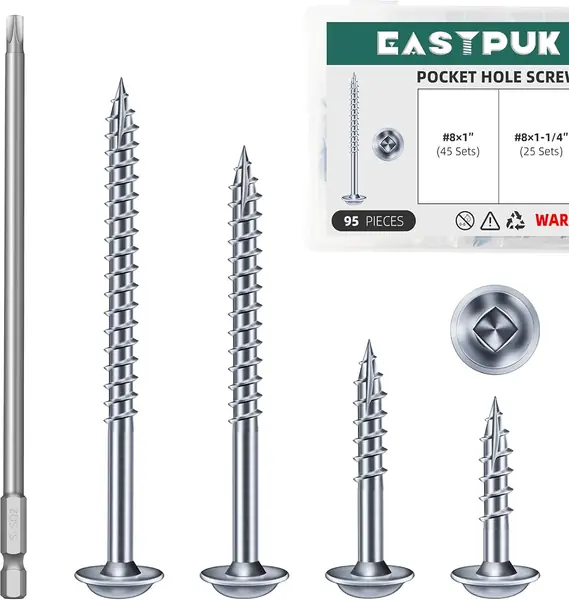
EASTPUK Pocket Hole Screws Assortment Kit Best for First Jig Projects

EASTPUK 95-piece pocket hole screw assortment with 150mm magnetic driver bit

First jig projects

Shop Score 86/100
Pack Count
95
Thread
Coarse
Included
150mm magnetic driver bit
Screw Sizes
1, 1-1/4, 2, and 2-1/2 inches
View on Amazon

Ninety-five screws is not a project; it's an answer to the first weekend with a new jig. Four lengths — 45 at 1 inch, 25 at 1-1/4, 15 at 2, and 10 at 2-1/2 — plus a magnetic 150mm driver bit, and you can find out how pocket-hole joinery behaves without clearing shelf space for 600 screws.

The recipe is the standard one — zinc-plated alloy steel, square drive, washer head, self-tapping tip — so nothing about driving these will surprise you after the first joint. What we noticed is the weighting: 70 of the 95 are the 1-inch and 1-1/4-inch lengths that 1/2-inch and 3/4-inch stock actually take, with a handful of long ones for the odd thick piece.

Treat it as a sampler rather than a supply — enough to learn the technique, set your clutch, and find out which length your material wants before you buy 600 of anything. The magnetic bit alone is worth having as a spare.

Worth Noting

  • As few as 10 screws per length
Our Verdict

For the first weekend with a new jig, we like this sampler: four lengths, a magnetic bit, and no big commitment.

Check Latest Price

How We Tested Pocket-Hole Screws

We started with the jig already clamped to the bench, a fresh bit and collar, and a pile of scrap. From there we sorted the field by the things that change a joint — thread type, length options, head and drive style, corrosion coating, and cost per screw — and dropped any listing that wouldn't say plainly what it was selling. Sixteen packs made the cut, and we spent six months driving them into cabinets, a plywood bookcase, a side table, and that cedar bench.

Every screw went in on the same jig at the same clutch setting, into softwood, plywood, and scrap oak and maple, while we watched for the three failures that ruin a joint: a head that cams out and strips, a shank that snaps at the shoulder, and a washer head that won't sit flush in the pocket. We checked each driver bit against its screws for wobble in the fit, and whether the shaft was long enough to reach a pocket at an angle without the chuck rubbing the workpiece. The multi-size kits got opened, sorted, and carried around until we knew whether we could read the size labels with sawdust on our hands.

Coated screws spent weeks outdoors on the bench and a stretch sitting in a tray of water, and we checked heads and threads for rust afterward. We divided pack price by count for a true cost per screw, then counted how many we wasted on stripped heads. One rule we never bent: these joints stayed in furniture and cabinetry, never in framing, rated connectors, or anything touching soil.

How to Choose Pocket Hole Screws

Match the Length to the Stock

Length is a lookup, not a guess: 1/2-inch material takes a 1-inch screw, 3/4-inch takes 1-1/4 inches, 1-inch stock takes 1-1/2 inches, and 1-1/2-inch stock takes 2-1/2 inches. Buy for the material you build with most and add a small pack of the next size up rather than a second big box.

The trap is a screw that's too long, because it breaks through the show face of the joint and no amount of sanding fixes that. Hold the screw against the outside of the assembly before you drive the first one; if the tip reaches the far surface, you have the wrong length.

Coarse Thread or Fine

Coarse threads are for softwood, plywood, particleboard and MDF, where the thread needs to grab without tearing the material. Fine threads are for hardwoods like oak, maple, cherry and walnut, where a coarse screw wedges the grain apart instead of cutting it.

The usual mistake is buying a big box of coarse pocket screws because the price per screw is unbeatable, then fighting tear-out and stripped heads in hardwood. If your work crosses both, buy both — the second box costs far less than the project it saves.

Head, Shoulder and Drive

What separates a pocket screw from an ordinary wood screw is the head: a washer or Maxi-Loc head with a flat underside that seats on the flat bottom of the pocket and resists overdriving, plus a self-tapping tip that starts without a pilot hole. A screw without that shoulder will pull into the pocket and take the joint with it.

Square drive is the default because four deep flanks take torque without cam-out; Torx does the same job on six flanks and, in the Milescraft kit here, makes a good case for itself. Either works. Both beat a Phillips in a pocket, where a cam-out means a re-drilled hole.

Coatings, Indoors and Out

Zinc is the indoor default and plenty for shop cabinets and furniture. For anything that sees weather, choose a coated screw — Blue-Kote, Protec-Kote or a ceramic finish — and treat that coating as weather protection rather than a rating for soil contact; if a joint sits in dirt or in lumber that never dries, ask the maker for the rating before you build.

One coating note that surprises people: a coated screw is still a carbon-steel screw, so it does nothing about the corrosion that treated lumber can drive. Match the fastener to the exposure first, then to the material.

Kit or Single Length

An assortment is how you learn the sizes: one case with four or five lengths, a chart on the lid, and no guessing when a joint comes out thicker than planned. A single-length box is how you finish a run of cabinets. Buy the kit first, then buy bulk in whatever length you keep running out of.

The trap in kits is spread. A 700-piece case sounds like a lifetime supply until you need 300 of one length for a casing job and find a single bay holding 150. Check the per-size counts before you plan a project around a kit.

Frequently Asked Questions

Final Verdict

For most of us the answer is the Kreg zinc screw: the geometry matches the jig, the head seats where it's supposed to, and a 100-count box is a small enough commitment to start tonight. Build in volume and the LIONMAX box does the same work 600 times over.

If your projects are oak and maple rather than plywood, skip both and buy the Trend fine thread. That's the one decision on this page that material, not budget, should make.