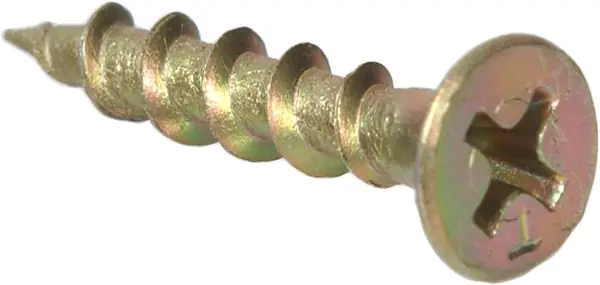
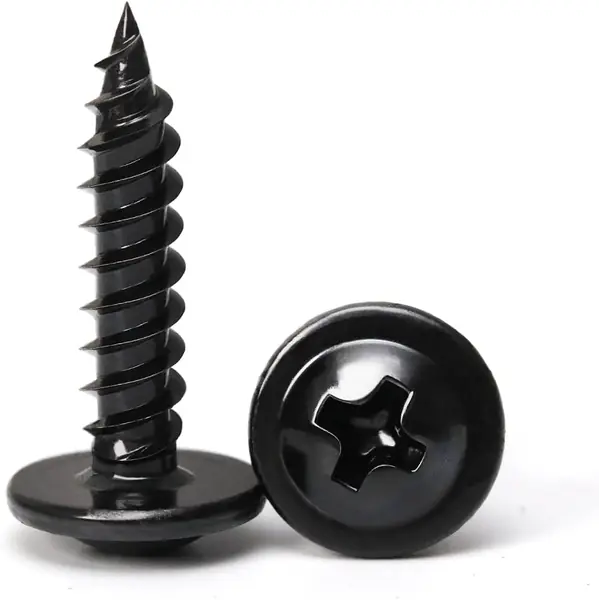
↑↓ navigate ↵ open Esc close All results →

Best Screws for MDF of 2026

MDF does not split along grain lines like pine; instead, it fails quietly when a blunt point skates off layout, aggressive threads auger out a powdery crater, or a screw even a quarter-inch too long blows out the far face just as the joint pulls tight. With zero fiber springiness to grip a shank, the screw itself has to cut clean threads, clear dust, and hold in compressed fiberboard.

Driving 14 packs of #8 screws in lengths from 1/2 to 1-1/4 inches over four months across MDF offcuts, drawer slides, cabinet doors, and aging bookshelf repairs showed how unforgiving length and thread geometry are on composite panels. Bulk 300-count cartons only save money when the length actually fits the thickness of the stock in front of you.

Across cabinet carcasses, slide hardware, hinge plates, spot repairs, and high-volume shop builds, thread profile and head design decide whether a composite joint holds tight or strips out on assembly.

Our Top Picks

The Best Screws for MDF

1.

FASTENPOWER #8 x 1-1/4-Inch Wood Screws Best Overall
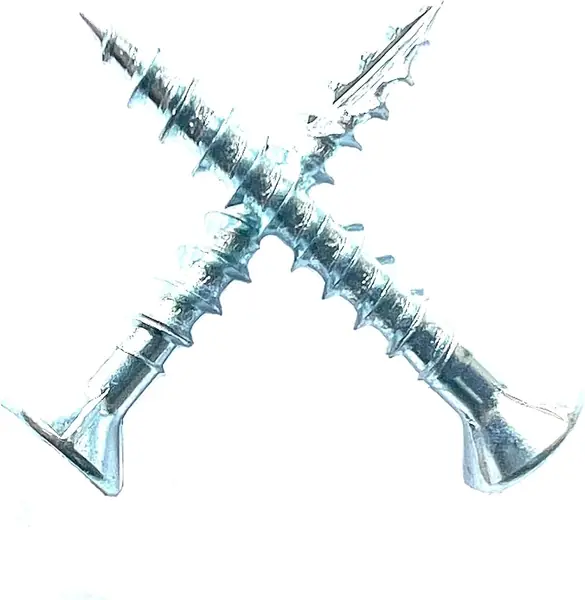
FASTENPOWER zinc-coated flat-head wood screws in a 100-count box of #8 by 1-1/4-inch screws

Cabinet joinery

Shop Score 95/100
Size
#8 x 1-1/4 inches
Head And Drive
Flat head, Phillips drive
Finish And Count
Zinc coated; 100 per pack
Thread And Point
Coarse, fully threaded; Type 17 point with nibs
View on Amazon

A Type 17 point is the detail that decides whether a screw starts cleanly in MDF or craters the surface. The point is fluted to cut and clear chips, and the small nibs behind it score the material ahead of the thread so the screw follows its own path instead of wedging. We made this FASTENPOWER pack our top pick because it is the only screw in this group that pairs that point with a coarse, fully threaded body in a length that actually spans a joint.

At 1-1/4 inches these reach through a 3/4-inch panel and leave roughly half an inch of thread in the piece behind it, which is the working range for cleats, cabinet sides, face frames, and shop jigs. The flat head countersinks flush if you ease off the clutch at the end; MDF's surface will crush into a shallow crater if you drive at full torque, and no head style saves you from that.

Zinc coating and a 100-count box fit indoor, project-sized work: a base cabinet, a run of jigs, a set of cleats. What keeps us coming back is the length. It is the only screw here that closes a real panel-to-panel joint without a second trip to the hardware store.

Worth Noting

  • Phillips drive only, no square or Torx option
  • Zinc finish is for indoor projects only
Our Verdict

We recommend it as the default MDF screw: coarse threads, a chip-clearing Type 17 point, and the one length here that closes a 3/4-inch panel joint.

Check Latest Price
2.

Rok Hardware #8 x 5/8-Inch Coarse Screws Best Grip in MDF

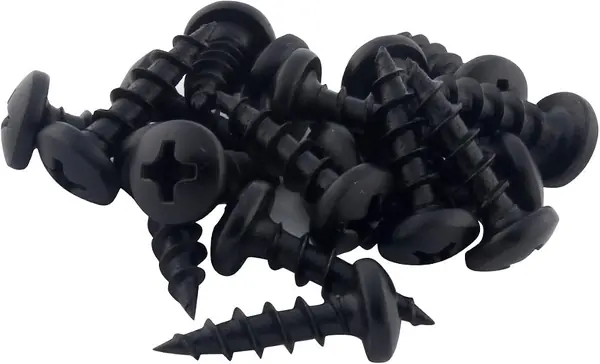
Rok Hardware black phosphate pan-head wood screws, 100-count box of #8 by 5/8-inch screws

Cabinet doors

Shop Score 94/100
Size
#8 x 5/8 inch
Head And Drive
Pan head, Phillips drive
Finish And Count
Black phosphate; 100 per pack
Thread
Deep coarse, fully threaded
View on Amazon

MDF gives a fine-threaded screw almost nothing to hold, which is why deep, widely spaced threads matter more here than they do in oak. The Rok cuts its thread deep and runs it the full length of the shank, so it grabs on the first turn and keeps holding in a material that has no grain to pull against. In cabinet doors, drawer boxes, and 1/2-inch backs, that first turn is most of the battle.

Among the short screws in this group, these are the ones we reach for first. The pan head gives a flat bearing surface that sits on a hinge plate or a bracket instead of wedging into it, and the black phosphate is the reason to choose this version over the zinc ones: in dark-stained MDF and black hardware it simply disappears, which is what you want on a finished door or drawer front.

Read the 5/8-inch length as a specification, not a suggestion. It is the right screw for door panels, drawer boxes, thin backs, and hardware, and the wrong one for a butt joint between two 3/4-inch panels — go up to the 1-1/4 inch of our top pick for that. Buy the hundred-count for one cabinet; these are the screws that get borrowed and never come back.

Worth Noting

  • Length limits it to thin panels and hardware
Our Verdict

We keep these for cabinet doors and drawer boxes, where the deep coarse thread bites MDF and the black finish disappears into dark material.

Check Latest Price
3.

Rok Hardware #8 x 1/2-Inch Truss Head Screws Best for Drawer Slides

Rok Hardware zinc truss-head wood screws with wide flanges, 100-count box

Drawer slides

Shop Score 93/100
Size
#8 x 1/2 inch (12.7mm)
Finish And Count
Zinc; 100 per pack
Head
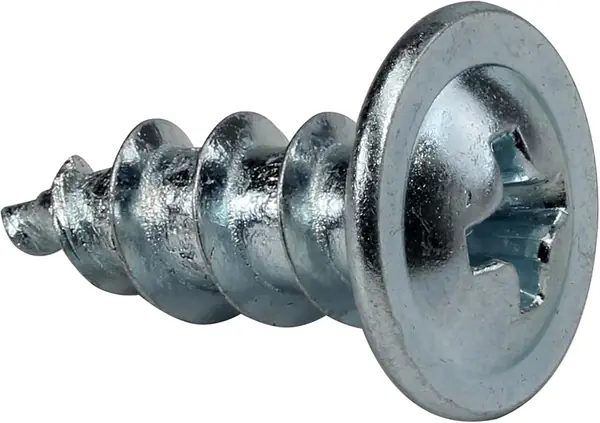
Truss head with built-in washer
Drive
Phillips #2
View on Amazon

Hanging a drawer slide is the job that exposes a bad screw. The slide has to sit flat and stay adjustable, so the head cannot sink into the cabinet side, and it cannot stand so tall that it fouls the slide's flange. A countersunk screw is the wrong shape for this work, and a narrow pan head usually does not carry enough surface.

The truss head on these Roks is the fix: a wide, flat flange with a washer formed into the underside, so the screw bears on the panel instead of digging into it. In particle board and MDF, materials that crush under a narrow head, that extra surface area is the whole point. The Phillips recess is cut deep enough to hold the bit, and the points are sharp enough to start without wandering across a cabinet side.

This is the box we keep next to the slides. What we will not do is ask it to do joinery: at half an inch it is a hardware screw for 3/4-inch cabinet sides and drawer boxes, and a panel-to-panel joint needs the extra length of our top pick.

Worth Noting

  • Truss head sits proud, so it will not countersink
Our Verdict

We trust these most for drawer slides and cabinet hardware: the wide truss heads bear on MDF without sinking and stay clear of the glide.

Check Latest Price
4.

Hillman 35024 Particle Board Screws Best for Quick Repairs

Hillman yellow zinc particle board screws, 100-count box of #8 by 3/4-inch flat-head screws

Furniture repairs

Shop Score 92/100
Size
#8 x 3/4 inch
Head And Drive
Flat head, Phillips drive
Finish And Count
Yellow dichromate; 100 per pack
Thread
Coarse, partially threaded
View on Amazon

This is an old-school particle board screw, and the unthreaded shank under the head is the part worth understanding. On a repair where a panel has lifted or a joint has opened, the smooth section lets the screw pull the top piece down before the thread takes hold in the second piece — something a fully threaded screw struggles to do, because its threads fight the pull instead of helping it.

We like this one for the small jobs that never make a cut list: re-hanging a hinge in 3/4-inch plywood, joining two 1/2-inch sheets, patching a cabinet base that has swollen and split. The yellow dichromate finish is the traditional look for this class of screw, the Type A point starts in soft panel stock without a pilot, and the screws arrive in a small reusable tub that keeps them from escaping in a drawer.

Three-quarters of an inch is the ceiling here. That is plenty for hinges, drawer bottoms, thin backs, and repairs, and nowhere near enough to bridge a joint between two 3/4-inch panels. As a repair screw that lives in a small shop, it earns its place.

Worth Noting

  • Less thread in the top piece than fully threaded screws
Our Verdict

Our pick for quick repairs: a short particle board screw whose smooth shank pulls a lifted panel back down without fuss.

Check Latest Price
5.

B1jounie YA Black Truss Head Screws Best for Bulk Cabinet Work

B1jounie YA black oxide truss-head wood screws, 300-piece box of #8 by 3/4-inch screws

Bulk cabinet work

Shop Score 91/100
Size
#8 x 3/4 inch
Head And Drive
Truss head, Phillips drive
Count
300 pieces
Finish
Black oxide
View on Amazon

Three hundred screws in one box, finished in black oxide, is a combination aimed at someone specific: the builder working in dark MDF, black plywood, or stained cabinets, where a bright zinc head would sit there glinting at them. The black disappears in that material, and once a project is finished and on display that is not a small thing. It is the reason we keep a box on the shelf for dark work.

The truss head does more than look tidy. It gives a wide, flat bearing surface that rests on the material instead of sinking into it, which is what you want on 1/2-inch stock and thin 3/4-inch parts, where a countersunk head would dimple the face. The count is the practical half of the appeal: 300 pieces covers a run of shop cabinets, a set of jigs, or a full shelf unit without a mid-project reorder.

It is a utility screw rather than a fine one, and we treat a box this size as shop stock rather than as the hardware for a display piece. If your project is one small cabinet, 300 is more than a year's worth; for a run of shop fixtures or a garage build, it is about right.

Worth Noting

  • Heads can snap when driven hard
  • Black oxide can rust in damp settings
Our Verdict

We like these for dark cabinets and big jobs, as long as the driver is dialed back so the heads survive the trip.

Check Latest Price

How We Chose and Tested MDF Screws

We started with a long list of screws sold for particle board, MDF, and composite panels, then narrowed it to #8 Phillips-drive options in the lengths our projects actually called for — half-inch through 1-1/4 inch — and filtered by thread form, point style, head shape, finish, and pack count. Fourteen packs went into the shop, and we drove them for four months: hanging cabinet doors, mounting drawer slides on shop cabinets, and patching furniture that had come apart at the joints.

Each pack went through the same sequence. We drove screws into both the face and the edge of 3/4-inch MDF scrap, watching whether the point cut its way in or wandered across the surface, and counting how many times the bit slipped out of the recess before the head seated. Then we backed them out and drove them again to see whether the recess survived a second pass.

To check breakout, we drove each length through scrap and flipped the panel to look at the far face. We compared partially and fully threaded shanks on identical joints to see which pulled the pieces together and which simply spun. For drawer slides, we mounted slides with each head style, checked whether the bearing surface sat flat against the slot or pulled through it, then removed and refastened the slide twice more. We counted culls — bent shanks, malformed threads, heads that wouldn't seat — and divided box price by usable screws to weigh value. All cutting and drilling happened in a ventilated shop with respirators on, because MDF dust is nothing to breathe.

How to Choose Screws for MDF

Start With the Thread and the Point

A screw sold as a wood screw can still be the wrong screw for MDF. Fine threads and a smooth taper were designed for hardwoods; in a uniform panel of glued fiber they take a shallow bite and lose their grip under load. What you want is a coarse thread with wide spacing between the turns, plus a point that cuts rather than pushes.

A Type 17 point with flutes is the best version of that: it drills and clears chips so the screw cannot bind on its own debris in a blind hole, and the nibs score the surface so the panel does not lift around the entry. Plain self-tapping points work in thinner stock and lighter loads.

Match the Length to the Panel

Length is where most MDF joints go wrong. For a butt joint in 3/4-inch material, a 1-1/4-inch screw leaves roughly half an inch of thread in the second piece — the working range. Shorter screws barely cross the joint line, and longer ones break out the far face, with no grain to warn you before it happens. For hardware, hinges, and drawer slides, drop to 1/2 or 5/8 inch so the point cannot reach the good face of a door or drawer front.

Choose the Head for the Joint

Head shape is a functional choice, not a cosmetic one. A flat countersunk head is for joints you want flush and later filled: cabinet sides, face frames, cleats. A truss, pan, or washer head is for anything that has to stay adjustable or removable — drawer slides, hinges, brackets, and hardware meant to sit on the surface. The wide flange under a truss head also keeps the screw from sinking into MDF's soft face, which is why it is the shape we reach for on slides.

Weigh the Drive Type

Phillips is everywhere and it is fine, but MDF is dense and abrasive, and a Phillips bit cams out of the recess under load — the exact moment the head strips and the screw stops moving forward. A square or Torx drive holds the bit far more securely, and on a long assembly run that difference shows up in your wrist and in your scrap pile. If you drive with a small impact, this is the one upgrade worth paying for.

Do the Math on Pack Size

Boxes in this category run from 100 to 300 pieces, and the count matters more than the price on the sticker once you are mid-project. Hundred-counts of short hardware screws go fast on a bank of drawers, at four to six per slide, while long panel screws you use a dozen of per cabinet tend to leave leftovers. Buy hardware screws in the larger pack and panel screws in the hundred.

Frequently Asked Questions

Final Verdict

Most MDF work comes down to one screw: a coarse-thread #8 long enough to cross the joint, with a point that cuts instead of pushing. That is why we recommend the FASTENPOWER 1-1/4-inch pack first. It handles cabinet sides, cleats, and face frames, and its Type 17 point starts cleanly where a plain wood screw tears the surface.

If your project is hardware rather than joinery, the Rok truss-head 1/2-inch screws are the better buy; for cabinet doors and drawer boxes, the deep-threaded 5/8-inch Roks hold hardest in the panel.