↑↓ navigate ↵ open Esc close All results →

Best Small Screw Extractors of 2026

Once a small fastener rounds out, an ordinary driver just polishes the recess while a drill bit threatens to chew through the surrounding plastic or wood. Small screw extractors solve that jam in two ways: pliers-style tools clamp the outer perimeter of a damaged head with serrated, concave jaws, while micro drill-out kits bite into the core to back stubborn threads free.

Putting 15 pliers, mini extractors, and micro drill sets through four months of real repairs highlighted the sizing mistake most buyers make first. Package specs list the screw's shaft diameter rather than its head width, so grabbing a size too large or small accounts for most slipped attempts.

Slim nose geometry, static-safe grips for electronics, and aggressive jaw serrations let the right tool handle everything from tiny laptop fasteners to seized outdoor hardware without scarring adjacent surfaces.

Our Top Picks

The Best Small Screw Extractors

1.

ENGINEER PZ-57 Screw Extractor Pliers Best Overall
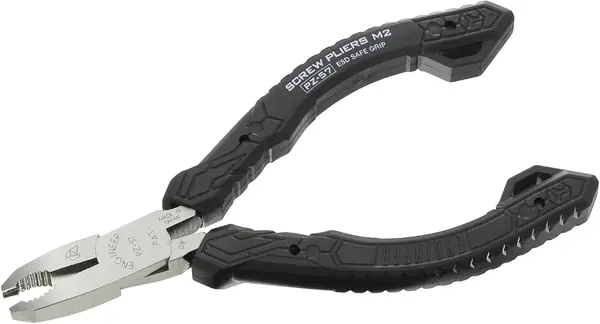
ENGINEER PZ-57 screw extraction pliers with slim serrated jaws and ESD-safe handles

Tiny electronics screws

Shop Score 95/100
Overall Length
4.72 inches
Screw Size Range
2–3.5mm
Weight
2.65 oz
Handle Material
ESD-safe elastomer
View on Amazon

The number that matters on the PZ-57 is 2–3.5mm. That is the range where ordinary pliers get clumsy and where a stripped M2 laptop screw can turn a quick repair into an afternoon. We keep it as our default because the whole tool is scaled to that work: slim jaws, a concave face, and ESD-safe handles that won't add a static worry when you're working around a board. At 4.72 inches and 2.65 ounces, it disappears into a drawer until you need it.

The jaw is the reason it works. Vertical and horizontal serrations meet at a concave center, so a rounded head has two directions of bite instead of one smooth surface to skate across. We like the spring-loaded handles for the same reason: the jaws open on their own, which leaves one hand free to hold the workpiece or steady the board. The tips are slim enough for tight electronics, but they are still stiff enough to lean on a stubborn screw.

What the PZ-57 doesn't do is chase a screw below the surface. It needs a head to grab, and it is happiest on an accessible M2–M3.5 fastener. For a larger cabinet screw, we step up to the PZ-58; for a recessed or headless screw, a drill-based micro kit is the right tool. That is a narrow brief, but it is exactly the brief most small-screw repairs have.

The PZ-57 is the one that stays in the electronics drawer, next to the tweezers and the spudger. That is the highest compliment we can give a tool this small.

Worth Noting

  • Jaws can mar soft surrounding surfaces
Our Verdict

We recommend the PZ-57 as the default small screw extractor for accessible M2–M3.5 screws, especially in electronics, where its ESD-safe grip and slim jaws earn their keep.

Check Latest Price
2.

VAMPLIERS 5" Mini Screw Extractor Pliers Best for Tiny Screws

VAMPLIERS VT-001-5 five-inch mini screw extraction pliers with black TPR handles

Tiniest laptop screws

Shop Score 94/100
Overall Length
5 inches
Screw Size Range
M1.2–M2; Ø2–3.5mm
Handle Material
ESD-safe TPR
Jaw Hardness
HRC56±2
View on Amazon

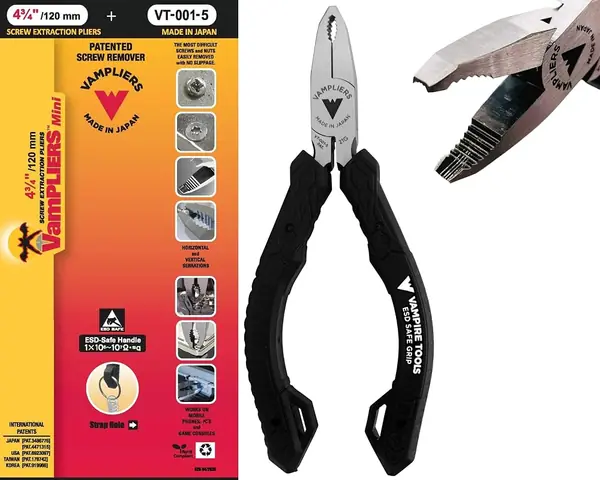
A 1.2mm screw in a laptop hinge is the case the VAMPLIERS VT-001-5 was built for. The jaw reaches down to M1.2 and up through M2, with a stated Ø2–3.5mm capacity for specialty heads. That lower bound is smaller than the PZ-57's, and for the tiny fasteners that hold a Steam Deck, a laptop, or a GPU bracket together, those fractions are the whole job.

We like the five-inch body for control. It is short enough to work under a wrist rest and light enough to keep in an electronics bag, and the TPR handles stay comfortable when you are making several attempts on the same chewed-up screw. The concave jaws and crosshatched teeth are the real selling point: they give you a place for a low-profile head to sit, so the tool bites instead of sliding off the rim.

The VAMPLIERS is a specialty tool, and the jaw is best kept for screws rather than hardened bolts. Lean on it too hard and the teeth will wear; use it as a precise grabber, not a substitute for a bolt extractor. That is a fair trade for electronics work, where one saved motherboard can justify keeping a dedicated pair in the bag.

If your work is mostly M3 cabinet screws, the PZ-57 is the easier buy; if the screw is smaller than the PZ-57's lower limit, this is the one we hand you. The VAMPLIERS stays in the electronics drawer, next to the tweezers.

Worth Noting

  • Premium price for occasional use
Our Verdict

For screws smaller than M2, we choose the VAMPLIERS 5-inch: its finer jaw and ESD-safe handles make it the better bite in laptops and other tiny electronics.

Check Latest Price
3.

ENGINEER PZ-58 Screw Removal Pliers Best for Larger Screws

ENGINEER PZ-58 green-handled screw removal pliers with serrated jaws and side cutter

Larger damaged screws

Shop Score 92/100
Overall Length
6.3 inches
Screw Size Range
Ø3–9.5mm
Weight
5.26 oz
Wire Cutting Capacity
Copper Ø3.2mm / steel Ø2.6mm
View on Amazon

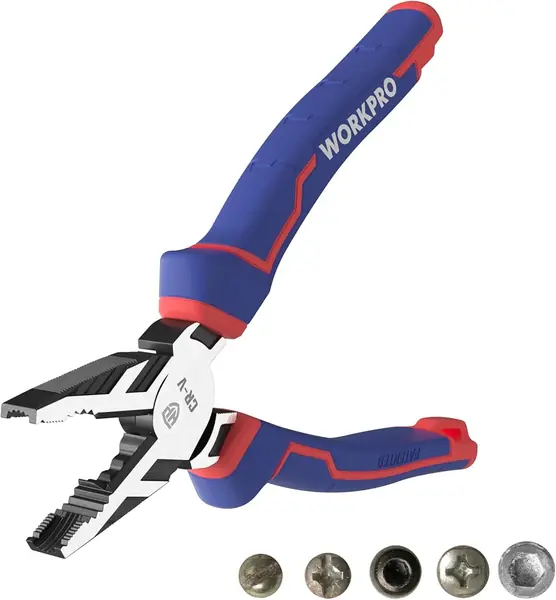
The PZ-58 is a pair of screw removal pliers for the screw that is too big for the micro pliers but still too small for a full bolt extractor. Its jaws span Ø3–9.5mm, so it covers M3 and M4 fasteners, license-plate screws, cabinet hardware, and the rounded heads that a Phillips bit has already given up on. The tool is 6.3 inches long and 5.26 ounces, which is still hand-tool size, but it has enough handle to lean on.

The jaw has vertical and horizontal serrations plus a concave face, the same basic idea as the PZ-57 in a larger package. We like the side cutter more than we expected to; it handles wire and zip ties in the same repair, so the tool stays in your hand instead of sending you back to the toolbox. The spring-loaded handles also make one-handed positioning easier when the screw is in an awkward spot.

Where it earns its place is the middle ground. A micro extractor can't get a purchase on a 5mm cabinet screw, and a Vise-Grip is too blunt for a finished surface. The PZ-58 gives you a real bite without the bulk of a full-size locking plier. We also appreciate that the tip is narrow enough for a recessed hinge screw, though it is not a substitute for a drill-based kit when the head is gone.

It is not the tool for a 1.5mm laptop screw; the jaw is too broad and the reach too deep. That is why it sits beside the PZ-57 rather than replacing it. For the stripped screw on a cabinet hinge, a car interior, or a piece of shop furniture, the extra size is the advantage.

Worth Noting

  • Jaw is too broad for tiny 1.5mm screws
  • Cannot extract screws when the head is completely gone
Our Verdict

We keep the PZ-58 for the middle ground: stripped 3–9.5mm screws in cabinets, cars, and shop fixtures that are too big for micro pliers but too small for a bolt extractor.

Check Latest Price
4.

ALDEN 4507P Grabit Micro Kit Best for Recessed Micro Screws

ALDEN 4507P Grabit Micro four-piece drill-and-extract kit in a plastic case

Recessed micro screws

Shop Score 84/100
Material
M2 HSS
Screw Types
Phillips / hex / Torx / Pentalobe
Number Of Pieces
4
Minimum Screw Size
No. 5 (3mm)
View on Amazon

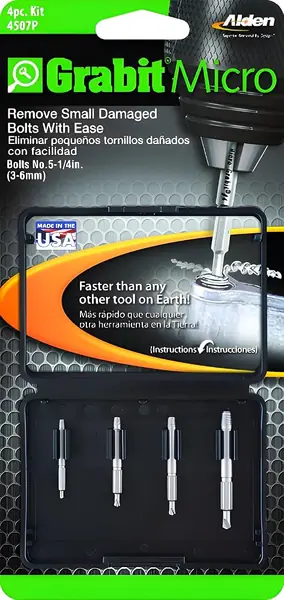
When the screw is broken off below the surface, or the head is too rough for any jaw, the ALDEN 4507P Grabit Micro takes a different route: a drill bit and extractor in one tool, with a self-centering tip. It is built for the screw you cannot grab, not the one you can.

We like that the kit handles Phillips, hex, Torx, and Pentalobe heads, and that its smallest size is rated down to No. 5, or 3mm. That makes it a complement to the PZ-57 rather than a replacement: the pliers are faster when there is a head to bite, while the Grabit can start a hole in a rough break and then reverse the screw out. The two-step action is simple, and the self-centering tip keeps the bit from wandering on a jagged surface.

The trade-off is that these are small, hard bits. Keep the drill straight, use a slow speed, and let the tool cut; a rushed or angled cut is where trouble starts. That is not a reason to baby it, but it is a reason to practice on a scrap screw before you go after a fastener in a laptop or an engine cover.

For a screw you can see and grab, we still pick up the PZ-57 first. The Grabit is for the recessed, headless, or chewed-beyond-recognition case, and it is the one we hope not to need. When the head is gone, it is the tool that can still start a hole.

Worth Noting

  • Requires a drill for every extraction
Our Verdict

We turn to the ALDEN Grabit Micro when a small screw is recessed or headless and no plier can reach it, accepting a slower drill-based process in exchange for a chance at extraction.

Check Latest Price

How We Tested Small Screw Extractors

We started by reading every spec sheet we could find and sorting the field by the three things that decide whether an extractor works: the screw diameter it's rated for, how thin the jaws are, and whether it removes a screw by gripping the head or by cutting into it. Anything that overlapped heavily with another tool, or never stated a screw range at all, we left out. Fifteen made the cut, and we used them for four months.

Before each test, we made our own damaged screws, driving fasteners into laptop bottom covers, controller shells, cabinet hinges, and a rusted patio bracket until the heads cammed out. We disconnected power and pulled batteries before opening any electronics, wore safety glasses whenever we drilled or leaned on a tool, and kept every attempt inside the tool's stated size range.

Then we watched what happened on each removal. We counted attempts before a screw turned, noted whether the jaws slipped or skated across the head, and checked the plastic around the hole afterward for jaw marks and drill skid. To judge durability, each tool went through repeated extractions on fresh damaged screws, and we examined the teeth afterward for rounding and watched for bits that snapped or wandered off-center.

Size and control got their own pass: we weighed each tool, carried it in a bench bag, worked it into recesses where a full-size plier wouldn't fit, and ran long sessions of repeat attempts to see whether spring-loaded handles and static-safe grips actually cut down on fumbling. Value came down to what a tool still did in month four compared with the first week.

How to Choose a Small Screw Extractor

Start With the Screw You Can Reach

If the screw head sits proud enough for a jaw to grab, a pliers-type extractor is faster and more controllable than a drill kit. The ENGINEER PZ-57 is our default for accessible M2–M3.5 screws, while the wider PZ-58 covers 3–9.5mm hardware. When the head is recessed, headless, or chewed down to a rough stub, the calculation changes: you need a drill-based micro kit such as the ALDEN Grabit Micro. The trap is buying a drill kit for a screw you can simply grab; it adds steps and a fragile bit to a job that a plier can finish in seconds.

Match the Jaw to the Screw Diameter

The number to check is the screw diameter the tool is rated for, not the tool's overall length. A micro plier might cover M1.2–M2, a general small extractor 2–3.5mm, and a larger plier 3–9.5mm. Buying one tool to span all three usually means a jaw that is too broad for electronics or too small for cabinet hardware. We prefer a dedicated micro pair plus a larger plier if you work on both. The trap is reading small as a description of the tool rather than the fastener; a compact-looking set can still start at a 3mm or larger screw.

Look for a Jaw That Bites

A good extractor jaw does two things at once: it gives the damaged head a place to sit and it cuts in two directions. Vertical and horizontal serrations, plus a concave face, are what keep a rounded Phillips or hex head from skating away. Spring-loaded handles are a real convenience because they let you position the jaw with one hand. For electronics, ESD-safe handles are worth having; they are not a substitute for disconnecting power, but they remove one avoidable risk from board work.

Respect the Tool's Limits

We treat extractor pliers as screws-only tools, not hardened-bolt removers. The teeth will wear if you lean on them beyond their range, and a snapped drill bit can turn a bad repair into a worse one. Use the largest extractor that fits, keep the tool in line with the screw, and go slowly with any drill-based kit. Eye protection is nonnegotiable when you are drilling or applying real torque. If the screw is rusted, clean the head and give penetrating oil time before you squeeze; forcing a chewed head usually just makes it rounder.

Frequently Asked Questions

Final Verdict

For most small-screw rescues, we reach for the ENGINEER PZ-57 first. Its 2–3.5mm jaws, ESD-safe handles, and spring-loaded action make it the most useful default for laptops, tiny electronics, and the small screws that never had much head to begin with.

If your screw is smaller than M2, the VAMPLIERS 5-inch is the better fit; if it is a larger cabinet or automotive screw, step up to the PZ-58. Keep the ALDEN Grabit Micro for the recessed screw no plier can reach, and accept that it demands a slower, straighter hand.