↑↓ navigate ↵ open Esc close All results →

Best Bowl Gouges of 2026

Against a spinning bowl blank, a bowl gouge broadcasts every flaw in setup or technique straight through the handle. Too short a shaft leaves little leverage to brace against the body, and a dull edge forces you to push harder into the wood—inviting a jarring catch—whereas a stiff, sharp gouge keeps the bevel riding smoothly and the cut predictable.

Nine months of hollowing bowls across 12 gouges—comparing light and heavy bar stock, standard high-speed steel against cryogenically treated M2, and conventional bevels alongside swept-back Irish grinds—highlighted which blades slice cleanly past the first few roughings. Every factory gouge also ships with one fixed grind, and buying a grinder plus shaping jig can easily rival the cost of the steel itself.

For newer turners, a well-matched three-piece set often covers more ground than a single flagship blade, so the tested lineup includes multi-tool sets, specialized singles, and a budget gouge that arrives sharp out of the box.

Our Top Picks

The Best Bowl Gouges

1.

Hurricane Turning Tools 3-Piece Bowl Gouge Set Best Overall
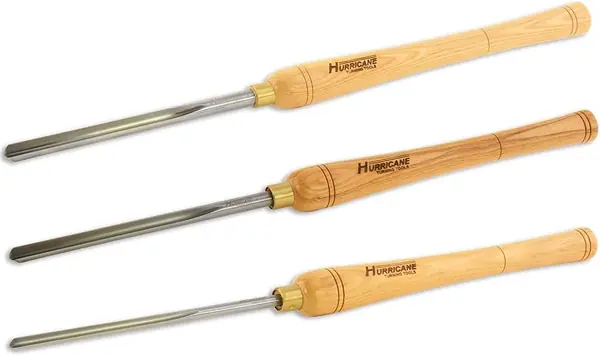
Hurricane three-piece bowl gouge set with high speed steel flutes and beech handles

First bowl-turning kit

Shop Score 91/100
Blade Material
High speed steel
Pieces
3
Handle Material
Solid beech
Flute And Bar Stock
1/2 in. flute (5/8 in. bar stock), 1/4 in. flute (3/8 in. bar stock), 3/8 in. flute (1/2 in. bar stock)
View on Amazon

Three flutes split the work cleanly. The 1/2-inch gouge, milled on 5/8-inch bar stock, takes the bulk of the waste off the outside of a blank; the 3/8-inch tool on 1/2-inch bar cleans up the inside curve; and the 1/4-inch gets into the bottom of a bowl and around a rim you have already shaped. That progression is why a set beats a single tool for anyone still working out how a bowl blank behaves.

This is the set we point a new turner toward first, and the reason is simple: it is a complete working kit for less than the cryo gouge further down this page. The tools sit in solid beech handles long enough to grip with both hands and tuck under your forearm, which is exactly the control you want when a catch tries to twist the gouge out of your hands. We also like that the three sizes teach you something — turn a dozen bowls and you find out whether you reach for the 3/8 or the 1/2 most, and that answers what your next single gouge should be.

What we noticed most in use is the balance. The 3/8-inch tool rides on 1/2-inch bar, one step lighter than the big gouge, so it is the one that tells you first when your bevel is not rubbing — if it starts to chatter, your tool rest is too far from the work. That feedback makes this a decent teacher as well as a decent kit.

Worth Noting

  • Standard HSS holds an edge less than cryo M2
Our Verdict

Our pick for a first bowl-turning kit: three flutes, long beech handles, and HSS that sharpens easily, for less than one premium gouge.

Check Latest Price
2.

Hurricane M2 Cryo Pro 5/8-Inch Bowl Gouge Best Single Gouge

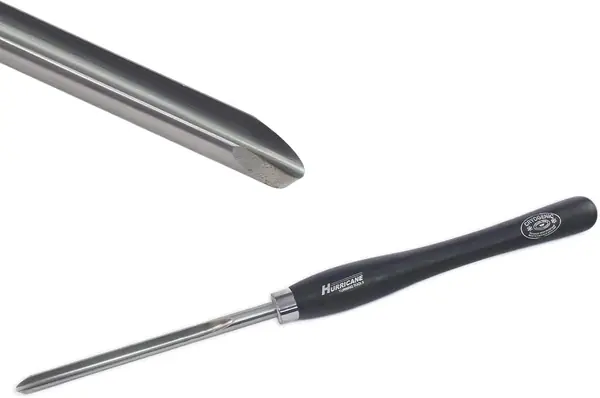
Hurricane M2 Cryo Pro bowl gouge with black ash handle and swept-back grind

Large bowl hollowing

Shop Score 89/100
Flute Width
1/2 in.
Grind
Swept-back (Irish grind)
Bar Diameter
5/8 in.
Usable Flute Length
8 in.
View on Amazon

The swept-back Irish grind is the reason to buy this one. That long, rolled bevel lets the tool swing through the inside curve of a bowl in one continuous arc instead of the stop-and-start you get from a short primary bevel. Behind it sits 8 inches of usable flute in a 5/8-inch bar of cryogenically treated M2 steel, with a 14-inch ash handle bringing the whole tool to 24 inches.

Edge life is what the cryo treatment buys, and it is the thing we paid closest attention to: this bar keeps cutting past the point where standard HSS needs a touch-up on the grinder. Made in Sheffield in partnership with Crown Tools, it also grinds clean, and the black-and-silver ash handle stays comfortable through a long session at the lathe.

It is the priciest tool here and it is one gouge, so we steer it toward the turner who has decided on a single 5/8-inch bar for heavy shaping — someone who wants one good tool rather than three adequate ones. If you are outfitting from nothing, the set above covers more ground for less money; if you are adding a serious bar to a rack that already has a 3/8, this is the one we reach for.

Worth Noting

  • Single tool with no smaller flute for detail
Our Verdict

For a turner who wants one bowl gouge that does the bulk of the work, we point to this cryo bar with its swept-back grind.

Check Latest Price
3.

Robert Sorby 842XLH-1/2 Deep Flute Bowl Gouge Best for Deep Hollowing

Robert Sorby deep flute bowl gouge with long hardwood handle and brass ferrule

Deep bowl hollowing

Shop Score 88/100
Blade Length
9 in.
Blade Material
M2 high speed steel
Warranty
2 years under normal use
Handle Length
17 in.
View on Amazon

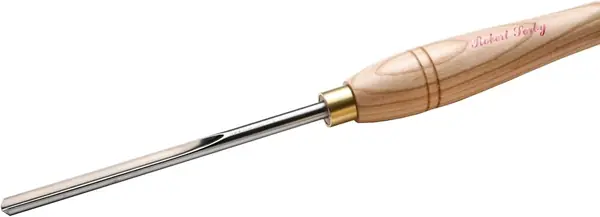
Seventeen inches of hardwood handle is the whole argument for this gouge. With 9 inches of M2 steel in front of it, you get enough reach to swing the tool across the bottom of a deep bowl while your hands stay well back from the rim, which is where a long handle stops being a luxury and starts being control.

We choose this one for hollowing, and the deep flute is why: it is shaped for the inside of a bowl rather than the outside, so it clears the curve of a bowl wall without the tool fighting you. The steel is M2 high speed steel, hardened and tempered, set in a brass-ferruled handle and covered by a two-year warranty under normal use.

Where the deep flute stops earning its place is small work: at the bottom of a small bowl you want a 3/8-inch tool you can choke up on, and this one is a specialist. Keep it for the bowls that need reach and let a smaller gouge finish the floor.

Worth Noting

  • 26-inch overall length needs clearance behind the lathe
Our Verdict

For hollowing big, deep bowls we choose this long-handled Sorby: the reach and the deep flute do work a short gouge cannot.

Check Latest Price
4.

PSI Woodworking LX220 1/2-Inch Bowl Gouge Best Budget

PSI Woodworking LX220 half-inch bowl gouge with hardwood handle and brass ferrule

First bowl gouge

Shop Score 87/100
Blade Length
9 in.
Blade Material
M2 high speed steel
Flute Width
1/2 in.
Overall Length
22 in.
View on Amazon

The least expensive gouge here is also one of the easiest to recommend: a 1/2-inch flute in M2 high speed steel, 22 inches overall with a 13-inch hardwood handle, for a fraction of what the cryo bar costs. If you want one honest bowl gouge to learn on, we start here.

M2 is the sweet spot for a first bowl gouge. It holds an edge far better than carbon steel and touches up quickly on a grinder, so you spend your evenings turning rather than fighting a dull bevel. The 9-inch blade leaves plenty of steel to grind back over the years, and the brass ferrule and full-length handle put your hands where they belong.

In the hand it feels like a bigger tool than it is: the 13-inch handle gives you a two-handed grip and enough length to keep your knuckles clear of the tool rest, which is the part budget gouges usually skip. Tuck the bevel in and it takes a clean shaving on the outside of a bowl.

Worth Noting

  • Single flute size limits detail work at the bottom
Our Verdict

We recommend it as a first bowl gouge: real M2 steel, a full-length handle, and the smallest outlay here.

Check Latest Price
5.

IMOTECHOM 3-Piece Bowl Gouge Set

IMOTECHOM three-piece bowl gouge set with teak handles and wooden storage case

Cased starter set

Shop Score 86/100
Blade Length
9 in.
Storage
Wooden case
Flute Sizes
1/4 in., 3/8 in., and 1/2 in. bowl gouges
Handle Lengths
13.3 in. and 15.3 in.
View on Amazon

Same three flutes as our top pick — 1/4, 3/8, and 1/2 inch — but dressed for a different buyer: 9-inch HSS blades sharpened at the factory, teak handles of 13.3 and 15.3 inches, and a wooden storage case with foam protection that keeps the set together between sessions.

That factory edge is the part that matters most for a beginner, because it means you can turn a bowl before you own a grinder and a jig. The bars feel solid in the cut, and the teak handles are comfortable and well balanced in a two-handed grip.

The case is the detail we did not expect to care about and now do: three sharp tools with nowhere to live get knocked around a drawer, and this one closes with the edges protected. Where we hesitate is length — 13.3 and 15.3 inches of handle plus a 9-inch blade is a lot of tool for a mini lathe, and you will end up choked up near the ferrule on a small machine. On a mid-size lathe it sits right, and that is the lathe we picture it on.

Worth Noting

  • Edge dulls faster than the Hurricane set's
Our Verdict

We see this as the set for a turner who wants factory edges and a proper case, and can live with touching up more often.

Check Latest Price

How We Tested Bowl Gouges

We built the shortlist around the specs that actually change how a gouge cuts: flute width and the bar stock behind it, steel grade, usable flute length, handle length, and overall length. From there we filtered by price and availability, keeping both multi-size sets and single tools in the running so a first-timer and an experienced turner would each have something to choose from. That left twelve gouges, which we turned with for nine months.

Testing happened at the lathe. We mounted each gouge on a full-size lathe and on a mini lathe, hollowed green-wood and kiln-dried blanks from small bowls up to deep forms, and wore a face shield every session. We noted how much steel sat behind the flute and how much of it was usable before the bevel ran out, whether the tool tracked steady across the tool rest or chattered, how much handle hung past the rest to lever against, and whether the butt of the handle cleared the bed on the smaller lathe.

To judge sharpness, we pared end grain with each gouge straight out of the package before touching it to a grinder. Then we roughed bowls until the edge stopped slicing and started burnishing, which told us how long the steel lasted between sharpenings. We resharpened in light passes, cooling the edge often so the temper stayed intact, and recorded how long it took to reset the bevel with a jig versus freehand — plus what the grinder and jig would add to the real cost. Our beginners tried every tool first; a gouge they had to fight was one we marked down.

How to Choose a Bowl Gouge

Flute Size and Bar Stock

The flute is the groove the shaving rides; the bar stock is the round steel around it. A 1/2-inch flute milled into 5/8-inch bar is the workhorse for roughing and shaping the outside of a bowl, a 3/8-inch flute on 1/2-inch bar is what most turners reach for inside the rim, and a 1/4-inch gets into the bottom. More steel in the bar means more mass against a catch.

If you are buying one tool, buy the 1/2-inch — it does the most work and forgives the most. If you are outfitting from nothing, the three-size sets here cover the whole progression for about the money of a single premium bar.

Steel Grade and Edge Life

Every gouge here is high speed steel, which resists the softening that ruins carbon steel on a grinder. Beyond that, M2 and cryogenically treated M2 hold an edge longer than standard HSS, and that difference shows up as time at the grinder rather than a different cut.

We think standard HSS is the right buy when you own a grinder and a jig and do not mind touching up between passes. Pay for cryo when you would rather turn than sharpen, or when you are hogging green blanks where a dull edge shows up fast.

Handle Length and Lathe Fit

Handles on these tools run from 13 inches to 17, and overall length from 22 to 26. A longer handle gives leverage over the tool rest and keeps your hands clear of spinning work — and it demands room.

The trap: long handle reads as an upgrade in every listing, but a 26-inch tool on a bench-top mini lathe leaves you choked up near the ferrule, which is the opposite of control. Measure from your tool rest to the back of the lathe before you buy the longest one you can find.

Conventional Grind or Swept-Back

The grind decides how the tool presents to the wood. A swept-back, or Irish, grind rolls the bevel into a long curve that lets you ride it through a bowl's inside arc; a conventional short bevel is simpler to sharpen but less fluid in the cut.

If you do not yet have a sharpening jig, buying a gouge that arrives with a swept-back grind gets you to a clean finishing cut sooner, because you can keep the profile it came with instead of inventing one.

Budget for Sharpening

The gouge is the cheap part of this decision. A slow-speed grinder and an angle jig cost real money, and without them a new gouge goes blunt and stays blunt — a mid-priced HSS set plus a grinder takes you further than a premium bar you cannot sharpen.

If the grinder has to wait a month, start with a factory-sharpened set and learn the cuts first. Then buy the sharpening setup before you buy more steel.

Frequently Asked Questions

Final Verdict

For anyone assembling a bowl-turning kit, the Hurricane three-piece set is the purchase we stand behind: three flute sizes, long beech handles, and steel that touches up in seconds, for less than the price of one premium bar. It leaves money in the budget for the grinder and jig you will need either way.

If a single tool is what you want, the Hurricane M2 Cryo 5/8-inch gouge is the one to buy, and turners spending carefully can start with the PSI LX220 and add sizes as the work asks for more.