↑↓ navigate ↵ open Esc close All results →

Best Bowl Scrapers for Woodturning of 2026

Deep inside a turned bowl, handle leverage and steel rigidity dictate whether a scraper shears cleanly or chatters across torn end grain. A 1-1/2-inch blade mounted on a long handle holds steady over the tool rest where a gouge struggles, whereas the same width on a stubby handle skips and burnishes the wood.

Testing 12 single and set scrapers over eight months in both green and kiln-dried blanks also underscored the value of factory edge prep. A bargain tool that demands an extended session at the grinder before its first cut quickly loses its appeal, and a balanced multi-profile set can outwork a lone high-priced blade.

Combining round-nose and curved side profiles across varied handle lengths, the tested scrapers shear interior walls cleanly, remain comfortable through full afternoon turning sessions, and wipe clean without fuss.

Our Top Picks

The Best Bowl Scrapers for Woodturning

1.

PSI Woodworking LCSIDE2 Scraper Set Best Overall
PSI Woodworking LCSIDE2 two-piece round-end side scraper set with wood handles

Most bowl turning

Shop Score 92/100
Blade Material
M2 high speed steel
Handles
13 in. and 10 in. wood
Blade Sizes
1 in. x 3/8 in. and 3/4 in. x 5/16 in.
Overall Lengths
19 in. and 16 in.
View on Amazon

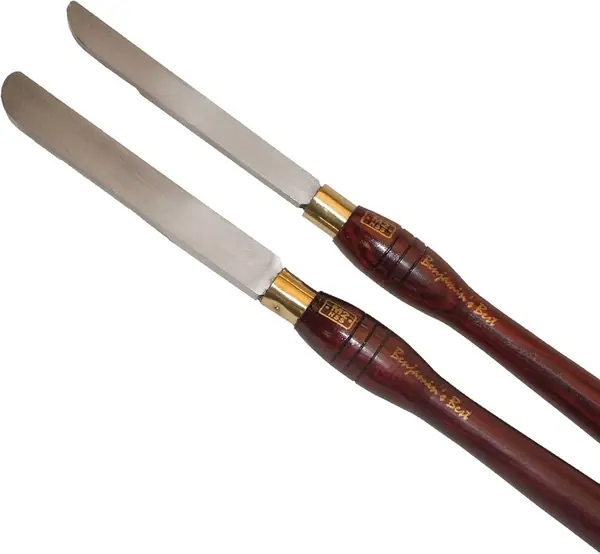
A pair of scrapers solves the problem a single tool creates: you can leave one set up for the wall and one for the bottom. The LCSIDE2 gives you a 1-inch-wide round-end side scraper and a 3/4-inch companion, both with 6-inch M2 high speed steel blades, 3/8- and 5/16-inch thick. We like that spread because the smaller tool reaches into the curve of a small bowl while the larger one spans more surface on a medium form. The long wood handles, 13 and 10 inches, also give you room to choke up near the ferrule or slide back for leverage.

What sold us on the set as a default is the mass where it counts. The thicker 1-inch blade is heavy enough to cut aggressively without the shivering feel that makes a scraper skid across end grain. The round end is designed to blend the side wall into the bottom, which is exactly the transition that shows every tool mark if you leave it rough. The smaller scraper is the one we reach for when the bowl tightens toward the bottom or when a box interior needs a lighter touch.

The set stops at 1 inch, so a very large bowl may leave you wanting a wider 1-1/2-inch round nose; that is the job the LX130 handles better. But for small and medium bowls, the pair is more useful than one bigger tool because you can switch without changing your stance. That is why it is our top pick.

Worth Noting

  • Edges may need sharpening before first use
Our Verdict

For most turners, the LCSIDE2 is the pair we recommend: two heavy scrapers cover small and medium bowls, and the price leaves room for sharpening gear.

Check Latest Price
2.

Hurricane HTT-121 Side Scraper Best Side-Curved Scraper

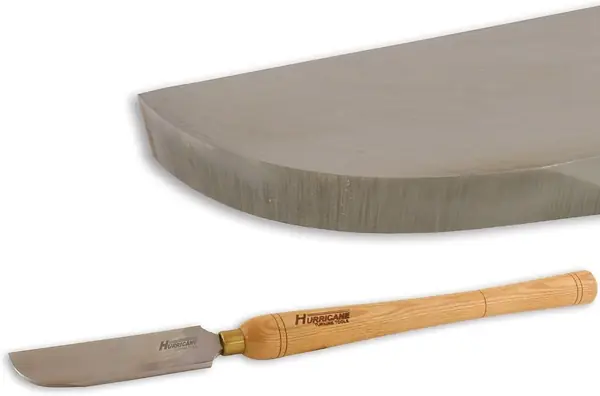
Hurricane Turning Tools HTT-121 1-1/2-inch left-side curved scraper with beech handle

Large bowls

Shop Score 91/100
Blade Material
High speed steel
Handle
16 in. beech
Blade Size
1-1/2 in. x 3/8 in.
Overall Length
23 in.
View on Amazon

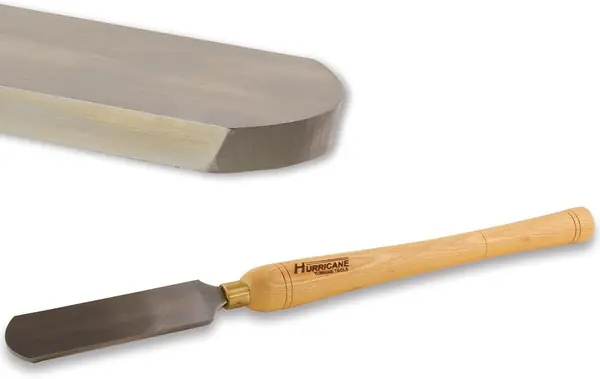
The 1-1/2-inch blade is the first thing you notice, and it is the reason to choose this scraper: the wide left-side curve lays a long edge against the bowl wall and blends it into the bottom with fewer passes. At 3/8 inch thick and 7 inches long, the HSS blade has enough mass to settle down in a shear cut instead of chattering. The 16-inch beech handle adds leverage, bringing the overall length to 23 inches.

We compared it with the two-piece PSI set, and the difference is specialization. The Hurricane is one big tool for one job: cleaning up a large bowl interior after the gouge has done the hollowing. The long handle gives you a lot of room to control the cut, and the weight is reassuring without being clumsy. It is a specialist, not a starter set; the PSI pair covers more bowl sizes for less.

Where it earns its keep is on a big form that has already been hollowed: the wide edge removes tear-out and tool marks without the nervous feel of a narrow scraper. We like that it is ready to work after a quick edge refresh, and the beech handle has a comfortable, plain shape that does not fight your grip. It is not the tool for a small box or a tight curve; that is where the 3/4-inch PSI scraper or the Sorby round nose makes more sense.

Worth Noting

  • Left-side curve suits one cutting direction
Our Verdict

A wide, stable shear cut is what this side-curved scraper does best; we recommend it for large bowl forms.

Check Latest Price
3.

Robert Sorby Left Hand Bowl Scraper Best Premium Scraper

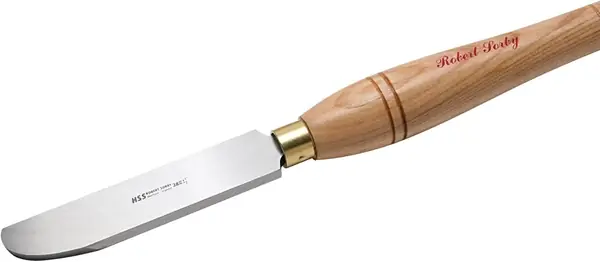
Robert Sorby left-hand bowl scraper with curved HSS blade and ash handle

Final bowl surfaces

Shop Score 90/100
Blade Material
High speed steel
Handle
14 in. ash
Blade Size
7 in. x 1-1/2 in. x 3/8 in.
Weight
1.9 lb
View on Amazon

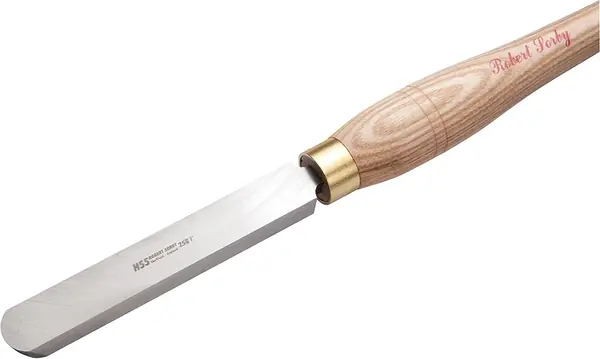
The shape is the story here: a 7-inch curved-left blade, 1-1/2 inches wide and 3/8 inch thick, with a long side edge that sweeps around the tip. The profile is designed to clean up rough, irregular gouge cuts inside a bowl and to cut a more pleasing curve at the same time. The 14-inch ash handle and 1.9-pound overall weight make it feel like a serious final-cut tool rather than a general-purpose scraper.

We think of it as a finishing scraper. The curved left edge lets you shear across the surface with the tool rolled slightly, and the heavy blade resists the skip that can show up when a lighter scraper meets a hard patch of grain. It is a left-hand tool, so it suits a turner who is comfortable working that direction; the mirror-image cut is not what this one is for. The ash handle is long enough to get both hands on and tuck against your side for control.

The premium is real. This costs more than the Hurricane side scraper and much more than the PSI pair, and you are paying for one specialized tool rather than a set. For a turner who already has the basics and wants a dedicated left-hand shear scraper for final surfaces, we think the edge geometry and the solid feel justify it. If you are just starting out, the PSI set is the more sensible first purchase.

Worth Noting

  • Left-hand profile only, not built for mirror-image cuts
  • High price buys one specialized tool, not a set
Our Verdict

If you want the cleanest final surface and will pay for a premium tool, we think this left-hand scraper earns its place.

Check Latest Price
4.

PSI Woodworking LX130 Round Nose Scraper Best Wide Round Nose

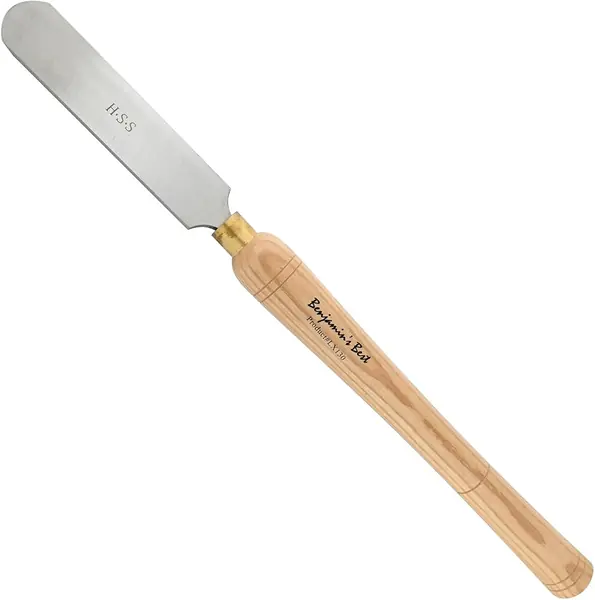
PSI Woodworking LX130 1-1/2-inch round nose scraper with wood handle

Deep bowl interiors

Shop Score 89/100
Blade Material
M2 high speed steel
Handle
14-1/2 in. wood
Blade Size
1-1/2 in. x 5/16 in.
Overall Length
21-3/4 in.
View on Amazon

A 1-1/2-inch round nose is a lot of edge to lay against a bowl wall, and that is exactly why this PSI scraper works for deep forms. The 7-1/4-inch M2 high speed steel blade is 5/16 inch thick, and the tool runs 21-3/4 inches overall with a 14-1/2-inch wood handle. We like the reach: the long blade gets you past the rim and over the tool rest without crowding your hands, while the wide round end spans more of the interior in each pass.

This is the one we choose when a bowl has already been hollowed and the inside needs smoothing rather than shaping. The round nose is less fussy than a side-curved scraper for the bottom of a deep bowl, and the broad edge leaves fewer ridges to chase. The 5/16-inch stock is a little lighter than the 3/8-inch side scrapers here, but the width gives it plenty of stability; we did not find it skittish in a moderate cut.

For the money, this is the wide round nose we point most turners toward. It is not as specialized as the Sorby left-hand scraper and it will not blend a wall into a bottom the way a side curve does, but it covers the large-bowl cleanup job cleanly. If you already have the PSI two-piece set, this is the step up when your bowls get bigger; if you are buying one wide round nose, start here.

Worth Noting

  • Round nose won't blend walls into bottoms like side curves
  • Thinner 5/16-inch blade than heavy 3/8-inch side scrapers
Our Verdict

Deep bowls are where this wide round nose makes sense: a 1-1/2-inch cut and a long handle without a premium price.

Check Latest Price
5.

Robert Sorby 1-Inch Round Nose Scraper Best for Small Bowls

Robert Sorby 1-inch round nose scraper with HSS blade and ash handle

Small bowls

Shop Score 88/100
Blade Material
High speed steel
Handle
Ash with brass ferrule
Overall Length
22.05 in.
Blade Width
1 in.
View on Amazon

We like the 1-inch width when a 1-1/2-inch blade is simply too broad for the work. This Sorby tool is 22 inches overall, with a high speed steel blade and an ash handle finished with a brass ferrule. The narrow round end reaches into small bowls, boxes, goblets, and inside curves where a wide scraper would bridge the hollow instead of touching it.

We reach for this one on smaller turnings because the control is different. The 1-inch width lets you steer the cut around a tight interior without the edge grabbing a whole quadrant of the bowl, and the long handle still gives you leverage. The steel holds an edge well, and the fit and finish are a step above the value tools here; the brass ferrule is a small detail, but it makes the handle feel solidly put together.

It is not the tool for a large bowl interior; the wide PSI and Hurricane round noses cover that ground better. What it does give you is a dedicated small-work scraper that feels precise in the hand. If you turn boxes and small bowls regularly, the extra cost over the PSI set buys you a narrower, more controllable edge and a nicer handle; if most of your work is large, put your money into the 1-1/2-inch tools first.

Worth Noting

  • Narrow 1-inch blade is undersized for large bowl interiors
  • Costs more than value round-nose scrapers and sets
Our Verdict

Small bowls and boxes are the reason to choose this 1-inch round nose; a wide scraper is simply too much tool there.

Check Latest Price
6.

Hurricane HTT-103 Round Nose Scraper

Hurricane Turning Tools HTT-103 1-1/2-inch round nose scraper with beech handle

Deep bowl cleanup

Shop Score 87/100
Blade Material
High speed steel
Handle
15 in. beech
Blade Size
1-1/2 in. x 5/16 in.
Overall Length
22 in.
View on Amazon

The HTT-103 is a 1-1/2-inch round nose with a 6-inch blade, a 15-inch beech handle, and a 22-inch overall length. That long handle is the reason to look at it: it gives you a lot of leverage on a wide scraping cut, and the 5/16-inch HSS blade has enough heft to smooth a bowl interior without feeling thin.

We see it as a close alternative to the PSI LX130 rather than a distinct step up. Both are wide round noses with long handles, and both are aimed at the same job: cleaning up the inside of a bowl after the gouge. The Hurricane's handle is slightly longer, and its beech grip has a plain, comfortable shape; the PSI costs less for very similar work. If you like a longer handle or you are already buying Hurricane tools, this one makes sense.

The blade is thick enough for a controlled cut, and the round nose is forgiving on the bottom of a deep bowl. It does not have the side-curve geometry of the HTT-121, so it will not blend a wall into a bottom as naturally; that is a job for the curved scraper. We think it is a solid choice when the PSI is unavailable or when the longer handle appeals to you.

Worth Noting

  • Costs more than the very similar PSI LX130
  • Round nose blends wall-to-bottom transitions less naturally than side curves
Our Verdict

This is the close alternative to the PSI LX130 that we recommend when you want a slightly longer handle and the same wide round-nose reach.

Check Latest Price

How We Tested Bowl Scrapers

We started with more than 40 scrapers sold as singles and sets, then narrowed by the things that actually change a cut: blade profile, width and thickness, overall and handle length, steel type, and price. That left 12 to test, mixing round noses with left- and right-side curved blades so we could run them against the same blanks.

For eight months we used them the way a turner does — roughing out the insides of green cherry blanks, cleaning up kiln-dried maple and walnut bowls from about 6 to 14 inches across, and taking light finishing passes on end grain. Large, out-of-balance blanks ran at slow speed with a face shield on, the tool rest moved in close, and our hands kept behind it. We noted whether a scraper skipped, chattered, or lifted a clean shaving instead of dust, and each tool stayed in rotation across several bowls so we could see how long the edge lasted before it went to the grinder.

Sharpness got its own test. We pared end grain with each edge straight out of the box and recorded whether it bit or skated, then ground a fresh burr and counted the passes it took. Handles were judged in the hand: how much leverage a long one gave through a deep bowl, whether a short one felt steady, and how heavy the tool felt by the third bowl of an afternoon. Between passes we wiped pitch and shavings dust off each blade and handle to see what stuck.

The last comparison was value — what a set delivered against a single premium tool once sharpening time and edge life were factored in.

How to Choose a Bowl Scraper

Match the Profile to the Cut

A round nose is the generalist: it reaches across the bottom of a bowl and cleans up the interior without a strong directional bias. A side-curved scraper is more specialized. Its long edge blends the side wall into the bottom and can shear across the surface, but the curve is handed, so it favors one direction of work. We prefer a round nose for a first scraper and a side curve for a dedicated finishing pass. If you work both small and medium bowls, the PSI two-piece set gives you both a 1-inch and a 3/4-inch side scraper without buying two premium tools.

Look for Mass Before Width

A wide blade covers more surface, but width without thickness can still chatter. The 3/8-inch stock on the Hurricane side scraper and the Sorby left-hand tool gives those blades more resistance to vibration than a thin 5/16-inch blade, which is why they feel steadier in an aggressive cut. That does not make 5/16-inch tools weak; the PSI LX130 uses that thickness in a 1-1/2-inch round nose and still has enough heft for deep bowls. For small bowls, a 1-inch blade is easier to control than a broad one.

Handle Length Is About Leverage

A long handle is not just about reach. It gives you a place to choke up near the ferrule for detail and to slide back for leverage when the scraper is buried in a bowl. The tools here run from 19 to 23 inches overall, with handles from 10 to 16 inches. A 23-inch tool needs more room behind the tool rest, so check your lathe setup before you buy the longest option. For most mid-size lathes, a 14- to 16-inch handle is a comfortable compromise.

Steel and Sharpening Are Part of the Cost

High speed steel is the baseline for a bowl scraper because it resists softening when you grind it and holds an edge longer than carbon steel. M2 is a common upgrade and shows up in the PSI tools here. The edge you get out of the box is another matter: plan on touching up a new scraper before its first cut, and budget for a grinder or sharpening system if you do not already have one. A sharp scraper cuts cleanly; a dull one burnishes the wood and invites tear-out.

Frequently Asked Questions

Final Verdict

For most woodturners, the PSI LCSIDE2 is the set we recommend first. The 1-inch and 3/4-inch side scrapers cover small and medium bowls, and the heavy blades give you a stable cut without the cost of a premium single tool. If you turn large deep bowls, step up to the PSI LX130 for its wide 1-1/2-inch round nose. For a dedicated left-hand finishing scraper, the Robert Sorby is worth the premium.