↑↓ navigate ↵ open Esc close All results →

Best Clamps for Woodworking of 2026

A dry-fit joint sits dead flat right up until wet glue turns the seam slick, letting boards slide a half inch out of alignment while a flexing clamp creeps. Clamps exist to pull that joint closed evenly and keep the panel flat until the adhesive sets.

Light-duty bars often fail not from a lack of squeeze, but because they bow under load and leave every tabletop drying with a slight crown. Across nine months of assembling tabletops, shop cabinets, boxes, and frames with 14 clamps, bar stiffness, throat depth, and non-marring pads mattered far more than a headline force rating, which works better as a limit than a target.

From one-handed trigger clamps to heavy parallel bars, pipe clamps, and corner squares, matching the clamp style to the joint keeps glue-ups predictable.

Our Top Picks

The Best Clamps for Woodworking

1.

WORKPRO 6-Pack Bar Clamps Best Overall
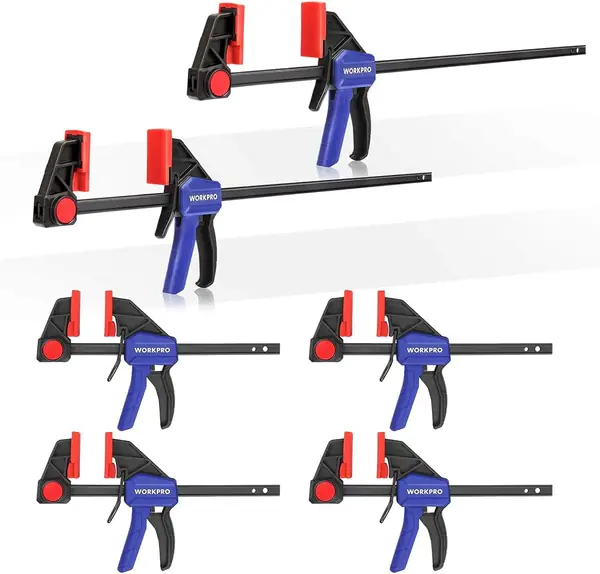
WORKPRO blue bar clamps with steel bars, four 6-inch and two 12-inch sizes

General woodworking assembly

Shop Score 98/100
Clamping Force
150 lb
Sizes Included
Four 6 in. and two 12 in.
Clamp Or Spreader
Reversible jaw with quick-change button
Body And Bar
Reinforced nylon and hardened steel
View on Amazon

Four 6-inch clamps and two 12-inch clamps in one box is a better start than a rack of identical bars. The short ones handle drawers, face frames, and small assemblies where a long bar is just in the way, and the 12-inch pair takes over when a joint needs more reach. Six clamps also means a small box glue-up goes together in one pass instead of two.

The trigger is what makes this set our default. You hold the joint closed with one hand and squeeze with the other while the ratchet takes up the slack; the quick-release latch drops the jaw with a press when the glue is dry. We also appreciate the red button that lets you pull a jaw off and turn it around, converting the clamp into a spreader for pushing a cabinet box or a frame apart to fit. Reversed, the 6-inch clamps open past 11 inches.

Reinforced nylon bodies on hardened steel bars keep the whole six-piece set a little over five pounds. That light weight matters more than it sounds: hang one on a small assembly and it will not tip the work over on the bench. The non-marring pads bite into sanded stock without leaving a bruise.

Those pads pull off, which counts the day one ends up glued to a project, because you replace the pad instead of the clamp. The 12-inch bars are the ones that stay out on the bench; the 6-inch clamps are small enough to live in a drawer until a job calls them out.

Worth Noting

  • 150-pound limit won't close heavy panel joints
  • Release trigger can stick under pressure
Our Verdict

The set we recommend to most woodworkers: six one-handed clamps in two sizes, with a trigger that lets you hold a joint and tighten it with the same motion.

Check Latest Price
2.

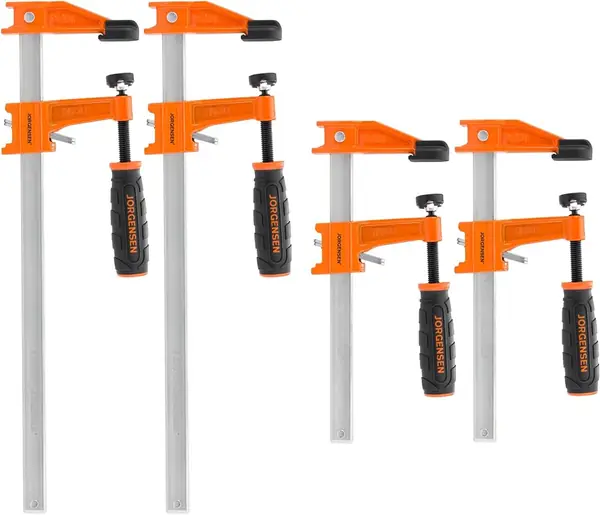
Jorgensen Steel Bar Clamp Set Best for Clamping Pressure

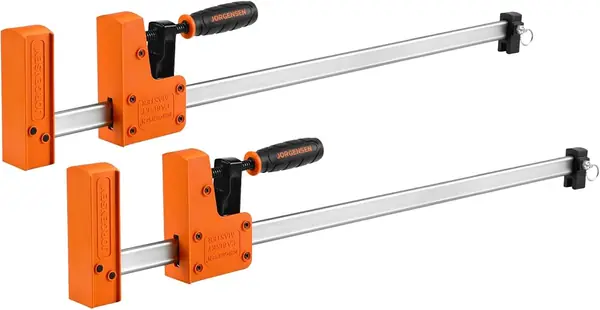
Jorgensen orange steel bar clamps, two 6-inch and two 12-inch, rubber handles

Tight glue joints

Shop Score 97/100
Clamping Force
600 lb
Sizes Included
Two 6 in. and two 12 in.
Bar Material
Plated high-carbon steel
Throat Depth
2-1/2 in.
View on Amazon

A 600-pound load limit puts these in a different class from the 150-pound trigger clamps here, and that is the whole reason to own a set. The large handle on the screw lets you crank a joint down until the glue line closes evenly, and the screw holds that pressure after you let go. They were the clamps we reached for whenever a seam had to be pulled together instead of merely pinned.

The sliding head runs on a multi-disc clutch that grips anywhere along the bar, so you set the jaw roughly by hand and finish with the screw. Throat depth is 2-1/2 inches, enough to clear a cleat or a batten, and the plated steel bar shrugs off a humid shop. Two 6-inch and two 12-inch clamps cover most of what a small shop builds.

Each screw ends in a swivel pad, so the jaw sits flat on the work instead of digging a corner in as you tighten. That is the detail that justifies the step up from a trigger clamp: the pressure goes into the joint rather than into a dent beside it.

Worth Noting

  • Plastic jaw pads deform and slide off
  • Screw drive is slower than a trigger clamp
Our Verdict

Buy these when a joint has to be pulled shut rather than simply held: 600 pounds of screw pressure in two useful sizes, at a price that still leaves money for more clamps.

Check Latest Price
3.

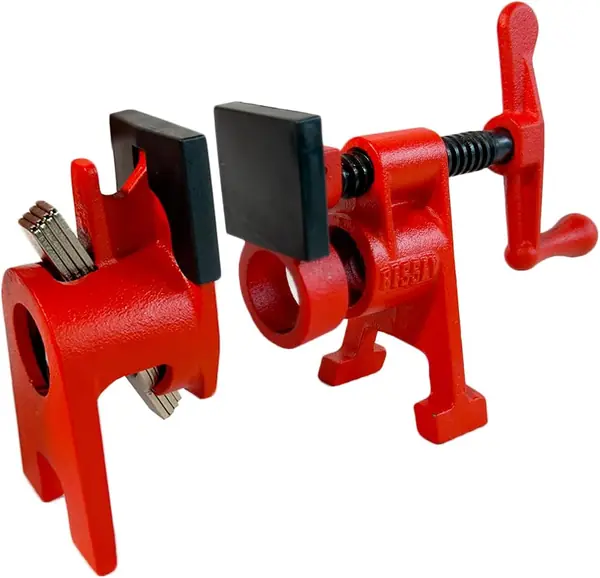
Bessey BPC-H34 Pipe Clamp Best for Long Glue-Ups

Bessey red and black H-style pipe clamp head with cast jaws and tall foot

Long panel glue-ups

Shop Score 96/100
Foot
H-style, dual-axis stability
Spindle
Acme threaded
Pipe Size
3/4 in. (pipe not included)
Jaw Material
Malleable cast iron
View on Amazon

What arrives is the clamp head, not the clamp. The 3/4-inch pipe that becomes the bar is chosen and cut to the length you want, which is why one pair of these can do the work of three fixed bar clamps. Set the price of a pipe length against a bar clamp of the same reach and the arithmetic usually favors the pipe.

The H-shaped foot is the other half of the case for it. Two tall legs stand the clamp upright on the bench and hold it there in two directions, so a glue-up does not roll over while you line up the next joint, and the raised base leaves room for your fingers under the crank handle.

Clutch plates on the sliding jaw grab the pipe wherever you drop it, and the Acme spindle turns the last inch or two against a cast jaw with a wide face. We like these best in multiples: six heads and three pipe lengths will clamp a tabletop that would otherwise need a rack of long bars.

Pipe length is the only real decision. Have the store cut and thread black iron for you, and the same head that clamps a drawer front will close a seam across a full sheet of plywood, with nothing left over but lengths of pipe you can store against a wall.

Worth Noting

  • Pipe is a separate purchase and store trip
  • Thin jaw pads work loose easily
Our Verdict

The clamp head we recommend for anything wider than a bar clamp reaches: buy it, add black iron pipe in the lengths your work needs, and glue up a full panel.

Check Latest Price
4.

Jorgensen Cabinet Master 24-Inch Best Parallel Clamps

Jorgensen Cabinet Master parallel bar clamp with orange jaw and maple handle

Cabinet and panel work

Shop Score 95/100
Clamping Force
1500 lb
Pack
2 clamps
Capacity
24 in.
Jaw Type
Parallel, reversible to spreader
View on Amazon

Parallel jaws are the difference between a flat panel and a panel with a crown in the middle. Both faces stay square to the bar as they close, so the pressure runs straight through the joint instead of pinching the top edges together and bowing the middle. On a tabletop or a cabinet side, that is the whole game.

The 24-inch opening handles most cabinet parts, the 1500-pound rating is more force than most glue-ups ask for, and the head reverses to push as well as pull. The pair weighs about fifteen pounds, and they stand on their own feet on the bench, so nothing has to be balanced while you position a joint.

We reach for these when the work is a panel rather than a joint, and two packs give you four clamps, enough to set a panel up on edge and check it diagonally for square before the glue sets. The maple handles are comfortable to lean on, which matters when you are closing four clamps in sequence.

Worth Noting

  • Premium price for a two-clamp pack
  • Moving jaw can bind and jam
Our Verdict

The clamp we recommend once panels become the work: parallel jaws and 1500 pounds of pressure hold a tabletop or carcass side flat, and the price reflects it.

Check Latest Price
5.

IRWIN Quick-Grip Mini Bar Clamps Best for Quick Light-Duty Work

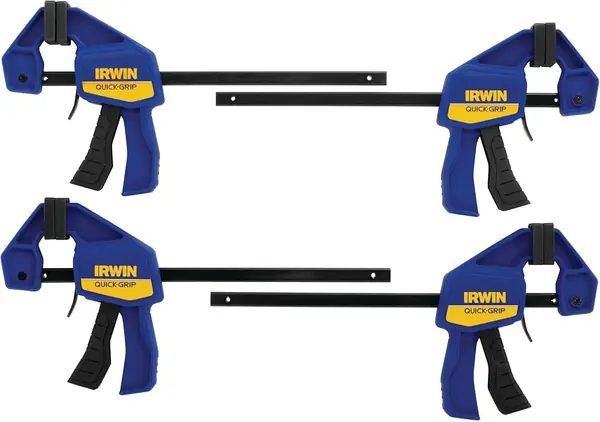
IRWIN Quick-Grip blue mini bar clamps, six-inch, four in a pack

Quick light-duty holding

Shop Score 94/100
Clamping Force
140 lb
Pack
4 clamps
Body
Reinforced resin with steel bar
Opening
6 in.
View on Amazon

Six inches of bar and 140 pounds of force is not much clamp, and it is the one we keep within reach at the bench. The four-pack earns its spot on the small holding jobs that fill a shop day: keeping a straightedge from sliding while you mark, pinning a jig to the benchtop, holding a piece of trim while the adhesive grabs.

The trigger sets one-handed and the lever drops the jaw instantly, which is the point of the design, since you can position a piece with one hand and lock it with the other. Non-marring pads are a real feature on finished work, and the resin body over a hardened steel bar keeps each clamp light enough to hang off the edge of a project without dragging it.

At this price a four-pack is easy to buy in multiples, and that is how they work best: two holding the work, two clamped to the bench edge waiting. The pads keep finished faces clean, so one can hold a face frame that has already been sanded.

Worth Noting

  • Resin bodies can crack under heavy pressure
Our Verdict

We recommend this four-pack as the clamp that lives within reach at the bench: light, quick, and kind to finished faces, for the small holding jobs that fill a shop day.

Check Latest Price
6.

HORUSDY 8-Pack Bar Clamp Set Best Budget Set

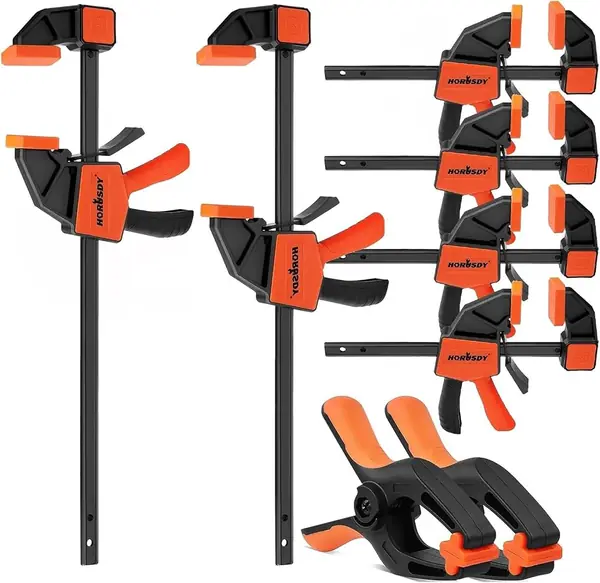
HORUSDY orange bar clamps, four 6-inch two 12-inch and two spring clamps

Budget starter set

Shop Score 93/100
Clamping Force
150 lb
Body
Nylon with hardened steel bar
Clamp Or Spreader
Reversible jaw
Pieces Included
Four 6 in., two 12 in., two spring clamps
View on Amazon

If the clamp drawer is empty, this is the set that fills it fastest. Four 6-inch bar clamps, two 12-inch bar clamps, and two spring clamps arrive together, all with the same 150-pound limit and the same button that flips a jaw into a spreader.

What we like is the range in one purchase. Someone fitting out a first bench can glue a drawer box, hold a face frame, and pin a backer board with the spring clamps without buying anything else. The 12-inch pair gets used most; the 6-inch clamps are the ones that get borrowed.

Nylon bodies and hardened steel bars keep the set light, and the release is quick enough for assembly work where you move from joint to joint. The spreader conversion works the same way as on the WORKPRO set: press the button, pull the jaw, turn it around, and push instead of pull.

The spring clamps are the pleasant surprise, since they are the right tool for holding a jig or a backer against a cut, and having two in the box saves a walk to the drawer. Where the set gives ground is in the hardware, which feels a grade lighter than the top pick's, so it suits weekend projects better than a shop that clamps every day.

Worth Noting

  • Clamps can release on their own under load
  • Plastic bumpers and handles can break
Our Verdict

The set we point a new bench to: eight clamps including two spring clamps for the money, with the same spreader trick as our top pick and lighter hardware throughout.

Check Latest Price
7.

Amazon Basics Metal Face Clamps

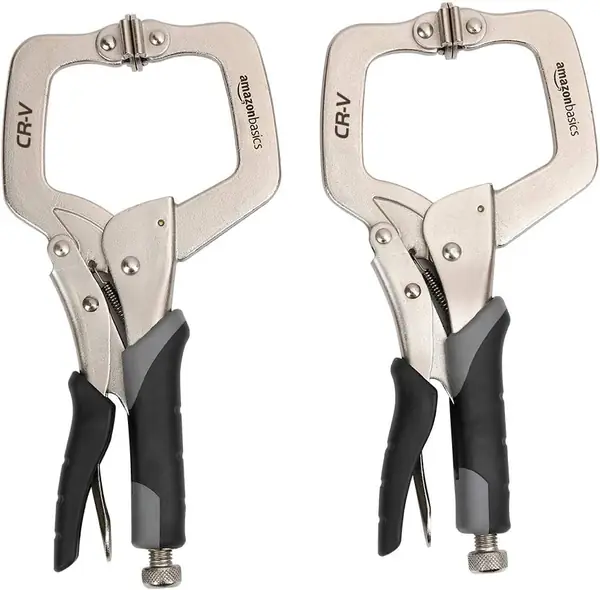
Amazon Basics metal face clamps with wide jaws and silver swivel pads

Pocket-hole joinery

Shop Score 92/100
Pack
2 clamps
Capacity
Up to 2-3/4 in.
Pad Type
Metal swivel pads
Jaw Reach
3 in.
View on Amazon

A pocket-hole joint slides while the screw drives, and a face clamp is the tool that stops it. The wide jaws sit flat across the joint and pull the two faces level, which is exactly what a bar clamp with a small round pad does badly.

The 3-inch jaws clamp material up to 2-3/4 inches thick, and the thumb knobs set the opening without hunting for a wrench. Swivel pads spread the pressure so the faces meet without a dent where the screw lands, and on a joint that stays visible that matters more than force.

The pair runs 11 inches long and weighs under two pounds, made of alloy steel with plastic grips. The mating surfaces are not polished, though the jaws still sit flat across a joint, and the broad pads do the holding rather than the screw threads.

For what a pair costs, we think they earn a drawer slot: one clamped to the pocket-hole jig, one on the joint, and the work stays put while you drive screws. They are not clamps you build a carcass with, but for flush faces before fasteners go in, nothing else here comes close.

Worth Noting

  • Screw mechanism is stiff to turn
Our Verdict

Worth buying if you cut pocket-hole joints, where a wide face clamp holding the two pieces flush does a job no bar clamp in this guide does cleanly.

Check Latest Price
8.

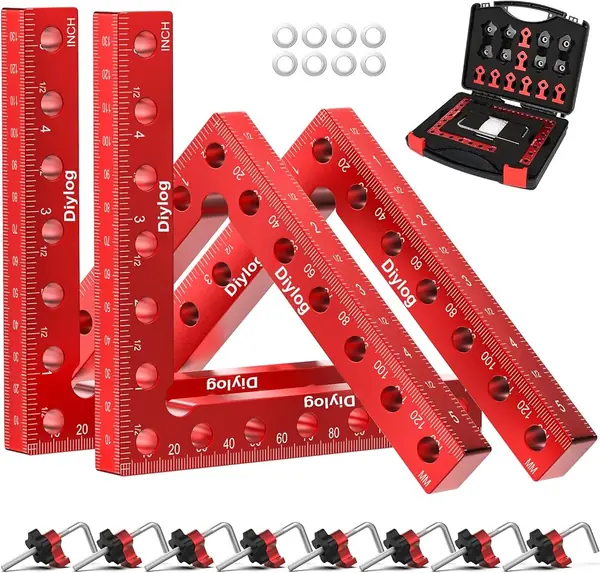
Diylog 90-Degree Corner Clamps Best for Box and Frame Assembly

Diylog red aluminum 90-degree corner clamps with fixing blocks and screws

Box and frame assembly

Shop Score 91/100
Size
5.5 x 5.5 in.
Angle
90 degrees
Included
Four squares plus eight spacers, blocks, nuts, and screws
Material
Aluminum alloy
View on Amazon

A box that goes together out of square stays out of square, and no amount of clamping pressure fixes it once the glue sets. Corner clamps hold two pieces at 90 degrees while they come together, and this four-pack does it with machined aluminum squares rather than cast corners.

Each 5.5-inch square sits inside a corner, and a screw run through an adjustable fixing block draws both pieces tight against it. Four squares mean all four corners of a box can be set at once, and the extra spacers and blocks let you set a square back from an edge when the joint needs the room.

The aluminum is chamfered along its edges so it does not scratch a sanded face, and it will not rust through years of glue spills. Check each square against a try square you trust before the first cabinet: a machined corner can be dropped in shipping, and five minutes now saves a carcass later.

We like these for boxes, drawers, and cabinet carcasses, where the job is holding an angle rather than pressing a joint. They do not replace a bar clamp, since the glue-up still needs clamps across each corner for pressure, but the squares are what make that pressure come out true.

Worth Noting

  • Requires separate bar clamps to supply joint pressure
  • Squares must be checked for accuracy after shipping
Our Verdict

Buy these for boxes, drawers, and carcasses, where you need a corner held at 90 degrees while the glue sets and bar clamps supply the pressure.

Check Latest Price

How We Tested Woodworking Clamps in a Working Shop

We built a shortlist from spec sheets and from the complaints of people who glue up for a living, then filtered it by jaw capacity, throat depth, rated force, and the cost per clamp in a set — a pack of light clamps is a different purchase than two heavy ones. Fourteen clamps came into the shop, and we used each one for nine months.

Testing happened on weeknights and Saturday mornings in a garage shop: tabletop panels glued and clamped across four bars at once, shop cabinet boxes squared up, a cedar chest assembled with pocket screws, a frame spread open with the jaws reversed. We ran a straightedge across each panel as pressure came on and noted whether the seam stayed flat or crowned. We slid each head along its bar to feel for grit, released each clamp one-handed while holding the workpiece with the other, and pried the pads off after repeated glue-ups to see whether they stayed put or wandered.

Durability was judged over months rather than a single session — triggers that went sticky, handles that spun loose, bars that spotted with rust in a damp shop. We also compared what a set actually covers, since a first batch usually has to handle more than one job. Throughout, we kept every clamp under its rated load, used plain black iron pipe with sound threads in the pipe clamps and checked it for cracks before loading, and unplugged the saw and clamped workpieces to the bench before cutting rather than trusting hand pressure.

How to Choose Clamps for Woodworking

Match the force rating to the joint

Force is where clamps separate fastest. A 150-pound trigger clamp is built to hold a piece in place; a 600-pound screw clamp is built to pull a joint shut. For edge-gluing boards into a panel, the seam has to close along its whole length, and that takes pressure you can lean into, enough to bring the joint tight without crushing the fibers along the edge.

The other half of the question is knowing when to stop. More pressure is not better on a glue joint: crank a clamp until glue runs out and you starve the seam, which ends up weaker than one closed firmly and left alone. A rated load limit is a ceiling for the tool, not a target to reach.

Bar length and throat depth decide what fits

The number on a bar clamp, whether 6, 12, or 24 inches, is the opening, not the reach into the work. Throat depth is what lets a jaw get past a cleat, a batten, or a table apron, so a 2-1/2-inch throat covers most assembly while a deep-reach jaw is what you need when the joint sits well in from an edge.

Longer bars flex more under the same load, which is why a 24-inch parallel clamp and a 24-inch bar clamp behave differently on the same panel. Buy the shortest bar that spans the work and add length only when the joint demands it.

One hand or two: triggers, screws, and pipe

Trigger clamps are for assembly, where you are holding a piece in place and need a clamp that sets with a squeeze. Screw clamps are for pressure, where you can afford two hands and want a joint to stay closed while you step away. Most shops end up with both, and the split is roughly the split between holding work and gluing it.

Pipe clamps sit in between. The head slides anywhere along a pipe you choose, so a pair of heads and a few lengths cover spans that would otherwise need three or four fixed bars, and the feet let a glue-up stand on its own while you work around it.

Sets, singles, and what to buy first

A set gets you clamping on day one, usually at a lower cost per clamp; singles let you build the mix your work actually calls for. Start with a spread, several short clamps and a couple of long ones, because a glue-up more often fails for lack of clamps than for lack of force. Six identical bars leave you short at the size the joint needs.

Add pressure next: a pair of screw F-clamps or a few pipe clamp heads cover the joints your trigger clamps cannot close. Parallel clamps come last, and only if panels are the work.

Frequently Asked Questions

Final Verdict

The WORKPRO six-pack is where we start most woodworkers. Six one-handed clamps in two sizes cover assembly, small glue-ups, and the holding jobs in between, and the spreader conversion handles frames and cabinet boxes without a second purchase.

Add the Jorgensen steel bar clamps when a joint has to be pulled shut, or the Bessey pipe clamp heads when the work runs longer than a 12-inch bar can span. If panels are your main output, go straight to the Cabinet Masters and buy two packs.