↑↓ navigate ↵ open Esc close All results →

Best Double Sided Tapes for Woodworking of 2026

Router templates often leave no safe margin for C-clamps or hold-downs anywhere in the bit's path. Double-sided woodworking tape solves that clearance problem by anchoring patterns directly to the blank, yet strong holding power and residue-free removal rarely arrive in the same roll.

Taping templates onto plywood, MDF, melamine, and acrylic and peeling them back across four months of testing 14 rolls showed that tape thickness predicts shear resistance far better than box claims. Rolls with a stiff carrier liner resist creeping even when a router bit hits a knot, whereas bargain-thin films curl at the edges and let good panels spoil mid-pass.

From single trial rolls to multi-roll shop packs, these eight tapes held patterns steady through full cuts and lifted off cleanly without forcing extra sanding.

Our Top Picks

The Best Double Sided Tapes for Woodworking

1.

XFasten Double Sided Woodworking Tape Best Overall
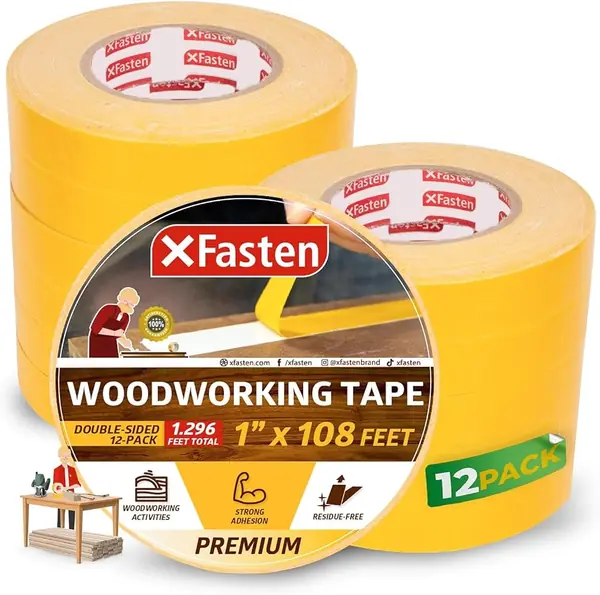
XFasten off-white double sided woodworking tape, 12 rolls, 1 inch wide

High-volume shops

Shop Score 94/100
Roll Size
1 inch x 36 yards
Total Length
1,296 feet
Pack Quantity
12 rolls
Thickness
7 mils
View on Amazon

A 12-pack looks like a lot of tape until you do the math. Each roll is 1 inch by 36 yards, and the box carries 1,296 feet, so the per-foot cost lands below most of the smaller packs here. For a shop that goes through tape on every template, jig, and CNC setup, that changes the way you use it: we don't ration it.

The specification that sold us is the 7-mil cloth backing. It resists curling, so the roll stays flat and manageable instead of folding back on itself while you're trying to line up a template. The silicone adhesive is the other half of the story: it grabs wood, MDF, and plywood firmly enough for routing, then releases without pulling fibers. We especially like it for CNC hold-down and pattern routing, where a template that creeps even a little ruins the cut. It cuts cleanly with a utility knife, too, which matters when you're fitting tape to a curved edge.

Bulk is the trade-off. If you make a few cuts a month, the box is a lot of tape and money to commit to at once. We still think it's the strongest default for frequent work, but occasional woodworkers should look at the smaller packs below. The 1-inch width is the versatile size; on a wide template, run two parallel strips rather than wishing for a 2-inch roll.

Worth Noting

  • Large 12-pack requires a big upfront purchase
Our Verdict

We recommend the XFasten 12-pack as the default for a busy shop: the cloth-backed tape holds templates through routing and peels clean, and the bulk box brings the per-foot cost down.

Check Latest Price
2.

Hippie Crafter Double Sided Woodworking Tape Best Value

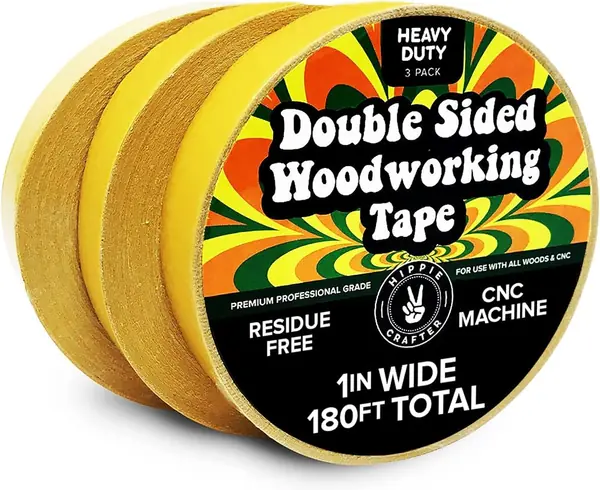
Hippie Crafter yellow double sided woodworking tape, three 1-inch by 60-foot rolls

Everyday template routing

Shop Score 91/100
Roll Size
1 inch x 60 feet
Total Length
180 feet
Pack Quantity
3 rolls
Thickness
0.25 millimeters
View on Amazon

Three 60-foot rolls for less than some single rolls is the reason this one stays in the drawer. The 1-inch width is the right general-purpose size for template edges, and the silicone adhesive is meant to be removable. We like having a spare roll on hand without feeling like we've bought a lifetime supply.

The 0.25-millimeter thickness is the detail we appreciate most. It lets a template sit close to the workpiece, which matters when a bearing bit follows the edge. The tape also tears by hand, so setup doesn't require a knife and a cutting mat every time. On a clean, flat surface, we burnish it down and add a few extra strips across a large template; that's the routine that makes it reliable for us.

For everyday routing, the price makes it easy to keep a roll at the bench and another in the tool bag. We treat it as our default utility tape and save the premium rolls for the cuts that scare us. It's also a good tape to hand to someone who is new to template routing because the cost doesn't make them hesitate to use enough.

Worth Noting

  • Hold varies on dusty or uneven surfaces
  • Backing can be fussy to separate
Our Verdict

We reach for the Hippie Crafter when we want a capable woodworking tape without a shop-sized outlay; the three-roll pack is affordable and works on CNC templates and hand routing.

Check Latest Price
3.

Better Boat Woodworking Double Sided Tape Best for Clean Removal

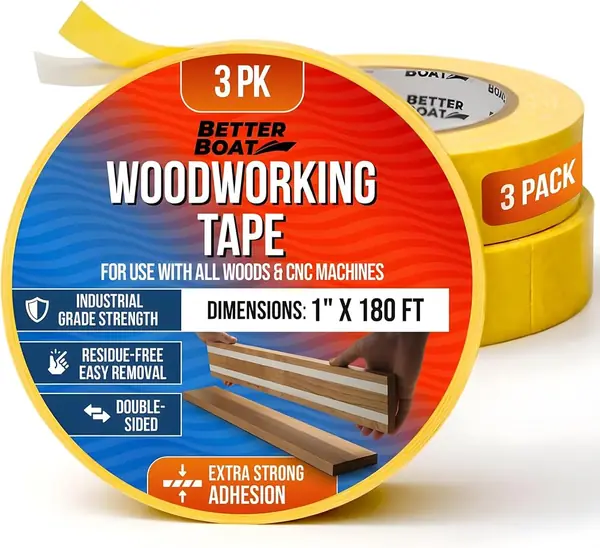
Better Boat yellow double sided woodworking tape, three 1-inch by 60-foot rolls

Finish template work

Shop Score 90/100
Roll Size
1 inch x 60 feet
Total Length
180 feet
Pack Quantity
3 rolls
Backing Material
Polyethylene
View on Amazon

Clean release is the promise, and it's why this tape earns a place. Each roll is 1 inch by 60 feet, so the three-roll pack gives you 180 feet; the width fits template edges and the narrow strips you need around curves. It's also a practical size for a bench drawer.

The marine-grade adhesive is the part we didn't expect to care about. It keeps acrylic guides and routing jigs locked during a cut, and it doesn't seem to mind the temperature swings in a garage shop. The polyethylene backing is thin enough not to throw off a flush-trim pass, and it cuts cleanly with scissors. We also like that the yellow color makes it easy to see where the tape ends and the template begins.

Where it stands out is removal. It peels away from MDF, melamine, and solid wood without the tacky patches that make you reach for a scraper. We keep it for finish work and veneered plywood, where a little residue would cost more time than the tape saves. That clean peel is the reason it stays in our finish kit rather than the utility drawer.

Worth Noting

  • Costs more per foot than budget rolls
Our Verdict

We choose the Better Boat tape when clean release matters more than brute grip; it holds router templates firmly and comes off wood without the sticky cleanup.

Check Latest Price
4.

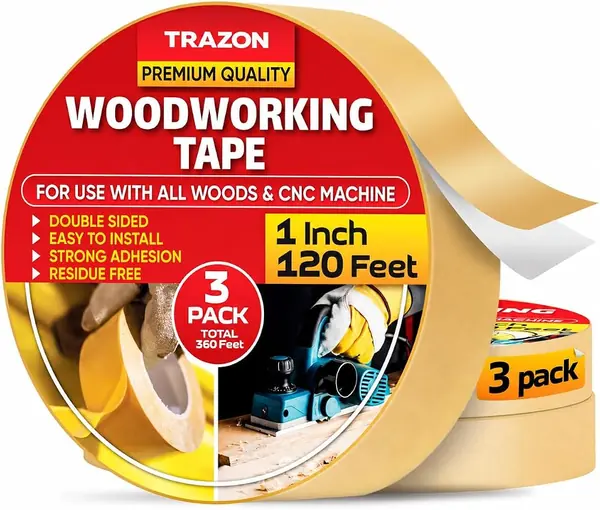
Trazon Double Sided Woodworking Tape Best for Long CNC Runs

Trazon yellow double sided woodworking tape, three 1-inch by 120-foot rolls

Long CNC sessions

Shop Score 89/100
Roll Size
1 inch x 120 feet
Total Length
360 feet
Pack Quantity
3 rolls
Adhesive
Acrylic
View on Amazon

Long CNC jobs put two demands on tape: it has to hold through heat, and it has to last. Trazon's 120-foot rolls and heat- and moisture-resistant acrylic adhesive are aimed at that routine.

The 1-inch width is standard for template work, and the three-roll pack gives you 360 feet. The tape tears cleanly from the roll, and the yellow backing is easy to spot against light wood. We also like that it's thin enough to keep a template close to the workpiece, which helps when a bearing bit follows the edge.

On a warm day in the shop, the acrylic adhesive kept its grip on plywood and MDF templates through a full routing pass. It tears by hand, so we can set up a jig without hunting for scissors. And the thin profile keeps the template close to the workpiece, which helps when a bearing bit follows the edge.

The limitation is on rough or dusty stock, where the thin profile can need more strips than you expect. We treat it as a clean-surface tape, prep the workpiece, and press firmly. For long CNC sessions and warm shops, that routine works; for a quick template on scrap, the budget picks are easier.

Worth Noting

  • Residue can remain on some surfaces
Our Verdict

We like the Trazon for long CNC sessions and warm shops, where its heat-resistant acrylic adhesive and 120-foot rolls keep a template locked without constant reloading.

Check Latest Price
5.

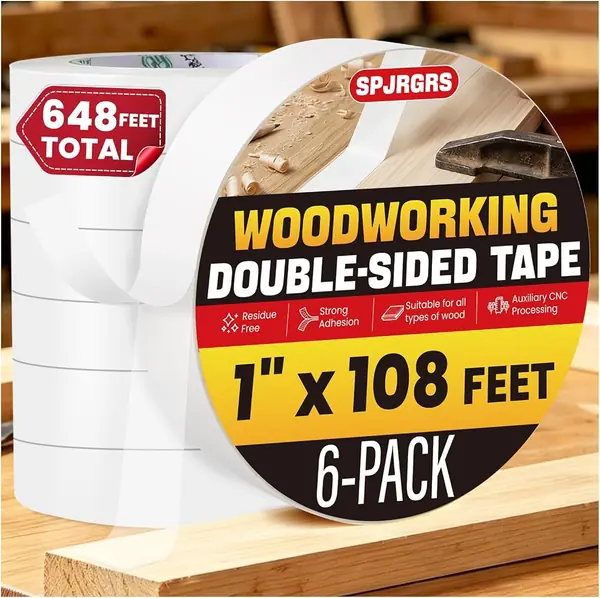
SPJRGRS Double Sided Woodworking Tape Best Bulk Budget

SPJRGRS white double sided woodworking tape, six 1-inch by 108-foot rolls

High-volume utility work

Shop Score 88/100
Roll Size
1 inch x 108 feet
Total Length
648 feet
Pack Quantity
6 rolls
Water Resistance
Water resistant
View on Amazon

Six rolls totaling 648 feet is the headline. If you cut every day, that changes how freely you use tape on jigs, templates, and spoil boards; you stop saving the last few inches of a roll for a special occasion. It's the closest thing here to a shop-supply box.

The tape is ultra-thin, which we like for keeping a template close to the workpiece. It's designed for a strong hold on wood, metal, and plastic, and the white backing peels away cleanly enough for routine work. We found it works best on flat, clean stock; press it down hard and give it a minute before cutting. On a curved template, tear narrow strips rather than fighting a wide piece around the bend.

The thin profile is also the catch. On rough MDF or a scratched bench, it can need more strips to feel secure. We keep it for shop jigs and utility work rather than veneered show pieces, where a more forgiving tape is worth the extra cost. For the price, it's a lot of tape to have on hand. That's a trade we make happily for jigs and fixtures.

Worth Noting

  • Can be difficult to remove from delicate surfaces
Our Verdict

For a high-volume shop, the SPJRGRS six-pack is the tape we buy when we want a huge supply without a premium price; it's thin, removable, and ready for repeated template work.

Check Latest Price
6.

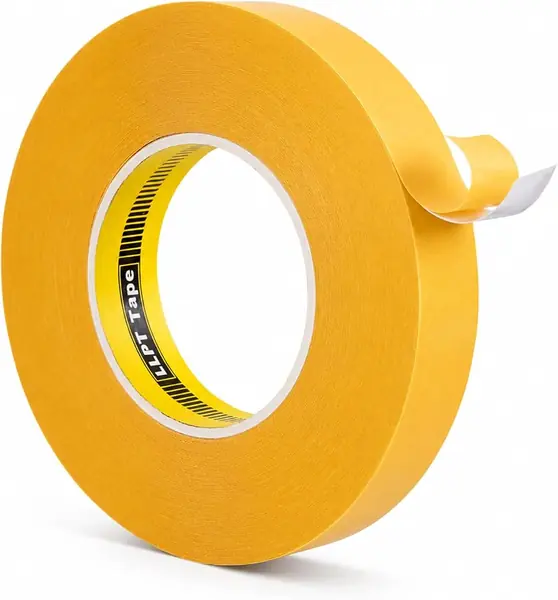
LLPT Double Sided Woodworking Tape Best for Aggressive Hold

LLPT yellow double sided woodworking tape, one 25-millimeter by 33-meter roll

Stubborn templates

Shop Score 87/100
Roll Size
25 millimeters x 33 meters
Total Length
108 feet
Adhesive
Silicone-based
Heat Resistance
120 °C
View on Amazon

Some templates just want to move. LLPT's tape is the one we choose when a router bit is grabbing and ordinary tape feels marginal; the silicone adhesive grips wood tightly and holds through pattern routing. It's the aggressive option in this group.

The 1-inch by 108-foot roll is a useful size, and the yellow backing makes it easy to see where you've applied it. We like the thin profile for template work and the way it cuts with a utility knife. It's also a strong option for CNC hold-down when you need a little more security than a budget roll provides. The roll unwinds smoothly, which matters when you're laying down a long strip along a jig.

The aggressive hold has a cost, and we treat it as a utility tape rather than a finish tape. On a stubborn jig or a CNC fixture, that trade-off makes sense; on veneered show pieces, we reach for Better Boat. That's the decision: choose LLPT for grip, and test it on scrap before you trust it on a finished surface. We keep a roll near the router table for the cuts that feel likely to shift.

Worth Noting

  • Residue can remain on wood after removal
  • Adhesive can lift fibers on MDF and plywood
Our Verdict

When a template needs extra grip, LLPT is the roll we choose; its silicone adhesive bites hard and holds through routing, and we keep it for utility jigs rather than finish work.

Check Latest Price
7.

SICCOMA Double Sided Woodworking Tape

SICCOMA yellow double sided woodworking tape, one 1-inch by 82-foot roll

Trying woodworking tape

Shop Score 86/100
Roll Size
1 inch x 82 feet
Pack Quantity
1 roll
Adhesive Format
Double-sided
Surface Recommendation
Wood
View on Amazon

A single roll is the right way to try a dedicated woodworking tape without committing to a bulk box. SICCOMA's 1-inch by 82-foot roll is small enough to store in a drawer and long enough for several template jobs. We like that it doesn't ask you to buy a lifetime supply before you know whether a woodworking tape fits your routine.

The tape is described as removable and residue-free, with a strong adhesive on both sides and a yellow paper backing. The 1-inch width suits template edges and narrow jigs, and the single roll is easy to keep near the bench. It cuts cleanly with a utility knife and presses flat without curling, which makes it easy to use on a small template.

What we appreciate most is the low commitment. You can keep it with your router bits, use it on a weekend project, and replace it without clearing shelf space for a case. For a busy shop, one roll disappears fast; for a hobbyist, that's the point. It's the tape we hand to someone who is curious about the method but not ready to stock a shelf.

Worth Noting

  • One roll won't last in a busy shop
Our Verdict

We keep the SICCOMA single roll as a low-cost way to try a dedicated woodworking tape; it's a simple 1-inch by 82-foot roll for templates and light CNC work.

Check Latest Price
8.

Opvixi Double Sided Woodworking Tape Best for Small Shops

Opvixi yellow double sided woodworking tape, two 1-inch by 75-foot rolls

Small shops

Shop Score 85/100
Roll Size
1 inch x 75 feet
Total Length
150 feet
Pack Quantity
2 rolls
Adhesive Sides
2
View on Amazon

Two 75-foot rolls make this a small-shop pack rather than a production box. The 1-inch width is the useful size for template edges and narrow jigs, and the total of 150 feet is enough for a few projects without taking up a shelf.

The tape is thin and designed to hold wood, metal, and plastic. We like that it comes in a two-roll pack; one roll can live at the bench and the other can stay in the tool bag. The yellow backing is easy to spot, and the adhesive is meant to release without leaving residue.

On a clean, flat workpiece, it held a template through light routing and left the surface ready for the next step. We pressed it down firmly and gave it a minute before cutting. It's a sensible middle ground for smaller templates and occasional CNC work.

What we appreciate most is the format: two rolls, 150 feet, and no bulk-box commitment. That makes it easy to keep one roll at the bench and one in the tool bag, and easy to replace when it runs out. For a small shop or a hobbyist, that convenience is the reason to choose it.

Worth Noting

  • Holding power drops on demanding cuts
Our Verdict

We recommend the Opvixi two-pack for small shops and hobbyists who want dedicated woodworking tape without a bulk-box commitment; the 150 feet across two rolls is easy to store and use.

Check Latest Price

How We Tested Double Sided Woodworking Tape

We started by reading spec sheets and buyer reviews for every removable double-sided tape sold for woodworking, then narrowed the field to rolls that listed a thickness, an adhesive type, and a removal claim — and compared them by cost per foot rather than by pack price. Anything pitched as permanent mounting tape or foam tape came out. That left 14 rolls, which we put to work in a home shop over four months, including a stretch in August when the garage passed 95 degrees and a damp week when everything in the basement felt tacky.

Each roll was pressed onto plywood, MDF, melamine, and scrap acrylic with a roller, then used to hold a template through router passes and to anchor smaller pieces on a CNC spoilboard. We watched for creep, lifted edges, and any drift in the pattern as the bit loaded up, and we timed how long it took to peel the liner one-handed while wearing gloves.

Removal got its own round. We pulled each tape back at a shallow angle, noted whether wood fibers lifted with it, and wiped the surface first with a dry rag and then with mineral spirits to see what residue was actually there. We also measured thickness with calipers, counted usable feet per roll against the label, and left taped blocks in the hot garage and the damp corner to check for adhesive ooze or softening before ranking anything.

How to Choose a Double Sided Tape for Woodworking

Start With the Hold, Then Check the Release

A woodworking tape has to do two jobs at once: keep a template or workpiece from creeping during a cut, then let go without lifting fibers or leaving a sticky film. Silicone-based adhesives are often chosen for clean release, while acrylic formulas tend to trade a little more aggression for heat resistance. Neither is automatically better. The deciding question is what you are cutting and how much cleanup you can tolerate.

We prioritize a secure hold on flat, clean stock first, because a template that shifts ruins the workpiece in one pass. Then we look at release. If you route veneered plywood or finished material, lean toward a clean-release tape such as Better Boat or XFasten. For a stubborn jig or a rough utility cut, the more aggressive LLPT roll can be the better tool. Test any tape on scrap before trusting it on a show piece.

Match Width and Roll Length to the Work

A 1-inch roll is the default for template edges, narrow jigs, and curved patterns; it bends more easily than a wide roll and leaves less waste. A 2-inch roll gives more surface contact on large, flat workpieces, but you can also run two parallel 1-inch strips. Roll length is a separate decision. A 60- to 120-foot roll suits occasional work, while a 648-foot or 1,296-foot bulk pack makes sense only if you cut often enough to use it.

We think about the commitment, not just the per-foot math. A three-roll pack like the Hippie Crafter is easy to justify for a hobbyist, while the XFasten 12-pack rewards a busy shop with a lower cost per foot. The SPJRGRS six-pack sits in the middle for high-volume utility work. If you are unsure, start with a single roll or a two-pack and buy bulk once you know the tape suits your workflow.

Thickness and Backing Matter More Than You Think

Thin tape keeps a template close to the workpiece, which is what you want when a bearing bit or flush-trim bit follows the edge. A thick tape can create a small gap that throws off the cut. But too thin can be fragile and hard to handle, especially on rough stock. A cloth or fiber-backed tape, such as the 7-mil XFasten roll, resists curling and stays manageable as you peel it.

Backing is the other half of handling. A stiff paper backing is easy to spot but can fight you when you are trying to expose the second adhesive face. A cloth backing tends to lie flatter and tear more predictably. We look for a tape that presses down without curling at the edges, because a lifted corner is where a template starts to move.

Prepare the Surface and Remove Promptly

Dust is the enemy of every woodworking tape. Wipe MDF, plywood, and melamine before applying, then press the tape down firmly and give it a minute to grab. Heat and moisture can soften the adhesive, so a warm shop or a damp garage is worth considering; acrylic and marine-grade formulas are the ones to look at for those conditions. Apply tape in parallel strips across the contact area rather than one lonely strip in the middle.

Remove the tape as soon as the cut is done. The longer it sits, the more likely it is to leave residue or lift fibers, especially on veneer. Peel it back low and slow rather than yanking it upward. If a bit of adhesive remains, a soft scraper and a light touch are safer than aggressive sanding. We keep a scrap board nearby to test the peel before using a new roll on a finished surface.

Frequently Asked Questions

Final Verdict

We recommend the XFasten 12-pack for most woodworking shops. It has the best balance of hold, clean release, and per-foot value in this group, and the cloth backing makes it easy to handle on real templates. If you want a smaller commitment, the Hippie Crafter three-pack is the budget choice; if you are routing veneered or finished wood and clean removal is the priority, the Better Boat tape is the one we reach for.