↑↓ navigate ↵ open Esc close All results →

Best Earplugs for Woodworking of 2026

An afternoon spent ripping stock on a table saw often leaves a faint ring in your ears on the quiet drive home—permanent damage that no shop upgrade restores. Earplugs are the simplest defense, provided they go in quickly with dusty fingers and stay comfortable long enough that nobody pulls them out early.

Proper expansion and seal mattered far more than the rating printed on the box across 16 earplugs worn over four months beside a table saw, router, planer, and shop vac; a half-seated foam plug blocks a fraction of its stated decibels. Evaluating softness, smaller-profile sizing for narrower canals, and accessible packaging narrowed the field from bulk disposable foam to reusable corded silicone.

Our Top Picks

The Best Earplugs for Woodworking

1.

Howard Leight Laser Lite Best Overall
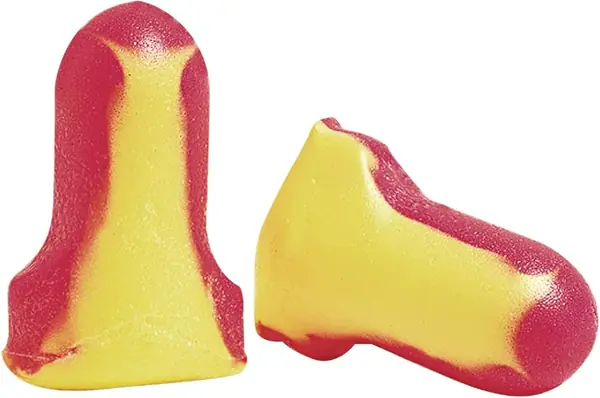
Howard Leight Laser Lite pink and yellow foam earplugs in a 200-pair box

General shop use

Shop Score 95/100
Quantity
200 pairs
Noise Reduction Rating
32 dB
Fit
Small ear canals
Visibility
High-visibility pink/yellow
View on Amazon

The pink-and-yellow color is the first thing you notice, and it's why these plugs stay findable on a bench, in an apron pocket, or beside the saw. We made them our top pick because the visibility is matched by a 32 dB NRR, a 200-pair box, and a closed-cell skin that resists dirt instead of grabbing it.

The foam is self-adjusting, with a small profile aimed at smaller ear canals and enough expansion for larger ones. We like the contoured T-shape for grabbing with dusty fingers, and the foam rolls down quickly for insertion. In our shop, the box lives on a shelf near the miter station, so there is no excuse to run a loud tool without a pair.

If you want the softest possible plug for a long session, Moldex is the one we reach for; Laser Lite is the one we keep by the saw because the high-vis color and bulk box make it the easiest to live with. The 32 dB rating is serious protection for table saw, router, and planer work, and the soil-resistant surface wipes clean when a plug picks up sawdust. We also appreciate that the box is large enough to leave a few pairs in a tool bag without emptying the supply.

Worth Noting

  • May sit loose in larger ear canals
Our Verdict

We recommend the Laser Lite as the shop default because the 32 dB rating, high-visibility foam, and 200-pair box make protection easy to keep within reach.

Check Latest Price
2.

Moldex SparkPlugs Best High-Noise Comfort

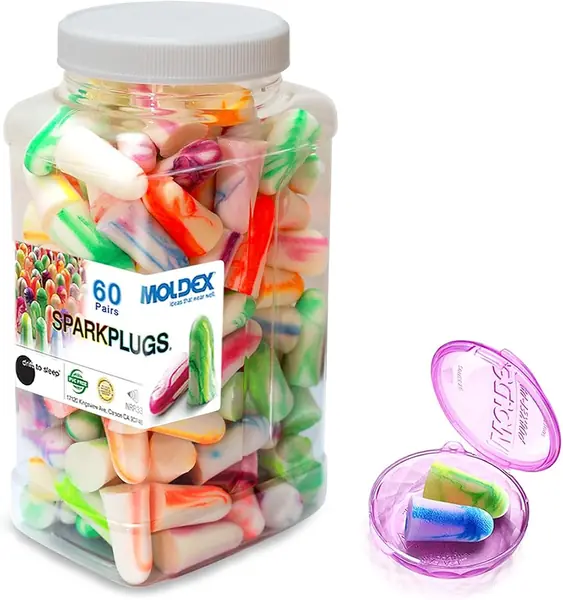
Moldex SparkPlugs soft foam earplugs in a 60-pair bottle pack

Long loud sessions

Shop Score 94/100
Quantity
60 pairs
Noise Reduction Rating
33 dB
Shape
Tapered foam
Packaging
Bottle pack
View on Amazon

A 33 dB NRR ties the top rating in this group, and it's the reason Moldex earned a place beside the saw. The foam is tapered and low-pressure, so it rolls down easily and expands with a gentle feel rather than a hard pop. The 60-pair bottle is small enough to tuck in a cabinet but holds enough pairs for several weeks of weekend work.

We reach for these on long routing or planing sessions, when comfort matters as much as attenuation. The soft foam doesn't press hard against the canal, and the tapered shape seats with less fuss than a stiff cylinder. It's the plug we hand to someone who finds typical foam plugs scratchy. The 33 dB rating gives a margin for tools that run hot, and the bottle pack is easy to keep in a cabinet. If you want top-tier attenuation in a softer plug, this is the one.

Worth Noting

  • Can feel long in smaller ear canals
Our Verdict

We reach for these when we want top-tier attenuation without giving up softness, especially for long routing or planing sessions.

Check Latest Price
3.

Quality Plugs Foam Earplugs Best Bulk Value

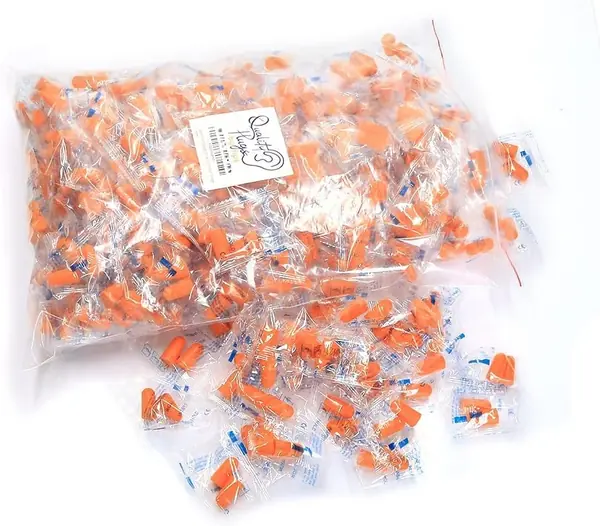
Quality Plugs orange foam earplugs in a 200-pair bulk box

Bulk shop supply

Shop Score 93/100
Quantity
200 pairs
Noise Reduction Rating
32 dB
Style
Disposable foam
Color
Orange
View on Amazon

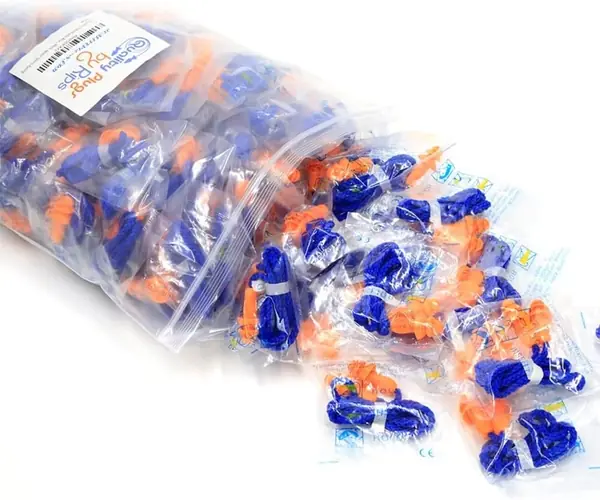
The 200-pair box is the first thing you notice, and for a home shop it solves a practical problem: there is always a pair within reach, so you don't skip protection because you can't find a plug. The foam is rated at 32 dB and comes in orange, which makes a dropped plug easier to spot in sawdust.

These are basic roll-down foam plugs, not a shaped or corded design. We found the foam compresses well and seats with a normal roll-and-hold, and the orange color is the useful detail; it stands out against a dark bench or a pile of offcuts. The bulk format means you can leave a handful in a tool bag without worrying about the supply.

We keep this box as the shop supply because the 32 dB rating is enough for table saw, router, and planer work and the per-pair cost is low. It isn't the softest plug here, and the plain foam shape asks you to roll and hold it properly. For a busy bench, that is a fair trade for a box that won't run out mid-project.

Worth Noting

  • Fit varies with ear canal shape
Our Verdict

This is the box we keep for a busy bench where plugs disappear and the priority is a steady supply of 32 dB foam.

Check Latest Price
4.

Quality Reusable Corded Earplugs Best Reusable Corded

Quality reusable silicone earplugs with blue cords and orange tips

Quick task changes

Shop Score 92/100
Quantity
100 pairs
Noise Reduction Rating
25 dB
Cord
Removable fabric cord
Material
Silicone
View on Amazon

The cord is the feature that makes these reusable plugs practical in a shop: you can pull one out to hear a question or check a machine, then let it hang around your neck instead of setting it down in sawdust. We like that the cord is removable, too, so the same pair can be worn uncorded when you don't want the loop. That matters when you are switching between a saw and an assembly task and don't want to set a dirty plug down.

At 25 dB, these are not the highest-attenuation plugs in this group. We treat them as the pair for shorter tasks, hand sanding, or the segment of a project where you need to take plugs in and out. The silicone flanges wipe clean, and each pair comes individually wrapped, which is handy if you keep spares in a toolbox. The flanges seat with a simple push rather than a roll, which is the main reason they come out so easily. For a long router session, we switch to a foam plug with more reduction.

Worth Noting

  • Cord can pull free from the plug
Our Verdict

We like these for the tasks where you need to pull a plug out and put it back in, and the cord keeps it off the sawdust.

Check Latest Price
5.

Howard Leight Maximum Lite Best for Smaller Ear Canals

Howard Leight Maximum Lite green foam earplugs for smaller ears

Small ear canals

Shop Score 91/100
Quantity
200 pairs
Noise Reduction Rating
30 dB
Fit
Smaller ear canals
Style
Uncorded
View on Amazon

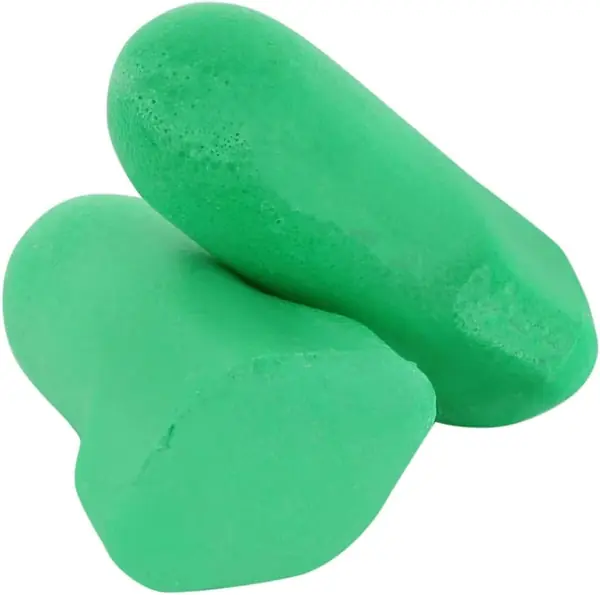
Standard foam plugs can feel like they're trying to tunnel into a smaller ear canal, and that's the problem Maximum Lite is shaped to solve. The low-pressure foam is designed for smaller ears, with a contoured T-shape that gives your fingers something to grip. The T-shape gives you a clean grip between thumb and forefinger, which is more control than a plain cylinder. The foam is also closed-cell and soil-resistant, which is a small but useful detail in a dusty shop.

We keep these in the small-ear bin because the 30 dB NRR is still serious protection, not a compromised junior plug. The foam expands gently, so it doesn't throb against the canal during a long session, and the T-shape is easier to remove than a plain cylinder. The 200-pair box means you can leave a handful in a pocket and not worry about losing them. The box is large enough for a shared shop, and the low-pressure expansion is the reason we keep them on the small-ear shelf.

Worth Noting

  • Not for larger ear canals
Our Verdict

We point anyone with narrow ear canals to these because the 30 dB foam is shaped to seal without the pressure of a standard plug.

Check Latest Price
6.

Mack's Ultra Soft Best for Soft Small Ears

Mack's Ultra Soft foam earplugs in a flip-top plastic jar

Soft small ears

Shop Score 90/100
Quantity
50 pairs
Noise Reduction Rating
33 dB
Foam
Slow-release foam
Packaging
Flip-top jar
View on Amazon

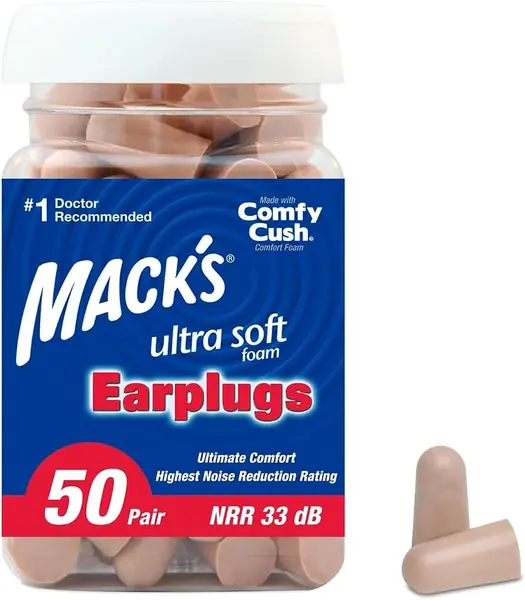
The flip-top jar is a small convenience that matters in a shop: the plugs stay together in a cabinet instead of loose in a drawer, and the lid is easy to open with one hand. Inside are 50 pairs of slow-release foam with a 33 dB NRR.

The foam is very soft, and that's the quality we noticed first. It rolls down easily and expands slowly, which gives you time to seat it before it fills the canal. For woodworking, that softness is welcome during long finishing sessions or when you're wearing plugs under safety glasses and a face shield.

The 33 dB rating is at the top of this group, and the jar keeps a decent supply clean. We also like that the plugs are small enough to sit low in the ear without pressing on a headband or a face shield strap. The jar is small enough for a drawer but big enough to hold a season of plugs for one person.

The softness is the reason we keep a jar on the shelf, and the 33 dB rating means it isn't a comfort-only compromise. The slow-release foam is the detail that makes the pair feel less like a foreign object and more like something you can forget for an afternoon.

Worth Noting

  • Runs small for wider ear canals
Our Verdict

We keep these for smaller ears and soft-foam fans, since the 33 dB rating comes in a plug that barely feels present.

Check Latest Price
7.

3M E-A-R Classic

3M E-A-R Classic yellow foam earplugs in a 200-pair box

Firm classic fit

Shop Score 89/100
Quantity
200 pairs
Noise Reduction Rating
29 dB
Foam
Slow-recovery foam
Shape
Cylindrical
View on Amazon

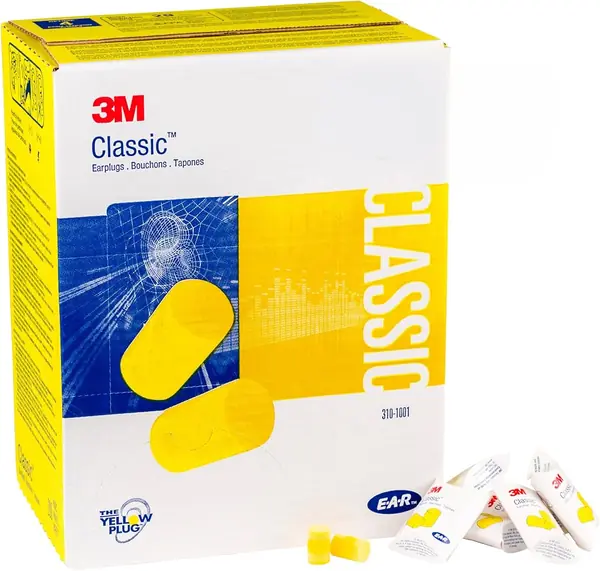
The old-school cylindrical shape is the giveaway: these are the yellow foam plugs that have been in workshops for decades, and the design is still useful. The slow-recovery foam is firm enough to roll down and insert with dusty fingers, then expands to fill the canal.

At 29 dB, they sit a step below the highest-rated picks here, but the seal is the thing. The cylinder gives you a straight path into the canal, and the foam is resistant to moisture, which matters in a humid shop or during a hot day at the bench. Each pair comes in a pillow pack, so you can grab one without opening a giant bag.

We keep a box of these for the tasks where a firm, predictable roll matters more than maximum softness. The straight cylinder is a different feel from a tapered plug, and the 29 dB rating is enough for most table saw and sander work. The classic shape is a good fit for someone who wants a plug that goes in the same way every time. The pillow pack also keeps a spare pair clean in a toolbox, which is a small thing until you need it.

Worth Noting

  • Firm cylinder feels blunt in small canals
Our Verdict

We choose the E-A-R Classic when we want a firm, predictable roll and a straight cylinder that seats the same way every time.

Check Latest Price
8.

Flents Protechs Quiet Time

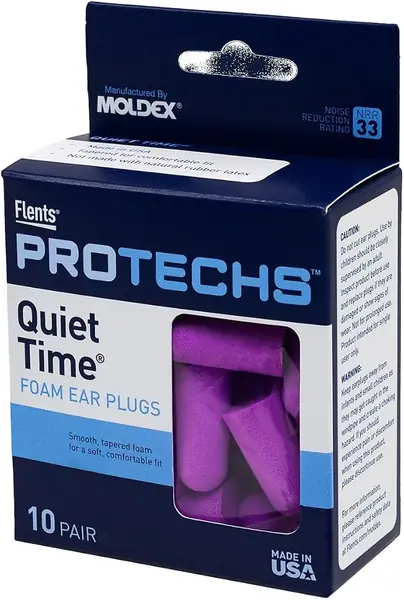
Flents Protechs Quiet Time purple foam earplugs in a 10-pair pack

Trying high-NRR foam

Shop Score 88/100
Quantity
10 pairs
Noise Reduction Rating
33 dB
Foam
Slow-recovery foam
Shape
Barrel-shaped
View on Amazon

The small 10-pair pack is the reason to notice these: it lets you try a 33 dB foam plug without committing to a 200-pair box. The purple barrel-shaped foam is soft and slow-recovery, and the pack is small enough to live in an apron pocket or a drawer.

We found the foam comfortable for short sessions, and the 33 dB rating puts it in the same high-attenuation class as the top picks. The barrel shape fills the canal with a broad, even pressure, and the slow-recovery foam gives you time to adjust the seal.

The small pack is the trade-off: 10 pairs disappear quickly if you leave them at the bench, so we treat it as a try-it or toolbox pack rather than the main supply. The purple color is easy to spot in a drawer, which helps a small pack stay findable.

We keep it as a spare option for a toolbox, not the main supply. The 33 dB rating is the draw, and the barrel shape is comfortable for a few hours of sanding or shop cleanup. We don't rely on it for a full day at the router, but it is a useful second option when you want to test a high-attenuation foam shape.

Worth Noting

  • Runs large for smaller ear canals
Our Verdict

We treat this 10-pair pack as a low-commitment way to try 33 dB foam without buying a full shop box.

Check Latest Price

How We Tested the Best Earplugs for Woodworking

We started by rounding up every earplug sold in a format that suits a shop: bulk boxes, bottle packs, flip-top jars, small trial packs, and corded reusable pairs. We sorted them by noise reduction rating, foam or silicone, shape, and whether a plug was built with a smaller profile, since ear canal size varies more than most people expect. We also did the cost-per-pair math, because a big box is only a bargain if the plugs inside hold up.

Sixteen earplugs went into the shop for four months. They lived in apron pockets, on the edge of the bench, and in the drawer with the tape measure, and they got used exactly the way earplugs actually get used: Saturday mornings cutting plywood, weeknight sessions at the router and miter saw, and the unglamorous sanding and shop-vac work that runs longer and louder than either.

Every foam pair got rolled tight, inserted fully, and held until it expanded, then we ran the tool with one plug in and one ear open to judge the seal by ear. We timed insertion with sawdust on our fingers, wore each pair through multi-hour sessions and noted where pressure built up, and worked the corded pair through quick task changes to see how the cord behaved.

We dropped pairs on a dark concrete floor to find out which ones we could spot again, and we retired foam that stopped springing back or had gone grimy rather than keep wearing it. The printed rating we treated as a laboratory number, and we compared plugs against the same tools so the ranking reflected the shop, not the box.

How to Choose Earplugs for Woodworking

Match the NRR to the Tool and the Session

NRR is the lab-rated attenuation number, and for sustained table saw, router, or planer work we prioritize plugs in the low 30s. The Laser Lite at 32 dB and Moldex at 33 dB give you more margin than a 25 dB reusable plug, which is better suited to shorter tasks or lower-noise hand tools. A higher number is not a license to skip fit: a plug that leaks can underperform a lower-rated plug that seals.

Fit and Seal Decide the Real Protection

Ear canals vary, and a plug that is too small can sit loose while one that is too large can throb. Foam plugs need a full roll, a straight pull on the outer ear, and a few seconds of hold while they expand. If standard foam feels too big, Howard Leight Maximum Lite is shaped for smaller canals; if it feels too small, a barrel-shaped plug like Flents Protechs may fill better. Buy a small pack first when you are between sizes.

Disposable Foam or Reusable Corded

Bulk foam is our default for a shop because it is cheap per pair and easy to keep at several stations. The catch is that foam gets dirty and loses its spring, so a disposable pair should be replaced when it stops expanding or picks up grit. Reusable corded plugs like the Quality Plugs silicone pair are better for tasks where you take plugs in and out; the cord keeps them off the bench. Their 25 dB rating is lower, so we switch to foam for long router sessions.

Comfort, Visibility, and Keeping Them Handy

A plug you have to hunt for is a plug you skip. High-visibility foam such as Laser Lite is easier to spot in sawdust, and a flip-top jar or bottle pack keeps a supply clean in a drawer. For long sessions, soft low-pressure foam matters more than a fancy shape; Moldex and Mack's are the softer picks here. Keep a few pairs at the table saw, the assembly bench, and in your tool bag so protection is never a walk away.

Frequently Asked Questions

Final Verdict

We make the Howard Leight Laser Lite our default because it pairs a 32 dB rating with a 200-pair box and high-visibility foam that survives shop life. The high-vis color is not a gimmick: it keeps a dropped plug findable in sawdust, which is how protection actually gets worn. If your ear canals run small, start with the Howard Leight Maximum Lite; its 30 dB rating and low-pressure shape solve the fit problem that makes standard foam plugs feel like too much.