↑↓ navigate ↵ open Esc close All results →

Best Earmuffs for Woodworking

A router hogging oak pushes roughly 110 decibels, high enough to cause permanent hearing damage in minutes, yet many earmuffs fail at the exact point a woodworker needs them most: around the arms of safety glasses. Any gap at the temples leaks the sharpest spindle whine straight into the ear canal.

Published noise reduction ratings are best-case lab figures, and pairing muffs with foam plugs adds safety margin rather than a simple arithmetic sum. In six months of rotating 12 pairs beside a table saw, planer, and router table—across different head sizes and eyewear frames—clamping geometry and cushion compliance mattered just as much as the box number, from plain passive sets hung by the saw to electronic models that pass speech through between cuts.

Our Top Picks

The Best Earmuffs for Woodworking

1.

3M PELTOR Optime 105 Ear Muffs Best Overall
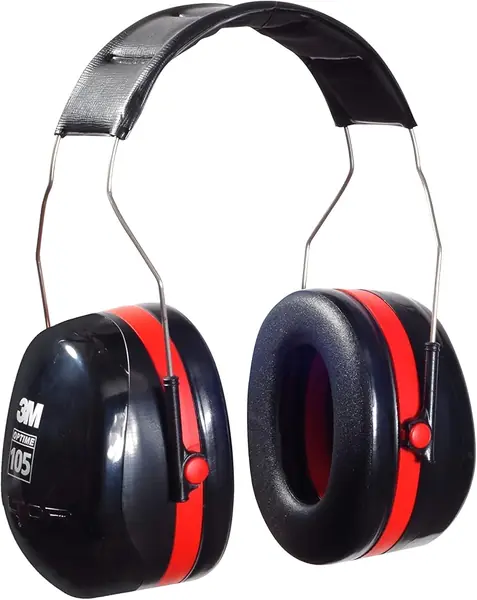
3M PELTOR Optime 105 over-the-head earmuffs in black and red with double-shell earcups

Long shop sessions

Shop Score 96/100
Noise Reduction Rating
27–30 dB depending on attachment type
Style
Over-the-head, black and red
Headband
Stainless steel
Earcup Design
Double-shell
View on Amazon

Double-shell earcups are what put these at the top of our list. 3M builds the Optime 105 with an inner and an outer cup, and the rating that comes out of that arrangement runs 27 to 30 dB depending on which version you buy. In a home shop it is the difference between standing at the router and leaving the room while it spins down: the tool still roars, but it stops being the thing that leaves your ears ringing at dinner.

The other half of the job is staying on your head for two hours. The headband is stainless steel rather than molded plastic, and that is the detail we appreciate most, because it holds its shape and the cups keep the same pressure in month six that they had in week one. The cushions are soft enough to forget about, and the seal holds with safety glasses on, which is the usual place a muff quietly gives up.

Fit is where these ask something of you. Extended fully the band suits most adult heads, but the clamp is firm, and if you are at the large end you want an hour of wear before committing to a Saturday of milling. We don't count that as a flaw: the firmness is what keeps the seal when you lean over the bench. At a midrange price, with more rated attenuation than any electronic pair here, they are the ones we point a new woodworker to first.

Worth Noting

  • Firm clamp feels tight on larger heads
Our Verdict

We recommend these to anyone setting up a shop: 27 to 30 dB of attenuation, a steel headband that keeps its grip, and cushions that last a long session.

Check Latest Price
2.

Decibel Defense 37 dB Ear Muffs Best Noise Reduction

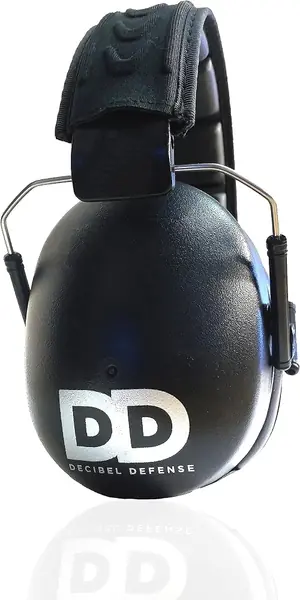
Decibel Defense black over-the-head ear muffs with padded headband and thick foam cushions

Loudest shop machines

Shop Score 95/100
Noise Reduction Rating
37 dB NRR
Weight
12.8 oz
Storage
Folds flat
Sizes
Regular and XL
View on Amazon

Thirty-seven decibels is the highest rating in this group, and it is why these are here. Decibel Defense uses thick foam in a fully padded frame, and the payoff shows up on the tools that punish you: a thickness planer, a router table in a small shop, a jobsite saw with a dull blade. If your ears ring after a session even with muffs on, this is where we start.

The trade is fit. The band doesn't slide the way most do; Decibel Defense sizes the muff instead, in Regular and XL, with the larger one adding extension for bigger heads. We think that is the more honest approach for a muff this strong, since a clamp light enough to feel comfortable at 37 dB is not clamping. What it means practically is that you order a size rather than adjust one, so measure instead of assuming.

At 12.8 ounces they carry real weight, and the padding across the top is what makes that livable over an afternoon. They also fold, which matters more than it sounds: a muff that goes in a drawer gets worn, and one that stays in its box does not. Where they stop is awareness, because with this much attenuation you won't hear someone walk up behind you, so look around before you start a machine.

Worth Noting

  • No sliding band to fine-tune the fit
Our Verdict

The most attenuation in this group, in a padded muff sold in two sizes — we reach for them whenever a planer or router is running.

Check Latest Price
3.

Walker's Razor Slim Electronic Muff Best Electronic

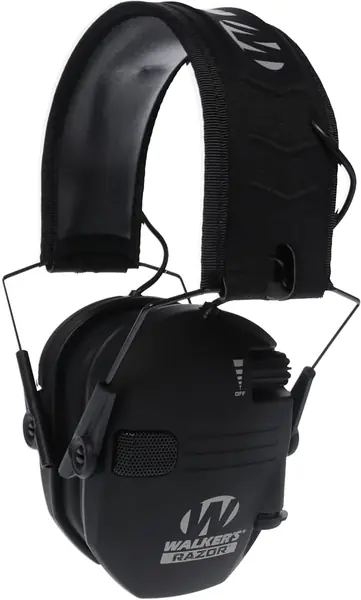
Walker's Razor Slim electronic earmuffs in black with narrow earcups and adjustable headband

Hearing the shop

Shop Score 94/100
Color
Black
Weight
12.6 oz
Size
One size
Type
Slim electronic muff
View on Amazon

Roll the volume up and the shop comes back — the dust collector, the radio, the question from the doorway — while the blade itself gets pushed down. That is the trade an electronic muff makes, and it is exactly what we want for stop-and-start work: a miter saw, a sander, a drill press, a run of pocket screws.

Slim is not marketing here. The cups are narrow enough that they don't fight a face shield and don't catch on the bench when you lean in, and the pair collapses tightly enough to vanish into a drawer. The controls are simple, the padding holds up over a few hours, and the price sits in the middle of this group.

There's no NRR on this model, so we treat the Razors as awareness-first protection and slide foam plugs in underneath when the planer or the big router runs. Do that and they earn their place: on a Saturday of mixed work you keep them on instead of pushing them up onto your forehead every time someone speaks.

Worth Noting

  • Headband pressure builds over a long session
Our Verdict

Our pick for a shop where you need to hear as much as you need protection: slim cups, amplified speech, midrange price.

Check Latest Price
4.

Pro For Sho 34 dB NRR Ear Muffs Best Value

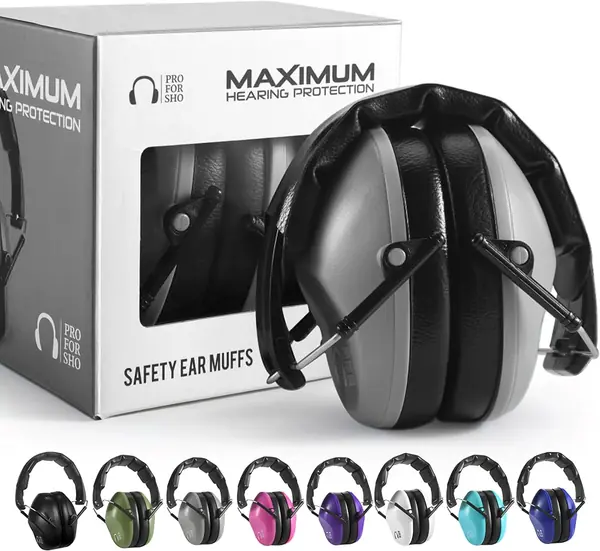
Pro For Sho gray low-profile ear muffs with padded headband and compact earcups

Second pair by the saw

Shop Score 93/100
Noise Reduction Rating
34 dB NRR (31 dB OSHA-adjusted)
Color
Gray
Profile
Low profile, compact
Certification
ANSI S3.19 and CE EN 352-1
View on Amazon

The least expensive way into a rating above 30 dB in this group is a low-profile muff, and it holds up better than the price suggests. Pro For Sho rates these at 34 dB NRR and gives the OSHA-adjusted 31 dB alongside, which is the number we compare against because it reflects how the rating gets applied on a real jobsite. The listing also carries ANSI S3.19 and CE EN 352-1 certification.

Fit is snug by design, and the maker says so out loud: the band is meant to be flexed, and the muff is meant to feel tight for the first few sessions before it settles. We prefer that to a pair that feels lovely and leaks. The headband adjusts over a wide range, and the low-profile cups sit close to the head, so you aren't knocking them against a benchtop when you lean in to sight a cut.

What we like best is the role they fill. These are the pair you leave hanging by the saw — cheap enough that scuffing them doesn't sting, rated high enough that you actually put them on. If you have ever skipped hearing protection because your good muffs were out in the truck, this is the fix.

Worth Noting

  • Snug fit needs breaking in first
Our Verdict

We recommend these as the pair that lives by the saw: 34 dB of rated protection, low profile, and priced like a spare.

Check Latest Price
5.

Howard Leight Impact Sport Electronic Earmuffs Best with Audio Input

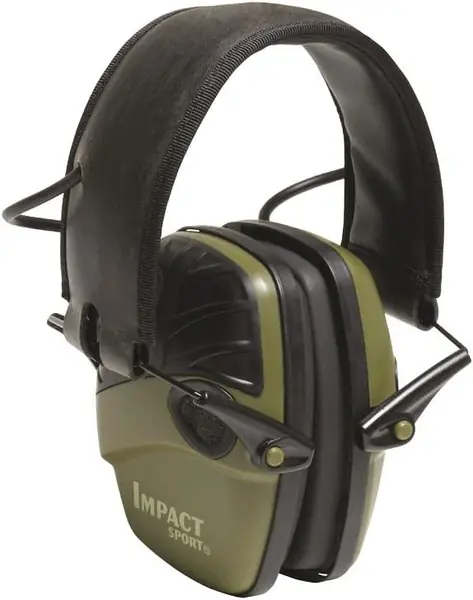
Howard Leight Impact Sport electronic earmuffs in olive green with low-profile folding earcups

Music in the shop

Shop Score 92/100
Noise Reduction Rating
22 dB, on or off
Batteries
2 AAA included
Dimensions
8.66 x 4.53 x 9.13 inches
Amplification
4x
View on Amazon

A 3.5 mm jack on the side of an earmuff sounds like a gimmick until you have sanded for an hour with something playing in your ears and the sander pushed down into the background. The cord and two AAA batteries come in the box, so the setup is: plug in, switch on, work.

The electronics are the good part. Four times amplification on omni-directional mics means you hear someone across the shop without lifting a cup, and the muff cuts amplification at 82 dB, so a hammer strike or a dropped offcut doesn't arrive at your ear at full volume. This is the set we hand over when someone wants to listen while they work, and the rating holds whether the electronics are on or off, which means a dead battery leaves you with a working muff rather than a plastic hat.

Comfort is where the design asks for a check. The cups are shallow, and your ears need to sit fully inside the cushion for the seal to hold; if they don't, the protection goes with it. Try them on with your safety glasses before the packaging goes out with the recycling. Get the seal right and they disappear on your head, which is the whole trick with an electronic pair — you should forget you have them on until the saw starts.

Worth Noting

  • 22 dB NRR is thin for routers
Our Verdict

For sanding sessions with a podcast going, these are the ones we hand over: a wired audio input, 4x amplification, and slim folding cups.

Check Latest Price
6.

PROHEAR 016 Slim Passive Earmuffs

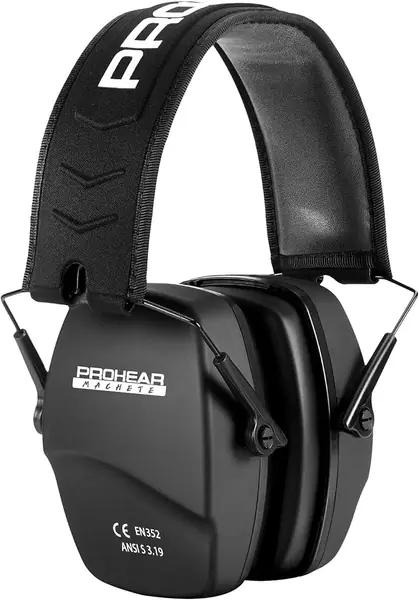
PROHEAR 016 slim black passive ear muffs with cut-out earcups and padded headband

Quick jobs at the bench

Shop Score 91/100
Color
Black
Earcup
Slim cut-out
Noise Reduction
26 dB NRR / 31 dB SNR
View on Amazon

Some pairs are a system; these are a hook by the bench. The slim cut-out cup is trimmed at the bottom so it sits close against the head, which keeps the muff out of the way when you tuck your chin to follow a pencil line or lean over a vise.

Protection is a stated 26 dB NRR and 31 dB SNR, enough for sanders, miter saws, band saws and a router you aren't standing over all afternoon. The band adjusts over a decent range and the cups run snug, which is the point with a passive muff, since a loose cup is a leak rather than a comfort feature.

Where we think they earn their keep is the price and the size together. Light enough to forget you put them on, cheap enough that a second pair for the truck or the garage isn't a decision, and snug enough to keep the seal while you work. The first ten minutes are tight and then they settle into the kind of pair you grab without thinking about it.

Worth Noting

  • Snug band can press on larger heads
Our Verdict

A pair worth keeping on a hook by the bench: slim cut-out cups, 26 dB of protection, and a price that makes a spare painless.

Check Latest Price
7.

Floriogra 2-Pack Ear Muffs

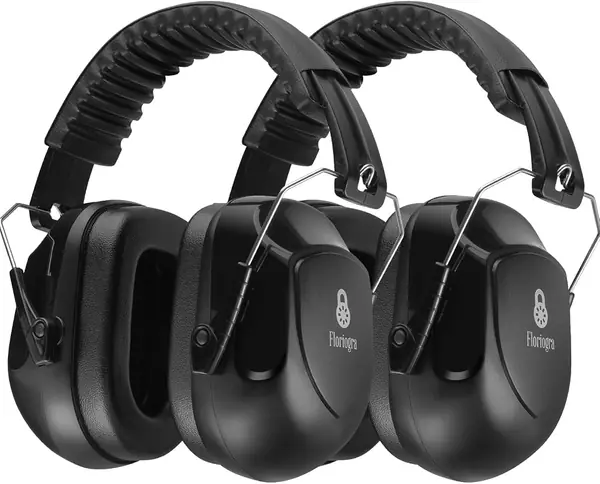
Two pairs of Floriogra black over-ear hearing protection muffs with padded headbands

Two-person shop

Shop Score 90/100
Noise Reduction Rating
34 dB SNR
Storage
Folds compact
Pack
2 pairs
Earcups
360-degree rotating
View on Amazon

Two pairs in one box is the whole argument, and it is a good one. Most shops have a second person in them sooner or later — someone holding a board, someone running the shop vac — and a spare on the shelf means the answer is yes instead of wait a minute.

The 34 dB figure here is an SNR rating, not an NRR, and the two don't convert neatly: SNR generally reads a few decibels higher than the number printed on US packaging. Read it as solid protection for saws, sanders and a miter saw, not as a score you can line up next to the NRR ratings on the other cards.

Adjustment is the compromise. The band slides and the cups rotate a full turn, but the range is short — fully extended, these fit small and average heads far better than large ones. For a guest pair or a teenager learning to use the band saw that is not a problem, and it keeps a good pair reserved for the person doing the cutting.

What we like is that the second pair isn't a punishment. The padding is soft, the frame folds, and the price makes the spare close to free, so the guest muff is a real one rather than something you apologize for. Buy them as the shop's spares, and keep your fitted pair for the long sessions.

Worth Noting

  • Adjustment range runs short for large heads
Our Verdict

Two pairs in one box with enough rating for power tools — we like these as the shop's spares and the guest set.

Check Latest Price

How We Tested Earmuffs in a Working Shop

We built the shortlist by starting with published noise reduction ratings and matching them to the machines that actually live in a home shop — a mid-20s rating is plenty beside a miter saw and out of its depth next to a thickness planer — then filtered by earcup shape, headband material, cushion style, and whether the pair collapses small enough to store in a drawer. From there we bought 12 pairs across the price range and used them for six months.

Testing happened in a two-car garage shop, on a weekend deck build, and at the bench for quick cuts. We fitted every pair on heads from small to extra large, then put safety glasses on and pressed a palm over each cup to hear whether a temple arm had opened a leak along the seal. We wore them through three-hour sanding and finishing sessions and noted where the headband pressed, how hot the cushions got, how often we had to lift a cup to hear someone, and how much adjusting the sliders needed mid-session.

Each pair went up against our loudest tool to see whether the rating held up in practice, not just on the box. We weighed every set and folded it to check it would disappear into a tool drawer, and we ran the electronic pairs on fresh batteries to judge how clearly voices came through, whether a slammed board cut the amplification, and whether the sound was clean or tinny.

We didn't stretch or bend any headband beyond the maker's fitting instructions — a pair that wouldn't seal on a smaller head was marked down for fit rather than forced — and we never credited a plug-and-muff combination with the sum of two ratings. Finally, we weighed price against the protection each pair actually delivered.

How to Choose Earmuffs for Woodworking

Match the Rating to Your Loudest Machine

An NRR is a laboratory number, and the protection you actually get is lower than the printed figure. A muff rated at 22 dB is a reasonable choice for a sander and thin protection for a planer, so buy for the loudest machine you run in a normal week rather than for the average of your shop. The 37 dB Decibel Defense and the 34 dB Pro For Sho are the numbers to beat in this group, and the 3M PELTOR Optime 105 sits between them.

Two traps catch people here. Ratings don't add: wearing plugs under muffs gives you more protection, not the sum of the two figures. And a high rating on a muff that doesn't seal is worthless — the cushion against your head is the only part doing any work.

Fit Is the Whole Ballgame

A muff protects you through the cushion touching your head. If a cup sits on your ear instead of around it, or the band has lost tension, the rating on the box is fiction. Check three things before a long session: ears fully inside the cups, the band extended and level on top of your head, and your safety glasses on, since temples are the usual path for a leak.

Some muffs are sized rather than adjusted, like the Decibel Defense in Regular and XL. Others, like the Pro For Sho, ask you to flex the band and live with a firm clamp for a few sessions. Both are honest designs. A loose muff is not.

Passive, Electronic, or Both

Passive muffs give you the most attenuation for the money, need no batteries, and never surprise you. Electronic muffs amplify what's around you up to a safe ceiling and cut the loud stuff, which makes them the better choice in a shop where you need to hear a question, a phone, or a machine about to bind.

The trade is protection: electronic pairs here run at lower ratings, and one of ours doesn't publish an NRR at all. If your work mixes both needs, keep foam plugs under a passive pair for the planer and wear the electronics for everything else. The Howard Leight Impact Sport takes a 3.5 mm cord, which is why we keep a set for sanding.

Comfort, Weight, and Where They Live

A muff you take off after twenty minutes protects you for twenty minutes. Weight and headband pressure decide that: heavier cups with real padding, like the 12.8-ounce Decibel Defense, often wear better over an afternoon than a light pair that pinches, and wire or steel bands hold tension longer than molded plastic.

Storage counts too. A pair that folds goes in a drawer or a toolbox, and a hook beside the saw is the difference between wearing your ear protection and thinking about it. We favor two modest pairs over one precious pair, because the pair that's within arm's reach is the one that gets used.

Frequently Asked Questions

Final Verdict

We reach for the 3M PELTOR Optime 105 first. Its 27 to 30 dB rating covers every tool in a home shop, the stainless band keeps its grip instead of relaxing, and the cushions are still comfortable at the end of a Saturday. For most woodworkers that is the whole purchase.

Want to hear the shop while you work? The Walker's Razor Slim Electronic is the pair we put on and add plugs under for the planer. If your ears ring after a session even with muffs on, go up to the 37 dB Decibel Defense — and order the size, because that one doesn't adjust.