↑↓ navigate ↵ open Esc close All results →

Best Cut Resistant Gloves of 2026

Comparing European Level 5 and ANSI A5 labels as if they use the same test scale—or buying loose gloves that bunch at the fingertips and weaken knife grip—leads many buyers to pick the wrong cut-resistant pair. Most people shop for protection after a close call with a mandoline, oyster knife, or rolling blade, looking for confidence to keep fingertips steady during close prep.

Wearing 14 pairs for four months across home kitchens, a shared prep counter, and a busy workbench proved that food-contact certification and cut-resistance ratings must be checked separately, alongside true sizing that preserves dexterity.

Covering daily meal prep, two-person counters, wet or oily grip, and utility work outside the kitchen, these six pairs still demand respect for a blade and proper mandoline guards, and should be retired once the knit begins to fuzz.

Our Top Picks

The Best Cut Resistant Gloves

1.

NoCry Premium Cut Resistant Gloves Best Overall
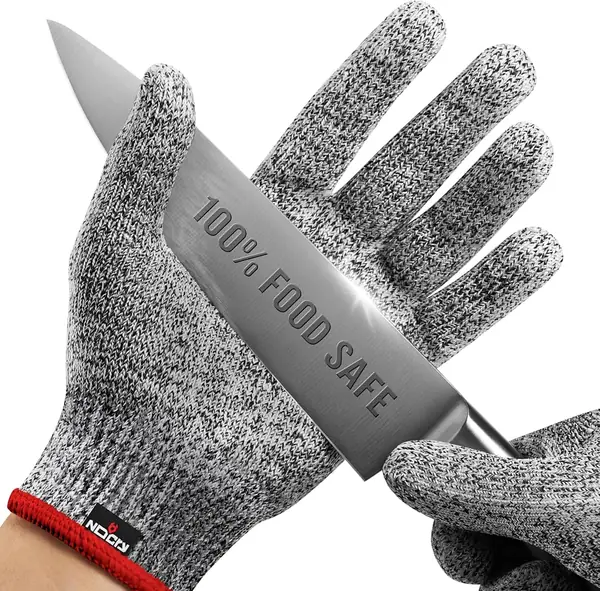
NoCry gray cut resistant knit glove with HPPE and fiberglass, one ambidextrous pair

Everyday kitchen prep

Shop Score 94/100
Cut Rating
Level 5
Sizes
X-Small to X-Large
Gloves Per Pack
2 gloves (one pair)
Food Safety
Food-grade, 100% food safe
View on Amazon

Ambidextrous is the detail that earns these the front of the drawer: no left and right to sort when your hands are covered in chicken, and a glove that takes a nick goes to the sink while the other one stays in service. NoCry knits it from HPPE, fiberglass, nylon, polyester, and spandex, rates it Level 5, and calls it 100% food safe — the combination you want for breaking down a roast, pushing cabbage through a mandoline, or opening oysters. At 1.39 ounces it disappears on the hand.

For most people this is the glove to buy first. It covers the tasks a home cook or a hunter actually faces — knives, slicers, shucking, a bread knife straight out of the oven — and the size range starts at X-Small, which matters because cut protection is close to useless on a hand swimming in fabric. When the job was food, we reached for this pair before any other in the group.

Sizing is the one place to slow down: the knit runs snug, and plenty of hands land one size above their usual, so measure across your palm and check the chart rather than assuming. Wash them cold, air-dry them, and they're ready for the next round of prep.

Worth Noting

  • Knit can snag and wear through at the fingertips
Our Verdict

We tell most people to start here: a food-safe Level 5 knit that fits either hand, washes clean, and still lets you feel the knife.

Check Latest Price
2.

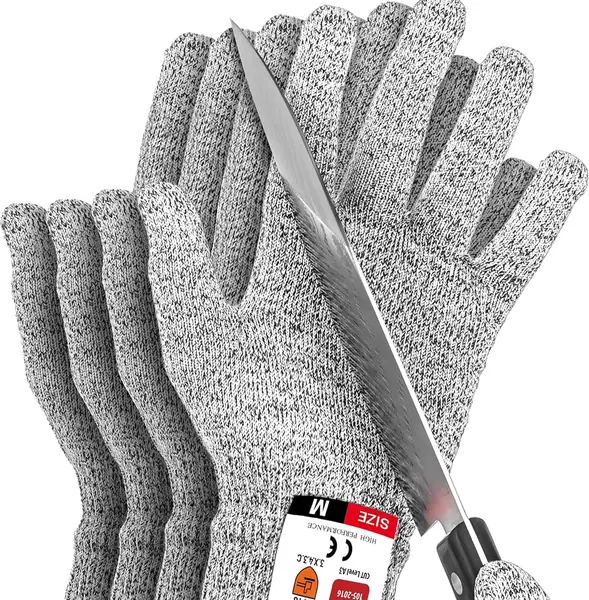
FORTEM Cut Resistant Gloves Best Multipack for Food Prep

FORTEM gray food-grade cut resistant knit gloves, four gloves in a two-pair pack

Two-person food prep

Shop Score 93/100
Cut Rating
EN 388 Level 5
Sizes
Small to X-Large
Gloves Per Pack
4 gloves (two pairs)
Construction
13-gauge seamless HPPE and nylon knit
View on Amazon

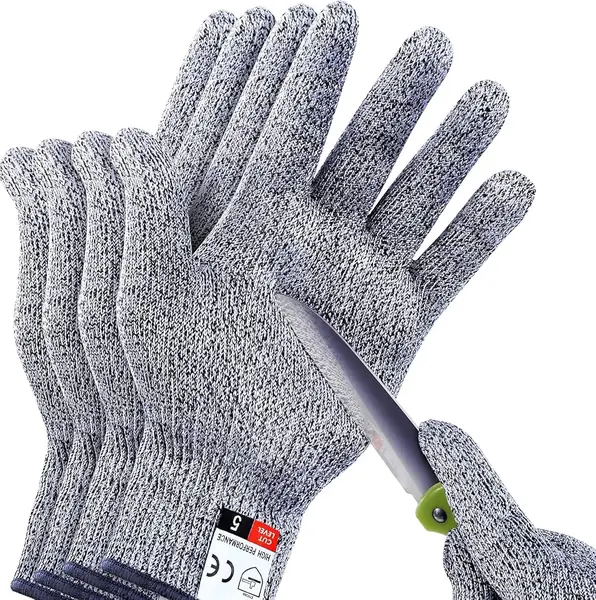
Four gloves is the entire argument: FORTEM sells this as two pairs, so one can be drying while the other is on your hands, and nobody in the house has an excuse to reach for a knife bare-handed. The 13-gauge HPPE and nylon knit carries a Level 5 rating and a food-grade claim, and of the four-glove packs here it's the one we trust with a blade.

Comfort is where it separates itself. The seamless knit is snug without pinching, the uncoated palm stays cool through an hour of chopping, and there's no dipped palm to trap heat. The trade-off is grip: plain knit does nothing extra for a wet chicken breast or a slick fillet, so keep a towel within reach. Sizes run Small to X-Large.

For roughly what our top pick costs, you get twice the gloves, and two pairs change how you treat them — a glove that gets bloody or oniony goes to the sink instead of being wiped on an apron and pressed back into service. What you give up is coated grip and a reinforced thumb; what you get is a dry pair always waiting.

Worth Noting

  • Knit wears at the fingers under daily use
Our Verdict

Our pick for a busy kitchen: four food-grade Level 5 gloves, so a wet pair drying never stops dinner from getting made.

Check Latest Price
3.

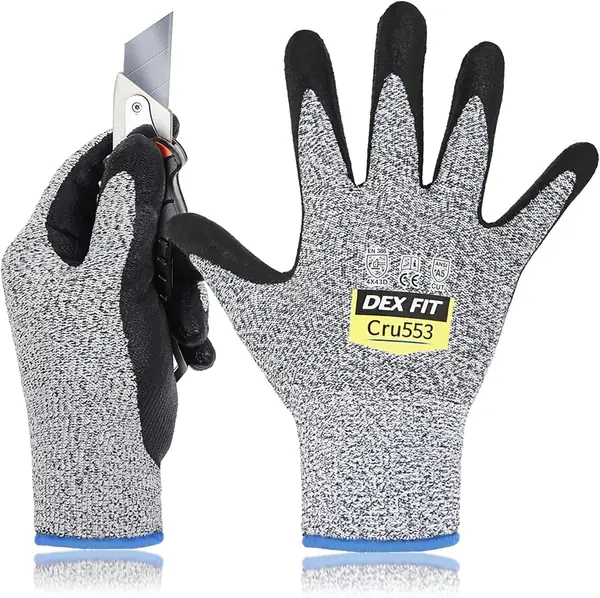
DEX FIT Cru553 Cut Resistant Gloves Best Grip for Wet Work

DEX FIT Cru553 gray work glove with foam nitrile coated palm and elastic cuff

Wet, oily work

Shop Score 92/100
Cut Rating
ANSI A5
Sizes
X-Small to XX-Large
Palm
Foam nitrile coating
Abrasion Rating
ANSI level 4
View on Amazon

Grip is why these earn a place: the palm is dipped in foam nitrile, so a wet knife handle, an oily wrench, or a slick fish stays put instead of rotating in your hand. Under the coating is a 13-gauge HPPE and fiberglass knit with an ANSI A5 cut rating and an ANSI 4 abrasion rating, at just under three ounces a glove.

The knit is thin and stretchy enough to pick a washer off a bench or feel the spine of a chisel, and the elastic cuff keeps the glove from sliding at the wrist. It is a close cut, so broader hands should go up a size rather than squeeze into their usual. Sizes run X-Small to XX-Large, and the gray knit hides the stains pale cotton shows by noon.

What we appreciate most is how little it feels like safety equipment. The dexterity is close to bare-handed, so the glove stays on through the small tasks instead of coming off at the first screw or shallot — which is the only way any glove protects you. Keep the rating in perspective, though: A5 buys you time on a slip, not permission to test an edge.

Worth Noting

  • Wrist stitching and coating wear with daily use
Our Verdict

We hand these to anyone cutting with wet or greasy hands, because the coated palm keeps the blade steady where plain knit slips.

Check Latest Price
4.

Mechanix Wear Pursuit D5 Best for Tactical and Field Work

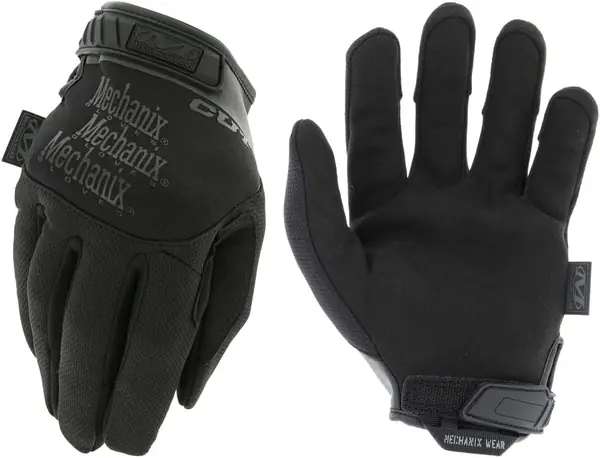
Mechanix Wear Pursuit D5 black synthetic leather tactical glove with hook-and-loop cuff

Tactical field work

Shop Score 91/100
Cut Rating
EN 388 Level D, ANSI A5
Palm
Carbon-infused synthetic leather
Liner
Armortex
Weight
3.2 oz
View on Amazon

This is the odd glove out here, deliberately: carbon-infused synthetic leather over an Armortex liner, 3D patterning, a hook-and-loop cuff, and an EN 388 Level D and ANSI A5 blade-cut rating. It looks and feels like gear a patrol officer or a lineman wears, because that's who it's built for.

We recommend it for the work a knit glove is out of its depth on — brush, splinters, sheet metal edges, fish spines, the underside of a truck. The pattern follows the curve of the hand instead of wrapping it in a tube, the reinforced thumb and padded palm take the abuse, and the touchscreen fingertips mean you don't have to strip it off to check a phone. At 3.2 ounces it is heavier than every knit here, and that weight is the protection.

The trade-off is bulk and money: this is the premium glove in the group, several times the price of the kitchen pairs, and the leather palm is far too clumsy for trimming a tenderloin. It's a field glove, so it lives in the shop bag while the knits handle dinner.

Worth Noting

  • Shell and seams break down under hard daily use
Our Verdict

Our pick for brush, metal, and patrol work: a leather-palm glove with a real A5 blade rating, kept well away from the cutting board.

Check Latest Price
5.

THOMEN Cut Resistant Gloves Best Two-Size Pack

THOMEN gray Level 5 cut resistant knit gloves, four gloves in medium and large

Shared kitchens

Shop Score 90/100
Cut Rating
Level 5
Gloves Per Pack
4 gloves (two pairs)
Sizes Included
Medium and large
View on Amazon

Two sizes in one pack is the trick: four gloves, a medium pair and a large pair, so two people can share one order or one cook can settle which size actually fits. The knit carries a Level 5 claim and is left uncoated, which makes it the plainest glove here — no nitrile palm, no reinforced thumb, no wrist strap.

Plain is the point. It slips on like a thick sock, stays cool through a long session at the board, and can be checked at a glance for the snags that tell you it's time to replace it. It handles the messy jobs as well as anything here: trimming a brisket, pushing cabbage through a mandoline, running a rotary cutter along fabric.

What we like is the honesty of the package — nothing to wear off, nothing to peel, and a price that makes a ruined glove an annoyance rather than a loss. The catch is sizing: medium and large are the only options and both run snug, so hands at either end of the chart should look elsewhere. For everyone else, four gloves nobody has to be precious about is the right trade.

Worth Noting

  • Knit can slice through at the fingertips
Our Verdict

The pack we suggest for two cooks: four Level 5 gloves split into a medium pair and a large pair, so everyone gets a fit and a spare.

Check Latest Price
6.

Dowellife Cut Resistant Gloves

Dowellife gray cut resistant food-grade knit glove with wrist hang loop

Plain kitchen prep

Shop Score 89/100
Cut Rating
EN 388:2003 Level 5
Care
Hand or machine washable
Styles
Plain knit or silicone coated
Material
HDPE with elastic nylon
View on Amazon

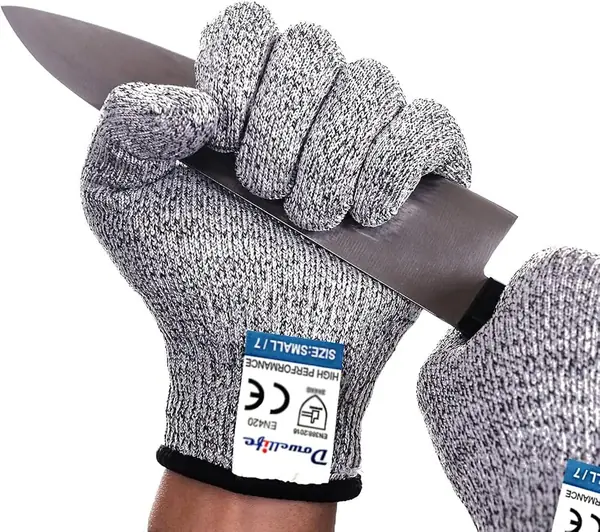
A small loop at each wrist is the detail we appreciate most: hang the gloves from a cabinet knob and the knit dries instead of sitting damp in a drawer between meals. Dowellife rates the HDPE and elastic nylon knit at EN 388:2003 Level 5 and makes it hand or machine washable, which counts for a lot when the glove spends its life against raw poultry.

The design is uncomplicated — no coating, no padding, nothing to peel or crack, just a thin knit that keeps your fingertips useful while a blade is moving. That also means it adds nothing for grip, so a wet fish or an oily handle behaves exactly as it does with a bare hand.

This listing is the plain original, and the same glove is sold in a silicone-coated style if you want more traction on a wet board. For a first pair of cut gloves it's a straightforward place to start, provided you don't need a coated palm — though it costs more than our top pick, which is why it sits below it here.

Worth Noting

  • Uncoated knit adds no grip on wet handles
  • Costs more than the top-ranked pick
Our Verdict

We point to this one for a plain, food-grade knit pair with a genuine Level 5 rating and nothing extra to wear out.

Check Latest Price

How We Tested Cut-Resistant Gloves

We started by collecting more than two dozen listings and cutting the field to 14 pairs based on what a label can tell you before you put a glove on: which cut standard the maker actually cites, whether the glove is documented for food contact, and how wide the size run goes. Then we wore them for four months—slicing onions and squash with the mandoline guard in place, breaking down chickens, shucking oysters, and hauling zip-tied bundles and cable at a workbench.

Protection was judged from the rating and from what happened at the board—never by running a blade against a gloved hand. We logged every close call during ordinary prep: whether the knit stayed intact, whether a wet or oiled hand kept its hold on a knife handle and a wet cutting board, and whether we could still feel for a bone or pick up a single sheet of paper. For fit, staff with different hand sizes wore each pair to the maker's chart while we watched for bunching at the fingertips, rolling cuffs, and gloves that twisted mid-cut.

After each session we washed pairs the way the maker specified, dried them, and checked the knit for fuzziness, nicks, and thin spots, the coating for cracks, and the stitching for separation—retiring anything that showed them. We also counted what a pack actually gets you: how many gloves, whether each one fits either hand, and whether four gloves meant two people working or one person with two sizes.

How to Choose Cut Resistant Gloves

Match the Rating to the Blade

Cut ratings are not one scale. ANSI/ISEA 105 runs from A1 to A9, while the older EN 388 scale runs 1 to 5; a 'Level 5' claim on a kitchen glove usually means the EN 388 number, which is not the same test as ANSI A5. What matters is the hazard: A1 and A2 are light protection against nicks, A4 through A6 is where most kitchen and light industrial gloves sit, and the higher levels get heavier and less sensitive. An A1 dexterity glove will not save you from a mandoline.

Ratings are also measured on an intact glove. Once the knit is fuzzy, the coating is cut, or the fingertips have thinned, you are wearing a glove rather than protection.

Food-Safe and Shop-Rated Are Different Gloves

If the glove will touch meat, fish, or produce, look for an explicit food-grade or food-safe claim, not just a cut rating. Food gloves are usually unlined knits or coated knits that wash clean; shop gloves add leather palms, padding, and heavy grip coatings that are clumsy around a cutting board and were never designed for contact with food.

We sort our picks that way: the food-grade knits for the kitchen, the coated work glove for wet and oily handling, the leather tactical glove for field work. One glove asked to do all three is a compromise in all three.

Fit Decides Whether It Protects You

A loose glove slides on the hand you are trying to protect, and a tight one tires your fingers until you pull it off at the worst possible moment. Measure around the widest part of your palm and compare that to the maker's chart rather than assuming your usual size; knit gloves commonly run small, and going up one is normal.

Sizing ranges differ, too. Our picks run from X-Small to XX-Large, and that spread is worth checking if your hands sit at either end — it is the difference between a glove you wear and one that stays in the drawer.

Coated Palms, Plain Knits, and Grip

A plain knit is cooler and lets you feel what you are doing, but it adds nothing on a wet surface: a slippery fish stays as slippery as it was bare-handed. A foam nitrile palm holds a wet or oily handle and is the right call for oyster knives, greasy tools, and anything that wants to rotate in your grip.

The catch is that coatings trap heat, dry more slowly, and eventually crack. Dry, delicate work suits plain knit; wet, forceful work suits the coating.

One Pair or Four?

Cut gloves get wet, smelly, and nicked, so the count in the pack matters as much as anything else. One pair means washing tonight; two pairs mean one drying while you work. Ambidextrous gloves let you swap hands as one gets dirty, and a two-size pack settles the fit argument in a shared kitchen.

Read the pack carefully, too. Some listings sell gloves in pairs and others by the glove, and a '4 PCS' title can mean two pairs rather than four pairs.

Frequently Asked Questions

Final Verdict

Start with the NoCry pair. It is the glove we hand people first: food-safe, Level 5 rated, ambidextrous, and thin enough that you forget it is on while a mandoline does its worst. Order a size up if you are between sizes or plan to wear it over another glove.

If your cutting happens with wet, slippery hands — oysters, greasy tools, a fish station — the DEX FIT Cru553 is the better glove, because the foam nitrile palm grips where plain knit slides. And for anything off the cutting board, from brush to sheet metal, step up to the Mechanix Pursuit D5.