↑↓ navigate ↵ open Esc close All results →

Best Work Gloves for Woodworking of 2026

Shop gloves live on an awkward see-saw between splinter armor and fingertip feel. Thick leather lets you slide rough sawn lumber across sawhorses without flinching while turning small hinge screws into guesswork, whereas thin coated knits pluck a finish nail cleanly off the bench and then abrade through after half a sheet of plywood.

Wearing 16 pairs through six months of ripping splintery oak, gluing panels, and driving hardware clarified why tag ratings only tell half the story. High abrasion scores say little about real cut resistance, and a loose glove catches on stock before it wears out—making a snug fit and a cuff that stays put non-negotiable for shop safety.

Splitting the workload between heavy cowhide pairs for rough lumber handling and nimble coated knits for assembly and finishing, the seven options below hold up through long afternoons without getting in the way.

Our Top Picks

The Best Work Gloves for Woodworking

1.

WZQH Leather Work Gloves Best Overall
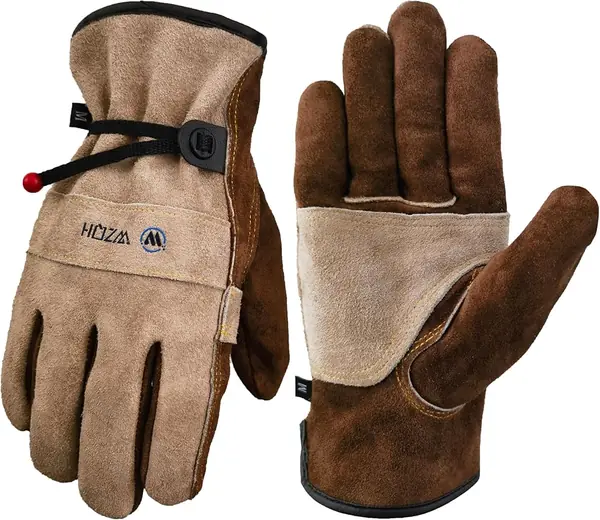
WZQH coffee-gray leather work gloves with reinforced palm and drawstring wrist

Rough lumber

Shop Score 97/100
Palm
Reinforced leather palm
Closure
Adjustable drawstring wrist
Material
100% split cowhide leather
Abrasion Rating
ANSI/ISEA level 4
View on Amazon

A stack of rough-sawn oak is the test that separates a real work glove from a yard glove. The WZQH pair met it with a thick split-cowhide shell and a reinforced palm patch that kept splinters and sharp edges from reaching our hands. The leather is soft enough that we did not spend a week breaking it in, and the curved wrist cuff lets the glove hinge with the hand instead of bunching at the palm.

What sold us on these as the default shop glove is the balance of protection and control. The keystone thumb is stitched separately, so the web of the hand opens naturally when we choke up on a handsaw, and the adjustable drawstring snugs the cuff without cutting off circulation. We used them for carrying lumber, sorting cutoffs, and moving firewood; the reinforced palm is the part that takes the abuse, and it is the part that still looks intact.

The trade-off is bulk. These are not the gloves we put on to pick a small screw out of a bin or to feel the edge of a chisel; for that kind of work we switch to a thin nitrile glove. But for the tasks that define a woodworking shop — hauling boards, clearing offcuts, handling rough stock — the WZQH is the pair we reach for first. The low cost makes a second pair for the truck or the garage easy to justify.

Worth Noting

  • Bulky leather limits feel for small screws or chisel edges
Our Verdict

We recommend the WZQH leather gloves as our best overall pick because they combine thick cowhide, a reinforced palm, and a budget price that makes a spare pair sensible.

Check Latest Price
2.

Ironclad Ranchworx Work Gloves Best Heavy-Duty Leather

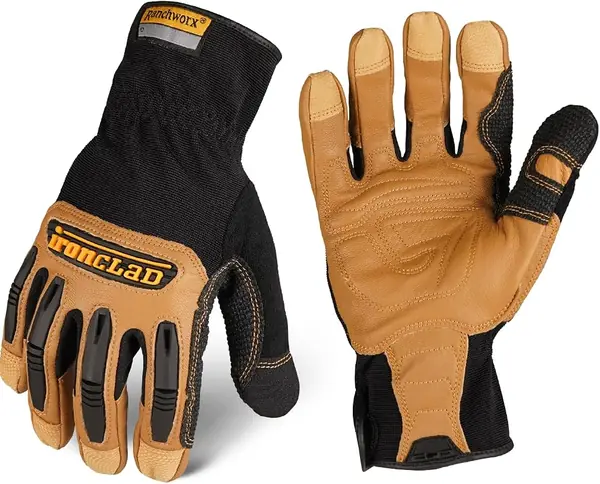
Ironclad Ranchworx brown and black leather work gloves with reinforced fingertips

Heavy shop work

Shop Score 96/100
Palm
100% goatskin leather
Cuff
TPR pull tab
Fingertips
Rolltop seamless
Reinforcements
Kevlar in wear zones
View on Amazon

Goatskin is the reason the Ranchworx feels different from a hardware-store leather glove: the palm is supple enough to pick up a chisel, but the Kevlar patches sit where the abrasion happens. The rolltop fingertips are a nice detail, too. There is no seam ridge across the most sensitive part of the finger, so we could feel a screw head or a sharp edge without pulling the glove off.

We wore these for the dirty middle of a shop project — dragging rough lumber, clearing a pile of offcuts, and handling a pry bar. The goatskin gives more feel than a thick cowhide, and the reinforced thumb and palm take the worst of the wear. The TPR pull tab is one of those small features we did not expect to use, but it makes the glove easier to get on when your hands are sweaty.

The catch is that you pay for that feel. These cost more than a basic leather glove, and if your work is mostly dragging rough lumber, the softer goatskin is not the longest-lived choice. For a weekend woodworker or a finish carpenter who wants dexterity, the trade is worth it; for constant rough stock, the WZQH is the more sensible budget choice.

Worth Noting

  • Costs more than basic split-leather shop gloves
  • Softer goatskin wears faster when hauling rough lumber
Our Verdict

We choose the Ranchworx when we want leather protection with real fingertip feel; the goatskin and Kevlar reinforcements suit careful heavy work.

Check Latest Price
3.

MaxiFlex 34-874 Nitrile Gloves Best Dexterity

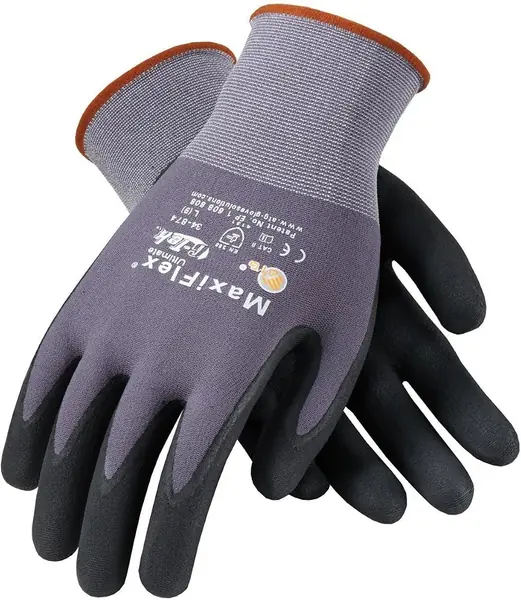
MaxiFlex gray nitrile-coated knit work gloves in a 12-pair pack

Fine assembly

Shop Score 95/100
Liner
15-gauge nylon and spandex
Coating
Micro-foam nitrile
Pack Size
12 pairs
Silicone
100% silicone-free
View on Amazon

Sliding a screwdriver into a tight cabinet hinge is where the MaxiFlex earns its keep. The micro-foam nitrile palm is thin enough that we can feel the screw slot and the pressure at the fingertip, and the knit back moves with the hand instead of bunching. We kept a pair on for an entire assembly session and forgot we were wearing them, which is the highest compliment a work glove gets.

The coating also grips well on smooth and lightly oily surfaces. We used these for driving screws, handling small offcuts, and picking through a box of hardware, and the glove did not slip on the tool handle. The breathability is real enough that our hands did not turn into a swamp, and the 12-pair pack means there is always a dry pair within reach.

These are not the gloves for carrying a rough 2x10 or clearing splintery offcuts. The nitrile is a coating, not a leather shield, and a sharp edge can find its way through. We treat the MaxiFlex as the assembly glove in a two-glove shop: leather for lumber, nitrile for precision. If you want one pair to do everything, this is not it; if you do a lot of joinery and small-part work, it is the pair we reach for.

Worth Noting

  • Thin nitrile coating lets sharp edges and splinters poke through
Our Verdict

We keep the MaxiFlex for assembly and hand-tool work, where its thin nitrile palm and breathable knit back beat a bulky leather glove.

Check Latest Price
4.

Ironclad General Utility Gloves Best General-Purpose Synthetic

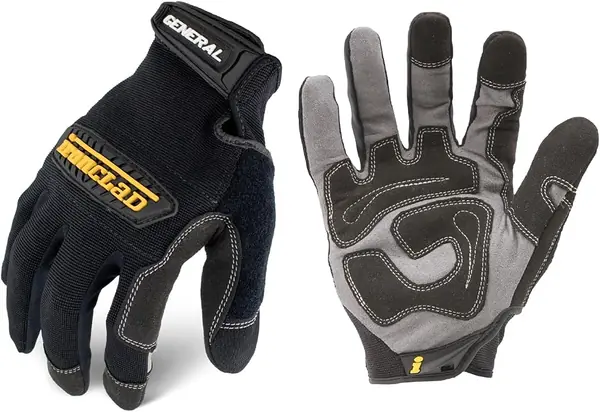
Ironclad General Utility black synthetic leather work gloves with performance fit

General shop work

Shop Score 94/100
Palm
Synthetic leather
Care
Machine washable
Fit
Performance fit
Thumb
Terry cloth sweat wipe
View on Amazon

A shop glove that can go in the wash after a glue-up has a practical appeal that a stiff leather gauntlet cannot match. The Ironclad General Utility is built around that idea: a synthetic leather palm, a performance fit, and a terry thumb wipe for the sweat that shows up halfway through a project.

We liked the control. The palm is thin enough to pick up a pencil or feel a chisel edge, but the reinforced wear zones give it more structure than a knit glove. It is a good middle ground for sanding, running a trim router, or handling finished parts that you do not want to scratch. The fit is snug through the fingers, and the glove comes up high enough at the wrist to stay put.

The General Utility is not a heavy leather replacement. We treat it as a general-purpose glove for light and medium work; for rough lumber, we reach for the WZQH or the Ranchworx. For a clean, comfortable glove that can be washed and worn again, it earns its place.

Worth Noting

  • Palm wears through under heavy daily use
Our Verdict

We like the Ironclad General Utility as a washable middle ground for sanding, routing, and general shop tasks that do not call for heavy leather.

Check Latest Price
5.

G & F Products Latex Work Gloves Best Bulk Value

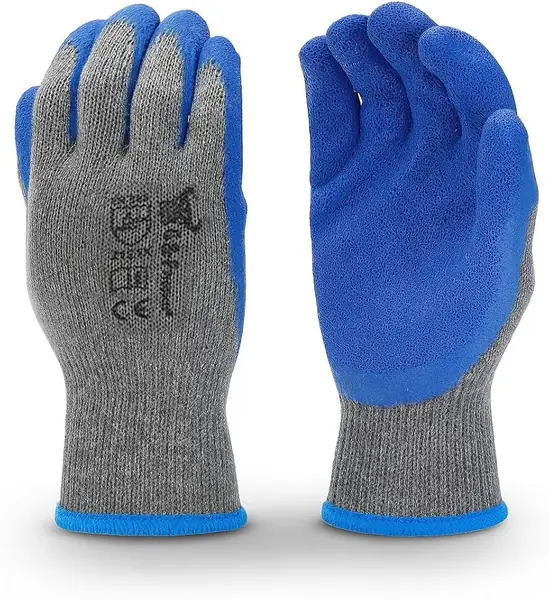
G & F Products blue latex-coated cotton work gloves in a 12-pair pack

Messy glue-ups

Shop Score 93/100
Palm
Textured latex
Liner
Cotton blend
Coating
Double-coated latex
Pack Size
12 pairs
View on Amazon

Twelve pairs in one bag changes how you use a glove: you stop saving the good pair for the finish cut and put a fresh one on for the messy job. The G & F Products double-coated latex glove is built for that kind of shop — glue-ups, staining, yard cleanup, and the dirty middle of a project.

The textured latex palm grips well on smooth wood, plastic, and tool handles, and the cotton blend liner keeps the glove from feeling like a plastic bag. We used them for spreading glue, handling wet lumber, and cleaning up after a project, and the coating kept glue and finish off our hands. The 12-pair pack means there is always a pair at the bench, in the truck, and by the sink.

These are not the pair we reach for when the job is all rough lumber and sharp offcuts; that is a leather job. But for glue-ups, finishing, and cleanup, the bulk pack makes sense. We keep a pair by the sink and a pair in the truck, and we do not mind when one gets too far gone.

Worth Noting

  • Latex coating wears through on rough stock
  • Fit runs inconsistent across the pack
Our Verdict

We buy the G & F pack for glue-ups and messy jobs, where a fresh latex-coated pair costs less than stopping to clean one.

Check Latest Price
6.

Mechanix Wear Original Gloves Best for Light Power Tools

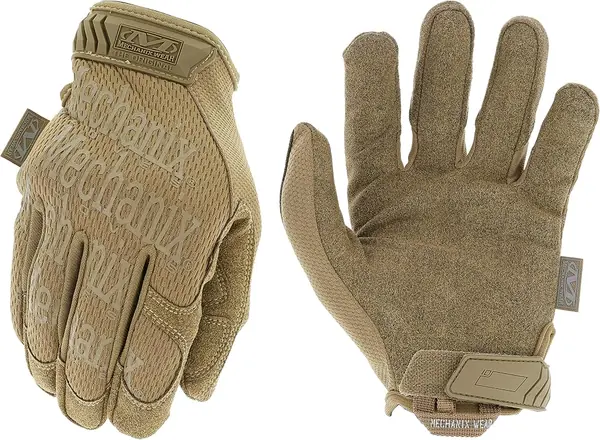
Mechanix Wear Original brown synthetic leather tactical work gloves

Light power tools

Shop Score 92/100
Palm
0.8 mm synthetic leather
Closure
Hook and loop
Touchscreen
Yes
Impact Rating
ANSI/ISEA level 3
View on Amazon

Checking a cut list on a phone without peeling off a glove is a small convenience, but it is the reason the Mechanix Original stays near the bench. The touchscreen fingertips actually work, and the 0.8 mm synthetic leather palm gives you enough feel to run a driver or pick up a small fastener.

The impact protection is the more serious feature. The TPR guards over the knuckles add a layer between your hand and a vise, a clamp, or a dropped piece of stock. We liked the hook-and-loop cuff, which snugs the wrist without the bulk of a leather gauntlet, and the glove is light enough to wear for a whole session.

These are a light-duty glove, not a rough-lumber glove. We use them for assembly, light power-tool work, and anything that involves a screen. If your shop day is mostly framing and demolition, the WZQH or Ranchworx is the better call; if you want dexterity and touchscreen in one glove, this is a good option.

Worth Noting

  • Fingertips wear under abrasive work
Our Verdict

We reach for the Mechanix Original for light power-tool work and touchscreen convenience, not for rough lumber or demolition.

Check Latest Price
7.

NEOTRIL MicroFoam Nitrile Gloves Best for Finishing Work

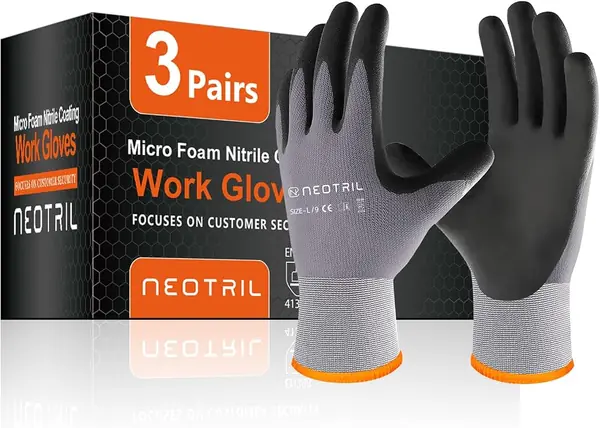
NEOTRIL gray micro-foam nitrile work gloves in a three-pair pack

Finishing work

Shop Score 91/100
Liner
Seamless knit
Coating
Micro-foam nitrile
Pack Size
3 pairs
Care
Machine washable
View on Amazon

The knit back is what keeps the NEOTRIL glove from turning into a sauna during a long assembly session. The micro-foam nitrile palm is thin and tacky, and the seamless liner fits close without leaving seams across the knuckles. We noticed the breathability first because most cheap nitrile gloves make our hands sweat within minutes.

For small-part work, the grip is the useful part. The coating holds onto smooth plastic, metal hardware, and lightly oily tools, and the glove is thin enough to pick up a washer or turn a small screw.

The three-pair pack is a sensible size for a glove that lives at the assembly bench. You can keep one pair clean for finishing and one for general handling without committing to a drawer full of gloves.

We like them as the clean, precise pair in a two-glove shop, especially for finishing and assembly. They keep small parts under control without the bulk of leather.

Worth Noting

  • Thin coating is not puncture protection
Our Verdict

We use the NEOTRIL three-pack for clean assembly and finishing, where thin nitrile grip matters more than puncture resistance.

Check Latest Price

How We Tested Work Gloves for Woodworking

We started with research, comparing spec sheets and owner feedback on leather gloves, coated knits, and multi-pair packs, then filtered for palms with real abrasion coverage, puncture protection where it counts, secure cuffs, and a cost per pair that made sense for a shop glove. That narrowed the field to 16 pairs, which we rotated through six months of weekend and evening work in a garage shop.

Each pair got the same run. We dragged a palm across rough-sawn oak and ran gloved fingertips along splintery edges to see whether the surface snagged or the leather scuffed. Fastener work came next: fishing a washer out of a shallow bin, starting a screw by hand, and driving it home to judge fingertip feel. We checked grip on a dry two-by-four and on one wiped with a light film of oil.

For fit, we noted where the palm seam landed against the knuckle creases, whether the cuff stayed put through an afternoon, and whether a glove could be flicked off — a loose cuff is one that can catch. We kept hands clear of exposed blades and followed each tool maker's glove guidance throughout.

Between sessions we logged how clammy hands felt after an hour and whether the lining bunched at the fingertips. Machine-washable pairs went through two cycles, and we checked whether coatings cracked or leather dried stiff afterward. After each weekend we inspected the thumb crotch and palm for thinning, then weighed how many sessions a pair lasted against what it cost, since replacement cost per pair tells you more than sticker price. We read the labels on abrasion, puncture, cut, and impact protection too, rather than assuming a tough-looking glove covered all four.

How to Choose Work Gloves for Woodworking

Leather for Lumber, Knit for Assembly

Most woodworking shops need two kinds of gloves. A leather pair handles rough lumber, firewood, and anything that can splinter; the WZQH and Ironclad Ranchworx are the leather picks we reach for. A thin nitrile or synthetic pair is better for assembly, small fasteners, and feeling a chisel edge; the MaxiFlex and Ironclad General Utility cover that end. If you buy only one pair, choose leather first. It protects against the accidents that hurt most, and you can add a thin pair later for precision work.

Fit and Cuff Security Come Before Features

A pair of safety work gloves is only as good as its fit. Look for fingertips that end at your fingertips, not beyond them, and a wrist closure that keeps sawdust out without cutting off circulation. Around rotating tools, a loose cuff or baggy finger can catch, so check the tool manufacturer's guidance and choose a snug fit. We prefer an adjustable wrist for leather and an elastic knit cuff for thin gloves; both keep the glove seated without bulk.

Abrasion, Puncture, and Cut Ratings Are Different

Abrasion resistance is about how long the palm survives rubbing on lumber and concrete. Puncture resistance is what stops a splinter or nail from poking through. Cut resistance is a separate rating for slicing hazards, and a thin nitrile glove can grip well without offering much of either. For rough stock, choose leather with a reinforced palm; for clean assembly, a nitrile coating is enough. Do not read a high abrasion number as cut-proof protection, and always keep your hands clear of blades.

Buy for Replacement Cost, Not Sticker Price

Work gloves are consumables. A single pair of leather gloves can be the better buy if it lasts a season, while a multi-pack of nitrile gloves makes sense if you go through them at the assembly bench. We compare cost per pair, not the price on the bag. The MaxiFlex 12-pair pack and the G & F 12-pair pack are both bulk buys, but they serve different jobs: one for precision, one for messy work. Keep a spare pair where you work so a worn glove does not stop the job.

Frequently Asked Questions

Final Verdict

For most woodworkers, the WZQH leather gloves are the pair we recommend first. Thick split cowhide and a reinforced palm handle lumber, offcuts, and firewood without asking you to baby them, and the low cost makes a spare pair easy to justify.

If you want more fingertip feel in a leather glove, the Ironclad Ranchworx is the step up. For assembly and finishing, the MaxiFlex is the thin glove we reach for; it is not a splinter shield, but it keeps small screws and chisels under control.