↑↓ navigate ↵ open Esc close All results →

Best Routers for Router Tables of 2026

Bolting a router upside down under a table turns it into a compact shaper where both hands guide the wood rather than wrestling a spinning motor. Still, plenty of capable handheld routers fight table mounting if the fixed base will not release the motor for above-table bit changes or hides the depth adjuster underneath the plate.

Testing 10 routers over nine months in table setups showed why half-inch collets and variable speed with soft start matter even more under a plate than freehand, since large panel and profile bits demand smooth startups and solid torque. Fine, accessible depth adjustment also saves endless frustration compared with clunky rings that need multiple turns for an eighth-inch move.

Options here span dedicated table-ready fixed bases, versatile combo kits, and budget motors suited to a first router table—all built to hold bits true, adjust in fine increments, and keep power switches within reach.

Our Top Picks

The Best Routers for Router Tables

1.

Bosch 1617EVSPK Router Combo Kit Best Overall
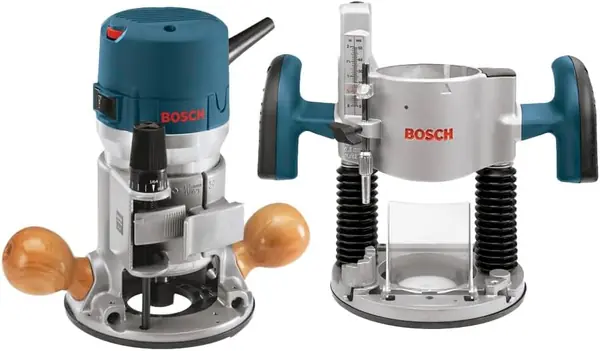
Bosch 1617EVSPK combo router in black with fixed and plunge bases and carrying case

Table-first shops

Shop Score 95/100
Motor
12 A, 2.25 HP
Collets
1/4 in. and 1/2 in.
Bases Included
Fixed and plunge
Speed Range
8,000–25,000 RPM
View on Amazon

Bit height is the control you touch between every pass, and this base puts it where your hands already are: with the fixed base bolted to a plate, you turn the depth ring from above the table instead of crouching underneath with a flashlight. The adjustment is microfine, so a correction is a small twist rather than a guess, and the quick-clamp system frees the motor from the base with one lever when you want to change bits in your hand.

Adjustment alone would earn it a place here; what makes it the one we recommend is the motor underneath. Twelve amps and 2.25 horsepower hold their speed in oak and maple, Constant Response circuitry keeps the RPM steady once a wide bit starts loading it, and the dial runs from 8,000 to 25,000 RPM — slow enough for a panel raiser, fast enough for a quarter-inch roundover.

The kit arrives with both collets, the 1/2-inch one included, which isn't a given with every combo here, plus wrenches, the plunge base, and a carrying case. If the router is table-bound the plunge base mostly sits on a shelf, but it's there for mortises and stopped cuts, and it means one motor covers the whole shop.

Worth Noting

  • Bases can bind when sliding
  • Switch is the weak point long term
Our Verdict

We recommend the Bosch for any table that sees real work: the depth ring adjusts from above the plate and 2.25 horsepower handles big bits in hardwood.

Check Latest Price
2.

DEWALT DW618PKB Router Kit Best Combo Kit

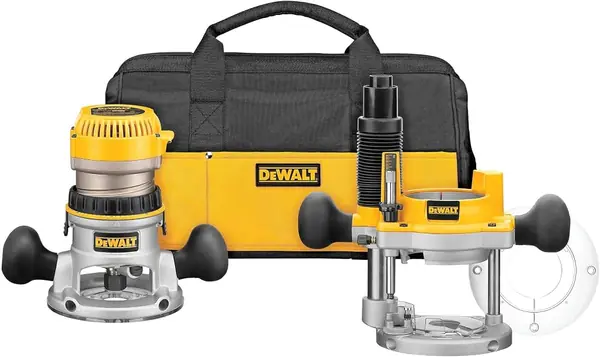
DEWALT DW618PKB fixed and plunge base router kit in yellow and black

Two-base workshops

Shop Score 94/100
Motor
12 A, 2.25 HP
Bases Included
Fixed and plunge
Speed Range
8,000–24,000 RPM
Warranty
3-year limited
View on Amazon

Two routers in this group share a 12-amp, 2.25-horsepower motor, and the choice between them comes down to what happens when you want the motor out of the base. This one uses a tool-free steel cam lock and quick motor-pack removal, so the whole motor lifts free and you change the bit at bench height instead of reaching under the plate.

We're pleasantly surprised by how much the soft start matters at a table. The motor ramps up instead of slamming on, and that is the difference between a calm start and a grab when the switch is under the plate and both hands are on the workpiece. The speed range runs 8,000 to 24,000 RPM with full feedback, the depth ring moves in 1/64-inch steps, and the three-year warranty is the longest in this group by a wide margin.

The plunge base is why you pay for this kit rather than a fixed-base-only model, and its depth stop is the part we trust least — it can creep between cuts on a run of identical parts. Set it, cut a scrap, then commit the batch. Through-column dust collection on that base pulls chips down and away from the cut line, which keeps the bit visible on deep profiles.

Worth Noting

  • Some kits arrive without the 1/2-inch collet
Our Verdict

We keep this kit for the shop where one motor has to cover the table and freehand work: plunge base, soft start, and the longest warranty here.

Check Latest Price
3.

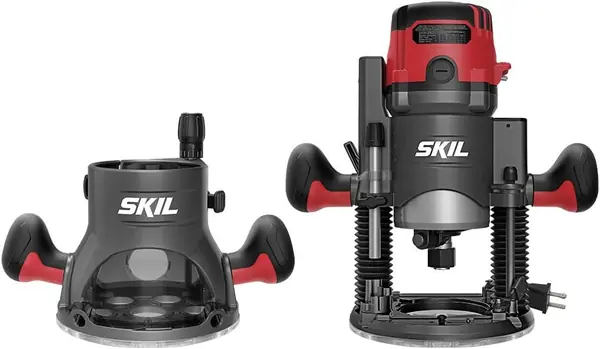
SKIL RT1322-00 Router Combo Best Value Combo

SKIL RT1322-00 plunge and fixed base router combo kit with two collets

Value-minded table builders

Shop Score 93/100
Motor
14 A, 2.42 HP
Collets
1/4 in. and 1/2 in.
Bases Included
Fixed and plunge
Speed Display
LCD with bit and material presets
View on Amazon

Fourteen amps is the highest rating in this group, and it sits in the least expensive combo kit here. The RT1322-00 pairs that motor with a fixed base and a plunge base, 1/4-inch and 1/2-inch collets, dust adapters for both, and a parallel guide.

The LCD is the part that surprised us. It suggests a speed for the bit and the material in front of you, which takes the guesswork out of slowing a panel bit down and speeding a small roundover up — the kind of thing you otherwise learn by scorching a few boards. Soft start and three LEDs at the base keep the machine from jumping when you flip the switch and keep the cut line lit.

Set against the fixed-base Skil below, the extra amps and the second base are exactly what you are paying for. If your work never leaves the table, that is money you can keep.

Worth Noting

  • No case included with the kit
Our Verdict

Our value pick: 14 amps, both collets, and two bases for a fraction of what the Bosch and DEWALT kits cost.

Check Latest Price
4.

DEWALT DW616 Fixed-Base Router Best Fixed-Base Only

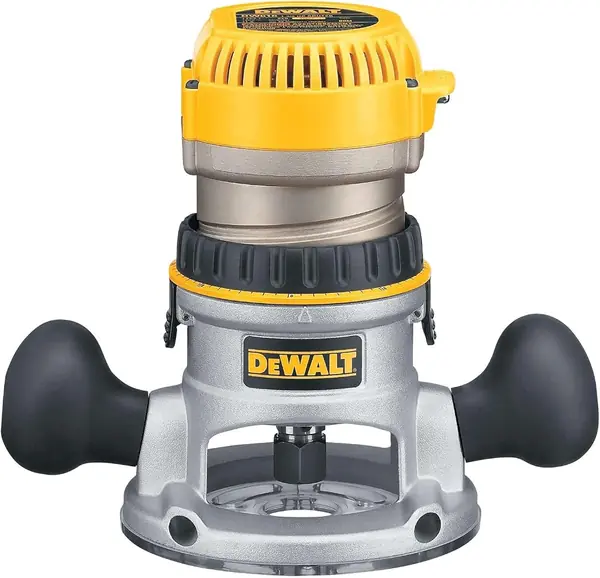
DEWALT DW616 fixed-base router in yellow with 11-amp motor and wrenches

Dedicated tables

Shop Score 92/100
Motor
11 A, 1-3/4 HP
Collets
1/4 in. and 1/2 in.
Base Type
Fixed only
Depth Increments
1/64 in.
View on Amazon

No plunge base comes with this one, and for a router headed straight for a plate, that is the right thing to leave out. What remains is an 11-amp, 1-3/4-horsepower fixed-base motor, a depth ring that moves in 1/64-inch steps, a tool-free cam lock, and quick-release latches that drop the motor pack out for bit changes.

The open base is the detail we appreciated most once it was mounted. There is more room around the bit than on the closed bases here, so you can watch a profile develop as the wood passes and see the cut line instead of guessing at it.

One and three-quarter horsepower is not the biggest motor here, and for a table that cuts profiles, rabbets, and door parts, we think it is the right amount to pay for; the combo kits above carry more motor for wide panel bits. The sub-base concentricity gauge in the box is a small thing that matters exactly once, when you center the bit in the plate, and it saves a frustrating afternoon.

Worth Noting

  • Height adjustment ring can be stiff
Our Verdict

For a router that will never leave the plate, we like this one: 1-3/4 horsepower, a 1/64-inch depth ring, and an open base you can see through.

Check Latest Price
5.

SKIL RT1323-00 Fixed-Base Router Best Budget

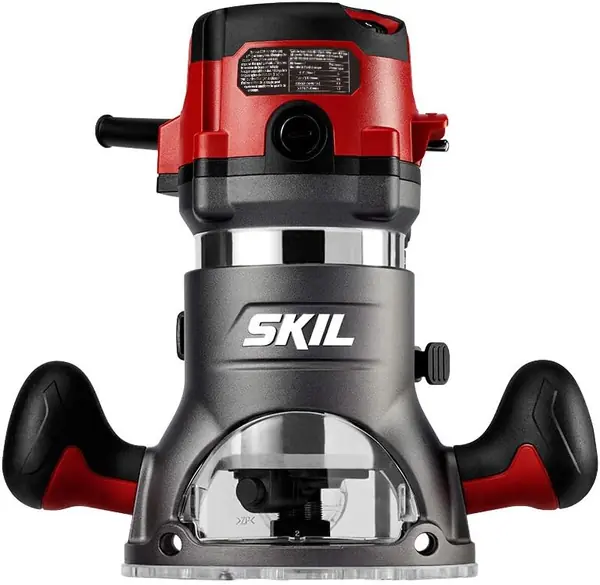
SKIL RT1323-00 fixed-base router with dust extraction adaptor and parallel guide

First router tables

Shop Score 91/100
Motor
10 A, 2.0 HP
Collets
1/4 in. and 1/2 in.
Base Type
Fixed only
Weight
7.7 lb
View on Amazon

The RT1323-00 is the least expensive router in this group, and it still takes both collets, including the 1/2-inch one that makes a table useful. Ten amps and 2.0 horsepower sit under a fixed base with a variable-speed dial, a soft start, and a dust extraction port.

What we like is where the money went: three coarse depth settings with a micro adjustment on top, a live tool indicator that tells you the machine is still powered while your hand is near the plate, and a 7.7-pound body that lifts out of the plate without a fight. For a first table, or a second router that stays mounted, that is the right set of priorities.

The catch is headroom. Ten amps is the smallest motor here, so wide panel bits in hardwood want lighter passes and more of them, and there is no plunge base for work away from the table. If your projects are profiles, roundovers, and door parts, neither limit will find you.

Worth Noting

  • Less power for wide bits in hardwood
Our Verdict

We point first-time table builders here: it is the least expensive router in this group and it still takes 1/2-inch bits.

Check Latest Price

How We Tested Routers for Router Tables

We started with dozens of current routers and read through spec sheets and owner reviews, then narrowed to models with a fixed base that mounts to a standard plate, a half-inch collet option, and enough motor to cut hardwood without bogging down. That left 10 routers, all bought at retail, which we ran for nine months.

Each one went into a benchtop table in a garage shop and mostly stayed there. We cut dadoes, rabbets, edge profiles, and raised panels in red oak and hard maple, using a guard, featherboards, and a starting pin on curved work, and noted where each machine pushed back — a motor that bogged in a deep panel cut, a speed dial that was hard to read under the table, a base that shifted under load.

Depth adjustment got its own session: we counted the turns and measured the bit's real travel with dial calipers to see how fine the increments were, and checked whether we could reach the adjuster with the motor in the table. We also swapped motor packs in and out of the plates to time above-table bit changes, unplugging before every one and seating each bit fully in the correct collet, tightened with both wrenches. We ran the plunge bases off the table too, checking how smoothly they returned and whether they held depth.

We emptied every box on the bench and inventoried what shipped — both collets, edge guides, dust adapters, cases — and flagged any kit that arrived short. Long, continuous sessions showed which motors and switches got hot and whether soft start kept a wide bit from lurching. Dust collection and switch access we judged with the router mounted and sawdust falling.

How to Choose a Router for a Router Table

Start with the fixed base and how it mounts

The base that goes into the table is the fixed one. The plunge base, if the kit has one, is for work you do with the router in your hands. Look for a flat sub-base with a bolt pattern that matches your plate, and for a clamp or cam lock that frees the motor pack, since that is how you change bits standing up instead of lying on your back.

A combo kit is worth the extra money only if you will use the second base. If the router never leaves the plate, a fixed-base-only model puts the same money into the motor and the depth ring instead of a base that sits on a shelf.

Check where the depth adjustment lives

Bit height is the control you touch between every pass, so reach matters more than range. Some fixed bases let you turn the ring from above the plate; others put it low on the body, where every tweak means reaching under the table with a wrench. Fine increments are worth having, because 1/64-inch steps let you sneak up on a profile, but they are no help if you cannot get to them.

The trap is a router whose adjustment is buried once the base is bolted down. Before you buy, put a hand on the depth ring and ask whether you can turn it with the plate at waist height.

Collet size and power for the cuts a table makes

A router table exists to run big cutters: panel raisers, wide cove and bead profiles, door-making bits. Those want 1/2-inch shanks and a motor in the 2-horsepower class, which is why every router here ships with both collets.

The trap is the compact trim router with a 1/4-inch collet. It looks like a bargain and it cannot hold the bits a table is for. We will not put a router under a plate unless it takes 1/2-inch shanks; the 10-amp Skil here is the least motor we would accept.

Speed control and soft start

Large-diameter bits have to run slow, so a variable-speed dial with a genuinely low bottom end is not a luxury. A panel raiser spun at full speed is a burn mark waiting to happen, and no amount of feed technique fixes the wrong RPM.

Soft start matters more at a table than in your hand, because the switch is under the plate and your hands are on the wood when the motor comes up. Electronic feedback, which holds RPM through a knot, is the other feature worth paying for. A single-speed router limits you to small bits, which is a strange limit to accept in a machine built to spin large ones.

Frequently Asked Questions

Final Verdict

The Bosch 1617EVSPK is the router we point table builders toward, because bit height lands where your hands are and 2.25 horsepower is enough for the biggest cutter you will spin. If the same motor has to earn its keep off the table too, the DEWALT DW618PKB gives you the better second base and a longer warranty.

And if budget is the deciding factor, the 14-amp Skil combo does most of that work for much less, while the 10-amp Skil is the honest entry point for a first table.