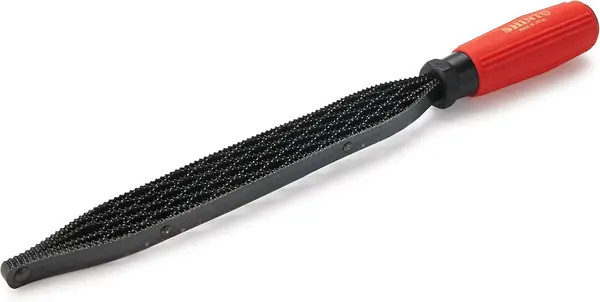
Shinto Saw Rasp Best Overall
- Weight
- 7.05 oz
- Cut
- Coarse and fine
- Blade Length
- 9 inches
- Blade Material
- Hardened steel
Ten hardened saw blades riveted into a flat paddle is an unusual way to build a rasp, and it is why the Shinto is our top pick. The coarse side peels away wood in shavings rather than dust, and the fine side leaves a surface that needs only light sanding. We noticed the difference most on end grain and outside curves, where the teeth keep biting instead of skating over packed chips.
The two-sided layout also saves time. You can rough in a shape, flip the tool, and clean up the tool marks without reaching for a second rasp. At 9 inches long and just over 7 ounces, it is light enough to control one-handed but long enough to span a chair leg or a tool handle. The teeth run right to the edge, so inside corners get a cleaner pass than they do with a conventional rasp.
This is a flat rasp, so it will not replace a round rasp for holes or a half-round for deep coves. And the blade has some side-to-side flex if you force the cut; let the teeth do the work. For the shaping jobs that send most of us looking for a rasp in the first place, that is a fair trade. We keep reaching for it because it removes material fast and leaves less cleanup than a traditional rasp.
What We Like
- Non-clogging blade stack keeps cutting without a file card
- Coarse and fine sides handle shaping and cleanup
- Teeth reach the edge for tight inside curves
Worth Noting
- Flat shape cannot replace round or half-round rasps for coves
- Blade flexes side to side if forced into cuts
We recommend the Shinto Saw Rasp for anyone who wants one tool to shape wood quickly, with a fine side for cleanup.
Check Latest Price