↑↓ navigate ↵ open Esc close All results →

Best Woodworking Compasses of 2026

A woodworking compass feels like simple school hardware until a point skids halfway across a walnut panel, the wing screw slips a quarter turn, and a scribed arc drifts off layout. Carrying a divider step or swinging a clean circle in one pass depends on points that meet accurately, a lock that resists bumps, and a clamp that actually grips a standard shop pencil.

Using 14 wing compasses, spring dividers, scribers, and center finders over four months on cabinet parts, shop jigs, and bowl blanks showed where spec sheets stretch reality. Makers often measure maximum circle diameters with the legs splayed nearly flat and the pencil barely hanging on, making that figure an outer ceiling rather than a steady working radius.

Spring dividers with speed nuts proved faster for repeating small layouts than wing-screw models, though a hard knock nudges them more easily. From compact 6-inch wing compasses for everyday bench marks to 12-inch dividers built for wide panels, each of the six tools ahead locked its radius cleanly across test layouts.

Our Top Picks

The Best Woodworking Compasses

1.

ZLKSKER Professional Woodworking Compass (6 Inch) Best Overall
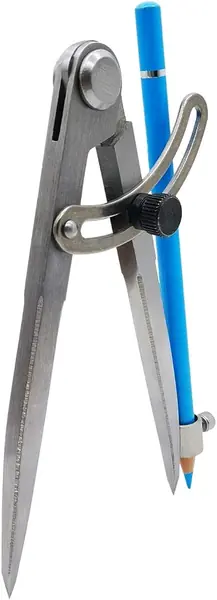
ZLKSKER steel wing compass with pencil holder and knurled locking screw, 6-inch legs

Everyday shop layout

Shop Score 90/100
Leg Length
6 inches
Maximum Circle
16 inches
Pencil Holder
8 mm
Maximum Radius
8.0 inches
View on Amazon

An 8 mm pencil holder sounds like a spec-sheet footnote until you have spent twenty minutes hunting for the one pencil thin enough to fit a compass. This ZLKSKER swallows an ordinary shop pencil, and that is the detail that kept it in our hands while the others sat on the bench. The rest of the numbers back it up: 6-inch legs, a listed maximum span of 8 inches as a radius, and circles up to 16 inches across, which covers cabinet arcs, table aprons, and most of what a home shop marks out.

The wing and its finely threaded screw do the real work. Set the legs against a rule, snug the knurled screw, and the setting survives a full swing without creeping. We checked by drawing the same circle over and over and laying the arcs on top of each other, and the lines landed in the same place. The carbon steel legs are heavier than the price suggests, and that mass keeps the point planted on the surface instead of skating across it.

Two things to know going in. The adjustment screw arrives stiff, and because the threads are fine, a full turn moves the legs only a little — good for dialing in a dimension, tedious if you are resetting constantly. Work the screw back and forth for a few minutes and keep a drop of oil on it, and it loosens up. The tips are hard and sharp enough to leave a clean line on oak and maple without tearing the fibers.

Where it runs out is size, not quality. Past a 16-inch circle you need longer legs and a two-handed stance, which is where the ALLY 12-inch comes in; below that, this one is the least fuss of anything here.

Worth Noting

  • Pencil clamp can slip on slim pencils
Our Verdict

We think most shops should buy this one: it locks firmly, takes a normal pencil, and reaches 16-inch circles without feeling clumsy.

Check Latest Price
2.

Mr. Pen Professional Woodworking Compass Best Heavy-Duty Wing Compass

Mr. Pen all-steel wing compass with locking knob and pencil holder in silver

Large panel layout

Shop Score 89/100
Material
Carbon steel
Leg Length
8 inches
Maximum Circle
18 inches
View on Amazon

The Mr. Pen has real weight to it. Lift it out of the box and the legs feel like bar stock rather than stamped sheet, and the version we tested runs 8 inches with a listed reach of 18-inch circles — enough to swing an arc across a full cabinet side without stopping to reset.

We like it most for jobs where the compass has to stay put while you lean around it. The lock knob bites hard, the carbon steel resists the flex that sends cheap legs wandering, and the wing holds a dimension through a whole run of marks. What we don't like is the pencil channel: it is narrow enough that a standard pencil won't seat without force. A slim pencil, a sanded-down stub, or a wrap of tape solves it, but sort that out before you start laying out a project.

An 8-inch leg is also a lot of tool to steer around a small box, and below cabinet-scale work the ALLY 8-inch or the ZLKSKER is simply easier to aim. On panels and shop furniture, the reach and the mass pay you back.

Worth Noting

  • Sharp milled edges need a file first
  • Joint is stiff out of the box
Our Verdict

We reach for the Mr. Pen when the layout is big: 8-inch legs, real mass, and a lock that doesn't budge, provided you feed it a slim pencil.

Check Latest Price
3.

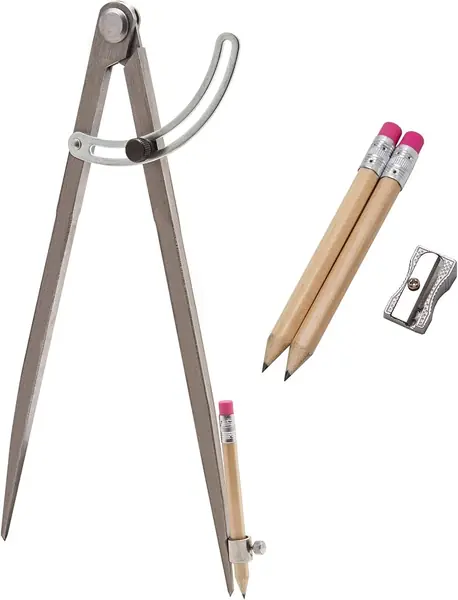
ALLY Tools 12-Inch Wing Divider Best for Large Circles

ALLY Tools 12-inch steel wing divider with knurled locking knob and pencil holder

Big layout work

Shop Score 88/100
Material
Carbon steel
Circle Range
1/2 to 31 inches diameter
Included
Two pencils and one metal sharpener
Size
12 inches
View on Amazon

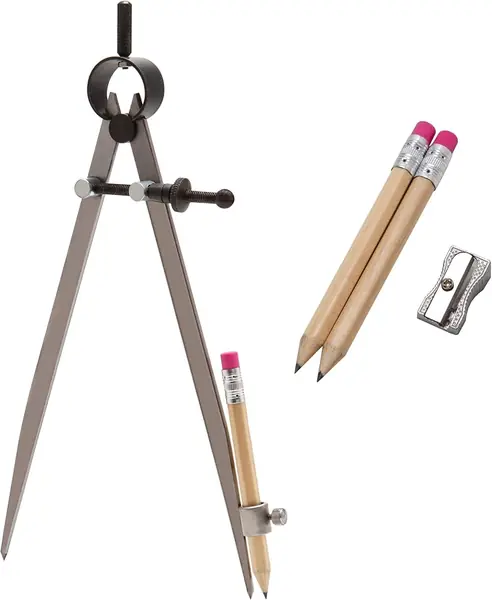
Thirty-one inches is the number that earns this ALLY its place. Set the legs as wide as the screw allows and you can swing a circle well over two feet across, which is more reach than anything else here. The range starts at half an inch, so it isn't only a big-circle tool — it just isn't the tool you reach for first on small work.

The body is high carbon steel with a knurled locking knob, and the frame is stiff enough that the legs don't twist when you bear down on them. It arrives with two pencils and a metal sharpener, which sounds like padding until you misplace a pencil halfway through a project. Bare carbon steel wants a wipe with an oiled rag after a session in a humid shop, a ten-second habit that keeps the points clean.

We found the pencil clamp to be the weak point. It is a simple sleeve, and a pencil that is slightly undersized will shift partway around a big arc, which is exactly when you notice. A fatter pencil or a wrap of tape around the one you have keeps it steady. Where the tool earns its keep is sheet goods and big turning blanks, where a 31-inch sweep saves you from setting trammel points on a straightedge.

Worth Noting

  • Awkward to steer on small layouts
Our Verdict

We keep this one for the largest arcs: it draws circles up to 31 inches across and holds them, but it's clumsy at small scale.

Check Latest Price
4.

ALLY Tools 8-Inch Spring Divider Best Spring Divider

ALLY Tools 8-inch steel spring divider with speed nut and pencil holder in gray

Repeat layout marks

Shop Score 87/100
Leg Length
8 inches
Circle Range
1-1/2 to 17 inches diameter
Included
Two pencils and one sharpener
Adjustment
Sliding speed nut on spring
View on Amazon

The mechanism is the story here. Instead of a screw you turn against a wing, this ALLY uses a spring between the legs and a speed nut on a threaded rod: slide the nut to a setting and the spring holds the legs against it. We found that the quickest way to lay out a run of evenly spaced marks — set the distance once, then walk the divider down a board, tap, tap, tap, without touching a rule again.

Eight-inch legs cover a listed range of 1-1/2 to 17-inch circles, so it handles everything from a small arc for a hinge up to a full round on a stool seat. The tips are needle-pointed steel and the spring keeps pressure on them, which is why the setting survives rough or slightly irregular stock — the legs give a little instead of skating off.

Two pencils and a metal sharpener come in the box, so it is usable the day it lands. The one thing it won't do is lock like a wing divider: the spring holds tension against the nut rather than clamping the legs, so a hard knock can move a setting that a knurled screw would have kept. That is the trade for speed, and for layout work we will take it.

Worth Noting

  • Pencil can wander in the clamp
Our Verdict

We like this spring divider for fast repeat marks: set the speed nut once and step the same distance around a project.

Check Latest Price
5.

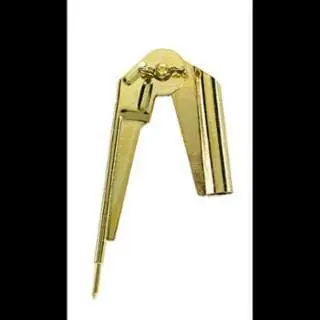
General Tools 843/1 Pencil Compass and Scriber Best for Detail Scribing

Three General Tools pencil compass and scriber tools with brass-plated steel legs

Detail scribing

Shop Score 86/100
Material
Brass-plated steel
Maximum Circle
8 inches diameter
Accepts
Standard pens and pencils
Pack Count
3
View on Amazon

Three to a pack is the reason to look at these at all, and it is a good one. A small pencil compass is the tool you want within reach when a curve needs transferring, and having one in the toolbox, one at the bench, and one in the truck beats walking back across the shop for the single one you own. Each draws circles up to 8 inches across and takes an ordinary pencil or a slim pen.

We treat them as scribing tools first. The points are fine enough to trace a contour onto a rail or mark a curve on a template, and they set to a small radius quickly, which is most of what finish work asks for. Past a template-sized curve you want the reach and the weight of a wing divider; for marking trim and transferring short distances, the small size is exactly the advantage.

Worth Noting

  • Light-gauge metal flexes on hard stock
Our Verdict

These are the detail tools in our kit: three small compasses for contour scribing and small arcs, at a price that lets you stash one everywhere.

Check Latest Price
6.

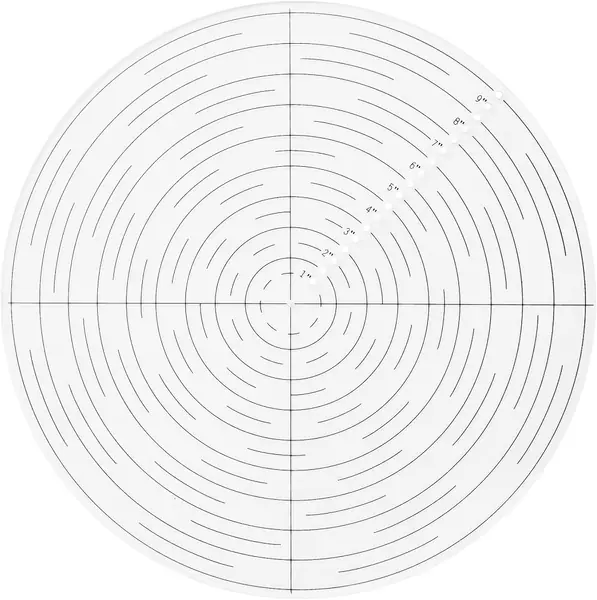
Fulton 10-Inch Round Center Finder

Clear acrylic round center finder with concentric circle markings for woodturning blanks

Bowl blank layout

Shop Score 85/100
Material
Clear acrylic
Circle Range
1 to 10 inches diameter
Weight
7.4 oz
Overall Diameter
10.5 inches
View on Amazon

This is not a divider, and it won't scribe a joint or lock a measurement — the acrylic disc has no adjustable legs at all. What it does is sit flat on a round or lumpy blank, let you sight the center through the clear plastic, and guide a pencil around a circle from 1 to 10 inches across.

That makes it a lathe tool more than a layout tool. Blanks off a chainsaw are rarely round, and finding the center of an irregular lump with a rule and a square is slow, fussy work; drop this on top and the concentric rings do it in seconds. The transparency matters more than it sounds, because you can see the grain and any split under the disc before you commit a screw center.

We have found it accurate on blanks where a rule gets you close and no closer, and the printed rings are sharp enough to read at a glance. It is still a piece of acrylic, though: dropped on a concrete floor or leaned on in the vise, it can crack, and 10 inches is the ceiling on the circles it will draw. Keep it on a peg rather than in a drawer full of steel and it will stay flat and readable.

Worth Noting

  • Acrylic can crack if dropped
Our Verdict

We recommend this disc for anyone turning bowls: it finds the center of a rough blank and draws the circle in one pass.

Check Latest Price

How We Tested Woodworking Compasses and Dividers

We started with a long list of wing compasses, spring dividers, scribers, and center finders, then narrowed it by the specs that change how a tool actually works: leg length and claimed circle range, wing screw versus spring with a speed nut, pencil holder size, material and finish, and whether a listing sold a single tool or a pack. We bought 14.

For four months they lived on a garage bench and in a truck toolbox, laying out rails and stiles, scribing a cabinet panel to a wall that was anything but flat, swinging arcs on plywood jigs, transferring mortise marks, and finding centers on bowl blanks.

To check alignment we closed each tool and held the tips against a backlight, then dragged the point across pine to see whether it wandered. To test the lock, we set each one to 3 inches, locked it, carried it across the shop, and tapped a leg against the bench edge before re-measuring. We drew 20 circles in a row with each spring divider and each wing compass to compare repeat marks against fine adjustment, and clamped a standard pencil and a carpenter's pencil in every holder to see what slipped. Carbon steel legs got flexed, and one sat on a damp bench overnight to see how quickly the finish spotted.

Grip was judged on long scribing runs, where a thin leg starts digging into your palm. Between uses, every tool had its legs closed and its screw or nut snugged before it went in a drawer, and the set was stored on a high shelf away from kids.

How to Choose a Woodworking Compass

Match the Reach to the Circle You Draw

Leg length and circle capacity are not the same number, and listings mix them freely. The 8-inch ALLY divider here draws circles to 17 inches; the 12-inch version reaches 31. Some listings quote a maximum span instead, which is a radius, so double it to get the circle — the 6-inch ZLKSKER lists an 8-inch span and a 16-inch circle.

Work out the biggest arc your projects actually need, add an inch or two of margin, and buy for that. More reach than you need is a liability rather than a bonus: a long leg is harder to steer around a drawer front, and the extra weight tires your hand on fine work.

Wing Screw or Spring: How the Setting Holds

Both designs do the same job with different manners. A wing divider clamps the legs with a knurled screw against a curved wing: it locks hard, adjusts in fine increments, and is the better choice when a dimension has to survive being set down, carried, and picked up again. A spring divider holds tension against a speed nut instead, which sets faster and suits stepping off a run of identical marks.

We keep a wing divider for dimensions and a spring divider for repeats. If you only buy one, buy the wing: the positive lock is the harder thing to work around.

The Pencil Holder Decides How Much You'll Use It

The holder is the most common letdown on an inexpensive compass. An 8 mm sleeve takes a standard pencil; narrower channels force you into a slim pencil or a wrap of tape, which is fine once and irritating by the tenth time. Check the stated holder size before you order rather than after.

If the tool is mainly for transferring measurements, a plain divider with no holder does that job better — steel points register on a mark more precisely than graphite, and there is nothing to loosen mid-project.

Check the Points, Then Check Them Again

Close the legs and look down the two tips. They should meet as a single point, not cross and not sit offset. A divider whose points are out of line scribes a line that drifts from the measurement, and no amount of care in use corrects it.

Heavy carbon steel resists the flex that throws a line; pressed or light-gauge metal bends. Expect to file sharp milled edges on an inexpensive tool, and check the tips the day it arrives so the return window is still open.

Frequently Asked Questions

Final Verdict

The ZLKSKER 6-inch is the compass we tell most people to buy. The holder takes a standard pencil, the wing locks a setting hard, and 16 inches of reach covers what cabinet and furniture work actually asks for — and it does all of that without the bulk that makes a big divider tiring to aim.

If your layout runs to sheet goods or big turning blanks, the 12-inch ALLY is the better tool, and the Mr. Pen is the one for anyone who wants more mass in the hand and doesn't mind hunting for a slim pencil. For scribing contours rather than swinging arcs, the three-pack of General Tools compasses is what we reach for.