↑↓ navigate ↵ open Esc close All results →

Best Woodworking Squares of 2026

An out-of-tune saw leaves tool marks a plane can erase, whereas a square off by even half a degree quietly compounds that error into every fence setup, jig, and cabinet carcass cut after it. Checking every square against a known true reference edge is the baseline before blade markings or extra features even enter the conversation.

Putting 14 squares through six months of framing layouts, trim scribing, joinery checks, and dowel center-finding—from 12-inch combination models to palm-sized center finders and multi-angle protractor heads—shifted attention away from etched graduations. How cleanly the head seats against stock and whether the lock mechanism holds firm after bumps decide accuracy far more than tiny scale ticks.

Covering rough framing, bench layout, tight joinery inspection, and pocket-sized setups, the eight squares ahead arrived square out of the box and kept their calibration after shop drops.

Our Top Picks

The Best Woodworking Squares

1.

Swanson Speed Square S0101 Best Overall
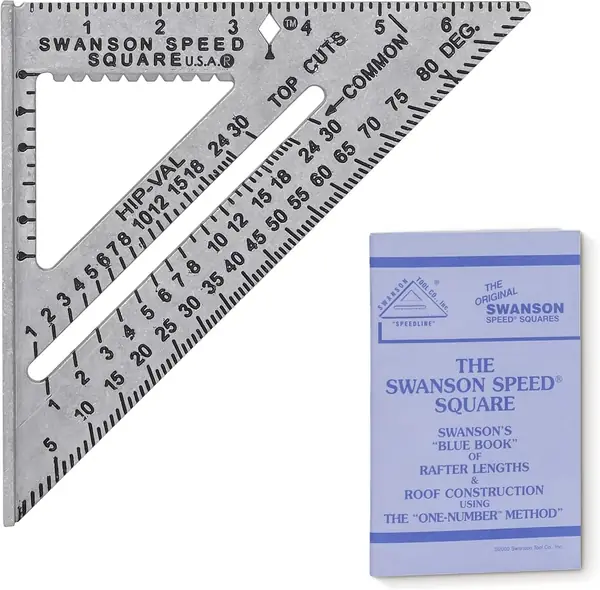
Blue Swanson Speed Square S0101 aluminum 7-inch layout square with etched markings

Framing and layout

Shop Score 97/100
Graduations
1/8 inch
Size
7 inch
Material
Die-cast aluminum alloy
Weight
8 oz
View on Amazon

A 7-inch speed square earns its keep by being the tool you can grab with one hand and set against a stud edge. The Swanson's die-cast aluminum body has a matte blue finish that stays easy to read in bright light, and the 7/8-inch heel seats against a board so the 45° and 90° edges land where you expect. We like that combination for framing, decking, and quick stair layout, where the square is going to get knocked around and needs to stay handy.

The 1/4-inch scribe bar is the detail we use most: it lets you hook a pencil and pull a parallel line without hunting for a tape. The 1/8-inch graduations are bold and etched into the metal, so they do not rub away, and the Blue Book tucked into the package is a useful crib sheet for rafter tables and common angles. We treat the coarser scale as the trade-off: this is a layout square, not the tool we reach for when a cabinet joint needs a 1/32-inch mark.

Where it wins is speed and broad usefulness. It is light enough to keep in a tool belt, the heel works as a saw guide for a circular saw, and the matte finish avoids the glare that makes polished squares hard to read outdoors. For finish joinery, pair it with a combination square rather than asking it to do both jobs.

Worth Noting

  • 7-inch reach limits long crosscuts
Our Verdict

For framing, decks, and quick 45° and 90° marks, this is the square we reach for first.

Check Latest Price
2.

IRWIN Combination Square 12-Inch Best Full-Size Combination Square

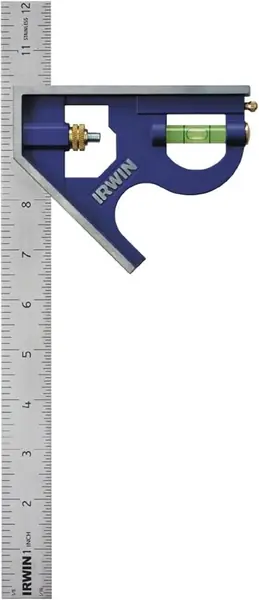
IRWIN 12-inch metal combination square with blue zinc head and stainless blade

Bench and trim

Shop Score 96/100
Graduations
1/16 inch
Blade Length
12 inches
Blade Material
Stainless steel
Body Material
Cast zinc
View on Amazon

The 12-inch blade is what puts the IRWIN in a different class from a pocket square. We like the extra reach for marking across cabinet sides, stair stringers, and wide trim, and the sliding head lets the same tool work as a depth gauge or a 45° miter reference. The cast zinc body has a reassuring heft, while the stainless blade resists the rust that kills cheaper squares in a damp shop.

The etched 1/16-inch scales are easy to read, and the 90° and 45° faces are the two settings most woodworkers actually use. We check a new combination square against a known true edge before trusting it, and this one is no exception: a square can arrive slightly out, and the thumb lock can feel stiff when new or loosen with use. Those are conditions to check on arrival, not reasons to skip a full-size square altogether.

For bench work, trim, and general carpentry, the longer blade saves repeated measuring and gives you a stable fence against the workpiece. We reach for it when the layout is longer than a 6-inch square can handle and a speed square's coarse scale is not enough.

Worth Noting

  • Heavier than compact squares
Our Verdict

A full-size combination square earns its place at the bench, and we trust this one once its 90° face checks out.

Check Latest Price
3.

DFM Small Square and Center Finder Best for Checking Square

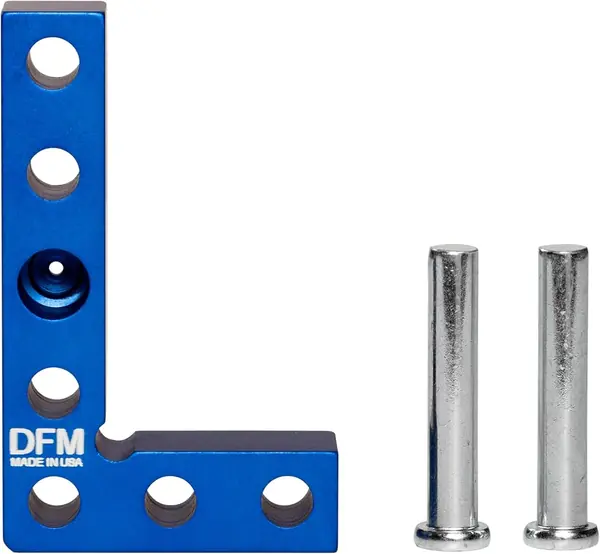
Blue DFM small aluminum square and center finder with two marking pins

Checking joinery

Shop Score 95/100
Graduations
1/32 inch
Size
2.63 x 1.63 inches
Material
Aluminum
Center Hole
11/32 inch
View on Amazon

The first thing you notice about the DFM is how little bench space it takes up. At 2.63 by 1.63 inches, it sits in an apron pocket or beside the table saw, and the 11/32-inch center hole gives a pencil a place to register when you need to find the middle of a narrow board. We like that combination for checking joinery and setting up blades, where a full-size square is often too clumsy to fit.

The aluminum body is machined with a 1/32-inch scale, and the two center-finding pins store on the tool. We use it to check inside and outside corners, chisel backs, and table-saw blade squareness; the small size lets it reach into places a 6-inch square cannot. The center-finding function is the reason to choose this over a plain machinist square, especially for spindles, dowels, and narrow stock.

It is a specialty tool, not a replacement for a framing square or a 12-inch combination square. We keep it as a third hand for setup and verification, and it earns its place because it is accurate, compact, and quick to grab. If you mostly break down sheet goods, spend the money on reach instead.

Worth Noting

  • Easy to misplace in a busy shop
Our Verdict

We keep this tiny square in an apron pocket for checking blades, joinery, and center marks.

Check Latest Price
4.

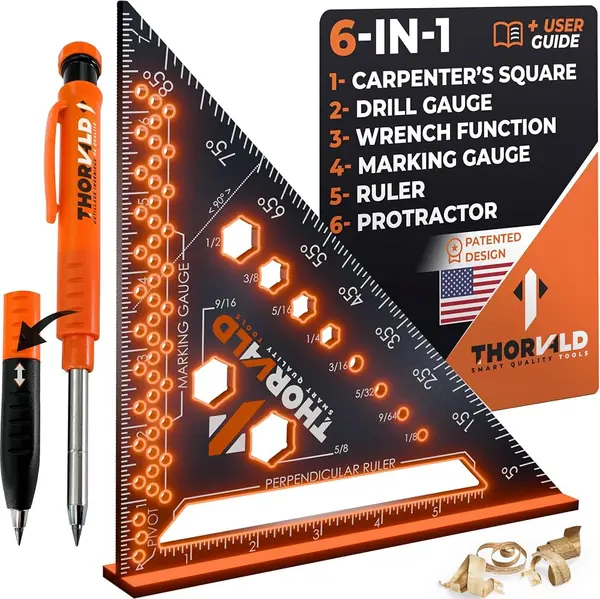
THORVALD 6-in-1 Carpenter Square Best Multi-Purpose Square

Silver THORVALD 6-in-1 aluminum carpenter square with mechanical pencil and refills

Small-project layout

Shop Score 94/100
Graduations
1/16 inch
Size
7 inches
Material
4 mm aluminum
Included
Square and 2-in-1 pencil
View on Amazon

Six functions in a 7-inch triangular body sounds like a gimmick until you are on a small job and do not want to carry a full toolbox. The THORVALD combines a square, two protractors, rulers, a drill gauge, a wrench cutout, and marking holes, and it throws in a 2-in-1 carpenter pencil. We like it for quick angle layout and for marking dowel centers without switching tools.

The 4 mm aluminum body is light but feels substantial, and the laser-engraved 1/16-inch scales are easy to read against both light and dark woods. We treat the wrench and some of the angle settings as convenience features rather than precision instruments; the square and marking holes are the parts that earn daily use. The included pencil is a nice touch, though it is the first thing we expect to wear out.

For a beginner setting up a small shop, or for a remodeler who wants one compact layout tool in a bag, this is a practical choice. It is also a good gift for someone who has a basic square but keeps reaching for a protractor and a pencil. We do not use it for cabinet-grade joinery, where a dedicated combination square gives more reach and a finer scale.

Worth Noting

  • Too small for full-sheet layout
Our Verdict

We see this six-in-one square as a useful layout helper for beginners and small-shop woodworkers.

Check Latest Price
5.

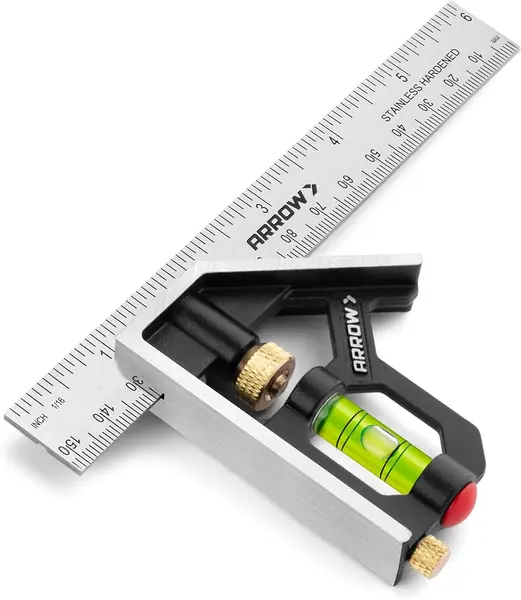
Arrow Combination Square 6-Inch Best Compact Combination Square

Black and silver Arrow 6-inch combination square with bubble level in handle

Pocket layout

Shop Score 93/100
Graduations
1/16 and 1/32 inch
Blade Length
6 inches
Blade Material
Stainless steel
Handle Material
Zinc alloy
View on Amazon

The bubble level is the reason this 6-inch combination square stands out in a drawer full of look-alikes. Set in the zinc handle, the vial lets you check a small assembly for level without reaching for a torpedo level, and the stainless blade slides through the head for 90° and 45° marks. We like it for quick checks on jigs, small boxes, and shelf supports.

The blade carries dual metric and SAE markings with 1/16- and 1/32-inch graduations, and the brass screw locks the head without a lot of force. We found the scale legible and the travel smooth, though the short blade is the limit: it is a pocket square, not the one we choose for marking across a 12-inch cabinet side. For small work, that compactness is the point.

Compared with the Swanson 6-inch combination square, the Arrow adds a bubble level and a slightly more compact feel; the Swanson has a longer track record and a different vial. We reach for the Arrow when we want a level and a square in one pocket tool, and for a small combo square it is an easy recommendation.

Worth Noting

  • Short 6-inch blade cannot span wide cabinet panels
Our Verdict

We like the bubble level on this compact combination square for apron-pocket layout.

Check Latest Price
6.

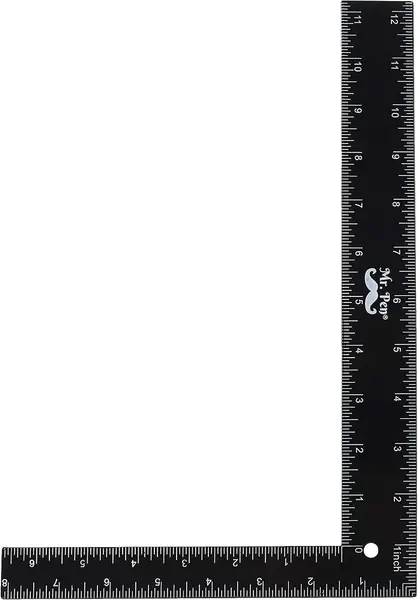
Mr. Pen Carpenter Square 8 x 12 Best for Rough Framing

Black Mr. Pen 8-by-12-inch carbon steel L-square with white markings

Rough framing

Shop Score 92/100
Graduations
1/16 inch and metric
Size
8 x 12 inches
Material
Carbon steel
Color
Black
View on Amazon

The Mr. Pen carpenter square is the tool you buy when you need a full-size L-square and do not want to think about it. The 8-by-12-inch carbon-steel body has a black finish with bright white markings, and the two legs give you a 90° reference for framing, squaring up sheet goods, and checking a corner before you commit to a cut.

Imperial graduations run to 1/16 inch on one side and metric on the other, which is handy if you move between plans and stock sizes. We like it as a spare square for the truck or the garage, where a more expensive combination square might get knocked around. It is a fixed L, so you give up the sliding blade and the fine adjustment of a combination square; this is a layout and checking tool, not a precision setup tool.

The value is in the size and simplicity. For rough framing, deck layout, and quick right-angle checks, it does the job without fuss. We keep one around for times when a 7-inch speed square is too short and a 12-inch combination square is more tool than the job needs.

Worth Noting

  • Fixed L-shape lacks a sliding blade and fine adjustment
  • Meant for rough layout rather than precision setup
Our Verdict

A beginner who needs a full-size L-shape without spending much is exactly who we point to this square.

Check Latest Price
7.

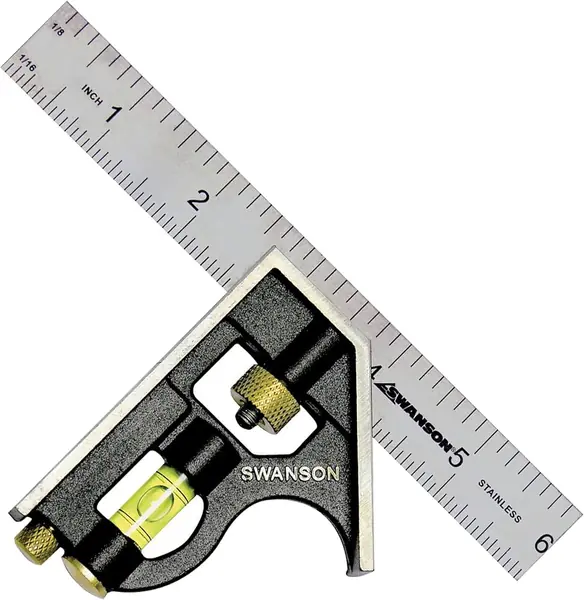
Swanson Combination Square 6-Inch Best for Tight Bench Work

Silver Swanson 6-inch combination square with zinc head and stainless blade

Tight bench work

Shop Score 91/100
Graduations
1/8 and 1/16 inch
Blade Length
6 inches
Blade Material
Stainless steel
Head Material
Die-cast zinc
View on Amazon

A 6-inch combination square is the tool we reach for when a 12-inch blade is too much and a speed square is too coarse. The Swanson pairs a stainless blade with a die-cast zinc head, and the brass bolt locks the blade with light pressure. We like the compact size for marking mortises, setting up small jigs, and checking a board's edge without dragging out a full-size square.

The etched graduations are in 1/8 and 1/16 inch, and the acrylic block vial is a more drop-resistant choice than the tube vials on cheaper squares. The blade slides through the head to work as a depth gauge, which is the function we use most when setting a router bit or a saw blade. We check any new combination square against a known true edge; if this one arrives slightly out, that is a return, not a tuning project.

The head moves smoothly and locks with less pressure than the stiff thumb screws on some full-size squares. For a compact tool, the acrylic vial and the etched blade are the details that make it feel more considered than the price suggests. It is a good companion to a speed square rather than a replacement for a 12-inch combination square.

What we like most is how quickly it sets up: slide, lock, mark, move on. It is the square we grab for a quick depth check at the router table, and that is enough to earn its drawer space.

Worth Noting

  • Short 6-inch reach
Our Verdict

Tight bench work and quick depth marks are where this small combination square makes sense for us.

Check Latest Price
8.

ArtyMaster Mini 3D Square

Red ArtyMaster 3.8-inch mini 3D square with carpenter pencil and refills

Small-part layout

Shop Score 90/100
Size
3.8 inches
Material
Aluminum
Included
Square and pencil
Angle Range
0-90 degrees
View on Amazon

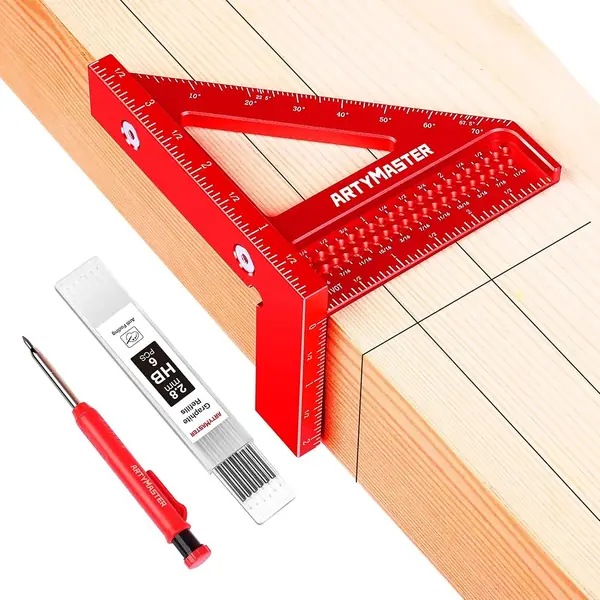
The ArtyMaster is a 3.8-inch 3D square, which means it can register on two faces of a board at once and carry a line around a corner. We like that for small boxes, trim returns, and any part where a full-size square will not fit. The anodized aluminum body has laser-engraved scales, and the package includes a carpenter pencil and six refills.

The frame covers 0 to 90 degrees with 45° and 90° references, and the marking holes let you scribe a line without walking the pencil along an edge. We found the size handy for checking small joinery and marking hole centers, and the red finish is easy to spot on a cluttered bench.

The anodized finish resists wear, and the laser-etched scales stay clear after repeated marking. We also like that the pencil has a built-in sharpener, so the tool stays useful without a separate sharpening stop. It is a compact layout station for small parts rather than a general-purpose square.

For model makers, small-shop woodworkers, and anyone who builds boxes and drawers, it fills a gap between a speed square and a protractor. We keep it in a drawer with the marking tools, where it takes up almost no space and comes out for the fussy little layout jobs.

Worth Noting

  • Too small for large panels
Our Verdict

We reach for this mini 3D square on small parts and hole scribing, not full-sheet work.

Check Latest Price

How We Tested (and Re-Tested) Woodworking Squares

We started with more than 40 squares sold by tool retailers and woodworking suppliers, filtering by size, head and blade material, graduation fineness, and price, then reading through customer reviews to see which ones carpenters and cabinetmakers kept bringing up. That got us to 14 squares, bought with our own money and used for six months in a home shop and on a garage framing project. The field covered L-squares, T-squares, combination squares, and a few multi-angle designs.

The first check happened the day each square arrived: we laid it against a known true straightedge, marked a line across a board, flipped the square over, and marked a second line on top of the first to see whether the two agreed. We did the same on the 45-degree faces against a mitered cut, then repeated the whole check every time a square came off the bench onto concrete, and again after a week riding loose in a tool bag.

In daily use we marked trim, laid out joinery, and checked assemblies at the bench, and we carried the small ones in an apron pocket up a ladder to see whether compact actually meant usable. We loosened and re-tightened each lock a few dozen times and noted which ones crept, slid the blades in and out looking for slop, and read graduations under the dim light of a garage at dusk to see which markings held up.

Finally, we kept a running note on the extras, a protractor head, a center-finding hole, an on-board pencil, and whether we reached for them more than once a week, which is what decides whether they earn their price. Two squares that arrived dead-on didn't survive their first drop.

How to Choose a Woodworking Square

Match the Square to the Layout

Speed squares, combination squares, L-shaped carpenter squares, and T-squares all establish a right angle, but they hold it differently. A speed square is a one-piece triangle with a heel that catches a board edge; a combination square slides and locks along a blade; an L-square is a fixed 90° reference; a T-square reaches across a panel. We start with the task: framing and quick marks call for a speed square, cabinet and trim work call for a combination square, and sheet goods call for a longer L-square or T-square. Buy the shape that matches how you hold the tool, not the one with the longest feature list.

Check Squareness Before You Trust It

Every square in this guide is sold as square, and every one deserves a five-minute check before it goes into the shop. Put the stock against a known straight edge, mark a line along the blade, flip the square over, and mark the same line again; a true square lands the two lines on top of each other. Do the same with a 45° face, or compare it with a known miter. We check a new square on arrival and again after a drop. If it is out, return it rather than trying to tune a cheap head.

Size, Reach, and the Workpiece

Blade length is the most practical spec to compare. A 6-inch combination square fits an apron pocket and handles small joinery; a 7-inch speed square is the framing default; a 12-inch combination square reaches across cabinet sides and stair stringers; an 8-by-12 L-square covers sheet goods and rough framing. The trap is assuming compact means versatile: a short square cannot mark across a wide panel, and a long square is clumsy in a tight corner. We match the blade to the widest mark we make most often, then add a small square for the tight work.

Read the Graduations and the Lock

More graduations are not automatically better. A 1/8-inch scale is fast to read for framing, 1/16 inch covers most furniture and trim layout, and 1/32 inch helps with fine setup but can be hard to see in low light. Etched markings last longer than printed ones, and a matte finish cuts glare outdoors. On a combination square, the lock matters as much as the scale: a brass or knurled thumb screw should hold the blade without slipping and still adjust smoothly. We prefer a slightly stiff lock that stays put to a loose one that moves under the pencil.

Decide Which Extras Earn Their Space

Center-finding holes, protractor heads, bubble levels, and hole-scribing pins can turn one square into a layout station, but each extra adds bulk or a setting to check. We value a center finder on a small square because it solves a specific job, and we like a bubble level on a pocket combination square for quick assembly checks. A protractor head is useful for repeat angles, though it is not a substitute for a true 90° reference. Buy the extra you will use weekly; skip the one that only makes the tool harder to read.

Frequently Asked Questions

Final Verdict

We recommend the Swanson Speed Square as the first buy for most woodworkers: it is light, readable, and built for the 90° and 45° marks that come up on every framing and decking job. If your work is finer, add a combination square. The Arrow is the compact choice with a bubble level, while the IRWIN gives you 12 inches of reach for cabinet and trim layout.

Start with the speed square, then buy the combination square that matches your bench. That pair covers quick framing marks and the tighter layout work without making you carry a full toolbox to every cut.