↑↓ navigate ↵ open Esc close All results →

Best Brushes for Gel Stain of 2026

Gel stain does not self-level. It stays put wherever the bristles drag it, which makes the brush responsible for ridges, lap lines, and stray filaments stuck in a tacky coat. On a bathroom vanity or cabinet door, a stiff, shedding brush forces extra sanding before the topcoat can go on.

Eighteen brushes — angled sashes, foam applicators, and wide block brushes from 1 to 5 inches across — went through four months of testing on flat garage-laid cabinet doors, dining chairs, and fence boards. A brush built to cover a broad door face quickly runs into trouble along a raised-panel edge or chair spindle.

Cleanup also draws a clear line between reusable tools and single-job brushes, because oil-based gel stain demands a mineral spirits rinse that cheaper brushes are barely worth. Each of the seven brushes ahead laid an even coat without shedding; choosing between them comes down to width, handle balance, and cost per brush.

Our Top Picks

The Best Brushes for Gel Stain

1.

Purdy XL Glide 2-Inch Angular Brush Best Overall
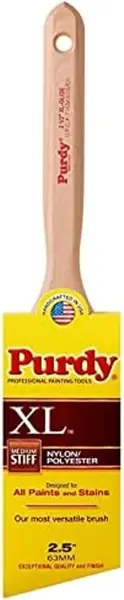
Purdy XL Glide angular trim brush with hardwood handle and nylon-polyester bristles

Furniture and cabinets

Shop Score 97/100
Handle
Fluted hardwood
Bristle
Nylon and polyester blend
Brush Width
2 inches
Stated For
Latex and oil-based paints, primers, stains
View on Amazon

Gel stain doesn't flow out the way a liquid stain does. It stays where the brush leaves it, which means a soft filament drags a ridge through the coat and you only find it after the topcoat goes on. Purdy builds this one as a medium-stiff nylon and polyester blend for latex and oil-based paints, primers, and stains, and a gel falls squarely into that last group.

That's why it's the brush we reach for first on furniture and cabinet frames. The 2-inch angular head carries enough material for a rail or a stile in one load, and the flagged tips feather the end of each pass so the next one blends in instead of stacking another line. We also like the fluted hardwood handle more than we expected to — it's light and balanced enough that wrist control stays with you through a long run of doors.

Retention is what we watched closest, because a bristle left behind in gel stain is a bristle you sand out of a finished surface. This one held its filament and its shape through repeated mineral-spirit cleanings, and the tips dried straight without needing to be combed back into line.

It's one brush rather than a kit, so pair it with a 1-inch for panel grooves and a pack of foam for flat door faces and you have a cabinet setup that covers everything except the widest panels, which want a block brush.

Worth Noting

  • One brush costs as much as some sets here
Our Verdict

We recommend it for anyone brushing thick gel stain onto furniture or cabinet frames: it's firm enough to move the material without ridging it.

Check Latest Price

2.

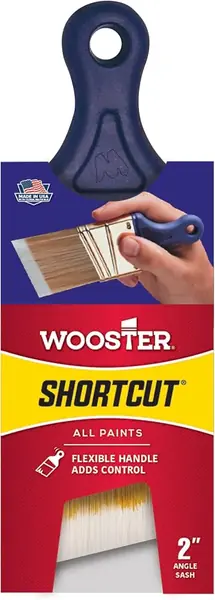
Wooster Shortcut 2-Inch Angle Sash Brush Best for Cabinets and Tight Corners

Wooster Shortcut angle sash brush with purple Shergrip handle and white synthetic bristles

Cabinet interiors

Shop Score 96/100
Handle
2-inch Shergrip
Bristle
White nylon and gold polyester
Brush Width
2 inches
Ferrule
Brass-plated steel
View on Amazon

Cabinet work is decided by where your knuckles end up. The Shortcut's handle is only 2 inches long, so your hand sits close to the ferrule and fits inside a cabinet box, along a face frame, and into the corner where a shelf meets a side — places where a full-length brush forces you to reach in at an angle and lose the line. That short grip is the whole reason this brush earns a place here.

The 2-inch angled head suits rails and stiles: load it, lay the gel along the frame, and the angle lets you finish into the corner without switching tools. Wooster lists this one for latex, acrylics, and water-based stains, so an oil-based gel is a step outside its stated brief. The synthetic blend handles gel fine — clean it in mineral spirits rather than water, and don't let it sit loaded.

There's a trade in the shape. A short handle buys precision in tight spots and gives up leverage on a wide flat panel, so we treat this as the second brush in a cabinet kit rather than the only one. It costs less than the Purdy, which makes buying both an easy call rather than a splurge.

Worth Noting

  • Short 2-inch handle gives up leverage on wide panels
  • Officially rated for water-based coatings, not oil-based gel stains
Our Verdict

Our favorite for cabinet boxes and inside corners, where the stubby handle gets your hand in and the angled head does the rest.

Check Latest Price
3.

Wooster Softip 1-Inch Flat Brush Best for Detail Work

Wooster Softip flat brush with white nylon-polyester bristles and short yellow plastic handle

Detail and profiles

Shop Score 95/100
Handle
Short plastic
Bristle
White nylon and gold polyester
Brush Width
1 inch
Weight
0.32 oz
View on Amazon

Soft is usually the wrong word for a brush headed into gel stain — the material is thick, and a limp tip pushes it around instead of laying it down. The Softip earns the name differently: the white nylon and gold polyester filament is soft enough to level a coat without leaving track marks, but the chisel trim still has an edge you can steer.

This is the brush we used on the parts a 2-inch head can't finish — raised-panel grooves, turnings, the inside of a frame, the little return where a cabinet door meets its edge. The 1-inch width gets in without overloading a profile, and the short plastic handle keeps your fingertips close enough to feel what the tip is doing.

It's the brush we noticed least, which is the compliment that matters here. Wooster lists oil among the paint types it takes, which puts gel inside its stated range, and the filament cleans up in mineral spirits without splaying. Buy two if you're doing a whole kitchen; this is the size that vanishes into a drawer and can't be found when you need it.

Worth Noting

  • One-inch width makes large panels slow work
Our Verdict

Keep one in the kit for spindles, panel grooves, and touch-ups: a detail brush that stays out of the finish it's laying down.

Check Latest Price
4.

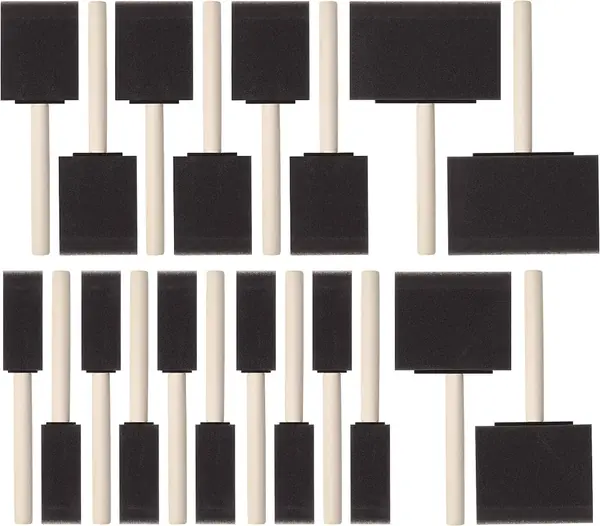
Bates Foam Paint Brushes (20-Pack) Best Foam Brush

Bates foam paint brushes in four sizes with wooden handles

Flat door faces

Shop Score 94/100
Handle
Wood
Pack Count
20 brushes
Sizes
1, 2, 3, and 4 inches
View on Amazon

A flat cabinet door covered in gel stain records every pass you made. Foam doesn't leave those marks: the open cells hold the gel and release it evenly, so the coat goes down flatter than any bristle brush here manages on a smooth panel. That's the whole argument for foam on this material, and on slab doors, drawer fronts, and tabletops it's a strong one.

Twenty brushes across 1, 2, 3, and 4 inches cover most of a kitchen — the wide ones for door faces, the narrow ones for edges and the inside of a frame. The wooden handles are glued to the foam heads and feel sturdier in the hand than a bulk pack suggests.

We treat them as consumables, and you should too. Gel stain cleans out of foam poorly, so a brush you can throw away is worth more on a big job than one you have to save. Load a fresh one for each door rather than pushing a single brush through a whole set; the head sits on a glued joint, and a long wet run is where that joint gives.

Where the surface is flat, nothing else in this group gives a cleaner result for the effort. We keep a pack in the shop for door faces and reach for bristle the moment a profile shows up, because foam rides over a groove instead of pushing material into it.

Worth Noting

  • Foam head can work loose on long wet runs
Our Verdict

For flat cabinet doors and slab panels, these foam brushes leave the cleanest coat here, and you can toss one when it's loaded up.

Check Latest Price
5.

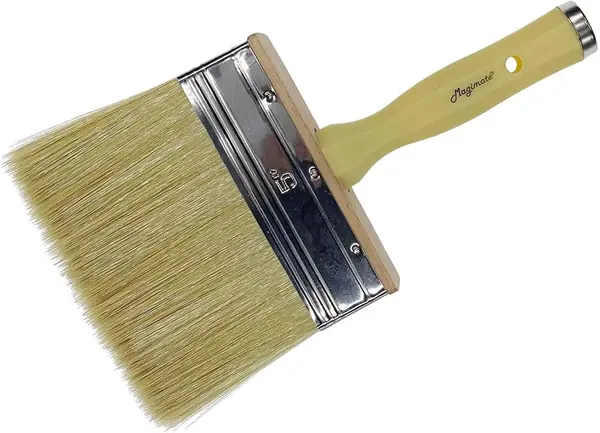
Magimate 5-Inch Deck and Fence Stain Brush Best for Decks and Fences

Magimate wide stain brush with thick bristle head and threaded extension-pole handle

Decks and fences

Shop Score 93/100
Handle
Threaded for extension pole
Bristle
Synthetic and natural blend
Brush Width
5 inches
Weight
7.2 oz
View on Amazon

Five inches of brush width is a different job entirely. The head is an inch thick and packed with a soft synthetic and natural blend, which holds a heavy load of thick stain and covers a fence board or a deck plank in a couple of passes instead of a dozen. The hollow handle is threaded, so it screws onto a standard extension pole and lets you work standing up.

That pole thread is what sold us. Coating a fence or a deck floor with a hand brush means bending or kneeling for hours, and the difference between that and working upright is the difference between finishing this weekend and finishing next month. The bristles spread gel thin without scrubbing at it, and the head carries enough material that you reload less often than the width would suggest.

It's a specialty tool. On cabinet doors and furniture trim, five inches is the wrong shape — the head is wider than a stile and slops over edges you then have to wipe back. Keep it for fence boards, decking, garage doors, and wide flat panels, and pair it with the Shortcut on a job that has both.

Worth Noting

  • Bristle block can work loose under heavy loading
Our Verdict

Buy it for fence boards, decking, and wide flat panels, where a five-inch head and a pole thread save you hours of bending.

Check Latest Price
6.

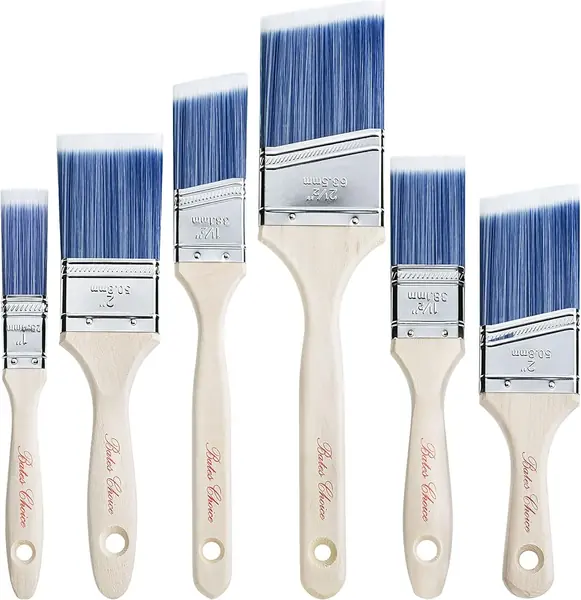
Bates 6-Piece Paint Brush Set

Bates six-piece brush set with flat and angled natural-bristle brushes and wood handles

Starter assortment

Shop Score 92/100
Handle
Wood
Bristle
Natural and synthetic blend
Pack Count
6 brushes
Sizes
1, 1.5, 2, and 2.5 inches
View on Amazon

Six brushes in one pack is the obvious appeal, but what makes this set useful on gel stain is the bristle blend: natural filament mixed with synthetic, which carries a heavier load of thick material than a light all-synthetic brush and lets it out more evenly across a panel. We noticed it on wide flat faces, where a thin brush starts streaking as its load runs out.

The assortment runs 1, 1.5, and 2 inches flat and 1.5, 2, and 2.5 inches angled, enough range to load a panel with the 2.5 and then cut in around a drawer opening with the 1. The wood handles stay light and comfortable through a long session, and the angled brushes hold a line along a frame without tape.

Shedding is the thing to manage. Some brushes in a pack like this drop filament into the first coat, so work each one hard against a scrap of wood or a stiff comb before it goes near the stain, and keep tweezers within reach for the first door. Do that and the set gets a kitchen's worth of doors finished without a second purchase.

Worth Noting

  • No wide brush for big flat panels
Our Verdict

A sensible starter set if you want several sizes at once and don't mind combing a few loose bristles before the first coat.

Check Latest Price
7.

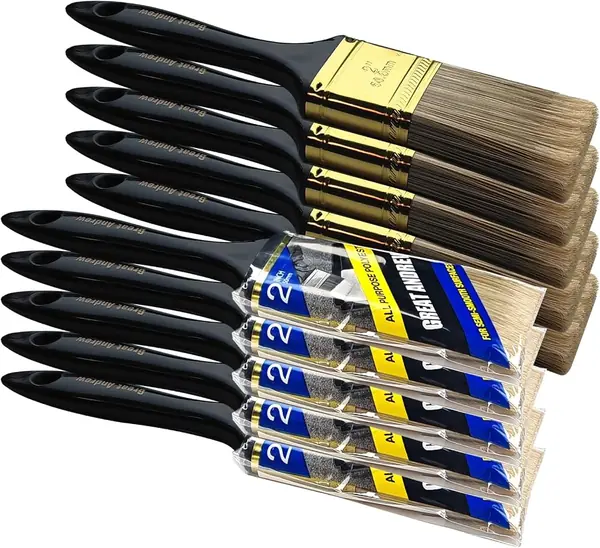
Great Andrew 10-Pack 2-Inch Flat Brushes Best for Multi-Door Jobs

Ten matching two-inch flat paint brushes with black plastic handles and metal ferrules

Multi-door jobs

Shop Score 91/100
Handle
Plastic beavertail
Bristle
Flagged synthetic
Brush Width
2 inches
Pack Count
10 brushes
View on Amazon

Ten identical 2-inch flats is a strategy, not a gimmick. Gel stain gets wiped back after it goes on, so the brush is repeating one motion over and over, and a stack of them means you can keep moving through a set of doors instead of standing at the sink with mineral spirits while the material skins over in the tray.

The densely packed flagged bristles carry a wet edge across a panel and leave fewer streaks than a thin brush, and the metal ferrule holds the filament where it belongs. The plastic beavertail handle is light and comfortable with a glove on, and every brush in the pack feels the same, so you aren't readjusting your grip from door to door.

This is the pack we hand out when a job has more square footage than detail, and it's the one we don't worry about. A few brushes shed a filament or two on the first pass — rub each one against a scrap before it meets the stain — and after that they hold together well enough for a full set of cabinet doors.

Worth Noting

  • All ten brushes are the same 2-inch size
Our Verdict

Ten brushes, one size: what to buy for a whole kitchen of doors so cleanup never stops the work.

Check Latest Price

How We Tested Gel Stain Brushes

We started by reading the construction details that actually change a gel-stain finish: bristle material, how densely the filament is packed, whether the ferrule is brass-plated or plain steel, and how the handle is shaped. From there we filtered for brushes sold in the widths that matter for furniture and trim — 1 to 2 inches for frames and profiles, wider for door faces and flat panels — and bought 18, from single angled sash brushes to bulk packs.

Testing ran four months, mostly in a garage with the door open and fans moving air, since oil-based gel stain and mineral spirits both need ventilation. We brushed the same thick stain onto cabinet doors laid flat, cabinet frames standing upright, a set of dining chairs, and a fence that got the 5-inch brush on an extension pole.

After each coat cured, we ran a palm across the panel and tilted it into raking light to see whether the brush had laid the coat flat or left ridges, then counted the filaments sitting in the finish with a flashlight and pulled each one out with tweezers. Foam heads got a firm tug at the ferrule to see if they would separate from the handle mid-panel, and we timed cutting in around raised-panel edges to compare the wide brushes against the 1-inch ones.

Cleanup was part of the test. Every brush that could be reused got a mineral spirits rinse, and we noted how many rinses it took, whether the bristles splayed, and whether the brush was worth keeping at all. Solvent-soaked rags were spread flat outdoors to dry before disposal. For multi-door jobs, we divided the pack price by the number of brushes to see what a whole kitchen would actually cost.

How to Choose Brushes for Gel Stain

Start With the Surface, Then the Width

Search results mix two very different tools under one name. A stain brush can be a 1- or 2-inch sash brush built for cabinet frames and furniture, or a 4- to 5-inch block brush meant for decking and fence boards, and the listings rarely make that obvious. Decide where the brush is going before you decide what it costs.

Cabinet doors, rails, and drawer fronts want 1 to 2 inches. A fence, a deck floor, or a garage door wants 4 inches or more. When you're unsure, buy the smaller size first: a narrow brush can cover a wide panel slowly, but a wide one can't cut in around a stile.

Foam, Synthetic, or Natural Bristle

All three work with gel stain, and each solves a different problem. Foam leaves the flattest, most mark-free coat on smooth panels, which makes it the usual choice for slab cabinet doors, but it can't push material into a groove. Synthetic filament holds its shape through solvent cleanup and gives you control on frames and profiles. Natural bristle carries the heaviest load and releases it slowly across a wide face.

We keep foam and one good synthetic brush on every cabinet job, and add a natural-bristle brush when a project is mostly wide, flat panels with some texture.

Stiffness and Shape: Where Ridges Come From

Gel stain doesn't level, so a ridge your brush leaves stays until you wipe it back. A medium-stiff brush lays the material down and feathers the end of each pass; a soft one pushes it into ripples you then chase around the panel. Angle or flat is a separate decision from stiffness, and it follows the shape of the work.

An angled sash brush reaches into corners and finishes a rail in one stroke, which makes it the better shape for cabinet frames and furniture. A flat brush covers a door face or panel in fewer passes. Buying one brush for furniture, buy angled; covering flat panels, buy flat.

Shedding Is the Defect You Can't Sand Out

A stray bristle in a liquid stain wipes off with the excess. In gel stain it sits in the coat, and once the topcoat is on you're sanding back to bare wood to get it out. Two habits cut the risk: work a new brush against a scrap of wood or a stiff comb before the first dip, and check that the ferrule is tight and no filament is already loose at the base.

If a brush keeps shedding after that, demote it to rough exterior work where you're wiping back hard. Price doesn't reliably predict which brushes shed, so the break-in test is worth more than the spec sheet.

Handles, Poles, and Where Your Hand Ends Up

The handle decides how long you can work. A short grip — 2 inches is common on sash brushes — puts your hand close to the bristles for control inside a cabinet box or around a drawer opening. A longer beavertail gives leverage on a big flat panel and keeps your wrist straighter through a long coat.

A hollow threaded handle takes an extension pole, which is the difference between standing up to stain a fence and kneeling for it. Think about where your hand will be for the next two hours, not just where the bristles land.

Frequently Asked Questions

Final Verdict

For furniture and cabinets, we buy the Purdy XL Glide 2-inch angular brush first: medium-stiff bristles that push thick gel into a flat coat and stay in the ferrule through solvent cleanings. Add the Wooster Shortcut if your project includes cabinet boxes and inside corners, where its stubby handle does what a full-length brush can't.

Flat slab doors are the one case for the Bates foam pack, which finishes cleaner than any bristle brush here. Two brushes and a pack of foam will take a kitchen from bare wood to sealed.