↑↓ navigate ↵ open Esc close All results →

Best Gel Stains for Wood of 2026

Liquid stain on a vertical closet door or trim molding tends to run down the stile and puddle on the drop cloth before a rag can catch it. Gel stain stays suspended on the surface rather than flooding deep into softwood pores, allowing even color buildup across blotch-prone pine and tight corners alike.

Six months of applying 12 gel stains to cabinet doors, interior trim, a pine dresser, and small frames showed that working consistency separates smooth finishes from streaky ones. A gel thin enough to wipe evenly can still sag on vertical work, while a stiffer body clings tightly but risks visible lap lines where wet and tacking passes meet.

Container size and recoat speed shape project planning just as much as oil or water chemistry: a quart makes sense for whole cabinetry sets, while half-pints and two-ounce jars cover trim or a single chair without skinning over on the shelf.

Our Top Picks

The Best Gel Stains for Wood

1.

General Finishes Oil Base Gel Stain, Java Best Overall
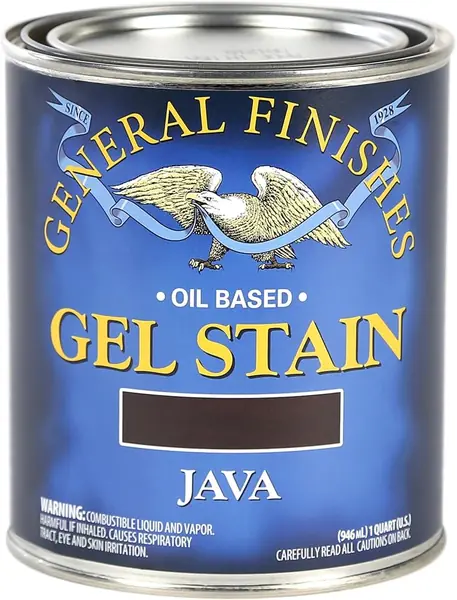
General Finishes Java oil-based gel stain in a one-quart can

Cabinets and furniture

Shop Score 95/100
Size
1 quart
Color
Java
Base
Oil-based
Finish
Satin
View on Amazon

Gel stain earns its keep in two places: a vertical face where a drip would ruin the job, and a board that a liquid stain turns tiger-striped. General Finishes handles both, and it does it with a heavier body than anything else in this group. We noticed the difference as soon as we wiped it on. It sits on the surface instead of diving into the pores, which is why it holds on a cabinet door and why pine and aspen come out even instead of patchy.

Java is the color this can is known for, and it earns the reputation on oak: a dark, near-espresso brown with the grain still readable underneath. Because so much of the pigment stays near the surface, dark colors read a little more like a colored film than a dye. Open-grained oak keeps its figure; tight-grained pine ends up closer to paint, so wipe back harder and sooner if you want the wood to show through.

The long open time is the part we found most useful. You can work a whole door, or a run of trim, before the stain starts to set, so lap marks are avoidable rather than inevitable, and we prefer that to fighting a fast film in six-inch sections. Keep a clean rag and wipe with the grain in one direction; a heavy gel left uneven in spots is exactly where streaks come from.

A quart goes further than its size suggests, because so little of it soaks in. A heavy gel does not need to penetrate to color the wood, and what you wipe off is excess rather than wasted product. For cabinets, a mantel, or a piece where the color is the whole point, that body and depth are what you are buying.

Worth Noting

  • Premium price for a single quart
Our Verdict

We reach for this one when the color has to be right on a cabinet or a piece of furniture: it holds on vertical faces, evens out blotchy woods, and a quart goes a long way.

Check Latest Price
2.

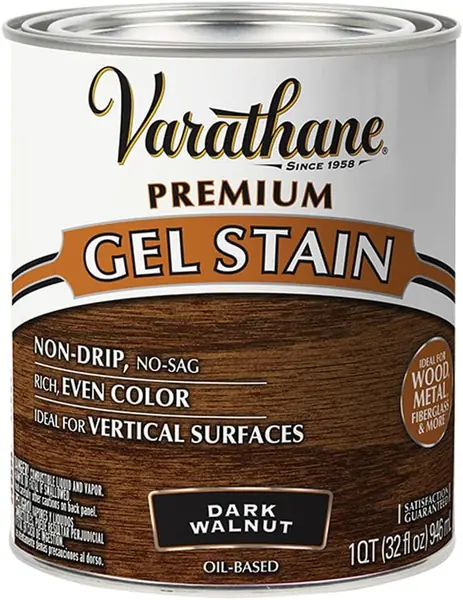
Varathane Premium Gel Stain, Dark Walnut Best Fast-Drying

Varathane Premium Dark Walnut gel stain in a quart can

Doors and trim

Shop Score 91/100
Size
1 quart
Color
Dark Walnut
Coverage
250 sq. ft. per quart
Dry Time
1 hour to the touch
View on Amazon

One hour. That is the dry-to-the-touch time Varathane lists for this quart, and with a two-hour recoat window and four hours before a topcoat, it turns trim, a door, or a set of drawers into a one-day job instead of a two-day one. Humidity stretches the schedule, so give it the full two hours before a second coat rather than the one.

What we appreciate most is the consistency: thick enough to hold its shape on a door edge or a window casing instead of sagging into a run, and rated for 250 square feet per quart, the most coverage of the full-size cans here. Applied with a rag and wiped back along the grain, it developed an even, unstreaked coat in our work. Left heavy in a corner, the pigment pools and dries that way, so keep the wipe moving.

Dark Walnut is a cool brown that lands dark, and on an already dark species it can go nearly black as coats build, so test a scrap of your own wood before you commit to the whole piece. What you give up against our top pick is depth: this is a medium-dark walnut at one coat, and reaching espresso takes a second and a third, which is where the fast dry time starts to earn its keep.

Worth Noting

  • Not recommended for floors or decks
Our Verdict

If you want a stain job finished in an afternoon, this is the quart we hand people: it dries fast, covers the most square footage here, and holds its shape on vertical work.

Check Latest Price
3.

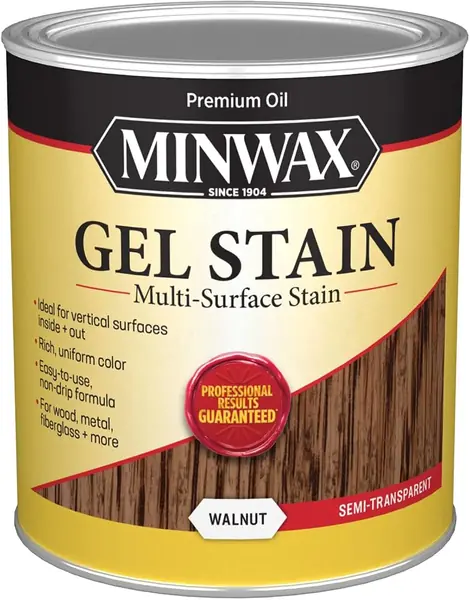
Minwax Gel Stain, Walnut Best Budget

Minwax Walnut gel stain in a one-quart can with semi-gloss finish

First-time staining

Shop Score 90/100
Size
1 quart
Color
Walnut
Coverage
200 sq. ft. per quart
Dry Time
8 to 10 hours between coats
View on Amazon

This is the least expensive quart in this group, and it is the can we point a first-timer toward. Part of that is the price; most of it is that a non-drip gel is forgiving about the two things beginners get wrong, which are loading too much onto a vertical face and working an area too big to keep wet. The 200-square-foot-per-quart coverage is honest, and the semi-transparent Walnut is a classic medium brown that flatters oak, pine, and maple without a custom mix.

What we noticed over a couple of coats is how much the result depends on the wipe-back. Minwax's own directions are the technique to follow: brush or cloth it on, wait about three minutes, then wipe the excess off along the grain. After that, leave it alone. The gel goes tacky and pushes into streaks if you keep working it. Stir the can thoroughly first, too, because the pigment settles and can turn lumpy.

The long open time is a real gift on a big flat panel, and it is why this can suits a first cabinet job: you have room to even out a heavy pass before it sets. The same can also goes onto veneer, metal, and fiberglass, so a mixed-material project does not need a second product on the shelf.

Worth Noting

  • Eight to ten hours between coats
Our Verdict

This is our beginner pick: the gel will not run while you learn, the 200-square-foot coverage is honest, and the Walnut is a safe medium brown for almost any wood.

Check Latest Price
4.

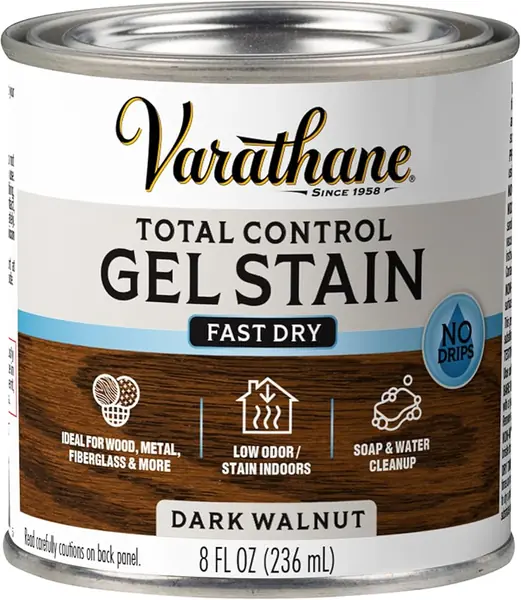
Varathane Total Control Gel Stain, Dark Walnut Best Low-Odor

Varathane Total Control Dark Walnut water-based gel stain, half-pint can

Indoor trim and doors

Shop Score 89/100
Size
Half pint (8 fl oz)
Color
Dark Walnut
Base
Water-based
Cleanup
Soap and water
View on Amazon

Staining a kitchen while people still live in the house is a ventilation problem, and that is the gap this one fills. Varathane's Total Control gel is water-based, low-odor, and cleans up with soap and water while it is wet, so you are not clearing the room or hunting for mineral spirits afterward. It also behaves the way a gel should: thick, no drips down a door or a banister, and no brush marks to sand out.

In our testing the color built more slowly than the oil gels here, which is a help on a first coat and a chore when you are chasing a dark brown. Coverage ran unevenly on bare wood, with some passes soaking in and going pale while others sat on top, so test a patch and buy by the square footage you actually have. The water base adds no amber warmth, so the same Dark Walnut name reads cooler and more neutral here than it does in Varathane's oil version.

For a banister, a run of trim, or a door you want to finish without opening every window in the house, that trade is worth it. Where the oil stains here warm a room, this one keeps the wood cool and gray-leaning, which suits modern furniture and cool-toned rooms better than a red-brown oil stain would.

Worth Noting

  • Half-pint can runs out on a full kitchen
Our Verdict

We like this one for indoor work: it is low-odor, cleans up with soap and water, and it is still thick enough to stay put on a door.

Check Latest Price
5.

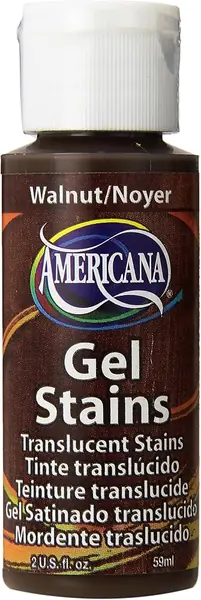
DecoArt Americana Gel Stain, Walnut Best for Craft-Size Projects

DecoArt Americana Walnut gel stain in a small two-ounce bottle

Craft-size projects

Shop Score 88/100
Size
2 fl oz
Color
Walnut
Base
Water-based acrylic
Cleanup
Soap and water while wet
View on Amazon

Two ounces is the whole story. This is not the can for a kitchen; it is the one for a jewelry box, a picture frame, a set of drawer pulls, or the trim on a small craft build. The acrylic gel is translucent, so it picks up carving and grain instead of burying them, and you can layer it thin until the shade looks right.

We liked the water-based formula for exactly that scale of work. It cleans up with soap and water while it is still wet, dries quickly enough to recoat in the same session, and the Walnut lands on the lighter, warmer side of the name rather than at espresso. Thin coats on a small piece also hide the unevenness that a wide panel would show, which is why this bottle works so well on hardware and hobby work.

Worth Noting

  • Two ounces will not cover furniture or cabinets
Our Verdict

We keep a bottle of this on the bench for small wood pieces and craft builds, where the color builds in thin layers and cleanup is just soap and water.

Check Latest Price

How We Tested Gel Stains on Cabinets, Doors, and Trim

We started by pulling every gel stain we could find in quarts, half pints, and craft-size jars, then narrowed the field on the things that actually change a project: oil or water base, stated coverage, dry and recoat times, and whether the can size matched the job it was aimed at. That left 12 gels, which we used over six months on the surfaces they claim to handle.

Cabinet doors got stained flat on sawhorses and again after hanging; interior door slabs, a stair railing, a pine dresser, and small frames covered the rest. On the vertical pieces we watched for the first sign of a run and timed how long each gel stayed workable before it grabbed, then wiped back at five minutes and again at fifteen to see whether the color evened out or set a hard edge where two passes overlapped. Under a raking work light we checked for lap marks and streaks and noted how much grain still read through the color.

Every product went onto panels sanded to the same grit, and we followed each maker's topcoat instructions, counting the steps between bare wood and a finished surface. Someone on our team who had never stained anything did a first pass with each gel, which is where forgiveness, or the lack of it, showed up fastest. We logged odor, cleanup, and sheen in daylight, and noted whether each can was sized for a whole kitchen or one small box.

To judge value honestly, we measured how far a can actually went on same-size scrap panels instead of trusting the number printed on it. Oil-based gels were worked with windows open and a fan pulling air through the room, well clear of the furnace and water heater, and every rag, pad, and glove was spread flat outdoors to dry before disposal — never wadded into a trash can.

How to Choose a Gel Stain for Wood

Oil Base or Water Base

Oil-based gels push color deeper and add a warm amber cast that flatters oak and dark browns, and they give you a longer working window, which is why they are easier on a big flat panel. The cost is solvent smell and mineral-spirit cleanup. Water-based gels dry faster, smell mild, and clean up with soap and water, and the same color name comes out cooler and more neutral with no amber oil underneath. If the piece lives indoors while the house stays occupied, choose water-based; for a deep warm brown on oak, oil earns its smell.

Handle the rags with care either way: oil-based stain rags, pads, and gloves need to be spread flat outdoors to dry or soaked in water before disposal, because a crumpled pile can heat up and ignite.

Match the Can to the Square Footage

The coverage figure on a label is one coat on smooth bare wood, and gel is used differently from liquid: you apply it heavily and wipe the excess off, so a good share ends up on the rag rather than on the project. A quart covers roughly 200 to 250 square feet in a single coat on the full-size cans here, and two coats on porous end grain and pine can double that. Measure the actual surface, multiply by the number of coats you plan, and round up. Half pints and two-ounce bottles are for samples, trim, and small builds.

Decide How Much Grain Should Show

Because a gel stays near the surface, it can even out woods that blotch under a liquid stain, including pine, aspen, and anything with wandering grain. The flip side is opacity: dark colors on tight-grained wood read more like paint than stain, and the more coats you build, the less figure shows. Open-grained oak keeps its grain. Test on an offcut of your actual species before you commit, and wipe back harder for more grain or leave more on for depth.

Working With a Gel

Load a rag, foam brush, or pad and get the whole face wet in one pass rather than dabbing at it, since a half-finished panel is where lap marks come from. Give it a few minutes, three by Minwax's directions and five to ten by Varathane's, then wipe the excess off with the grain. Once the gel starts to tack, stop moving it, because pushing tacky stain around is what makes streaks. Work top to bottom on vertical pieces and finish with a clean rag.

Frequently Asked Questions

Final Verdict

General Finishes in Java is the can we point to for cabinets, furniture, and any project where the color is the point. It holds on a vertical face, evens out blotchy woods, and builds a depth the fast-drying cans do not quite reach. When time is the constraint, switch to Varathane Premium: the same vertical control, an hour to the touch, and a much shorter wait before a second coat. If the budget decides, Minwax's Walnut does the same job on a slower schedule.