↑↓ navigate ↵ open Esc close All results →

Best Gel Stains for Kitchen Cabinets of 2026

Gel stain holds its place on vertical cabinet doors without running into rail joints, letting woodworkers build color deliberately and wipe back excess before it sets. That thick body eliminates the stripping and heavy sanding that usually turn a kitchen cabinet refresh into a weeklong teardown.

Viscosity acts like a dial rather than an on-off switch, a point underscored across five months of brushing and wiping 14 gel stains. Formulas that lean too thin sag down stiles and leave lap lines, while overly stiff gels grab around raised-panel profiles before a rag can blend the transition cleanly.

Oil-based gels drive richer tone into open-pored oak at the expense of odor and ventilation, whereas water-based formulas wash up with soap and reach recoat time faster—though either base requires a durable topcoat to survive daily kitchen wear.

Our Top Picks

The Best Gel Stains for Kitchen Cabinets

1.

General Finishes Oil Base Gel Stain, Java Best Overall
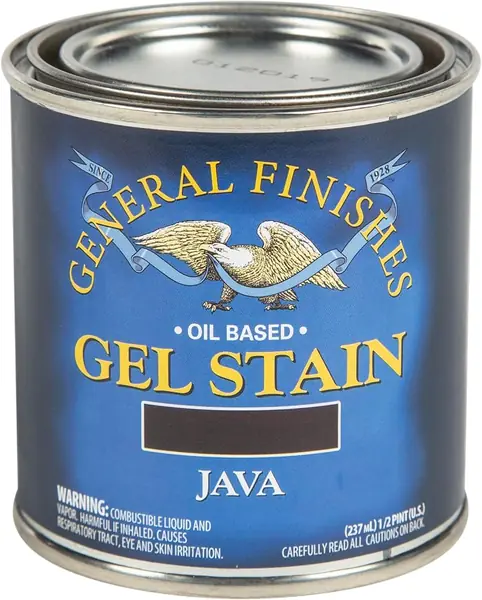
General Finishes Java gel stain half-pint bottle of dark brown oil-based wood stain

Dark cabinet refinishing

Shop Score 95/100
Size
1/2 pint (8 fl oz)
Base
Oil-based gel
Coverage
35-50 sq. ft.
Dry Time
6-12 hours
View on Amazon

An oak cabinet door that's already stained and hung is the hardest test a gel stain takes, and Java is the one we keep coming back to. A light scuff sanding is all the prep it asked of us; it laid color over the old finish without stripping anything down to bare wood. The body is what makes that possible — it sits up on the surface instead of soaking straight in, and it holds its shape on a vertical panel rather than running.

That thickness is also why the color reads more like a dark toner than a penetrating stain. The grain still shows, but it's quiet, and two coats take builder-grade oak somewhere close to custom. Listed coverage is 35 to 50 square feet per half pint, which is a vanity or a short run of cabinets; the line runs up to quarts and gallons, so match the can to the job instead of assuming the small one will stretch.

Where Java earns its place over cheaper cans is control at the edges. On a raised-panel door the gel stays where you put it long enough to work the profile without a run forming underneath. One thing to plan for: gel stain is color, not protection. Cabinet fronts take handling at every pull and edge, so a topcoat goes on afterward, and the doors stay off until that's cured.

Worth Noting

  • Six to twelve hours between coats
  • Can streak if the wipe-back isn't even
Our Verdict

We recommend Java as the default gel stain for cabinets: it hangs on vertical door fronts, covers an existing finish after a light scuff sanding, and builds a deep espresso color.

Check Latest Price
2.

Minwax Gel Stain, Coffee Best for a Full Kitchen

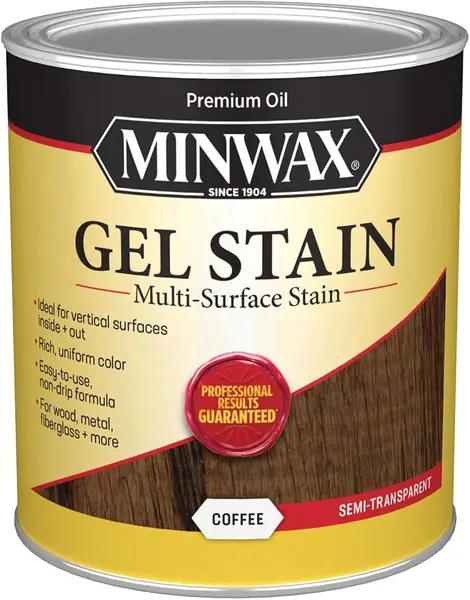
Minwax Gel Stain quart can in Coffee, a dark brown oil-based wood stain

Whole-kitchen refinishing

Shop Score 91/100
Size
1 quart (32 fl oz)
Base
Oil-based with polyurethane
Dry Time
8-10 hours
Formula
Non-drip gel
View on Amazon

A full kitchen is a bigger number than most of us guess once both faces of every door, the drawer fronts, and the boxes are counted, and this is the can sized for it. Minwax lists cabinets among the surfaces the stain is made for and builds the formula thick enough that it doesn't run down a door you're working in place. Coffee is a deep, dark brown that lets some grain read through instead of blacking it out.

We think it's the most practical pick here for a whole-kitchen job, and the square footage one can covers is most of the reason. The texture sits closer to peanut butter than to a liquid stain, which is what keeps it controllable around a face frame; load a foam brush lightly and it goes where you point it. One pass gets most of the color change on oak, and a second deepens it.

Cabinet boxes are often plywood or veneer rather than solid stock, and Minwax lists those along with metal and fiberglass, which is why we don't worry about a mixed-material kitchen. Stir it thoroughly before you start, since it settles lumpy in the can. On a warm orange-toned oak door, Coffee goes brown-black in two passes — the look most people are after when they start this project, and far less work than painting.

Worth Noting

  • Eight to ten hours between coats
  • Goes tacky if you overwork it
Our Verdict

This is the one we reach for when a whole kitchen is on the list — a full quart of non-drip gel that stays on vertical door fronts.

Check Latest Price
3.

Varathane Premium Gel Stain, Kona Best Fast-Drying

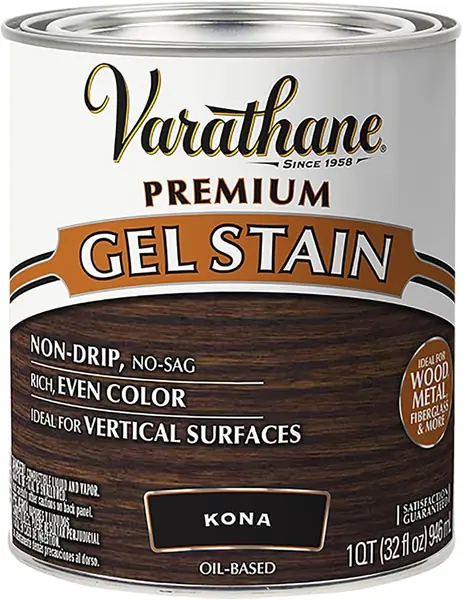
Varathane Premium Gel Stain quart can in Kona, a dark oil-based wood stain

Fast cabinet projects

Shop Score 90/100
Size
1 quart (32 fl oz)
Coverage
Up to 250 sq. ft. per quart
Dry Time
1 hour to touch
Recoat
2 hours
View on Amazon

A set of cabinet doors comes off its hinges and then sits somewhere, taking up room, until the finish dries, so Varathane Premium's short clock is worth paying attention to. About an hour to the touch and two hours between coats is the difference between two coats in an afternoon and two coats spread across a weekend.

We like that pace on a big job. The formula is built thicker than a traditional stain specifically so it holds on vertical surfaces, so face frames and the backs of doors move quickly without a run tracking down the panel; a quart is listed at up to 250 square feet, which covers a serious kitchen. What we watch is the color: Kona is a near-black brown, and on open-grain oak the gel fills the pores enough that the result lands close to paint with the grain pressed into it.

The thick body also wants a full cure before the topcoat, and the directions call for at least four hours before you apply one. Horizontal floors and exterior decks are outside what this one is rated for, which doesn't matter for a kitchen and does matter if you plan to use the leftovers on a porch. For a fast, uniform, dark door, it's a good trade.

Worth Noting

  • Kona dries darker than the swatch suggests
  • Can stay tacky for a day in humid weather
Our Verdict

When the doors are already off and the weekend is short, this is the gel stain we grab — a quart that touches dry in an hour.

Check Latest Price
4.

Varathane Total Control Gel Stain, Dark Walnut Best Low-Odor Option

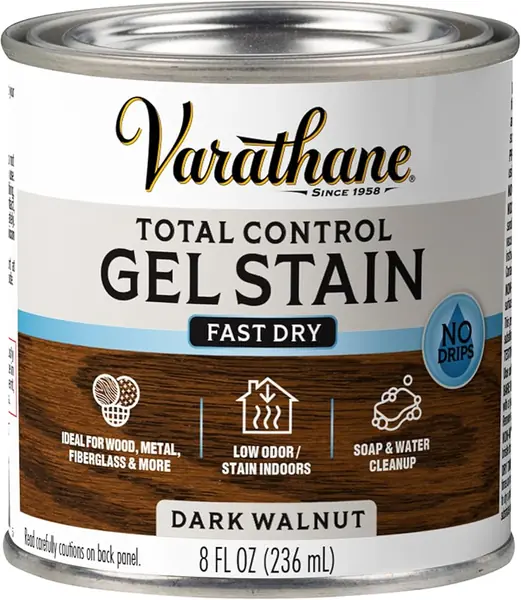
Varathane Total Control gel stain half-pint can in Dark Walnut, a water-based stain

Small cabinet projects

Shop Score 89/100
Size
Half pint (8 fl oz)
Base
Water-based acrylic gel
Coverage
Up to 250 sq. ft. per quart
Cleanup
Soap and water
View on Amazon

Most stain jobs smell like a working garage for days, and that is the reason this one exists. Total Control is water-based, so the odor stays low while you work, and a drip on a cabinet box wipes off with a damp rag instead of needing solvent. In a kitchen you're still using, that changes how much of the job you can do in place.

The gel is thick and holds on vertical surfaces the way the oil versions here do, which is the whole point of a gel in the first place. On bare wood the listing calls for a water-based pre-stain conditioner first, and we treat that as required rather than optional: water-based products are the ones that raise grain on oak and ash, and a conditioner is cheap insurance against a fuzzy door front.

We hand this one to anyone refinishing cabinets in a house they're still living in, and to anyone working in a small shop without real ventilation. What you give up is depth — the color sits a little flatter than an oil gel, and Dark Walnut reads as a clean medium-dark brown rather than the near-black some swatches imply. For a first-time stainer, though, it's the most forgiving formula on this list: a mistake wipes out with water before it sets.

Worth Noting

  • Half-pint size limits it to small projects
Our Verdict

For a small cabinet project in a house you're still living in, this low-odor water-based gel does the job with soap-and-water cleanup.

Check Latest Price

How We Tested Gel Stain on Kitchen Cabinet Doors

We started with every gel stain we could find, oil and water-based alike, then sorted them by can size, stated coverage, recoat window, and whether the maker described a body thick enough to hold on a vertical face. Anything that read like a wipe-on liquid rather than a gel we set aside. That left 14 cans, which we bought ourselves in half-pint and quart sizes.

Most of the testing happened in a shop with two box fans running and the bay door open, on salvaged oak cabinet doors and a run of shaker panels. We also refinished the lower cabinets of a small kitchen and a bathroom vanity, and both stayed out of service until the topcoat had cured. We applied each gel with foam applicators and rags, the way you'd do it at home; rags soaked with oil-based stain went flat on the pavement outdoors to dry, never in a pile.

We timed how long each one stayed open enough to wipe back and how long a coat took to dry to the touch, then checked the bottom edge of every door for runs. On oak, we noted how much grain still showed after one coat and after two, and we recoated inside each maker's window to see whether the new coat left lap marks. Coverage we tracked by square footage per ounce, so value came down to what a can actually finished.

Once the topcoat cured, we checked sheen under kitchen light, ran a thumbnail and a damp cloth over the handled edges, and compared odor and cleanup between the oil and water-based cans. Anything that ran or grabbed too fast to wipe back didn't make the list; odor and cleanup we weighed rather than cut on. The doors are still on their hinges in our shop.

How to Choose a Gel Stain for Kitchen Cabinets

Size the can to the square footage

The number that matters is coverage, not the price on the shelf. A base-cabinet run with doors and drawer fronts, counted inside and out, easily reaches 100 square feet before you touch the boxes — and a half pint of General Finishes is listed at 35 to 50 square feet. A quart is the safer starting point for a whole kitchen, and the small sizes make sense for a vanity or a bathroom cabinet. Buy a spare, too; running out with three doors left is how a kitchen ends up two-toned.

Look for a body that holds on vertical surfaces

This is the whole reason to use a gel wood stain instead of a liquid one. A gel sits on the surface and stays where you put it, so a door stained in place doesn't develop a run down the panel; a penetrating liquid wicks in and drips while you chase it. Every pick here is thick-bodied, and they all want the same technique: load the applicator lightly, work a small area, wipe back with the grain before moving on. The trap is treating gel like paint — brush it on heavy and leave it, and you get brush marks in a film that looks like paint.

Decide between oil and water-based

Oil gels build deeper color and give you longer to work an edge before they set. They also smell like solvent, need real ventilation, and put most of a day between coats. Water-based gels cut the odor and clean up with soap and water, which matters in a kitchen you're still cooking in, but the color sits flatter and bare wood wants a pre-stain conditioner to keep the grain from lifting. We choose oil when the look matters most and water when the household does.

Plan the recoat window and the topcoat

Dry times across these picks run from about an hour to twelve, and that spread decides how long the doors stay off their hinges. Two coats is normal going over oak; three isn't unusual when you're moving from golden oak to near-black. Whatever you choose, remember that gel stain is color only. Cabinet fronts take handling at the pulls and edges, so a topcoat goes over the stain, and the doors stay off until it has cured.

Frequently Asked Questions

Final Verdict

If you're restaining a whole kitchen and want the deepest, most forgiving color, General Finishes Java is our pick; it holds on vertical door fronts and covers an existing finish after a light scuff sanding. Trying to do a full set of cabinets economically makes Minwax's quart the better buy, since one can goes the distance and the non-drip body is built for vertical work. And if the kitchen has to stay in service while you work, Varathane Total Control's low-odor water-based formula is the one to start with.