↑↓ navigate ↵ open Esc close All results →

Best Finishes for Kitchen Cabinets of 2026

Picking a kitchen cabinet finish by color swatch alone usually ends in chipped stiles and sticky edges around the pulls, because cabinet longevity is a chemistry problem first. A coating has to match whatever already sits on the doors while withstanding cooking grease, weekly scrubbing, and years of daily slamming.

Painting, staining, and clear-coating working cabinet doors with 13 finishes over six months showed that prep outranks every claim on the label—no formula bonds cleanly over unseen kitchen grease. Dry-to-rehang time, realistic coverage per can, and brush or spray leveling decide how long the kitchen stays torn apart.

Spanning cabinet enamels, stains, aerosol options, and protective topcoats, the nine tested coatings differ primarily in the surface prep and cure patience each asks for up front.

Our Top Picks

The Best Finishes for Kitchen Cabinets

1.

General Finishes Oil Base Gel Stain Best Overall
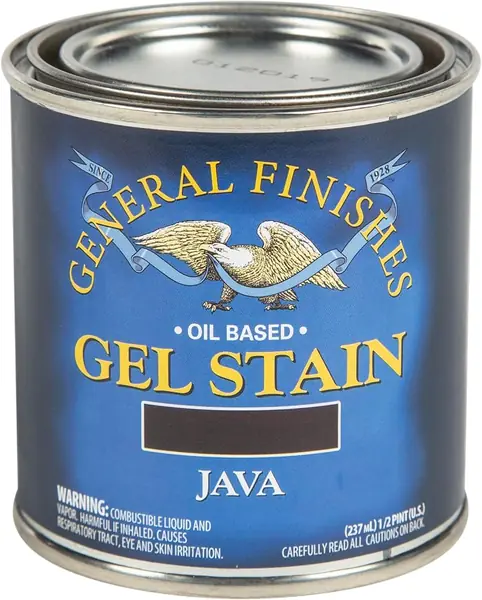
General Finishes Java gel stain in a half-pint bottle with a black label

Oak cabinet makeovers

Shop Score 96/100
Base
Oil-based gel
Sheen
Satin
Coverage
35-50 sq ft per half pint
Dry Time
6-12 hours
View on Amazon

Sound cabinets with a 1990s orange tone are the problem this product solves. Gel stain is heavy-bodied, so it sits on the surface instead of soaking deep into the grain: it lays color over an existing finish rather than demanding that you strip to bare wood. That same thickness is why it builds evenly on pine and aspen, the two species that go splotchy under a liquid oil stain.

We recommend it as the default for anyone whose boxes and doors are solid but whose color is wrong. It wipes on with a cloth or a foam brush with no drips or splashes, and the six-to-twelve-hour dry keeps the surface workable long enough to even out a door before it sets. On a kitchen, that patience is worth more than speed.

The schedule is the real cost. A half pint covers 35 to 50 square feet, which handles a run of doors and drawer fronts but not a whole kitchen; a quart gets you around 200 square feet. Between coats and cure, plan on several evenings with the doors laid flat in the garage rather than a single afternoon.

One more step matters: this is a color coat, not the protection. A water-based clear over the top, once the stain has dried, gives you the wipeable surface a kitchen actually needs. If a faster, lower-odor color coat suits your timeline better, the Furniture Clinic water-based stain covers that ground with looser color accuracy.

Worth Noting

  • Java can read close to paint on light oak
  • Streaks if you don't wipe back evenly
Our Verdict

For sound cabinets with the wrong color, we start here: the gel wipes on evenly, stays workable, and darkens oak without a strip-and-sand weekend.

Check Latest Price
2.

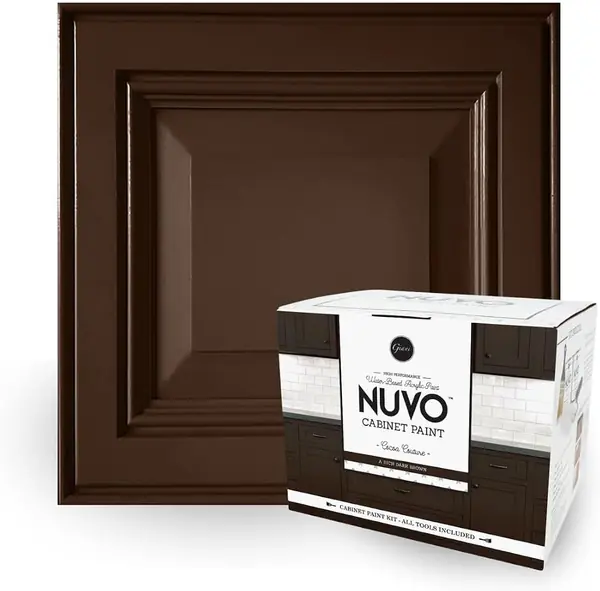
Giani Nuvo All-in-One Cabinet Paint Kit Best Cabinet Paint Kit

Giani Nuvo cabinet paint kit box with two paint cans roller and brush

First-time cabinet painting

Shop Score 95/100
Coverage
100 sq ft per kit
Finish
Satin
Included
Two 31 oz cans plus roller, brush, and instructions
Surfaces
Wood, laminate, metal
View on Amazon

The box is the pitch: two 31-ounce cans of Nuvo cabinet paint, a roller arm with two covers, a brush, a stir stick, and illustrated instructions. Two coats cover about 100 square feet, roughly one typical kitchen by the brand's own estimate, and the paint is meant to bond to wood, laminate, or metal with no stripping or priming.

Cocoa Couture is a deep walnut brown, and a dark color is forgiving over old oak grain in a way a white never is. What we watched is wear, because a cabinet front takes more handling than any other painted surface in a house. Chipping and scuffing along door edges and around hardware is the failure mode to plan around.

We still recommend it, especially for a first cabinet repaint, because the kit answers the two questions that stall people: how much paint, and which tools. It rolls on and levels rather than holding stipple. Let it cure fully before the doors go back on, and add a clear water-based coat on the fronts where hands land — that is the simple fix for edge wear.

Worth Noting

  • Sheen lands flatter than the satin label
Our Verdict

We recommend this kit when you want a painted kitchen with no guesswork: the paint, roller, and brush arrive together, so a first-timer can finish in a weekend.

Check Latest Price
3.

Heirloom Traditions ALL-IN-ONE Paint Best One-Step Paint

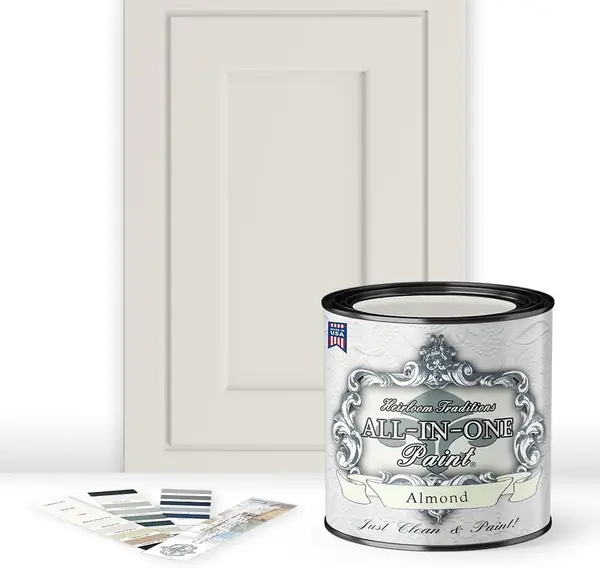
Heirloom Traditions ALL-IN-ONE Paint quart can in Almond off-white

One-step painted cabinets

Shop Score 94/100
Size
1 quart (32 fl oz)
Sheen
Low-luster velvet
Coverage
140 sq ft
Dry Time
6 hours
View on Amazon

A quart covering 140 square feet is a real kitchen's worth of cabinet fronts on a good day, and this is the paint we hand someone who will not sand. It's a water-based acrylic that goes on without a primer or a topcoat and dries to a low-luster velvet sheen. Almond, the color here, is a balanced off-white that sits between warm and cool, the safest kind of neutral to put on cabinets that have to live with a countertop and a floor.

Thinness over dark surfaces is the thing to plan for. Over a dark stain or a glossy factory finish, one coat reads translucent, so a primer or a couple of extra coats is part of the budget, not a surprise. It also dries quickly, which is a gift on a Saturday and a nuisance when you are trying to keep a wet edge — work one door face at a time and don't stop halfway across.

Against the Giani kit, this covers more cabinet frontage from a single can and leaves you resealing one can instead of two half-used ones. The finish is why we keep it: it levels brush and roller marks and settles into a matte that doesn't broadcast the dings in a twenty-year-old door the way a semi-gloss would.

Worth Noting

  • Photo swatches diverge from the delivered color
Our Verdict

Our pick if you refuse to sand: this paint bonds to an old finish and skips the topcoat, though dark cabinets will want a primer or extra coats.

Check Latest Price
4.

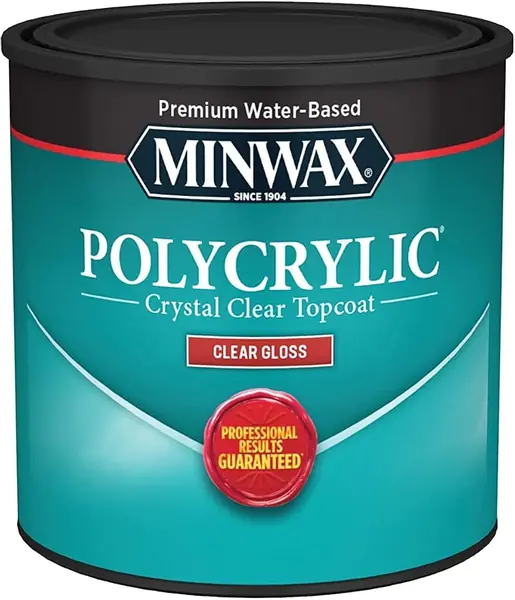
Minwax Polycrylic Protective Finish Best Clear Topcoat

Minwax Polycrylic clear gloss water-based finish in a half-pint can

Clear protection over paint

Shop Score 93/100
Size
8 fl oz (half pint)
Base
Water-based
Sheen
Gloss
Recoat Time
2 hours
View on Amazon

Two hours between coats is the number that makes this our default clear coat for cabinets: a set of doors can take several coats in a day, and the brush rinses in the sink instead of going into a solvent can. It's water-based, dries crystal clear, and stays clear, which matters most on white and pale-gray cabinets where an oil-based film would pull the color warm.

Clarity is the other half of the argument. On maple, ash, and birch — the light woods that go yellow under an oil finish — it keeps its colorless look, and it works over both oil-based and water-based stains underneath. Over paint it does what a topcoat has to do: a clear, wipeable film that doesn't disturb the color beneath it.

The gloss is a true high gloss, and the same formula is sold in satin and matte if a softer cabinet is the goal. Whichever sheen you choose, build two or three thin coats rather than one heavy one and sand lightly between them. A water-based film is thin by nature, and thin coats are what keep it from running at the door edges.

Worth Noting

  • Thin water-based film needs multiple coats with light sanding
  • Can run on door edges if applied too heavily
Our Verdict

This is the clear coat we reach for over painted cabinets: it stays water-clear, cleans up with soap, and recoats in two hours.

Check Latest Price
5.

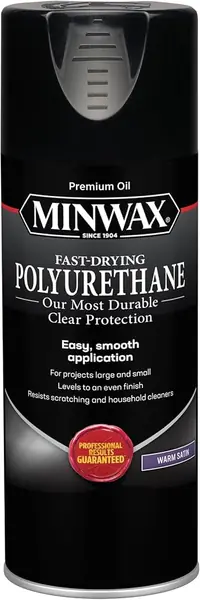
Minwax Fast Drying Polyurethane Spray Best Spray Finish

Minwax fast drying polyurethane clear satin aerosol spray can

Doors and detailed trim

Shop Score 92/100
Size
11.5 oz aerosol
Base
Oil-based
Sheen
Satin
Recoat Time
4-6 hours
View on Amazon

Raised-panel doors are where brushes go wrong: the profile holds a wet edge that sags, then telegraphs every stroke when it dries. An aerosol sidesteps the whole problem. This is an oil-based satin polyurethane that lays a level film on the flats, the panel recesses, and the door edges without a brush touching them, and it also protects a cabinet front you can't take down and lay flat.

We reach for it on doors with detail and on small kitchens where setup time is the enemy. Satin is the right sheen for a cabinet, since it hides the dust and fingerprints a gloss amplifies, and the aerosol puts it where a brush can't follow. The sheen does land flatter than a true satin, so spray the back of one door first. Recoats come at four to six hours, and the oil base needs an open window, moving air, and a respirator rather than a quick pass in a closed kitchen.

Worth Noting

  • Warm oil cast shifts white and pale paint
Our Verdict

A can of this saves a set of raised-panel doors from brush marks; just test the satin on the back of a door before you commit the kitchen.

Check Latest Price
6.

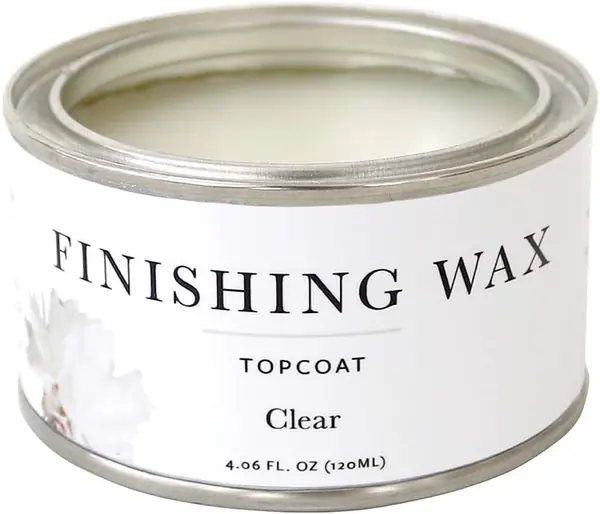
Jolie Finishing Wax Best Matte Wax Finish

Jolie Finishing Wax in a small tin of clear finishing wax

Chalk-painted cabinets

Shop Score 91/100
Size
120 ml
Coverage
75 sq ft
Finish
Matte, buffable
Dry Time
8 hours between coats
View on Amazon

Wax looks like nothing else on a cabinet: soft, dry to the touch, and buffable to a low sheen that reads like a piece of old furniture rather than a coated box. Jolie's clear wax is odor-free and non-yellowing, applies with a wax brush or a lint-free cloth, and takes one or two coats with eight hours between them.

It's the topcoat for chalk-painted and matte cabinets, where a gloss film would look like a layer of plastic laid over the color. Clear wax doesn't shift the color underneath, and the line also includes brown, black, and white waxes for working into edges and texture, a treatment that suits a kitchen with some age on it better than a mirror finish does.

Our advice is to treat it as the finish for cabinets that are looked at more than scrubbed. Apply it thin and buff it dry, because a heavy coat is exactly what stays tacky. A 120 ml tin covers about 75 square feet, so for a whole kitchen buy the 500 ml size rather than three small tins.

Worth Noting

  • Needs re-waxing in splash and steam zones
Our Verdict

We like this wax for chalk-painted cabinets that should look hand-finished rather than lacquered, and we keep it away from the sink run.

Check Latest Price
7.

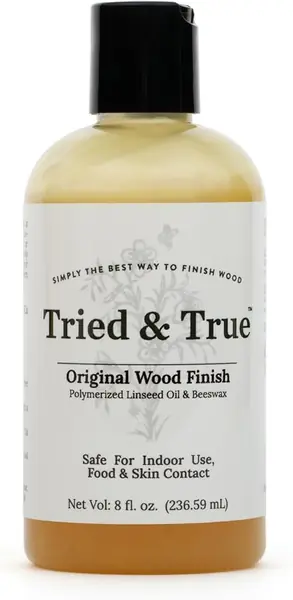
Tried & True Original Wood Finish Best Natural Oil Finish

Tried & True Original wood finish bottle of linseed oil and beeswax

Natural wood cabinets

Shop Score 90/100
Size
8 fl oz
Base
Polymerized linseed oil and beeswax
Finish
Warm matte
Food Contact
Rated for food-contact use
View on Amazon

Two ingredients do the work: polymerized linseed oil and filtered beeswax, with no solvent and no metallic dryer. That's why it smells like a workshop rather than a paint aisle, why it needs no ventilation rig, and why it's rated for food-contact surfaces like butcher block and cutting boards.

On a cabinet it behaves like an oil, not a coating. It soaks in, warms the wood a shade, and leaves a matte surface that feels dry rather than slick. Sand to 320, wipe it on, buff it dry, wait a day, burnish with fine wool, and repeat until the wood stops drinking. The schedule is the product; there is no shortcut that ends in a hard film.

The maintenance story is what sells it for solid wood. A scratched door gets spot-repaired with another wipe of oil, with no stripping and no blending a patch into a film, and the kitchen stays in use while you work because there is nothing to ventilate out of the house.

We like it best where the cabinets are solid oak, maple, or pine and the look is meant to be wood, not paint. It isn't a barrier finish: near the stove and the sink, an oil-and-wax surface needs refreshing more often than a polyurethane would, and that upkeep is the price of keeping the wood feeling like wood.

Worth Noting

  • Thick coats stay tacky for days
  • Not for painted laminate or thermofoil doors
Our Verdict

For solid-wood cabinets, this oil-and-wax blend gives a warm matte finish you can repair in place, with none of the solvent smell.

Check Latest Price
8.

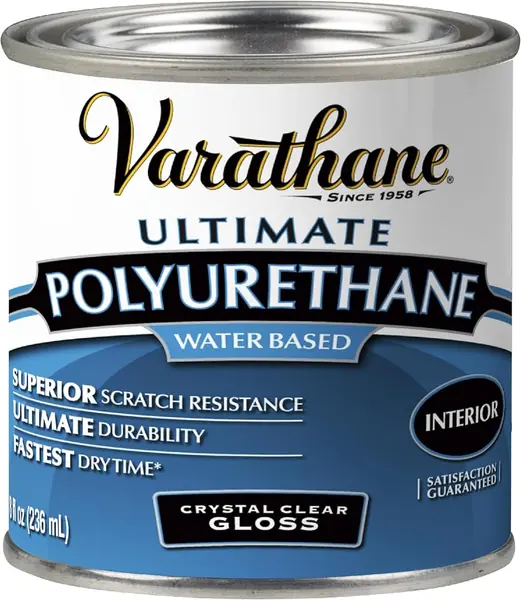
Varathane Water-Based Ultimate Polyurethane

Varathane water-based ultimate polyurethane gloss in a half-pint can

Glass-gloss topcoat

Shop Score 89/100
Size
Half pint (8 fl oz)
Base
Water-based
Sheen
Gloss
Cleanup
Soap and water
View on Amazon

Set this beside the Minwax Polycrylic and the difference is the gloss. Varathane's water-based film builds to a glassier shine, the kind that makes a stained door look lacquered rather than varnished, and it's just as clear, just as low-odor, and just as easy to clean up with soap and water.

We rank it behind our top clear coat, and the reason is placement rather than looks. On uppers, a pantry, or a display run where the shine is the point and hands rarely land, the film holds and the gloss is worth having. On the run of doors under the counter that takes knuckle-and-hip traffic, the film scratches and peels; that's where a topcoat's job is hardest, and it's why this one sits below our first choice.

Apply it in thin coats with a light sand between them and it goes on without streaks or globs, which is what produces a glassy surface rather than a plastic one. It dries clear and fast enough to keep a project moving, and over a dark stain the clarity is the whole point: the color stays exactly where you put it.

Worth Noting

  • Gloss amplifies dings in older doors
Our Verdict

We rank it just behind our top clear coat: the gloss is beautiful on stained doors, but the film scratches on the edges that get handled.

Check Latest Price
9.

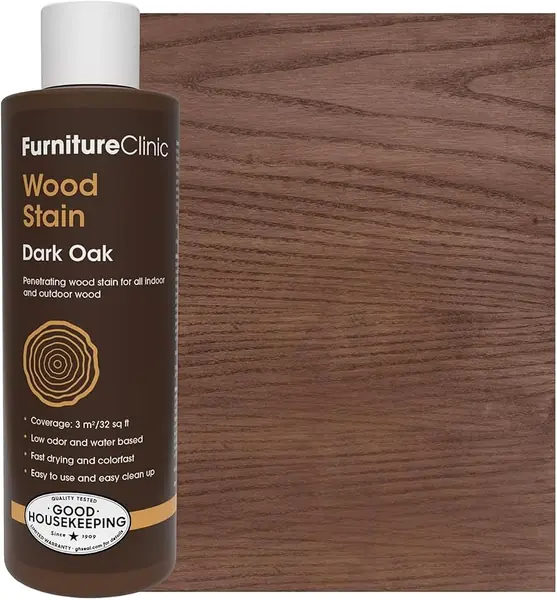
Furniture Clinic Wood Stain Best for Quick Color Changes

Furniture Clinic water-based wood stain bottle in Dark Oak

Quick color changes

Shop Score 88/100
Size
250 ml (8.5 fl oz)
Base
Water-based
Coverage
3 m² per 250 ml
Color
Dark Oak
View on Amazon

A water-based stain is the fast route from dated cabinets to a different color: this wipes on, dries quickly enough for a second coat in the same session, cleans up with water, and barely smells, so the kitchen can stay in use while you work.

Application is where the result is won. A wood conditioner on pine or maple keeps the pigment from landing unevenly, a thin coat wiped back right away reads lighter than a flood coat, and the inside face of a door makes a better test panel than a swatch on a screen. Whatever you do, plan a topcoat: the stain colors the wood, it doesn't protect it.

We recommend it where speed and low odor matter more than exact color, such as refreshing cabinets that are already stained or coloring a small run of doors over a weekend. Where a deep, even, furniture-grade color is the goal, the gel stain is the better tool. Where fumes and drying time are the constraint, this one earns its place.

Worth Noting

  • Bottle covers only three square meters
Our Verdict

We recommend it when speed matters more than exact color, since this water-based stain dries fast and cleans up with water.

Check Latest Price

How We Tested Cabinet Finishes

We started with labels rather than marketing: finish type, base, sheen, and the stated recoat and cure schedule. From there we filtered the long list down to products that could realistically live on a cabinet front — a surface that gets wiped, splattered, and grabbed by the handle every day — and bought 13 of them at retail across paint, stain, spray, and clear topcoat.

For six months they ran on three real cabinet sets: an oak kitchen with its original finish, factory-painted laminate doors, and a chalk-painted pantry that needed a wear layer. Every front was degreased and left to dry before anything went on. Doors came off their hinges so we could coat them flat and rehang them, and we timed each recoat with a stopwatch, recoating at the earliest stated window to see whether the finish dragged or the new coat lifted.

Each product went on the way its label specified — brush, roller, spray, or wiped cloth — and we inspected the result under raking light for brush marks, lap lines, and streaks. Aerosols were judged on raised-panel doors and inside corners, where sags and dry overspray show up first. For wear, we handled the fronts daily, wiped them weekly with a degreaser, and smeared cooking grease around the pulls to see whether it sat on the surface or soaked in.

We kept the kitchen out of food prep until every finish reached full cure, not merely dry-to-touch, and noted how long that took and how strong the smell was with the windows open and a fan moving air. Clear coats went over light paint so we could watch for yellowing, and we measured what each container actually covered against the square footage it claimed — which is where value for money really lives.

How to Choose a Kitchen Cabinet Finish

Start With What You're Changing: Color or Protection

The first fork is whether the cabinet needs a new color or a new wear layer. Paint and stain change the color; a clear coat protects whatever is underneath. If the finish is intact and only the tone is dated, a gel stain can lay new color over it without stripping. If the color is fine and the surface is scuffed, a topcoat is the entire job.

Most kitchen projects need both, in that order, and that order is what makes the schedule work: color first, protection last.

Match the Product to the Cabinet Front

Solid wood takes paint, stain, and oil. Laminate, thermofoil, and factory-finished doors take paint once they're degreased and scuffed, but they don't take a stain, because there's no grain to absorb it. An oil-and-wax finish only makes sense on bare or previously oiled wood, where something can actually soak in.

Read the label for the surfaces it names rather than assuming one product handles the whole kitchen. The trap here is the word all-in-one: it usually means no topcoat, not no cleaning, and grease is what makes a finish fail six months later.

The Wear Layer Is the Decision Most People Skip

Cabinet fronts take more contact than any other painted surface in a house: hands, hips, rings, and a sponge. A color coat alone won't hold up on the doors under the counter. A water-based clear over paint or stain buys a wipeable film; an oil-based film is warmer and slower to apply; wax and oil finishes are maintenance finishes you refresh rather than protect-and-forget.

We decide the wear layer before we decide the color, because it's the part you can't add cheaply once the doors are back on.

Plan the Kitchen Around the Recoat Schedule

Recoat times run from two hours for a water-based clear to six to twelve hours for a gel stain, with eight-hour gaps between wax coats. That number decides how many evenings the doors spend flat in the garage, not how good the finish looks.

Drying to the touch is not cured. Doors put back on a tacky film will stick to the frame and print the hinges into the paint, so build your batches around the slowest step rather than the fastest.

Buy for Coverage, Not for Can Size

Coverage figures assume a smooth, sealed surface and one coat; two coats on bare or dark wood can cut them by half. A half pint of gel stain covers 35 to 50 square feet, a quart of cabinet paint about 140, and a two-can cabinet kit about 100.

Add up the front faces of the doors and drawer fronts, double it for two coats, and buy the next size up. Leftover finish costs less than a second order that arrives mid-project with the doors already off.

Frequently Asked Questions

Final Verdict

If the boxes are sound and the color is the problem, buy the General Finishes gel stain. It has the deepest cabinet-specific record here, the most forgiving application, and the working time to even out a door before it sets. Put a water-based clear coat over it and the wear question is answered.

If you're painting instead, the Giani kit is where a first repaint should start, and the Minwax Polycrylic is the clear coat we use over paint or stain when we want the color left exactly as it is. Stain for color, paint for coverage, clear coat for the years after — that's the whole decision.