↑↓ navigate ↵ open Esc close All results →

Best Finishes for Dining Room Tables of 2026

The dining table is the hardest-working surface in the house. It holds cereal bowls at seven, a laptop at noon, and a hot casserole at seven at night, and in between it takes sweaty glasses, spilled milk, and dropped forks. A good finish is what decides whether the top shrugs all that off or wears a pale ring where a coaster wasn't.

We applied 12 finishes to test boards and to two working dining tables over nine months, then ate off the results. The first lesson is that film versus penetrating decides nearly everything else: a hard film coat stands up to daily wiping, while an oil sinks in and can be spot-repaired without stripping the whole top.

The rest comes down to behavior, not claims: brush marks that level out, a recoat window that fits one Saturday, fumes in a house that keeps eating in the next room, and whether the clear coat stays clear on pale wood or yellows it. Every finish here earns its spot, from the film coat for a busy family table to the oil for a top you want to still look like wood.

Our Top Picks

The Best Finishes for Dining Room Tables

1.

General Finishes High Performance Topcoat Best Overall
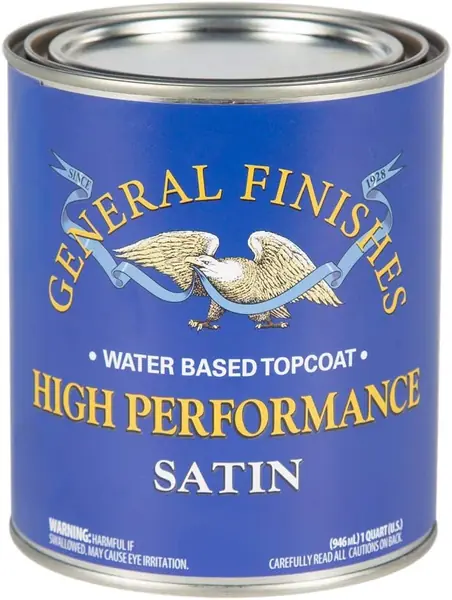
General Finishes High Performance water-based topcoat in a one-quart can, satin sheen

Everyday dining tables

Shop Score 97/100
Size
1 quart
Finish
Satin
Coverage
125–150 sq ft
Recoat
1–2 hours
View on Amazon

A quart of water-based topcoat, a good brush, and one free weekend is the whole shopping list. The number that decided it for us is the recoat window: General Finishes lists one to two hours between coats, so three coats can go down in a day instead of stretching across a week of a table nobody can use.

We like a finish that doesn't take over the house, and this one barely announces itself — no solvent smell filling the dining room, soap and water at cleanup, and a satin sheen that reads as rubbed wood rather than lacquer. Over maple or ash it stays water-clear, so a pale top keeps the color you bought it for. A quart covers 125 to 150 square feet, which handles a full top with a third coat and leaves something in the can.

It goes on thin, so plan on a third or fourth coat if you want real film thickness, and scuff lightly between coats with a fine pad. This listing is the satin quart, which is the sheen we want on a dining table anyway — enough shine to look finished, not enough to advertise every fingerprint.

Set against the oil-based polyurethane we also recommend, the trade is color for schedule: this one adds no amber at all, and you can put the room back together the same weekend you started.

Worth Noting

  • Thin build needs a third or fourth coat
Our Verdict

For a table that has to survive dinner every night, this is the finish we recommend first: hard, clear, low-odor, and recoatable in an hour or two.

Check Latest Price
2.

Minwax Fast Drying Polyurethane Best Oil-Based Finish

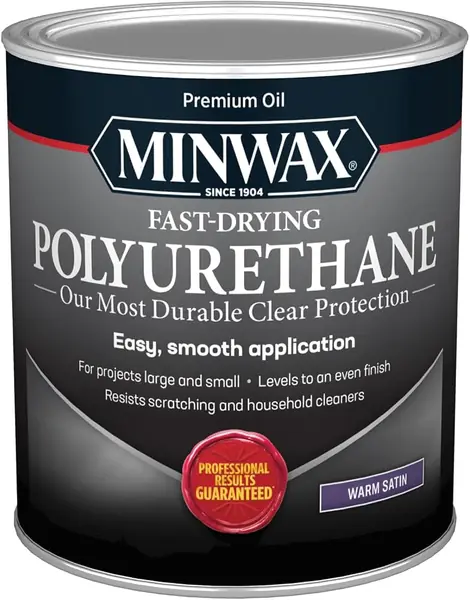
Minwax Fast Drying Polyurethane one-quart can of warm satin oil-based finish

Dark wood tables

Shop Score 96/100
Size
1 quart
Finish
Warm satin
Coverage
250 sq ft per quart
Recoat
4–6 hours
View on Amazon

Oil-based polyurethane is the finish that makes oak look like oak. On walnut, cherry, or quarter-sawn white oak the grain deepens into a warm honey-brown that a water-based clear can't reproduce, and that color shift is the reason to pick this can rather than something to tolerate.

What surprised us is how far a quart goes. The listed coverage is 250 square feet, more than a big table needs even at three coats, which makes this the cheapest protection per square foot in this group by a wide margin. The film it builds is the classic dining-table answer to spills and daily wiping, and it sands level between coats if you pick up a dust nib.

Where it earns its keep is dark wood in a room you can air out. On white paint or pale maple the same ambering reads as yellow, so those tops get the water-based can instead — that single question of color is the whole decision between this and our top pick.

Worth Noting

  • Four-to-six-hour wait between coats
  • Strong solvent smell while it dries
Our Verdict

We choose this one when the wood should look warmer than it did bare — just plan on an open window and a four-to-six-hour wait between coats.

Check Latest Price
3.

Rubio Monocoat Oil Plus 2C Best One-Coat Finish

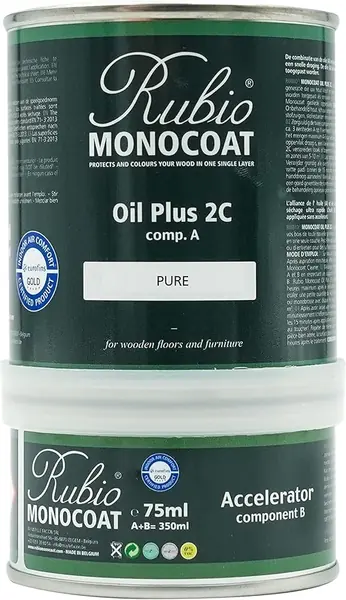
Rubio Monocoat Oil Plus 2C 350 ml can of Pure matte hardwax oil

Natural matte look

Shop Score 95/100
Size
350 ml
Finish
Matte
Coverage
105–175 sq ft
Coats
One
View on Amazon

One coat is the pitch, and it holds: you spread the oil, let it react, buff off the excess, and the table is done. That single-application step is what sold us — no three-night schedule, no sanding between coats, no lap lines to chase — and it's why this stays in the guide despite a can price that makes people wince.

The finish is a hardwax oil, which means it soaks into the wood rather than sitting on top of it. Rubio sells it with a separate accelerator you mix in before use, and the result is a matte surface with the grain still visible and nothing like a plastic sheen. A 350 ml can covers 105 to 175 square feet, which is a full dining table with material left over.

The matte look is the point and also the limit: there's no film to level, so you are not going to get the glassy build a polyurethane gives you. What you get instead is a surface you can repair in place — a scratch takes a drop of oil, a rub, and a buff, with no blending into a surrounding film.

We think that trade is worth making when the wood is the reason you bought the table. And the arithmetic is friendlier than the sticker suggests, because one coat is the whole schedule and the leftover oil in the can is what handles the touch-up after the first holiday.

Worth Noting

  • Premium price for a small can
Our Verdict

A single coat covers a whole table and leaves it looking like finished wood rather than a coating, which is why we think it's worth the price.

Check Latest Price
4.

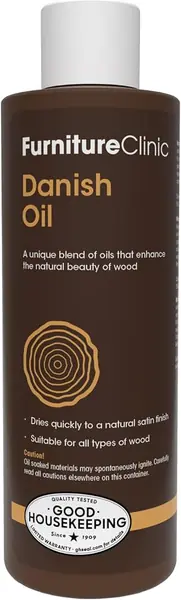
Furniture Clinic Danish Oil Best Natural-Looking Finish

Furniture Clinic Danish Oil in an 8.5-ounce bottle for sealing and restoring wood

Antiques and older tables

Shop Score 94/100
Size
8.5 fl oz
Finish
Natural satin
Surfaces
Interior and exterior wood
View on Amazon

Danish oil is the finish for anyone who doesn't want a film on the table. It wipes on with a rag, soaks into the grain, and leaves a soft satin sheen with the wood still under your fingers. There's nothing to sand back later, which is why it suits an older table whose character you are trying to keep rather than cover.

What we appreciate most is how forgiving it is. There's no brush to leave marks, no lap lines to chase, and no dust nib to pick out; a rag, a bottle, and twenty minutes gets a coat on. If you have ever fought a polyurethane into a smooth film across a big top, that difference is the whole argument.

Protection is the honest caveat. Danish oil handles spills and daily wiping, but it isn't a film, so a table that sees hot dishes and homework most nights wants a fresh coat now and then, and it will always look like oiled wood rather than glass. On the right table that reads as patina rather than wear.

Worth Noting

  • Solvent smell hangs around for a day
  • Darkens pale wood noticeably
Our Verdict

We like this for antiques and low-traffic dining rooms, where a wipe-on oil that touches up in minutes beats a film you would have to strip.

Check Latest Price
5.

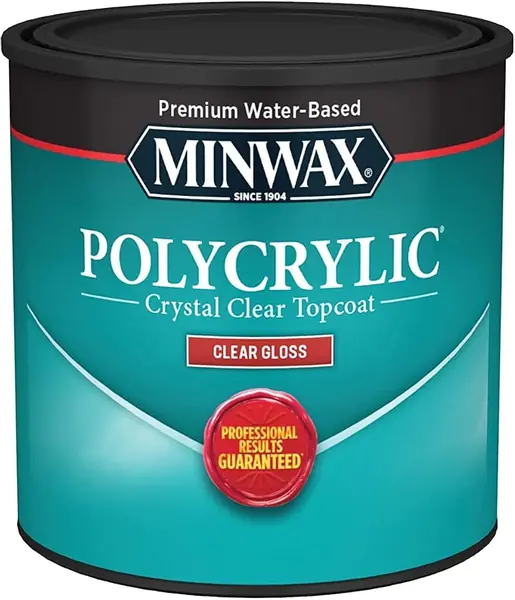
Minwax Polycrylic Protective Finish Best for Light Woods

Minwax Polycrylic protective finish in a half-pint can, clear gloss

Pale wood tops

Shop Score 93/100
Size
Half pint (8 fl oz)
Finish
Gloss
Coverage
Up to 150 sq ft
Recoat
2 hours
View on Amazon

Pale woods are where clear finishes go wrong. An oil-based polyurethane will take maple toward the color of weak tea, and it keeps going for a year. Polycrylic is the can we hand people with a birch, ash, or maple top, because it goes on milky and dries without color, and it stays that way.

The rest is convenience. Two-hour recoats, soap and water for cleanup, and coverage up to 150 square feet from a half pint, which is roughly a tabletop and its edges at three coats. A foam brush lays it down evenly without much working, and it doesn't fill the room with fumes while it sets.

Gloss is the sheen in this listing, and gloss is unforgiving: every dust nib and brush mark shows in raking light, so wipe the top with a tack cloth and keep the room still while it dries. If that sounds fussy, the same formula comes in softer sheens, and satin hides more.

Worth Noting

  • Half-pint covers one top, not a table with leaves
Our Verdict

Our pick for maple, ash, and birch: it dries and stays water-clear, cleans up with soap and water, and a half pint does one tabletop.

Check Latest Price
6.

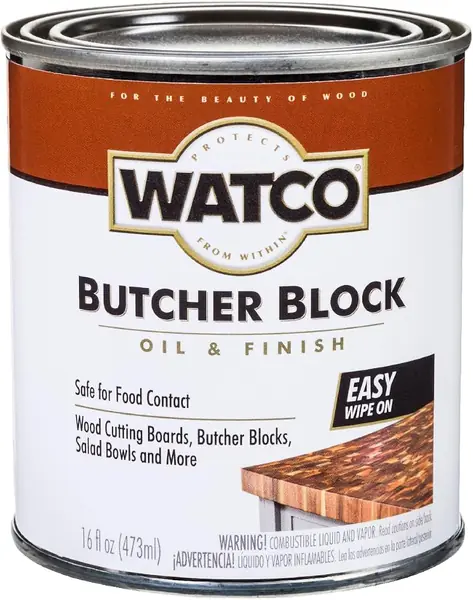
Watco Butcher Block Oil & Finish Best for Butcher Block

Watco Butcher Block Oil and Finish pint can for food-safe wood surfaces

Butcher-block tops

Shop Score 92/100
Size
16 fl oz (pint)
Coverage
50 sq ft
Recoat
After 6 hours
Food Safe
Once fully dry
View on Amazon

A butcher-block table is a different animal: it's a work surface with chairs around it, and whatever goes on it has to be safe to eat off. Watco's oil-and-resin finish is built for that job, and the maker rates it for food contact once the surface is completely dry — 72 hours, by the label.

It goes on clear rather than amber, so a maple block stays pale instead of turning honey. Wipe it on thin with a cloth, let it sit, wipe off what hasn't soaked in, and recoat after six hours if the wood is thirsty; a pint covers about 50 square feet.

The appeal for us is repairability. A knife mark or a ring can be sanded out and re-oiled in place without stripping the whole top, which is more than you can say for a film that has to be feathered and blended. That's the trade: a film ignores more abuse, but when one fails you are refinishing a whole table.

Worth Noting

  • Three days of cure before everyday use
  • Needs fresh coats to stay water resistant
Our Verdict

If the dining table is butcher block and gets cut on, wiped down, and eaten off, this is the food-safe finish we recommend.

Check Latest Price
7.

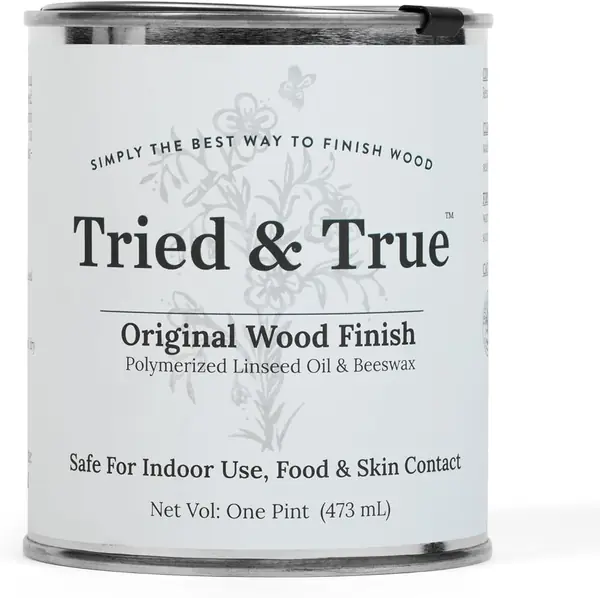
Tried & True Original Wood Finish Best for Fume-Sensitive Homes

Tried and True Original Wood Finish pint can of linseed oil and beeswax

Fume-sensitive homes

Shop Score 91/100
Size
16 fl oz (pint)
Finish
Matte
Coverage
Up to 125 sq ft
Base
Polymerized linseed oil and beeswax
View on Amazon

Polymerized linseed oil and beeswax, and nothing else — no solvents, no metallic driers, no petroleum distillates. That is the entire formula, and it's the one we point to for a table being finished in a spare room or a house with small children in it.

Application is simple if you follow the order: sand to 320, wipe the oil on, buff it dry, wait a day, burnish with fine synthetic wool, and repeat until you have the build you want. A pint covers up to 125 square feet, so one can handles a table with a couple of coats to spare.

The catch is time. This finish cures by taking up oxygen rather than by flashing off a solvent, so a coat that feels dry today can still be soft tomorrow, and a heavy application is slower still. Several thin coats with a day between them is the schedule, and the table stays off duty while it happens.

Where it earns its place here is the combination: solvent-free, food safe, and repairable with another coat rather than a strip. We don't send people to it when the table has to be finished before a holiday — the water-based topcoat gets you there faster.

Worth Noting

  • A day between coats and a slow final cure
  • Oil-wax finish needs periodic renewal
Our Verdict

We recommend this oil-and-beeswax blend for a house where solvent fumes are a non-starter — as long as you can give the table a week.

Check Latest Price
8.

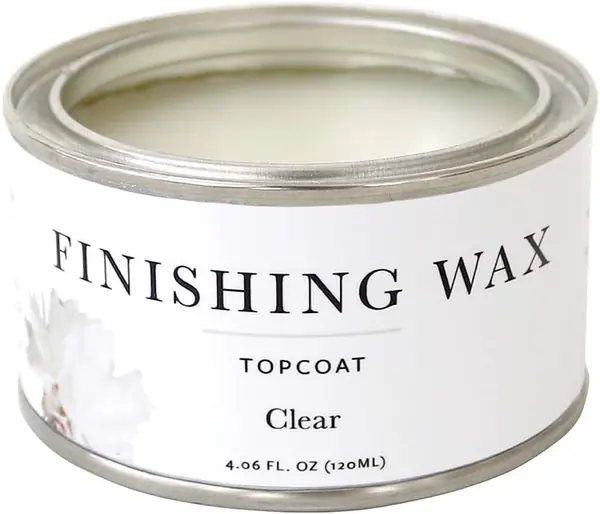
Jolie Finishing Wax Best for Chalk-Painted Tables

Jolie Finishing Wax 120 ml tin of clear matte finishing wax

Chalk-painted tables

Shop Score 90/100
Size
120 ml
Finish
Matte, buffable
Coverage
75 sq ft
Cure Time
8 hours
View on Amazon

Wax is what a chalk-painted piece has traditionally been finished with, and Jolie's clear tin is built for that job: soft enough to work into paint with a brush, firm enough to buff to a sheen once it sets.

Application is one coat at a time — work it in with a wax brush or a lint-free cloth, wait eight hours, then buff. It's low odor and non-hazardous, which matters when the table lives in the dining room and the weather says you can't open a window.

The one thing to get right is thickness. A thin coat worked into the paint buffs out to an even sheen; a thick smear sits on the surface and stays tacky well past the eight-hour mark, which is where most of the frustration with wax begins. Two thin coats beat one generous one every time.

We like that the sheen is adjustable — buff harder for a soft glow, leave it flatter for a dead-matte look — and that it doesn't shift the color underneath. A 120 ml tin covers about 75 square feet, which is a table and a couple of chairs.

Worth Noting

  • Little resistance to heat and scratches
Our Verdict

For a chalk-painted table, we like this clear wax: it buffs to a soft, controllable sheen and leaves the paint color exactly as you chose it.

Check Latest Price

How We Tested Dining Table Finishes

We built the shortlist from technical data sheets rather than the front of the can: film or penetrating, sheen, recoat interval, full cure, coverage, food-contact claims, and what each product is actually made of. From there we bought 12 finishes across waterborne topcoats, oil-based polyurethane, a one-coat hardwax oil, Danish oil, butcher-block oil, a polymerized linseed and beeswax blend, and a buffable finishing wax. We compared price by coverage rather than sticker price, since a cheap can that barely covers one tabletop isn't a bargain.

Each finish went onto sanded maple and walnut boards and onto two real dining tables, one in a house with young kids and one in a quieter home, and we checked in on them over nine months of actual dinners. Raking light down the length of each top exposed brush marks, lap lines, and dust nibs, and we noted which products leveled out on their own and which punished a slow hand.

Dry and recoat times came from a finger test, not the clock, because several finishes felt dry long before a dinner plate could sit on them. Odor was judged from the next room with the windows open, and solvent-based products went on with cross-ventilation, well away from pilot lights and open flames. On pale maple, taped-off comparison patches showed which clears stayed colorless and which turned the wood yellow.

Once cured, every top took a wet glass left overnight, a hot pizza box, and a fork scratch, followed by a spot repair. Oil-soaked rags were spread flat outdoors to dry before disposal, never crumpled into a bucket, and no food touched a surface until the label's full cure had passed.

How to Choose a Finish for a Dining Room Table

Film or penetrating: decide this first

A film finish — polyurethane, polycrylic, or a water-based topcoat — dries into a layer that sits on the wood and takes the abuse instead of the table. A penetrating finish, whether Danish oil, linseed oil, or a hardwax oil, soaks in and leaves the grain exposed. The first buys you quiet years behind a thin barrier; the second looks and feels better and asks for a fresh coat now and then.

For a table that eats three meals a day, we start with a film. Reach for oil when the table is old, when the wood is the reason you bought it, or when you would rather touch up a scratch in five minutes than live with it.

Match the clear coat to the color of the wood

Water-based finishes dry clear and stay clear; oil-based ones add amber, which deepens walnut and cherry and turns maple the color of weak tea. That is the whole decision for most pale tops: a water-based topcoat over birch, ash, or maple, and an oil-based polyurethane over the darker stuff.

Nothing amber goes over white paint, whatever the can says about clarity. Test on the underside or an offcut before you commit, because the color a finish leaves is far easier to judge on scrap than on a table you have already sanded.

Read the recoat and cure times before you start

A dining table is out of service while it is being finished, and the schedule varies more than the price does. Water-based topcoats commonly allow another coat after one to two hours, oil-based polyurethane wants four to six, and a finishing wax wants about eight between thin coats. Butcher-block oil asks for three days of cure before normal use.

Add the coats up before you buy. Three coats with an overnight wait between each is a four-day project even though every individual step takes twenty minutes.

Choose a sheen you can live with

Gloss is the most protective and the least forgiving: it shows every dust nib, brush mark, and fingerprint in raking light. Satin hides more while still looking finished, which is why it is the sheen we recommend for most dining tables. Matte is quietest of all and the hardest to keep clean.

The same product usually comes in more than one sheen, so the sheen should not decide which finish you buy. Pick the finish first, then pick the sheen.

Food contact, fumes, and a house full of people

If food goes straight onto the table, look for a finish rated for food contact once fully dry — butcher-block oil and oil-and-beeswax blends are the usual candidates, and the dry time on the label is part of that claim, not an optional extra.

Solvent-based finishes need cross-ventilation and a closed door to the rest of the house; water-based ones are mild enough to use indoors. Whatever you use, oil-soaked rags and steel wool go flat on the ground outside to dry, or into a sealed metal can of water, because they can self-heat and ignite.

Frequently Asked Questions

Final Verdict

For most dining tables, our recommendation is the General Finishes water-based topcoat. It builds a hard, clear film you can put down in a weekend, it doesn't shift the color of the wood, and it cleans up with soap and water — the three things that matter when the table has to go back into service inside your own house.

If the top is walnut, cherry, or oak and you want the grain to go warm and deep, the oil-based Minwax polyurethane does that for far less per square foot. And if you want the table to feel like bare wood with nothing sitting on it, the Rubio hardwax oil gets you there in one coat.