↑↓ navigate ↵ open Esc close All results →

Best Tack Cloths for Woodworking

Wiping down sanded wood before staining or topcoating requires a fine balance of resin tack: too dry and a cloth merely pushes dust around, too sticky and it smears residue into the grain that turns polyurethane into fisheyes. A clean, wax- and silicone-free tack cloth traps the last traces of flour-fine dust without leaving anything behind for the finish to fight.

Testing 15 cotton cheesecloth, gold mesh, and non-woven cloths across four months of sanding, staining, and topcoating highlighted packaging as much as fabric. Individually pouched cloths stay supple and grit-free until opened, whereas loose stacks sitting in a shop drawer dry out around the edges and collect the very debris they are supposed to remove.

Options range from three-packs sized for a single dresser to bulk shop boxes for daily spraying and wiping, each leaving bare wood clean and ready for stain or clear coat.

Our Top Picks

The Best Tack Cloths for Woodworking

1.

TCP Global Pure Blue Superior Tack Cloth 12-Pack Best Overall
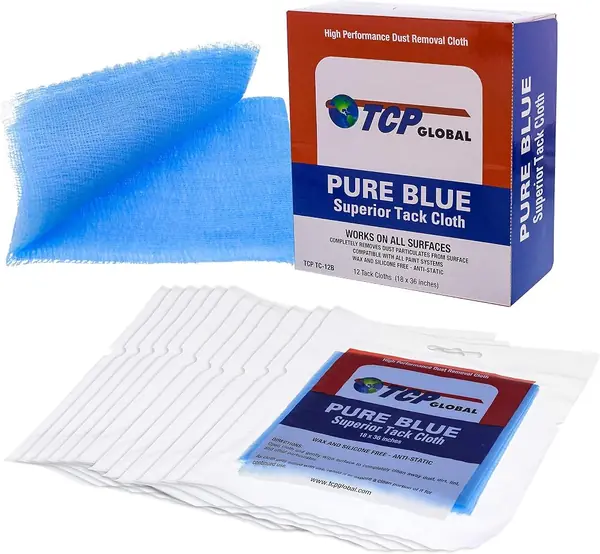
TCP Global Pure Blue tack cloths, blue cotton mesh squares, 12 individually wrapped

General wood finishing

Shop Score 95/100
Cloth Size
18 x 36 in
Pack Count
12 cloths
Individually Wrapped
Yes
Wax And Silicone Free
Yes
View on Amazon

Silicone is the enemy of a finish. A trace of it on sanded wood shows up as fisheyes and craters once the topcoat goes on, and by then you are sanding back to bare wood. So the first thing we check on a tack cloth is whether the label rules out silicone, and this one rules out wax too. It also has what should be standard and often isn't: a full 18 by 36 inch cotton mesh cloth, individually wrapped, with an anti-static treatment.

We made it the top pick because it is the most complete cloth here rather than the most specialized. It has one of the strongest overall performance records in this group, an explicit wax-free and silicone-free claim, and a price per cloth that sits in the middle of the range. The size is what we keep coming back to: folded into eighths it gives you eight clean faces, so a single cloth takes a tabletop from the first sanding pass through three coats without dragging yesterday's dust back over the surface.

The tack is the variable. It is generous on most cloths and lighter on a few, which is why we keep each one in its wrapper until we need it and run the first pass over an offcut of the same stock before committing a final coat. A box of 12 carries a cabinet project if you refold instead of reaching for a fresh cloth every pass, and that is the way these are meant to be used.

Worth Noting

  • Tack varies from cloth to cloth
Our Verdict

We recommend it as the default: full-size, wax- and silicone-free, and it lifts fine sanding dust without smearing. Keep each cloth sealed until the moment you wipe.

Check Latest Price
2.

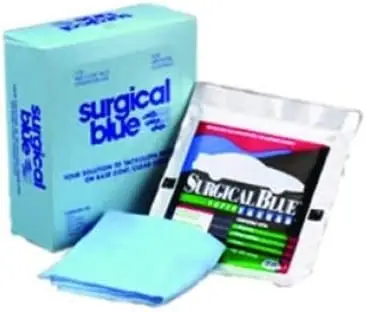
Surgical Blue Tack Rags 12-Pack Best for Residue-Sensitive Finishes

Surgical Blue tack rags, light blue cotton cloths, 12-pack made in USA

Clear topcoats

Shop Score 94/100
Cloth Size
18 x 36 in
Pack Count
12 cloths
Individually Wrapped
Yes
Made In USA
Yes
View on Amazon

When the topcoat is water-clear and every speck shows, this is the cloth we want in hand. The tack sits at a lighter, more controlled level than most of the picks here, and the surface comes up clean rather than tacky — no streaks, no discoloration lifting through the paint. That is the whole reason it earns a place: it removes the dust without leaving anything of itself behind.

It is a full-size 18 by 36 inch cotton cloth, and one will go several rounds if you refold it. We worked a single rag across cabinet doors before spraying and then along the face frames, folding to a clean patch each time. It is also made in the USA, as the Trimaco cloth is, which matters to shops that try to buy domestic when they can.

Two things to accept. These are among the most expensive cloths per unit on this page, and they can be stubborn to open out — unfold completely and scrunch before the first pass, or you spend the first minute fighting the cloth instead of the dust. Neither has stopped us keeping a pack on the shelf for finish work that shows.

Worth Noting

  • Among the most expensive per cloth here
Our Verdict

This is the one we reach for when a water-clear topcoat is going on and any residue will show through it.

Check Latest Price
3.

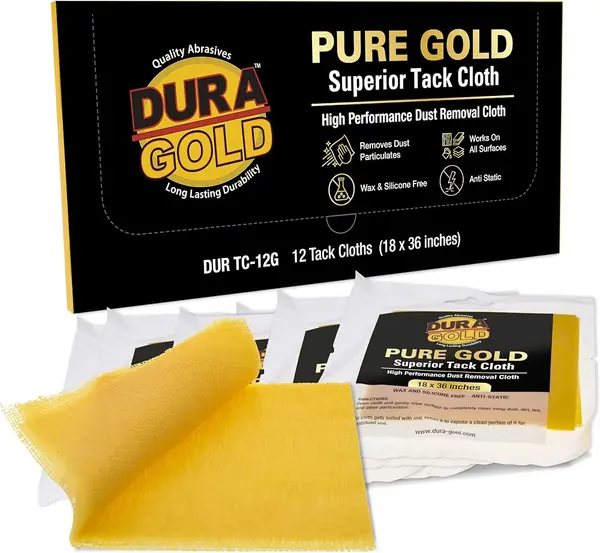
Dura-Gold Pure Gold Superior Tack Cloth 12-Pack Best Value

Dura-Gold Pure Gold tack cloths, gold cotton mesh, 12 to a pack

Large flat panels

Shop Score 93/100
Cloth Size
18 x 36 in
Pack Count
12 cloths
Wax And Silicone Free
Yes
Fabric
Gold cotton mesh
View on Amazon

Dura-Gold lands near the bottom of the price range for a full-size cloth on this page, and the compromise is written into the tack: it runs lighter than the rest of these. That is not a flaw so much as a different job. A light tack glides over a sealed surface between coats without dragging, and it leaves nothing behind to interfere with the next coat.

Size and toughness are why it stays in rotation. You get 18 by 36 inches of gold cotton mesh sold as tear-resistant, and it takes corners, edges and repeated refolding without shredding the way a thin cheesecloth can. Twelve to a box means you can be generous with it on a long run of shelves or a floor, changing cloths as each one loads up rather than nursing one to the end.

We reach for it on large, flat work — a tabletop, a set of built-ins, a porch floor — where you want a fresh face every few passes and the cost of the cloth should not be in your head. For the final wipe before a clear topcoat on a showpiece, we lighten the pressure or switch to a cloth with more controlled tack.

Worth Noting

  • Runs a lighter tack than other cloths in this group
Our Verdict

Buy it if you sand a lot of flat panels and want a big, tough cloth at one of the lower costs per cloth here.

Check Latest Price
4.

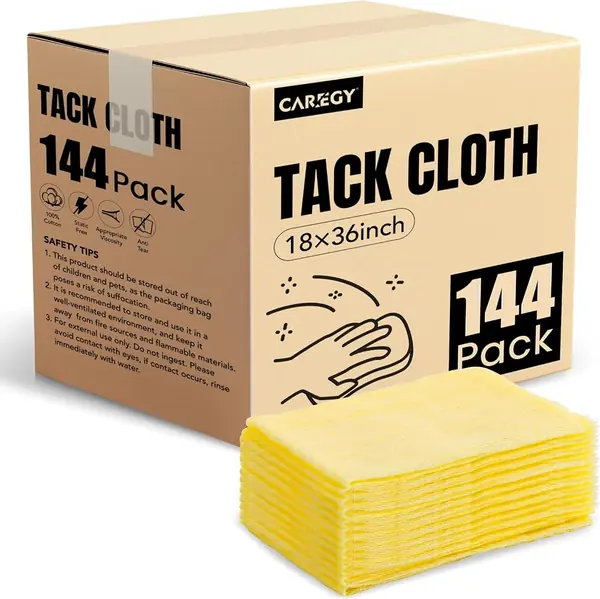
CAREGY Tack Cloth 144-Pack Best Bulk Pack for Shops

CAREGY tack cloths, 144 individually wrapped 18 by 36 inch cotton mesh cloths

High-volume shops

Shop Score 92/100
Cloth Size
18 x 36 in
Pack Count
144 cloths
Individually Wrapped
Yes
Wax And Silicone Free
Yes
View on Amazon

Nobody buys 144 tack cloths twice in a decade. The box is aimed at shops that finish constantly, and the detail that makes it work is the wrapping: every cloth is individually packaged, so the one you pull out in month eight is as fresh as the one on top. That single choice separates it from a bag of loose cloths, which stiffen from the top down while you work through them.

For a busy shop, this is the pick we point to. Each cloth is 18 by 36 inches of cotton mesh with a grid structure that traps fine dust, wax-free and silicone-free, and it works out to the lowest cost per cloth of anything on this page by a wide margin. It is also the one place where a bulk purchase genuinely pays: the packaging protects the tack, so volume does not cost you quality.

The catch is the outlay, which is the largest single purchase in this group, and it is a lot of cloth for someone who refinishes a table a year. If that sounds like you, buy a small pack and put the difference into sandpaper. If you are spraying cabinet doors most weekends, the arithmetic flips fast and you stop thinking about tack cloths entirely for a season.

Worth Noting

  • Biggest single outlay of the picks
Our Verdict

For anyone finishing weekly, this shop box earns its shelf space: every cloth is still tacky when you open it.

Check Latest Price
5.

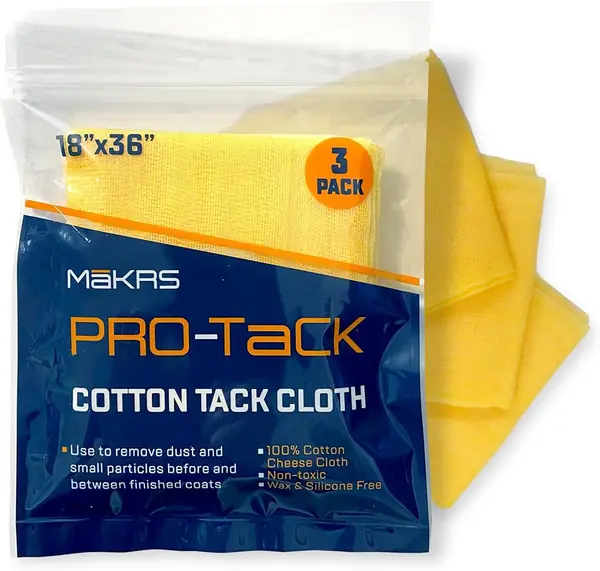
MāKRS Pro-Tack Tack Cloths 3-Pack Best Small Pack for Furniture Projects

MāKRS Pro-Tack tack cloths, yellow cotton cheesecloth squares, three to a pack

One-piece refinishing

Shop Score 91/100
Cloth Size
18 x 36 in
Pack Count
3 cloths
Wax And Silicone Free
Yes
Fabric
Cotton cheesecloth
View on Amazon

A dresser and a set of cabinet doors is about the right size for this pack: three full-size cloths, one for the last sanding pass and one for each coat, with nothing left over to go stiff on a shelf. That sounds like a small thing until you are three coats into a project and digging through a bag for a cloth that still grabs.

The cloth is 18 by 36 inches of cotton cheesecloth rather than the apertured mesh most of these use — a softer, more open weave that scrunches into a pad and works into a bead or a rail without dragging. MāKRS also pitches it at wood finishing specifically, wax-free and silicone-free, rather than at auto body prep, and the language on the package matches the job.

What we noticed in use is how little pressure it takes. Cheesecloth this open lifts dust on a light pass, and pressing harder mostly pushes the cloth's own tack into the wood. Unfold it fully, scrunch it loosely, wipe once, refold to a clean patch. It rewards patience more than muscle.

We keep this one for the job where a single clean cloth matters more than unit price — a refinish where you would rather open a fresh one for the last wipe than reuse a dusty one. If you finish every weekend, it is the wrong shape entirely and the shop box is the better buy.

Worth Noting

  • Priciest per cloth of the picks here
Our Verdict

A sensible three-pack for a single refinishing job, where a fresh, clean cloth matters more than the cost of each one.

Check Latest Price
6.

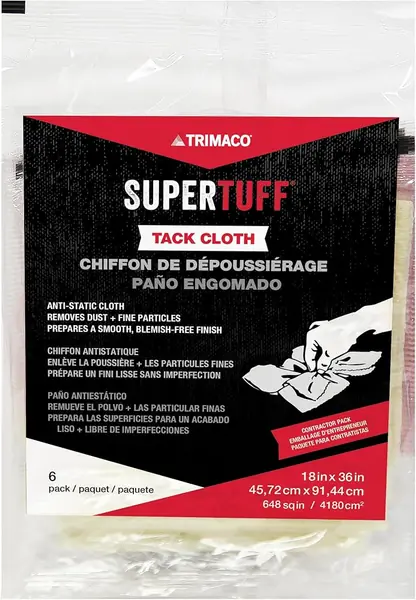
Trimaco SuperTuff Tack Cloth 6-Count Best for Sealed Surfaces

Trimaco SuperTuff tack cloth, tan cotton cloth, six-count pack

Sealed surfaces

Shop Score 90/100
Cloth Size
18 x 36 in
Pack Count
6 cloths
Fabric
100% cotton
Made In USA
Yes
View on Amazon

Trimaco's SuperTuff is the tack cloth most people have already met — it turns up in hardware stores and paint departments around the country, it is made in the USA from 100% cotton, and it carries more tack than anything else in this group. That last part is the whole story. This is a specialist, not a default.

On a sealed surface the heavy tack is exactly right: a cured coat of polyurethane, a primed wall, a painted door. It pulls coarse dust and lint that lighter cloths skate over, and one cloth keeps working through several passes if you refold it. It is also the most forgiving cloth here if you are working on a vertical surface, because you barely have to press to make it grab.

On bare wood headed for stain, the same gumminess can transfer to the surface and interfere with an even take-up of color, and it clings to fingers badly enough that gloves stop being optional. Wear nitrile, keep the cloth off anything you have not sealed, and save it for the between-coat work it does best.

For a shop that wants one familiar cloth for dusting between coats, six to a pack keeps the outlay small. Just do not make it the cloth you wipe a bare tabletop with ten minutes before the first coat of stain.

Worth Noting

  • Gummy tack transfers to hands and bare wood
Our Verdict

Keep it for sealed surfaces and between-coat dusting; on bare wood its heavy tack can work against you.

Check Latest Price
7.

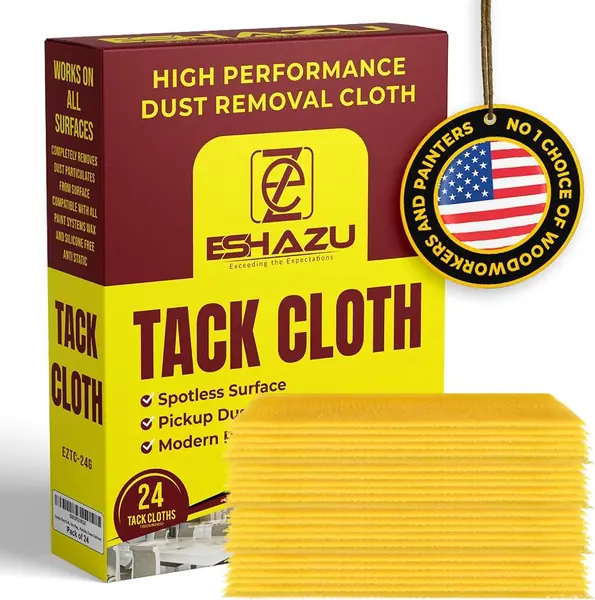
Eshazu Premium Tack Cloth 24-Pack Best for Between Paint Coats

Eshazu Premium tack cloths, yellow cotton mesh cloths, 24 individually wrapped

Between paint coats

Shop Score 89/100
Cloth Size
18 x 36 in
Pack Count
24 cloths
Individually Wrapped
Yes
Wax And Silicone Free
Yes
View on Amazon

The tack on these runs on the heavy side, and you feel it on your fingers inside a couple of passes, so a box of nitrile gloves lives next to the box in our shop. That is not a knock on a tack cloth doing its job — it is simply what to expect when you tear one open.

What you get is 24 individually wrapped cloths of yellow cotton mesh, each a full 18 by 36 inches. That is the best cloth-per-box ratio here after the shop box, and the wrapping means the last cloth is as usable as the first. Big enough to fold into eighths and get a fresh face for each section of a cabinet door.

We like it for painted work and sealed surfaces between coats, where the heavy tack lifts sanding powder off trim and face frames without a second pass. On bare wood that is about to take a stain, the residue risk is real enough that we put the box down and pick up a lighter cloth instead. Buy it for the painting you do, not the staining.

Worth Noting

  • Heavy tack leaves residue on bare wood before staining
  • Sticky feel on fingers makes nitrile gloves worth wearing
Our Verdict

A good budget box for painted cabinets and trim, as long as you keep it off bare wood headed for stain.

Check Latest Price
8.

Opvixi Tack Cloths 8-Pack Best for Small Shop Jobs

Opvixi tack cloths, yellow non-woven cloths, eight individually wrapped

Small shop jobs

Shop Score 88/100
Cloth Size
17.7 x 35.4 in
Pack Count
8 cloths
Individually Wrapped
Yes
Fabric
Non-woven
View on Amazon

Most of the cloths here are cotton mesh or cheesecloth. This one is non-woven, a softer and more uniform sheet that behaves differently in the hand — less open, closer to a soft shop towel with a sticky finish. It does not have the loose weave that can shed threads onto a wet surface, and it drapes over a curved edge instead of springing off it.

The size is a hair under the standard at 17.7 by 35.4 inches rather than 18 by 36. In practice that is a fraction of an inch at each edge, not enough to change how you fold it, but it is worth knowing if you are matching cloths to a particular block or pad.

The tack is heavy and stringy out of the wrapper — these cloths want to cling to each other and to your hands — and with eight in a box you will not feel bad retiring one halfway through a job. It works right down to fine dust; the last of the sanding powder came up with a light pass on a sanded panel.

For touch-ups and small jobs it is the cheapest way to keep a few wrapped cloths on hand, and that is the role it fills for us. It is not the cloth for a full cabinet run: the smaller sheet and the stringy tack would have you reaching for a second one before you finished the doors.

Worth Noting

  • Slightly under the standard 18 x 36 size
Our Verdict

Cheap, wrapped, and small enough to stash in a drawer — a fine spare pack, not a shop's main supply.

Check Latest Price

How We Tested Tack Cloths for Woodworking

We started by reading listings and spec sheets, tracking which cloths were labeled wax- and silicone-free, what unfolded size they gave, and whether they came individually wrapped or stacked loose. We also weighed pack counts against how often a person actually finishes, from a small pack for one piece of furniture to bulk boxes for a working shop. Fifteen cloths went into rotation, across four material styles: cotton gauze, gold cotton mesh, cotton cheesecloth, and non-woven.

For four months we used them where they actually live: a garage shop wiping dust off oak and pine after sanding, a driveway refinishing a dresser, and a bench between coats of polyurethane on cabinet doors and a tabletop. We pressed each cloth flat and lifted it to see whether the dust clung or just moved around, and dragged a few strokes against the grain to catch any cloth that smeared resin instead of collecting it.

Residue got its own round. After wiping an offcut, we brushed stain across it to see whether the wood took color evenly or the finish beaded away, then checked wiped panels under a raking light for streaks. We refolded each cloth into fresh faces until the tack quit and counted how many passes that took, watching for lint threads and torn edges along the way.

We noted the packaging too, sealed pouch versus loose stack, and did the price-per-cloth math for every pack size. Gloves went on for the heaviest-tacked cloths, since that resin transfers to skin and doesn't wash off with soap.

How to Choose Tack Cloths for Woodworking

Match the Tack to the Surface

More tack is not automatically better. A heavy, gummy cloth lifts coarse dust and lint off a sealed surface beautifully, and we like Trimaco's SuperTuff for exactly that. On bare, open-grain wood the same tack can transfer to the surface and interfere with an even take-up of stain. If you finish a lot of raw wood, keep a lighter-tack tack rag for that pass — Surgical Blue is our choice — and save the heavy ones for between-coat work, where a cured film is already sealing the wood.

Wax and Silicone Free, Every Time

Wax and silicone are release agents. A trace of either on a sanded surface can cause fisheyes and craters, or leave patches where the next coat refuses to flow out, and you usually discover it after the finish has cured. Many cloths are formulated for auto body shops, where a primer-sealer goes on next and covers a multitude of sins; that is not the cloth you want under a clear topcoat on walnut. Look for wax-free and silicone-free on the label, and treat the word tack on its own as no guarantee of anything.

Size, Wrapping, and How Many to Buy

Standard tack cloths unfold to 18 by 36 inches, and the size is the point: folded into eighths, one cloth gives eight clean faces, so you can wipe a panel, refold to a clean patch and keep going without dragging dust back across the surface. Smaller low-tack cloths, around 9 by 15 inches, exist for detail and finish repair, but for sanding between coats you want the big one.

Buy wrapped cloths if the pack will last more than a few weeks. The tack is a resin that skins over once air reaches it, and a loose bag stiffens from the top down. Then match the count to your schedule: three to six cloths for a single piece, a dozen for a cabinet run, and a shop box only if you are finishing most weekends.

Frequently Asked Questions

Final Verdict

For most woodworkers the TCP Global Pure Blue 12-pack is the one to buy: full-size, wax- and silicone-free, individually wrapped, and it has one of the strongest records in this group for lifting fine dust without smearing. It is the cloth that suits the widest range of jobs, from a tabletop before the first coat to trim between coats.

When a water-clear topcoat is going on and any residue will show, we move to Surgical Blue. When you are finishing most weekends, the CAREGY shop box is the cheaper way to keep a fresh, sealed cloth within reach for a whole season.