↑↓ navigate ↵ open Esc close All results →

Best Exterior Wood Finishes of 2026

Every exterior finish forces a trade-off between a surface film that blocks moisture until it eventually peels and a penetrating oil that refreshes with a rag but lets the wood weather faster if neglected. Scraping blistered varnish off porch railings in August quickly teaches how much chemistry matters alongside prep.

Testing 12 exterior finishes over nine months on cedar fence boards, a teak bench, a mahogany door, and two Adirondack chairs exposed to sun, rain, and wind showed how differently each family ages. Watching tack time, ambering, and color retention on a south-facing rail made one label detail clear: the recoat window matters far more than dry-to-touch time, because an uncured film wrinkles under the next pass.

Spar varnishes, exterior urethanes, pure oils, waxes, and spray-on stains all behave differently across dense oily hardwoods and porous softwoods. Choosing the right balance depends on whether the project is a small teak side table or an entire fence line.

Our Top Picks

The Best Exterior Wood Finishes

1.

Rust-Oleum Marine Spar Varnish Best Overall
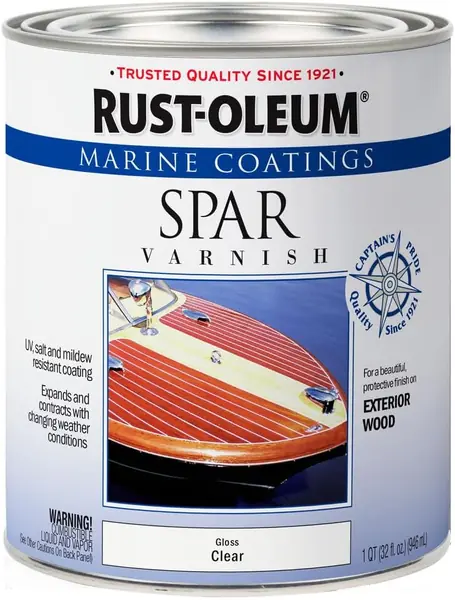
Rust-Oleum Marine Spar Varnish quart can with clear gloss exterior wood finish label

Furniture, trim, railings

Shop Score 97/100
Size
1 quart (32 fl oz)
Coverage
75-150 sq ft per quart
Finish
Gloss
Dry Time
2 hours to the touch
View on Amazon

A spar varnish is the closest thing exterior wood gets to a raincoat, and this is the can we keep coming back to. It's an oil-based clear coat meant for wood above the waterline — trim, railings, outdoor furniture, a door that faces the weather — that builds a film on the surface instead of soaking away. A quart covers 75 to 150 square feet depending on how thirsty the wood is, and it's dry to the touch in about two hours, which makes a second coat the same afternoon realistic.

What sold us is how forgiving the film is. It brushes out level, cleans up with mineral spirits, and, unlike a hard polyurethane, stays flexible enough to move with the wood instead of cracking open the first time the seasons swing. The UV package matters just as much to us: it's the difference between a table that keeps its color and one that goes gray in two summers. Among the clear films here, this is the one carrying the longest record of holding up to weather.

Application rewards patience more than skill. Brush it thin, give each coat a full day, and don't work in cool damp air where the film sits soft and takes forever to set. Three coats on a tabletop is not overkill — it's the difference between a finish you inspect once a year and one you're refinishing in eighteen months.

Worth Noting

  • Gloss film and amber cast on pale wood
Our Verdict

For outdoor furniture, trim, and railings, we reach for this spar varnish first: a flexible gloss film rated for sun, rain, and salt spray that covers a lot of wood per quart.

Check Latest Price
2.

Minwax Helmsman Spar Urethane Best Satin Finish

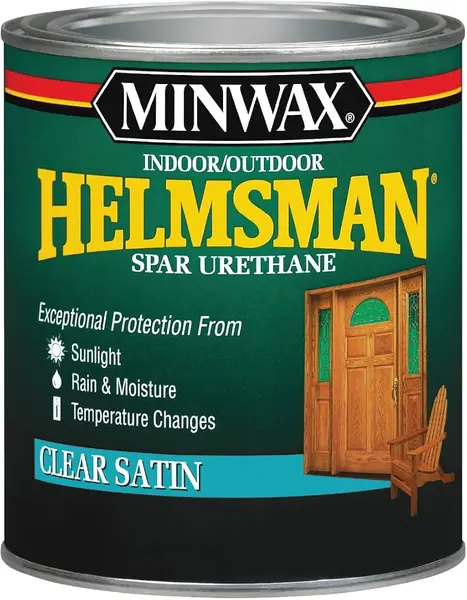
Minwax Helmsman spar urethane quart can labeled satin for indoor and outdoor wood

Doors and furniture

Shop Score 96/100
Size
1 quart (32 fl oz)
Use
Interior and exterior
Finish
Satin
UV Protection
UV blockers
View on Amazon

Gloss isn't for everyone, and this is where we send the people who want protection without the lacquered look. Helmsman cures to a soft satin sheen that reads more like waxed wood than plastic, and it's the finish we prefer on outdoor dining tables and front doors where a mirror surface feels like too much. Under the sheen it works the same way a marine varnish does: UV blockers to slow graying, and special oils that let the film expand and contract as the weather moves the wood.

It's rated indoors as well as out, which is why it turns up on bar tops, bathroom cabinets, and window trim — the places that see steam and sun in the same week. A quart handles a door and its frame with some left over, or a small table through three coats. Sand lightly between coats, keep them thin, and expect the last one to look better than the first, which is not always true of exterior clears.

Worth Noting

  • Ambers white and light gray wood
Our Verdict

If you want exterior protection without a wet look, this satin spar urethane is the one we point to: UV blockers, a soft sheen, and a film that flexes with the seasons.

Check Latest Price
3.

Hope's 100% Pure Tung Oil Best Natural Oil

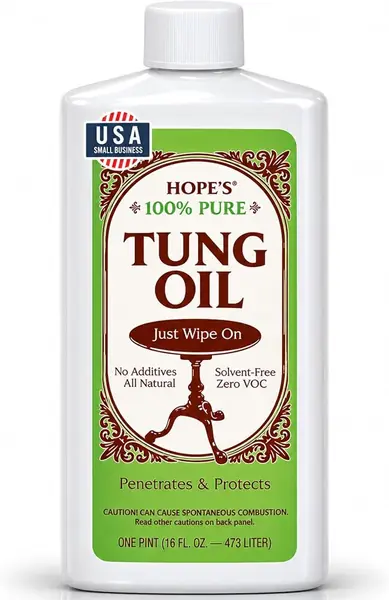
Hope's pure tung oil bottle for food-safe wood finishing on bare wood

Bare interior wood

Shop Score 95/100
Size
16 fl oz
Formula
100% tung oil
Food Contact
Food safe when cured
Water Resistance
Water resistant
View on Amazon

Tung oil isn't a coating, and the people who end up disappointed with it are usually the ones who expected one. This is 100 percent pure oil. It soaks into the fibers, cures hard in place, and becomes part of the wood rather than sitting on top of it, which is why it can't peel, crack, or flake the way a varnish can. On a piece that gets handled — a bench, a tabletop, a tool handle — that's a real advantage.

Wipe it on thin with a rag, let it soak, wipe the excess back off, and wait. On bare or weathered wood it darkens the grain slightly and leaves a soft satin, the kind of finish that looks hand-rubbed because it is. It's also considered food safe once fully cured, which is why this is the one here we keep for cutting boards, butcher blocks, and salad bowls. The 16-ounce bottle goes further than you expect when the coats are thin.

Where we like it most is bare wood indoors and on a covered porch, where it can be topped up without sanding anything. The smell is the other thing to know: pure tung oil is pungent while wet, so this is an outdoor or open-garage job, not a basement one. It's a finish for someone who enjoys the process, not someone who wants it over with.

Worth Noting

  • Cure takes days to weeks between coats
Our Verdict

For bare wood you want to feed rather than wrap, we like this pure tung oil: it soaks in, cures to a soft satin, and never peels because there is no film to peel.

Check Latest Price
4.

Ready Seal Exterior Wood Stain & Sealer Best for Beginners

Ready Seal Natural Cedar stain and sealer spray can with turbo spray nozzle

Fences and railings

Shop Score 94/100
Coverage
Up to 50 sq ft per can
Dry Time
1 hour to the touch
Type
Oil-based semi-transparent stain and sealer
Color
Natural Cedar
View on Amazon

The pitch here is that you can't really mess it up, and the design backs it up. It's an oil-based semi-transparent stain and sealer in a spray can with a ten-inch fan, no back brushing, and no laps, runs, or streaks to chase afterward. It's dry to the touch in about an hour, and the can covers up to 50 square feet in a single coat.

We like it for the jobs where a brush is awkward — railing balusters, a pergola, a fence section, the slats of a bench — and where a first-timer shouldn't have to worry about overlap marks. The Natural Cedar tint gives wood a warm reddish brown and a flat finish that looks like weathered wood with the color turned back up, not like paint. Recoats are the good part: no sanding or stripping, just clean the surface and spray again when the color fades.

The limit is arithmetic, so do it before you order. Fifty square feet per can is a railing or a small project, not a deck; a full deck means gallon containers and a sprayer, not a can in each hand. That said, for the small, fiddly, hard-to-brush project, the convenience is worth a lot.

Worth Noting

  • Tinted so it shifts the natural wood color
Our Verdict

If you have never stained anything, start here: this oil stain and sealer goes on without laps or streaks and dries to the touch in about an hour.

Check Latest Price
5.

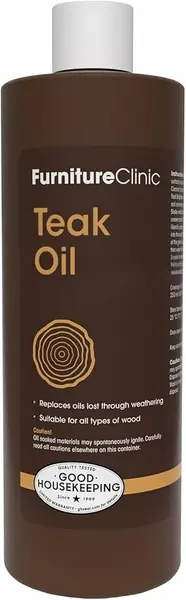
Furniture Clinic Teak Oil Best for Weathered Teak

Furniture Clinic teak oil bottle for indoor and outdoor hardwood furniture

Weathered teak furniture

Shop Score 93/100
Size
17 fl oz
Use
Indoor and outdoor hardwoods
Finish
Natural matte
Formula
Tung and linseed oil blend
View on Amazon

Silver-gray teak is the reason to keep this on the shelf. A coat of this tung-and-linseed blend brings the gold back into weathered furniture in a single session, and it leaves a matte finish that reads as oiled wood rather than a coating, which is exactly what we want on a bench or a table that lives outside. The 17-ounce bottle is a sensible size for a chair or two, and it's rated for indoor and outdoor hardwoods, boats, and shower benches alike.

Application is about as simple as finishing gets: wipe it on with a lint-free cloth, give it a few minutes, and wipe the rest off. No brushes to clean, no sanding between coats, and it builds a water-resistant surface that beads instead of soaking in a rain shower. A second coat deepens the color noticeably; a third rarely adds anything.

The smell is the one thing we mind. It lingers longer than you expect, and on a still day a freshly oiled chair keeps announcing itself — a breezy afternoon job, not a closed-garage one.

Worth Noting

  • Needs refreshing once or twice a season
  • Small bottle for a full dining set
Our Verdict

Silver-gray teak comes back fast with this oil, and we like the tung and linseed blend for furniture that needs feeding rather than another coat of something.

Check Latest Price
6.

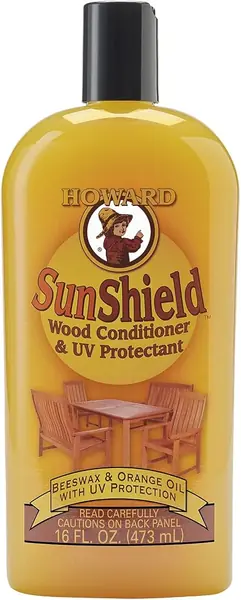
Howard SunShield Outdoor Furniture Wax Best for Seasonal Touch-Ups

Howard SunShield beeswax and carnauba outdoor wood polish in a yellow container

Seasonal touch-ups

Shop Score 92/100
Size
16 fl oz
Use
Outdoor furniture
Formula
Carnauba wax, beeswax, orange oil
UV Protection
UV inhibitors
View on Amazon

Wax does a narrow job well, and it's worth being clear about which job. SunShield is a blend of carnauba wax, beeswax, and orange oil with UV inhibitors, made to feed and buff furniture that already wears a finish — a teak bench in August that's gone chalky, a table that has lost its sheen. It conditions and protects, and it's aimed squarely at teak and other tropical hardwoods.

The 16-ounce container goes on like furniture polish: thin coat, wipe, buff. It brings up grain and depth in a way that reads as care rather than coating, and the UV inhibitors target the drying and fading that sun causes. Between oilings, that is a genuinely useful move on a piece that sits out all season.

We keep it for exactly that middle ground and we're glad to have it there — no sanding, no stripping, no dry time worth scheduling around, and a bench looks looked-after in ten minutes. Hand it to someone with a raw cedar planter, though, and it will disappoint them.

Worth Noting

  • Conditions previously finished wood rather than sealing raw wood
Our Verdict

Think of it as upkeep rather than a finish: this beeswax and carnauba polish keeps already-finished outdoor furniture fed and slows sun damage, but it is not a sealer.

Check Latest Price
7.

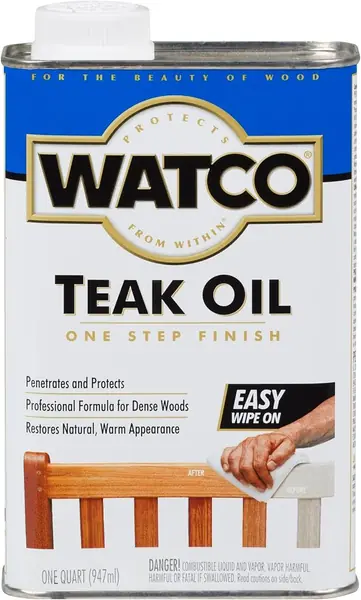
Watco Teak Oil Finish Best for Dense Hardwoods

Watco Teak Oil Finish quart can for teak, rosewood, and mahogany

Dense hardwoods

Shop Score 91/100
Size
1 quart (32 fl oz)
Coverage
Up to 170 sq ft
Dry Time
8 hours, tack free
Best For
Teak, rosewood, mahogany
View on Amazon

Eight hours to tack-free is the number that makes this one useful. Brush or wipe it on in the morning and you can handle the piece, flip it, or put it back in service the same evening, which is a different experience from an oil that wants a week of patience. A quart covers up to 170 square feet, roughly a dining set with some to spare.

It's built for dense woods — teak, rosewood, mahogany — where a thin oil can't do much more than sit on top. Watco's claim is that it protects from within rather than chipping, peeling, or wearing away, and it's rated for marine use above the waterline, so a shower bench or a boat's trim is fair game. Brush or wipe on, let it sit, wipe the excess off.

It does warm the wood noticeably, which is welcome on teak and mahogany and a visible change on lighter species. On a fresh piece, test a hidden spot first if you're attached to the original tone.

What we keep it for is speed and a hand-rubbed glow on dense hardwood — a big table, a set of chairs, anything where you'd rather be done by Sunday. It's a good, affordable way to bring teak back without a long cure, and the result looks like it took more work than it did.

Worth Noting

  • Dries to a sheen rather than matte
Our Verdict

The teak oil we suggest when you want to finish a whole dining set in a weekend: tack-free in about eight hours, with a quart covering up to 170 square feet.

Check Latest Price
8.

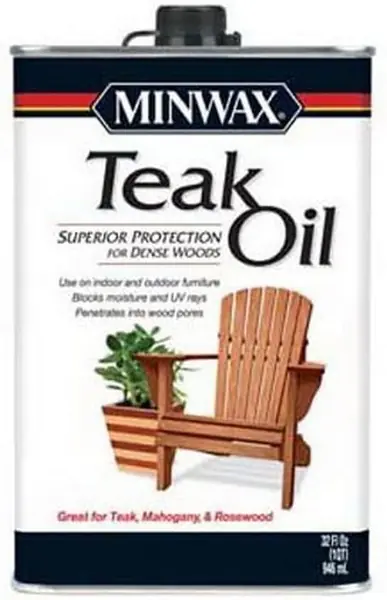
Minwax Helmsman Teak Oil Best for Large Outdoor Projects

Minwax Helmsman teak oil clear quart can for outdoor wood furniture

Large outdoor projects

Shop Score 90/100
Size
1 quart (32 fl oz)
Use
Indoor and outdoor dense woods
Coverage
Up to 250 sq ft
UV Protection
UV protection
View on Amazon

Two hundred and fifty square feet from a quart is the best coverage number here, and that's the reason this one earns a place. Feed a long fence, a pergola, or a whole patio set and the arithmetic matters more than the label copy. It's a clear teak oil for dense woods, rated for indoor and outdoor use and for marine surfaces above the waterline.

It does what a teak oil should: brings out the grain, warms the color, and leaves a water-resistant surface that shrugs off humidity. Application is brush-on and wipe-off with no special technique, and the coverage means you're not rationing the last inch of the can on the second chair.

Budget some care with the excess. Left on too thick, it can dry tacky and drag lint off a rag, so wipe it back hard, keep the coats thin, and give the piece air. A second thin coat the next day does more than one heavy one ever will.

For a big project on a budget, that's a fair trade. We use it on outdoor chairs and tables that need color and protection more than a furniture-grade finish; on a single teak bench you want to look special, we spend more and slow down.

Worth Noting

  • Behaves more like thin varnish than oil
Our Verdict

When the project is big and the budget is not, this is the teak oil we buy: up to 250 square feet per quart at the lowest price in this group.

Check Latest Price

How We Tested Exterior Wood Finishes

We built the shortlist from the labels first: film-forming or penetrating, UV blockers or none, listed coverage, sheen, and whether the maker names dense oily hardwoods or porous softwoods as the right surface. From there we filtered by price and container size until we had 12 finishes worth putting on real wood, from clear gloss films to a semi-transparent cedar stain.

Testing ran nine months. We cut cedar fence boards into panels, marked off square footage on each, and applied every product by its own directions with the same brushes and rags. A teak bench, a mahogany door, and two Adirondack chairs lived outside for the duration, while smaller sample boards sat on a south-facing railing in full afternoon sun. Once a month we looked for peeling, cracking, gray patches, and color shift, and we counted how far a quart actually went against the coverage number on the label.

Application habits got written down as they happened: brush marks and lap lines, whether back brushing smoothed a run, how long each coat stayed tacky enough to catch dust and pollen, and how sharp the solvent smell was in a garage with one door cracked open. We also noted which products needed sanding between coats and which could be refreshed with a wipe-on pass.

Oil-soaked rags and applicator pads were spread flat to dry outdoors before disposal, and every solvent-based varnish, urethane, and teak oil was opened with cross-ventilation and no pilot light or flame nearby.

How to Choose an Exterior Wood Finish

Film or Oil: Choose How You Want to Maintain It

A spar varnish or spar urethane builds a coat. It sheds water, carries UV blockers, and on vertical surfaces like doors, trim, and railings it can hold for years. But a film fails from the edges in — a crack lets water behind it and the sheet lifts, and the repair is sanding back to bare wood. A penetrating oil soaks in, can't peel, and gets refreshed with a rag, though it wants topping up once or twice a year.

We choose based on how much upkeep you'll actually do. Film suits the person who wants to forget it for three years; oil suits someone who prefers twenty minutes twice a season to a weekend of sanding.

Match the Finish to the Wood

Dense, oily hardwoods — teak, mahogany, rosewood — are what teak oils are formulated for, and they take oil deeply and evenly. Porous softwoods like pine and cedar drink the first coat and can go blotchy, so plan an extra coat and watch the end grain, which soaks up far more than a flat face. On wood that already wears paint or an old varnish, a film is the only thing that will sit on top convincingly; oil needs bare fiber to grab.

Do the Coverage Math Before You Buy

Coverage is where a can gets misjudged. A quart of spar varnish covers 75 to 150 square feet depending on how thirsty the wood is; a quart of teak oil can reach 250; a 24-ounce spray can of stain and sealer covers about 50. That last number is the trap — a can that size is for a railing or a fence section, not a deck. Measure the square footage, double it for a second coat, and add a little for end grain.

Dry to the Touch Is Not Dry Enough

The times on the label are touch-dry times, and they're honest: about two hours for a marine varnish, eight for a teak oil, one for a spray stain. None of them is a recoat time. Oil-based exterior finishes want a full day between coats, and cool or damp weather stretches that out; a coat applied too thick in humid air can stay tacky for days. Give yourself a dry 48-hour window and keep every coat thin.

Sheen, Color, and the Amber Question

Clear isn't colorless. Oil-based varnishes and urethanes carry a warm amber that deepens with each coat — flattering on oak, teak, and mahogany, unwelcome on white or light gray. Gloss throws light and shows every ripple; satin hides brushwork and looks more like waxed wood. A tinted stain and sealer changes the color on purpose, so it isn't the pick if you want the wood exactly as it stands.

Our rule: gloss on furniture that should look varnished, satin where brushwork will show, and matte oil on teak and anything you plan to touch a lot.

Frequently Asked Questions

Final Verdict

Our pick for most exterior wood is the Rust-Oleum Marine Spar Varnish. It builds a flexible, UV-resistant gloss film, covers 75 to 150 square feet per quart, and has the longest record in this group of holding up on furniture, trim, and railings. If a mirror finish isn't what you want, the Minwax Helmsman Spar Urethane gives you the same kind of protection in a soft satin.

And if the wood is teak and you would rather feed it than coat it, start with the Furniture Clinic Teak Oil — it brings silvered furniture back in one afternoon and never needs sanding off.