↑↓ navigate ↵ open Esc close All results →

Best Finishes for Cedar Wood of 2026

Bare cedar shrugs off rot and insects, yet it rarely stays the color it had coming off the planer. Left unfinished outside, it silvers to gray within a single season; indoors, alternating bands of grain drink finish at different rates, leaving one streak honey-amber while the next stays chalky pale.

Evaluating 14 cedar finishes over six months on an outdoor bench and planter exposed to rain and heat alongside an indoor chest and slat screen highlighted a clear rule about color. Every oil warms cedar toward amber, so keeping the wood pale calls for a clear film instead, trading an oil's easy rag-on maintenance for clarity that eventually wears first at board ends.

Both protective routes belong in a cedar shop depending on exposure, alongside food-safe jars suited to serving boards and kitchen counters that can be wiped or brushed on in a single afternoon.

Our Top Picks

The Best Finishes for Cedar Wood

1.

Furniture Clinic Teak Oil Best Overall
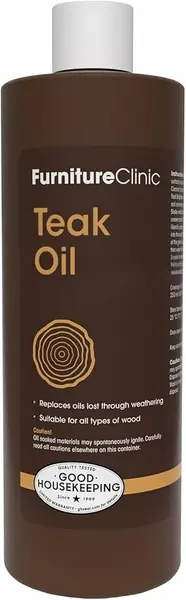
Bottle of Furniture Clinic Teak Oil, a clear wood oil for indoor and outdoor furniture

Outdoor cedar furniture

Shop Score 97/100
Size
17 fl oz
Base
Tung and linseed oil blend
Use
Indoor and outdoor
Finish
Natural matte
View on Amazon

Outdoor cedar has one predictable trick: leave it bare through a season of sun and rain and the honey-brown turns silver-gray. A UV-blocking oil is the simplest answer, and this tung-and-linseed blend is the one we keep coming back to. It's clear and thin, so it warms the wood without laying a coating over the grain, and it goes on with a rag: wipe it on, wait a few minutes, wipe the excess off. A pair of chairs is an afternoon.

It's one of only three finishes here rated for both indoor and outdoor wood, and that range is what makes it the default for cedar, which turns up on a porch railing and in a hallway chest with equal frequency. Once the oil cures, the wood takes a water-resistant seal rather than a skin, so a shower beads on a chair seat instead of soaking in, and there's nothing to crack when the boards swell in humid weather. The grain stays open and visible, which is most of the reason anyone chooses cedar in the first place.

Two things to plan for. A penetrating oil lives in the wood and wears out of it, so outdoor pieces want a fresh coat once a year — twenty minutes with a rag, not a strip and refinish. And it smells like oil while it cures, a food-oil scent that carries further on a still day; we minded it far less than solvent fumes, and it fades as the oil sets. Set against what a cedar chair costs to replace, an annual rag-and-oil afternoon is cheap maintenance.

Worth Noting

  • Needs a fresh coat outdoors each year
  • Oil smell lingers while it cures
Our Verdict

For cedar that lives outdoors, we keep coming back to this: a UV-blocking oil that feeds gray boards back to honey and seals them against rain.

Check Latest Price
2.

Hope's 100% Pure Tung Oil Best Natural Oil Finish

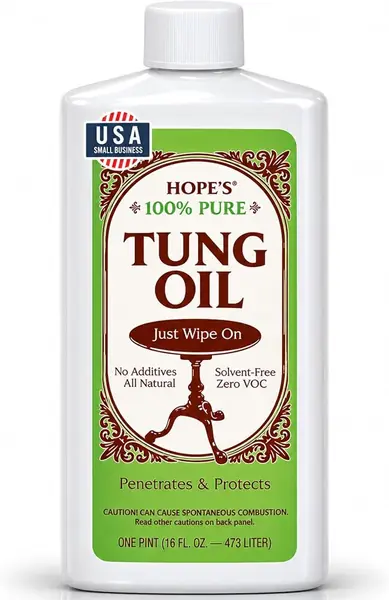
Bottle of Hope's 100 percent pure tung oil wood finish

Film-free natural look

Shop Score 96/100
Size
16 fl oz
Formula
100% pure tung oil
Food Contact
Safe once cured
Use
Indoor and outdoor
View on Amazon

Where a blended furniture oil is built for speed, this is one ingredient — 100 percent tung oil — and the slow cure is what you accept in exchange for that simplicity. We like it for cedar we want to touch: a chest lid, a shelf, the tray of a planter box. It sinks in rather than sitting up, cures to a flexible solid that isn't oily, and leaves the soft sheen of wood rather than the shine of a coating.

Applying it is the easy half. Wipe it on, give it time to soak, wipe off whatever the board won't take, and wait. A first coat on dry cedar disappears in minutes; the second sits on the surface longer, which is the sign the wood has had enough. The hard part is the calendar, because this is days between coats rather than hours, and a three-coat piece is a project that lives in the corner of the shop for two weeks.

Food contact is where pure tung oil earns its keep. Once fully cured it's considered non-toxic, which is why it's a standard on cutting boards and wooden utensils and why it suits cedar serving pieces and herb planters. The smell is nutty and strong while it's wet, so we open the shop door. A 16-ounce bottle stretches across more than one project, which softens a price that looks high next to a blend.

Worth Noting

  • Days between coats slows a project
  • Strong nutty odor while wet
Our Verdict

We pick this when the wood should still feel like wood — pure tung oil, food-safe once cured, with a cure slow enough to plan around.

Check Latest Price
3.

Odie's Universal Oil Best Hardwax Oil

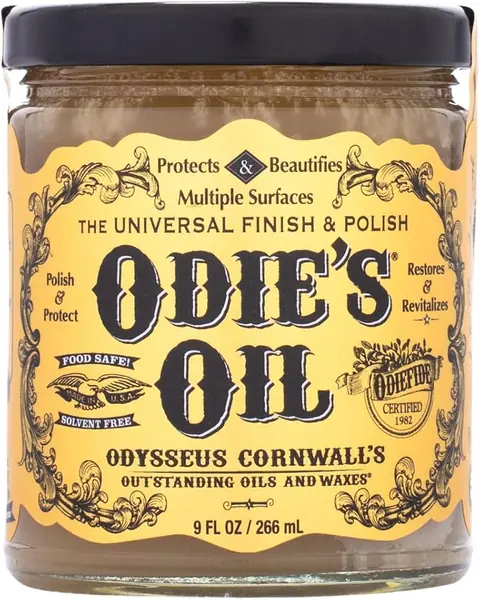
Nine-ounce jar of Odie's Universal Oil hardwax wood finish

Multi-surface one-jar finish

Shop Score 95/100
Size
9 oz
Formula
Solvent-free oil and wax blend
Food Contact
Safe once cured
UV
Natural UV inhibitors
View on Amazon

The price of this jar is the first thing anyone notices, and we hesitated over it too: nine ounces for what a quart of Danish oil runs. Then we looked at what it replaces — a solvent-free blend of natural oils and waxes that goes on wood, leather, metal, concrete, even stone, with no separate sealer and no sanding between coats.

On cedar it behaves like the hardwax it is. Wipe it on thin, let it set, buff it off, and you get a soft sheen that follows the grain instead of sitting on top of it. There are no chemical driers in it, it's food-safe once cured, and the natural UV inhibitors help outdoor pieces hold their color instead of going gray by August. We also came back for a second buff the next day, which is what turns a good finish into one that feels expensive under the hand.

That buffing isn't optional. While it cures, the surface goes tacky enough that dust and stray shavings stick to it, and a piece left unbuffed feels like a diner table. Thin coats and a moving rag solve it. It also takes very little per coat — a few drops spread a long way — and that is how a nine-ounce jar justifies itself against finishes sold by the quart.

Worth Noting

  • Tacky surface while it cures
  • High price for nine ounces
Our Verdict

A jar we hesitated over and then stopped doubting: one solvent-free hardwax finish for cedar, leather, and metal, buffed to a soft sheen.

Check Latest Price
4.

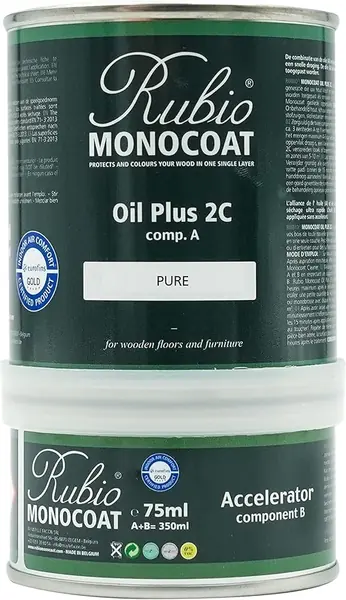
Rubio Monocoat Oil Plus 2C Best for Interior Cedar

Can of Rubio Monocoat Oil Plus 2C hardwax oil in Pure

Interior cedar furniture

Shop Score 94/100
Size
350 mL
Coats
One
Coverage
105–175 sq ft
VOC
0% VOC
View on Amazon

One coat. No lap marks. A 350-milliliter can covering 105 to 175 square feet. Those are the claims, and the one-coat part holds up: you spread it, buff it back, and the wood comes out sealed in a single pass, with no second dry time and no sanding between coats. For interior cedar that is a genuine shortcut.

The two-part mixing sounds fussier than it is. Part A is the oil, Part B the accelerator that lets it cure hard without the solvents a conventional finish needs, which is why the VOC content is zero and the smell is barely there. If you finish in a basement or a spare room, that difference is large. It's also certified for food contact and for wooden toys, which covers most of what a cedar chest or a kitchen shelf might be asked to hold.

Two cautions worth knowing before you open the can. Rubio lists this for interior floors, furniture, cabinetry, tables, and millwork, so a deck or a planter left out in the rain is the wrong job for it. And the 55-color range is best judged on offcuts rather than on screen: cedar varies enough from board to board that a sample chip and a finished panel can read as two different colors, and a test on the underside is the only reliable preview.

Worth Noting

  • Not for outdoor cedar or decks
  • Premium price for a small can
Our Verdict

The interior cedar finish we reach for when we want sealing and protection in one pass, with no solvent smell in the shop.

Check Latest Price
5.

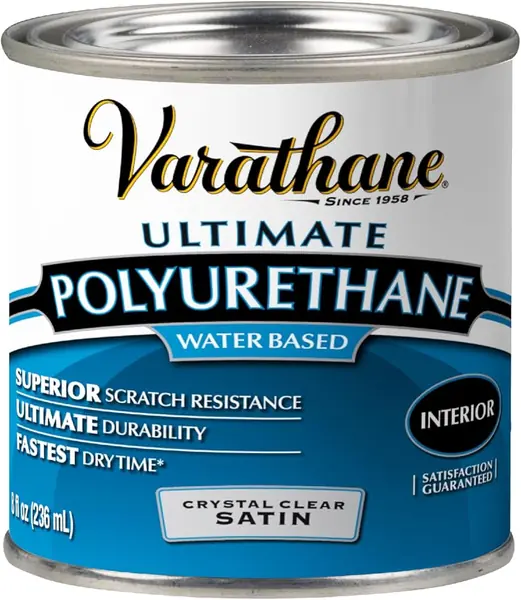
Varathane Water-Based Satin Polyurethane Best Clear Film Finish

Can of Varathane water-based satin polyurethane for interior wood

Keeping cedar pale

Shop Score 93/100
Size
Half pint
Base
Water-based
Sheen
Satin
Coverage
Up to 62 sq ft
View on Amazon

If the goal is to finish cedar without changing its color — pale, pinkish-brown, faintly striped — oil is the wrong tool, because oil warms the wood toward amber and keeps going darker with every coat. A water-based clear coat doesn't. This one brushes on milky and dries clear, and it's what we reach for when pale wood needs real protection rather than a drink.

Protection is the right word, because a film finish does something an oil can't: it builds a thin skin over the surface that takes the scratches and spills so the wood doesn't have to. The satin sheen here is a soft one, closer to hand-rubbed than to plastic gloss, and it brushes out thin, dries quickly, and cleans up with soap and water. That last part is why a water-based can stays on our bench while the oil-based one gathers dust.

The one claim that doesn't always hold is clarity. On pale cedar the finish disappears, but over darker wood a milky cast can show, so test a hidden face before committing to a whole panel. Thin coats with a light sanding between them keep the film even, and two or three of them on a tabletop give a surface that stands up to daily use without the amber shift that comes with oil.

Worth Noting

  • Not rated for exterior use
Our Verdict

Our choice for cedar you want to stay pale: a clear water-based film that protects the wood without adding amber.

Check Latest Price
6.

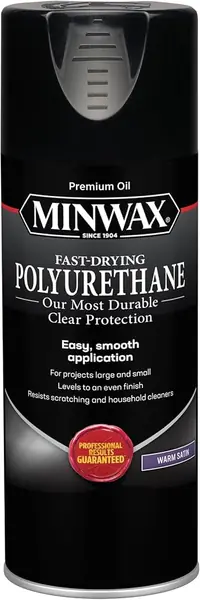
Minwax Fast Drying Polyurethane Spray Best for Detail Work

Aerosol can of Minwax fast drying clear satin polyurethane spray

Slats and louvers

Shop Score 92/100
Size
11.5 oz aerosol
Base
Oil-based
Sheen
Satin
Recoat
4–6 hours
View on Amazon

Louvered closet doors, chest slats, spindle backs, the inside of a small box: cedar projects are full of shapes a brush can't get into without sags and brush marks. An aerosol reaches them. This is the can we keep on the shelf for that work — 11.5 ounces of oil-based satin poly that goes on in passes, is ready to recoat in four to six hours, and leaves no brush to clean.

Satin is the right sheen for cedar. It doesn't flatten the grain the way gloss does, and the oil-based formula adds a slight warmth that suits cedar's own color better than it suits pale maple or pine. Light passes beat a wet one; two or three thin coats, spaced by the recoat window on the can, give an even film, and heavy coats are where runs come from.

The trade-off is cost per square foot. An aerosol puts much of its contents into the air rather than onto the wood, so the same area takes more cans than it would quarts, and the nozzle can spit and dribble if it isn't kept upright and cleared between passes. For a small piece, a set of slats, or a repair in the middle of a finished panel, no brush-and-cleanup routine comes close to that speed.

Worth Noting

  • Costs more per square foot than liquid
  • Designed for interior wood only
Our Verdict

For slats, louvers, and small parts, this aerosol gets finish where a brush can't and recovers in a few hours.

Check Latest Price
7.

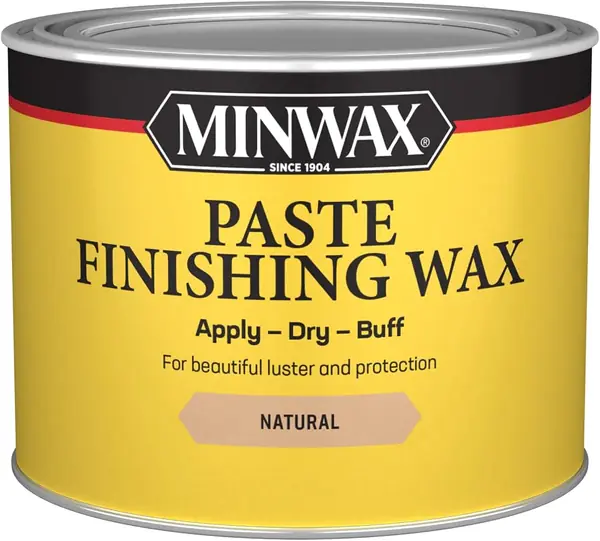
Minwax Paste Finishing Wax

One-pound can of Minwax paste finishing wax in natural

Buffable interior topcoat

Shop Score 91/100
Size
1 lb
Coats
2 recommended
Form
Paste
Dry Time
10–15 minutes
View on Amazon

The first place our can of Minwax paste wax went wasn't a piece of furniture — it was the cast-iron top of a table saw, where a thin rub makes boards glide across the table with noticeably less effort. That's a use most people never get to, and it alone justifies keeping a can within reach of the bench.

On cedar its job is more modest: a thin film that adds luster, depth, and a slick feel, so a box lid and a chest front read as polished rather than coated. Minwax labels this for projects that don't need a hard protective coat of polyurethane, and that's the right way to think about where it belongs in a finishing schedule.

The method is a thin coat, ten to fifteen minutes of drying, then a buff with a clean cloth; two coats beat one. Too much paste is the classic mistake, since a heavy coat dries chalky and takes real elbow grease to level, and a cold shop makes the paste stiff and crumbly — warm the can in your hands or work the wax between your fingers first. Cleanup is mineral spirits.

A pound of paste lasts years at that rate, which makes it the cheapest way to upgrade the feel of a finished piece and to keep a planer bed slick. It's the last five minutes of a project, and it's worth owning for that alone.

Worth Noting

  • Made for interior wood only
Our Verdict

A can that earns its place twice, as a buffable topcoat for interior cedar and as maintenance for planer beds and saw tops.

Check Latest Price
8.

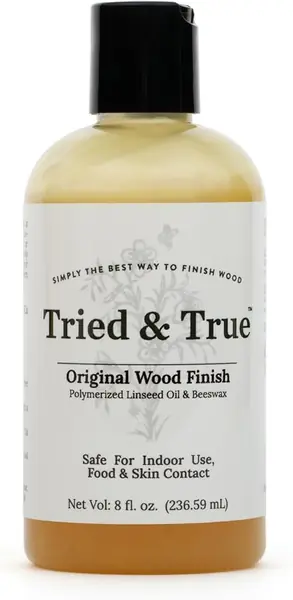
Tried & True Original Wood Finish

Bottle of Tried & True Original wood finish, linseed oil and beeswax

Food-safe interior cedar

Shop Score 90/100
Size
8 fl oz
Formula
Polymerized linseed oil and beeswax
Food Contact
Safe once cured
Solvent
Solvent-free
View on Amazon

We opened the bottle expecting the usual solvent bite and got almost nothing: a faint, waxy smell closer to a candle than to a can of finish. That's the whole point of the formula — polymerized linseed oil blended with filtered beeswax, no petroleum distillates and no metallic driers — and it changes how pleasant a finishing session is, especially in a small shop.

The look is a warm matte, with grain that stands up instead of being buried, and because there's no hard film, a scratched panel is fixed with another coat rather than stripped. It's safe for food contact and for children's pieces, which is most of why people seek it out for boards, utensils, and toys. Cedar takes it well, with a slightly honeyed tone rather than a dark amber shift.

The method takes patience. Sand to at least 320, wipe the oil on, buff it dry, wait a day, burnish with fine steel or synthetic wool, and repeat until the surface stops drinking. A day between coats is normal, and some pieces stay tacky longer than that, so the realistic plan is short sessions across a week rather than a single afternoon.

The eight-ounce bottle is small for a big project and the schedule is slow, so this is a finish for pieces worth spending a week on. What you get back is a surface that beads water instead of soaking it up, feels dry rather than greasy a day after the last coat, and takes another wipe years later without any stripping.

Worth Noting

  • A day between coats
  • Small bottle for larger projects
Our Verdict

The finish we hand someone making a cedar chest for a child: solvent-free linseed and beeswax, safe for food and hands.

Check Latest Price

How We Tested Cedar Finishes

We started with close to 30 finishes and read each one's directions before touching a board. We wanted a stated base — oil, water-based film, wax — a recoat or dry time, and a coverage estimate, since cedar's movement makes those numbers matter more than they do on oak. From there we filtered by interior versus exterior use, penetrating versus film-forming, and container size against a bench-sized project. Fourteen made the cut.

Testing ran six months. A cedar bench, planter, and slat screen sat outside through rain, sun, and one long heat wave; an interior chest, a shelf, and a serving board stayed in the shop and the kitchen. We applied each finish the way its maker specifies — rag, brush, or aerosol — and noted how far a pass stretched on vertical slats and end grain, whether it soaked in or pooled on top, and how long it stayed tacky before a recoat.

Then we judged results. Every finished board sat next to an unfinished control under the same light, checked at one day and again at one month, which is where the amber shifts, the pale clears, and the tinted tones separated. We ran a hand and then a rag over each cured surface to see whether it felt like wood or plastic, and measured how far a container actually went against the coverage printed on it. Odor was judged an hour after application and again after full cure, in a closed room and in a ventilated shop.

Durability came down to water beading on the outdoor pieces, checking at the board ends, and whether a scuff needed another coat or a sanding. For the food-contact finishes we waited out the full cure and smelled the board before anything edible touched it; oil-soaked rags went flat on the driveway to dry, never in a pile.

How to Choose a Finish for Cedar Wood

Start With Where the Piece Will Live

A finish labeled for interior use only will fail on a cedar chair left out in the rain, and the failure is ugly: white blush, peeling patches, gray wood underneath. Check the label first. Outdoors you want both water resistance and UV blockers, because sun grays cedar faster than rain rots it. Indoors the field opens up, and film finishes, waxes, and one-coat hardwax oils all make sense on a chest or a table, where you're protecting against wear rather than weather.

Decide Between a Penetrating Oil and a Film

An oil goes into the wood and leaves the grain open. A film — polyurethane, varnish, lacquer — builds a skin on the surface. On cedar that distinction matters more than it does on oak, because cedar moves a lot with humidity and its extractives can interfere with a coating's grip. Outdoors, a film eventually cracks along the grain as the boards swell and shrink, which is why penetrating oils dominate exterior cedar. Indoors, on a tabletop or a chest lid that takes daily abuse, a film earns its keep.

Think about repair while you're deciding. An oiled piece is refreshed with another coat and no sanding; a failed film has to be sanded back to bare wood before anything else goes on. On a large panel, that difference is the whole argument.

Expect the Color to Move, and Watch for Blotching

Cedar doesn't take pigment evenly. The soft earlywood drinks stain while the harder bands between the grain resist, and the result is a blotchy, tiger-striped surface that extra wiping won't fix. A pre-stain conditioner or a thin wash coat before any pigment goes on is the standard defense, along with a test patch on the underside of the piece.

Clear finishes have their own color question: every oil warms cedar toward honey, and every water-based clear leaves it pale. Neither is more correct, but they are not interchangeable, and the amber happens faster than most first-timers expect.

Buy for the Shape and the Square Footage

Coverage figures are the honest way to size a purchase: a half pint of the Varathane covers up to 62 square feet, while a 350-milliliter can of Rubio covers 105 to 175 in a single coat, so the small containers here go further than their size suggests. Match the applicator to the shape, too. Slats, louvers, and the insides of boxes are aerosol work; flat panels go faster with a rag or a brush, and a rag wastes less.

Plan on Maintenance Before You Pick

Nothing here is permanent. A penetrating oil on outdoor cedar wants a fresh coat once a year, and more often on horizontal surfaces like a bench seat or a planter rim where water sits. A film lasts longer but fails at the edges and joints first, where moisture gets under it. Wax is a finish you re-buff whenever the sheen goes flat. Buy the finish you'll actually maintain, because a modest oil refreshed every spring beats an expensive coating left to crack.

Frequently Asked Questions

Final Verdict

For most cedar projects, the Furniture Clinic teak oil is the finish we recommend. It's one of the few here rated for both indoor and outdoor wood, it blocks enough UV to keep an outdoor piece from graying in a season, and it seals out water without laying a film that will crack as the boards move.

If the piece will be handled or will touch food, choose Hope's pure tung oil instead. If the cedar is interior and you want it to stay pale, or it takes daily wear on a tabletop, the Varathane water-based poly keeps the color light and adds a film with real scratch resistance.