General Finishes Oil Base Gel Stain Best Overall
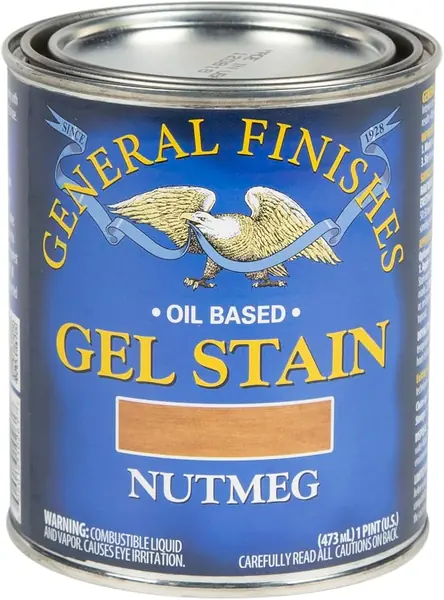
- Size
- 1 pint
- Coverage
- 35-50 square feet
- Base
- Oil-based gel
- Color
- Nutmeg
Stain goes blotchy on pine for a structural reason. The pale earlywood drinks pigment while the darker latewood bands barely take it, so a thin penetrating stain dries in stripes and patches no amount of extra sanding will fix. General Finishes' gel is heavy-bodied enough to sit on the surface and stay where you wipe it, and the maker names pine among the difficult woods it is built for. That combination is why it is our pick here, where even color is nearly the whole job.
What we appreciate most is the control it gives you. It goes on with a cloth or a foam brush without dripping or splashing, and you can work a section, look at it, and wipe back before it sets. Nutmeg is a warm mid-brown that suits pine's own tone without going orange, and a pint covers 35 to 50 square feet — a small table, a shelf, or a run of cabinet doors.
It is closer to a colored film than to a classic stain, though, and that is the line to check yourself against. It will not sink in and lift the grain the way a thin oil stain does, so if your pine has figure worth showing, choose a clear finish instead. This is a product for making pine look deliberate, not for making it look untouched.
Because it colors without protecting, plan on a topcoat before the piece goes into service. Work in sections, keep a wet edge, and judge the color in daylight rather than under shop lights before you commit to a second coat. Do that and pine takes on a depth of color that usually costs a lot more lumber.
What We Like
- Heavy gel body resists blotching on soft pine
- Wipe-on application stays controllable while wet
- A pint covers 35 to 50 square feet
Worth Noting
- Long, uneven drying between coats
We recommend the gel stain as the most reliable way to get even color on pine, where a thin stain usually blotches; expect a paint-like result and a long dry.
Check Latest Price