↑↓ navigate ↵ open Esc close All results →

Best Finishes for Purple Heart Wood to Keep Its Color

Purpleheart shows up as a hard, dense, startling violet, and then a few months of window light slide it toward brown. A finish can't freeze that color, but it can slow it, and it decides the rest: whether the surface stays water-clear or turns amber, whether a cutting board is safe to eat off, and whether the coat you brushed on at ten at night is still tacky at breakfast.

We put 14 finishes on purpleheart over seven months: wipe-on oils, hardwax blends, an aerosol, a water-based film, shellac, and a lathe friction polish. They went onto a side table, a cutting board, a turned bowl, and boards on an outdoor rail, and we judged them on what actually annoys people — lap marks, smell in a closed shop, slow recoat windows, and coats that dry grainy instead of level.

One lesson up front: purpleheart's violet is more UV-sensitive than picky about sheen, so a clear, non-yellowing formula is the safer default, and anything warm-tinted pushes the wood toward burgundy. A lathe, a salad bowl, and an outdoor bench each want something different, and this list covers all three.

Our Top Picks

The Best Finishes for Purple Heart Wood to Keep Its Color

1.

Odie's Universal Oil Best Overall
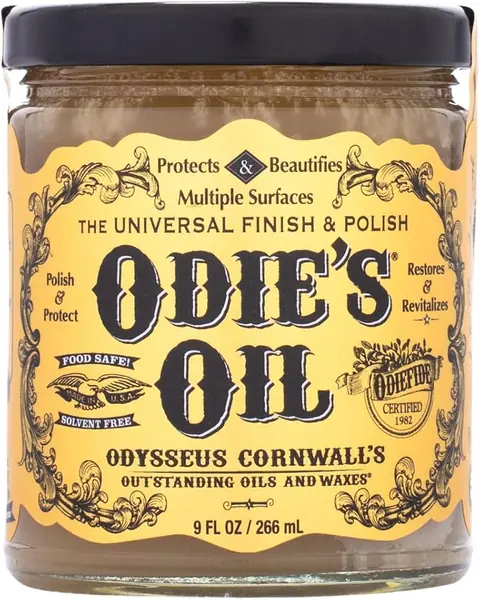
Odie's Universal Oil nine ounce jar of clear hardwax wood finish

Exotic hardwood furniture

Shop Score 97/100
Finish Type
Solvent-free hardwax oil blend
Sheen
Achieve any sheen level
Coverage
Up to 270 sq ft per 9 oz jar
Food Safe
Yes once cured
View on Amazon

Nine ounces does not sound like much until the coverage claim lands: up to 270 square feet from one jar. There are no solvents in Odie's Universal Oil to evaporate away, so nearly everything you wipe on stays on the board, and one jar outlasts the shelf of half-used cans most of us have accumulated.

What earns it the top spot is tone. The solvent-free blend of natural oils and waxes is built for clarity, and the purple in our test pieces stayed purple instead of drifting toward amber the way it does under a warm oil. Natural UV inhibitors in the formula resist yellowing, which matters for anything within range of a window, and the finish is food safe once cured. Application is the other half of the appeal: wipe it on, wait, buff it off, with no sanding between coats and nothing to mix.

The objection is cost. This is the priciest finish on our list, and the jar looks small next to a quart of polycrylic. Run the coverage numbers and the gap narrows considerably, which is why we keep it for furniture and small gift pieces rather than rationing it for something special.

Worth Noting

  • Premium price for a small jar
  • Stays tacky when applied too heavily
Our Verdict

Our default for purpleheart: a clear hardwax oil that deepens the purple without a yellow cast and covers far more area than its small jar suggests.

Check Latest Price
2.

Deft Clear Satin Lacquer Best Clear Spray Finish

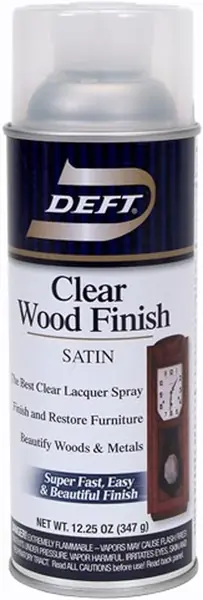
Deft clear satin lacquer in a 12.25 ounce aerosol spray can

Small wood projects

Shop Score 96/100
Finish Type
Nitrocellulose lacquer aerosol
Sheen
Satin
Coverage
About 12 sq ft per can
Dry Time
Touch-dry in 30 minutes
View on Amazon

Lacquer is the finish we trust most when a color has to survive untouched. Deft's nitrocellulose formula dries clear and is non-yellowing, and the maker lists rosewoods and other exotic hardwoods among the woods it suits, the same dense tropical stock that purpleheart belongs to. Satin is the right call here too: it kills the glare without the plastic look a gloss film gives a small box.

The aerosol is what makes it practical. Nothing to mix, no gun to clean, and the self-leveling formula needs no sanding between coats. A coat is touch-dry in about 30 minutes, so a pen blank or a small frame can take several passes in one session, and the cured film resists alcohol and water better than shellac does.

The trade-off is scale. An aerosol can goes only so far, so treat this as a small-project finish rather than a furniture-scale one; a table or a long shelf wants a brushing lacquer or a water-based coat instead. Test the nozzle on scrap before you point it at finished work, because a sputtering tip is the quickest way to ruin a good coat.

Worth Noting

  • Coverage limited to about 12 square feet
Our Verdict

This is the clearest film finish here: a non-yellowing lacquer that sprays onto small purpleheart pieces in minutes and never muddies the wood.

Check Latest Price
3.

Birchwood Casey Tru-Oil Best Build-Up Finish

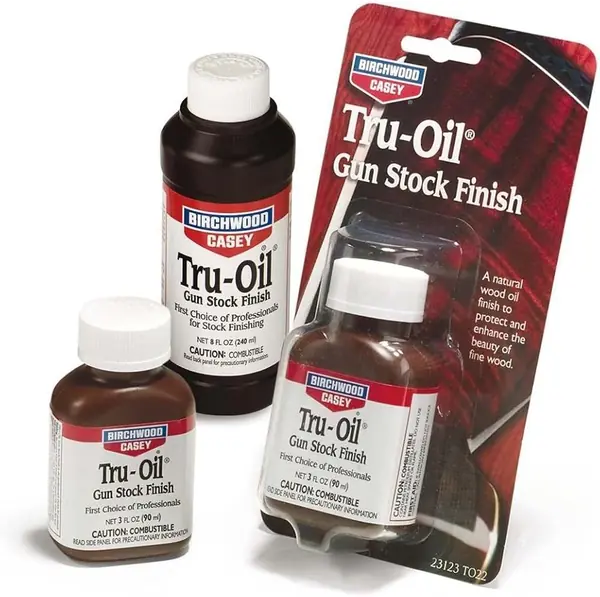
Birchwood Casey Tru-Oil stock finish in a small three ounce bottle

Small turned pieces

Shop Score 95/100
Finish Type
Linseed and natural oil blend
Size
3 fl oz
Build
Layers into a hard film
Water Resistance
Resists water once cured
View on Amazon

Tru-Oil started life as a gun stock finish, and that history explains its behavior: a linseed and natural oil blend that builds a thin, hard film instead of soaking in and stopping. Stock makers wanted a finish that would not cloud or yellow on walnut, and that same property is what makes it interesting on a colored wood.

We keep a bottle for knife scales, tool handles, and small turnings, because the maker states it will not cloud, yellow, or crack with age, the three ways a clear film usually spoils purpleheart. It also builds. Each coat is thin, but three or four of them start to read as depth rather than coating, and the cured film resists water rather than spotting under a damp glass.

Think of it as a bench finish for pieces you can hold in one hand. It rewards patience with a surface that looks sprayed, hardens fast enough to recoat in a couple of hours, and holds the wood's own color instead of laying a brown cast over it. A tabletop, a cabinet run, a deck: those want something you can flood on with a rag or a brush.

Worth Noting

  • Small three-ounce bottle limits large projects
Our Verdict

We reach for this when we want a hard, glassy build on knife scales or small turnings without the film turning yellow with age.

Check Latest Price
4.

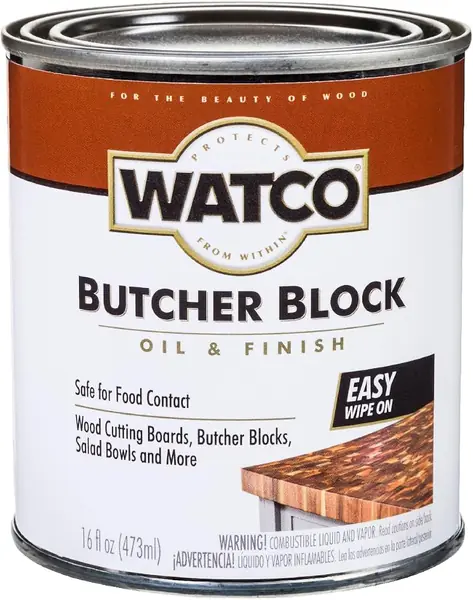
Watco Butcher Block Oil & Finish Best for Food-Contact Pieces

Watco Butcher Block clear oil and finish in a one pint can

Food-contact pieces

Shop Score 94/100
Finish Type
Tung oil alkyd resin
Coverage
50 sq ft per pint
Food Safe
Yes once fully cured
Recoat Time
After 6 hours
View on Amazon

Clear on a finish label means no pigment was added, not that the wood comes out the same color it went in. Most of the oils in this group warm the tone at least a shade. Watco's butcher block formula is the one that barely moves it: a tung-oil alkyd resin with no pigment, so purpleheart keeps its own hue instead of trading it for amber.

Application is classic wipe-on. Thin coats go on with a soft cloth, about six hours apart, and the maker wants 72 hours of cure before the piece goes into service, so start a board well before you plan to use it. Once dry it is rated for food contact, and a pint covers about 50 square feet.

That combination is why we hand it to anyone building a purpleheart cutting board or a serving platter: the color stays honest, the surface is rated to touch food, and the piece looks like wood rather than like a coating. On a board that gets used and washed, that is the right trade to make.

Worth Noting

  • Feeding oil needs periodic top-ups
Our Verdict

Buy it for pieces that meet food: a pigment-free tung oil that leaves purpleheart's color alone and is rated safe for contact once cured.

Check Latest Price
5.

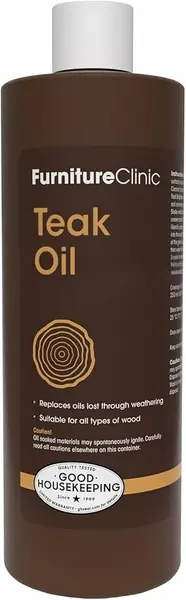
Furniture Clinic Teak Oil Best for Outdoor Projects

Furniture Clinic teak oil in a 17 fluid ounce bottle

Outdoor wood furniture

Shop Score 93/100
Finish Type
Tung and linseed oil blend
Sheen
Natural matte
Size
17 fl oz
UV Protection
Added UV inhibitors
View on Amazon

The cheapest oil here is also the one we hand to anyone finishing a purpleheart bench, planter box, or patio table. Furniture Clinic's teak oil is a clear tung and linseed blend with UV inhibitors added to the formula, and UV is what matters most on a colored wood that lives outside.

It goes on with a lint-free cloth: rub it in, give it a few minutes, wipe off the excess. The result is a natural matte rather than a build, so the grain stays open and the piece reads as oiled wood. The bottle is large for the money and a little goes a long way, which is the main reason it makes sense on anything bigger than a box.

Outdoors, treat it as maintenance rather than a one-time job: it seals and repels water while it is fresh, and the renewal coat is a rag job rather than a sanding project. Pick a dry stretch, wipe on, wipe off, and let the piece sit a day before it goes back out.

Worth Noting

  • Linseed content warms the tone over time
  • Oil smell lingers indoors for days
Our Verdict

Our value pick for outdoor work: a clear tung and linseed oil with UV inhibitors, priced so you can renew a bench every year.

Check Latest Price
6.

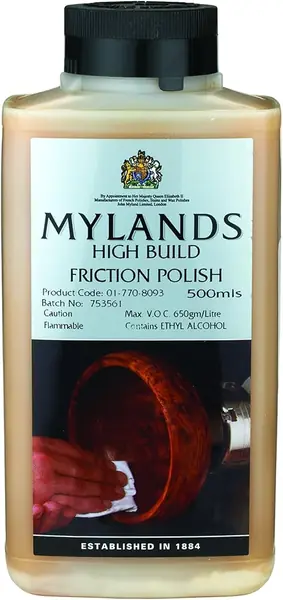
Mylands High Build Friction Polish Best for Turned Pieces

Mylands high build friction polish in a 500 ml bottle

Lathe-turned pieces

Shop Score 92/100
Finish Type
High build friction polish
Sheen
Satin to high gloss
Size
500 ml
Dry Time
Almost instant
View on Amazon

Before purpleheart is a tabletop it is a pen blank, a tool handle, or a small bowl, and friction polish is the one finish here built specifically for the lathe. Applied against spinning work, it sets from the heat of the friction almost instantly, so several coats go on in the time a sprayed finish takes to flash off.

This version builds fast and finishes smooth. On its own it leaves a satin sheen; over a cellulose sealer it goes to a hard, bright gloss, which is the trick for turners who want a finish that looks cast rather than rubbed. The 500 ml bottle lasts through a long run of small pieces.

We rate it as a turning-shop answer rather than an all-purpose finish. It does nothing for a flat panel or a tabletop, and it should not be asked to. On a pen blank or a bowl it puts a clear, glassy shine over the purple without burying the grain, which is a narrow job done very well.

Worth Noting

  • Requires a running lathe to apply
  • Premium price for occasional use
Our Verdict

For pen blanks and small bowls coming off the lathe, this friction polish builds a glassy, color-true shine in minutes.

Check Latest Price
7.

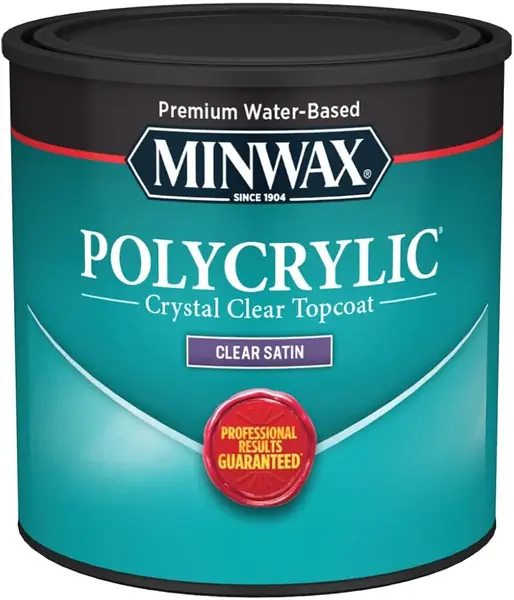
Minwax Polycrylic Clear Satin

Minwax Polycrylic clear satin water-based finish in a half-pint can

Indoor furniture

Shop Score 91/100
Finish Type
Water-based polycrylic
Sheen
Satin
Cleanup
Soap and water
Recoat Time
2 hours
View on Amazon

This is the finish we suggest when the work has to happen indoors: a basement in winter, a spare room, a kitchen table after the kids are down. Minwax's Polycrylic is water-based, so there is no solvent smell to ventilate and the brush rinses under the tap.

The clarity is the point. It does not add the amber that oil-based varnishes do, and the satin sheen keeps a small piece from looking lacquered. Recoats go on after two hours, which is quick enough to lay three thin coats on a box in an evening without rearranging the shop.

Where it can disappoint is in the wood itself. A film sits on the surface, so purpleheart never gets the deepened, wet look a penetrating oil gives it; the color you seal is the color you keep. Two or three thin coats, lightly scuffed between, give an even satin without runs.

We reach for it when a purpleheart piece has to take handling, like a box lid, a shelf, or a small side table, and the priority is that the purple stays exactly where it started. The clear coat does the protecting; the wood underneath stays the color it was.

Worth Noting

  • Half-pint can is small for big projects
Our Verdict

A water-based coat that stays perfectly clear, our choice when a purpleheart piece needs a film and you are working indoors.

Check Latest Price
8.

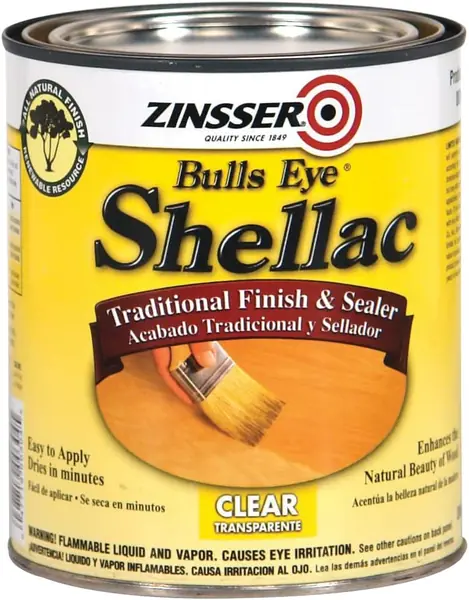
Zinsser Clear Shellac Best for Sealer Under Topcoats

Zinsser Bulls Eye clear shellac in a one quart can

Sealer under topcoats

Shop Score 90/100
Finish Type
Alcohol-based clear shellac
Size
1 quart
Dry Time
Fast-drying
Cleanup
Ammonia and water
View on Amazon

Shellac does two jobs that nothing else here handles as neatly: it seals bare wood in minutes, and it locks down whatever is underneath so knots and stains cannot bleed up through a topcoat.

Zinsser's clear version dries transparent with only a faint golden cast, far lighter than an oil varnish, and it takes a recoat in minutes. Cleanup is ammonia and water, which makes sense once you register that the solvent is alcohol rather than oil. A quart covers a lot of small work.

It is rarely the last thing we put on a piece. Clear shellac works as the sealer and barrier coat, and over it we can build lacquer or polycrylic on a surface that is already sealed and stable, which is exactly what you want under a film.

Our use for it on purpleheart is the first coat: seal the wood, hold the color, then decide what goes on top. When we want a fast, clear barrier that will not push the wood toward brown the way an oil does, this is the can we open.

Worth Noting

  • Soft film that water and heat mark
Our Verdict

We use it as a fast, clear barrier coat under lacquer or polycrylic, and it seals purpleheart in an afternoon.

Check Latest Price

How We Tested Purpleheart Finishes

We started with spec sheets and technical data rather than label promises, sorting candidates by finish family — penetrating oil, building oil, film, and friction polish — and by how far a can or jar realistically stretches. We leaned toward products that spelled out what's in the can and how long to wait between coats, because on an oily, dense exotic those details decide whether the whole job goes sideways.

Over seven months we tested 14 finishes on purpleheart offcuts and on real pieces: a side table that lives by a window, a cutting board washed after every use, a turned bowl, and a row of boards on a south-facing deck rail. We wiped, brushed, and sprayed per each label, with the garage door up and a fan running for the aerosol and the shellac. Every board got photographed in the same light at the start and again every two weeks, so we could see the violet drift toward brown or gray, and whether the cured film stayed clear or nudged the wood amber.

We watched texture closely — whether a first coat raised grain, whether a sprayed pass landed level or came out with orange peel and spatter, whether sanding between coats gave a smooth surface or gummy nibs. Durability got the blunt treatment: water rings, a hot mug, a fingernail drag, and coverage tracked coat by coat so we knew what a pint actually bought. Boards and serving pieces were only called food safe once fully cured, and every oil-soaked rag was spread flat to dry or submerged in water before it went near a bin.

How to Choose a Finish for Purple Heart Wood

Clarity comes before sheen

A finish labeled clear has no pigment added; that is the whole promise. Tung and linseed oils, Danish oil blends, and oil-based varnishes still cure with a warm cast that pulls purpleheart toward brown, and the shift compounds with every coat. When the color is the reason for the project, start with finishes built to stay neutral: water-based polycrylic, nitrocellulose lacquer, a hardwax oil made for clarity, or Watco's pigment-free butcher block formula.

Sheen is a separate decision. Satin and matte read as wood; gloss builds depth but shows every sanding scratch. On a small piece with figure, we want satin so the color does the talking.

Decide how much sun the piece will see

Purpleheart's color is not permanent. Light breaks it down, which is why an outdoor bench drifts gray-brown while a box kept indoors holds its purple for years. Finishes with UV inhibitors in the formula, which Odie's hardwax oil and Furniture Clinic's teak oil both name, are the ones worth choosing for anything that lives outside.

Treat that as slow-down, not protection. No coating here makes an exterior piece permanent, so if the color is what sold you, plan the placement as carefully as the finish and expect to renew the oil as the surface dulls.

Oil, film, or something in between

An oil soaks in, deepens the color, and leaves the grain feeling like wood. It also offers the least protection and wants renewing. A film such as lacquer, polycrylic, or shellac under a topcoat sits on top and takes the abuse, which is why we choose a film for anything handled often.

Between them sits a building oil like Tru-Oil, which hardens into a thin film without looking sprayed, and a friction polish like Mylands, which only makes sense with a lathe turning under it.

Match the method to the piece

A flat panel and a pen blank do not want the same delivery system. Aerosol lacquer reaches small, shaped pieces with no equipment at all; a rag handles a table; friction polish needs a spinning lathe. None of that is about quality, it is about how the finish gets onto the wood without pooling.

Food contact narrows the field further. If the plan is a purpleheart cutting board or a serving piece, buy a finish rated safe for contact once cured, like Watco's butcher block oil, rather than assuming a clear film is harmless because it looks clean.

Frequently Asked Questions

Final Verdict

Odie's Universal Oil is what we put on purpleheart when the color is the point: clear enough to keep the purple true, easy enough to apply with a rag, and generous enough that one jar covers a long run of small projects.

If you want a film rather than an oil, Deft's satin lacquer sprays onto small pieces and stays colorless, and for anything headed outdoors the Furniture Clinic teak oil costs little enough to renew without wincing.