↑↓ navigate ↵ open Esc close All results →

Best Finishes for Interior Wood Doors of 2026

Vertical stiles, eye-level raking light, and constant hand contact around the latch turn an interior door into a magnet for drips, lap marks, and early wear. A reliable door finish levels smoothly without sagging, resists skin oils and keys, and keeps primed panels or stained hardwood true to color.

Over eight months of brushing and wiping 14 water-based clears, oil urethanes, shellac, gel stain, oil, and wax across primed doors, bare oak, and previously coated panels—both flat on sawhorses and hanging in the frame—cure schedules proved more important than marketing claims. A finish that feels dry to the touch in an hour can still bruise against a weatherstrip if it lacks a fast, hard rehang cure.

Pale trim enamels, rich gel stains, and clear topcoats each balance sheen, coverage, and cleanup differently depending on whether the door starts bare or over an existing coat.

Our Top Picks

The Best Finishes for Interior Wood Doors

1.

Minwax Polycrylic Water-Based Protective Finish Best Overall
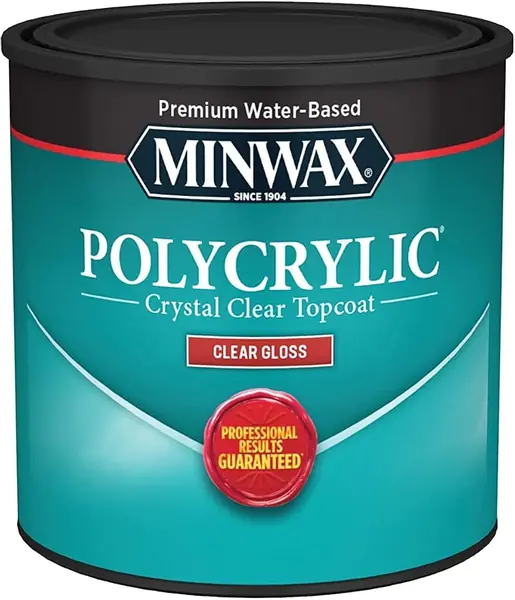
Minwax Polycrylic clear gloss water-based protective finish in a half-pint can

Pale painted doors

Shop Score 97/100
Base
Water based
Coverage
Up to 150 sq. ft. per 0.5 pints
Sheen
Gloss
Recoat Time
2 hours
View on Amazon

A white or primed door is where a bad clear coat announces itself: two summers in, the panels have gone the color of weak tea. Polycrylic is the finish we hand anyone who wants the door to stay the color it is now. It goes on milky and turns clear as it cures, and it stays clear — over maple, ash, or birch, or over a water-based or oil-based stain, it leaves the door looking unfinished in the best sense.

Water-based changes the work itself. You can recoat after two hours and rinse the brush at the kitchen sink, which matters when the door is in a hallway and the nearest slop sink is a flight away. The protection is real against the scuffs a door collects from shoulders, keys, and a dog pushing through, and the film goes down thin enough that three coats with a light scuff between them fit into one evening.

Two practical notes. The sheen here is gloss, and gloss on a big flat slab catches the light and shows every ripple in the panel — in a bright hallway, satin is the friendlier look. And this is a half pint, listed at up to 150 square feet, which disappears fast once you are three coats into a two-face door with edges and jambs to match.

Worth Noting

  • Half-pint can is tight for a multi-door job
Our Verdict

We recommend Polycrylic for any interior door that should stay white, primed, or pale — it dries clear, stays clear, and lets you put three coats on in an evening.

Check Latest Price
2.

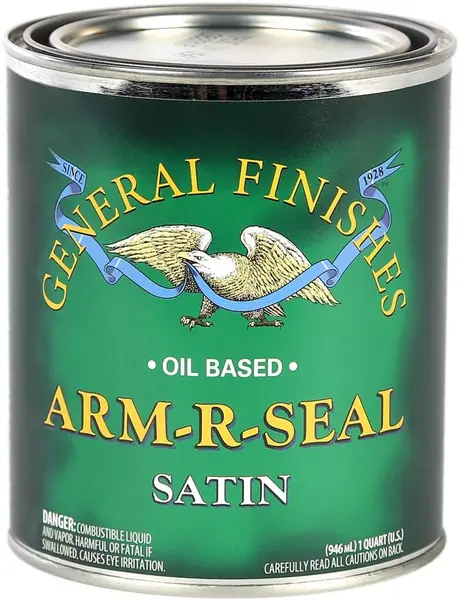
General Finishes Arm-R-Seal Oil-Based Topcoat Best Satin Film for Stained Wood

General Finishes Arm-R-Seal satin oil-based topcoat in a one-quart can

Stained hardwood doors

Shop Score 96/100
Base
Oil-based urethane
Coverage
100-125 Sq.ft
Sheen
Satin
Size
1 Quart
View on Amazon

The most expensive can in this group is a quart of urethane resin you wipe on with a rag, and the reason woodworkers keep buying it is in the result: a satin film you can build and rub out until it looks like it came from a shop rather than a can. On a stained oak or walnut door, that is the difference between a finish and a piece of furniture.

We apply it with a folded T-shirt scrap rather than a brush. Wiping gives you control on a stile or a door edge, where a brush loads too much and sends a run down the panel, and the oil-based film stays open long enough to level — which is why it ends up flatter than a fast-drying water-based coat. Two thin passes beat one heavy one; a thick coat worked too long with a rag is exactly how streaks happen.

A quart covers 100 to 125 square feet, so it is one door at three coats or two doors at one — the can looks expensive until you divide it that way, and then it looks like what it is: a finish worth using on the door everyone sees. The recipe is dull, wipe and wait and scuff and repeat, and the result is not.

Worth Noting

  • Amber cast muddies white and gray doors
  • Mineral spirits cleanup instead of soap and water
Our Verdict

We reach for Arm-R-Seal when the door is stained oak or walnut and deserves a satin film that levels itself out — the can costs more and earns it.

Check Latest Price
3.

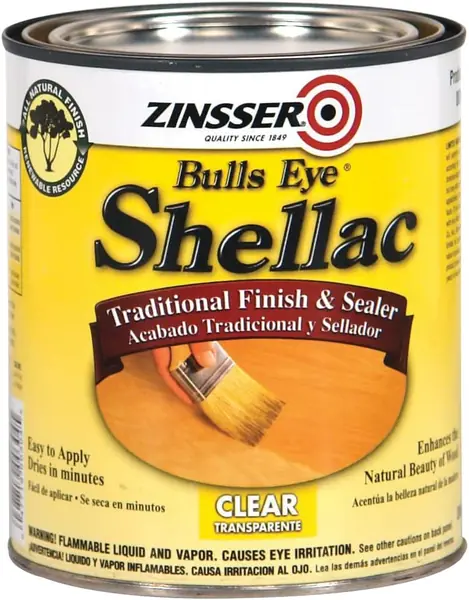
Zinsser Bulls Eye Clear Shellac Best for Fast Finishing

Zinsser Bulls Eye clear shellac in a one-quart can for wood trim and furniture

One-afternoon door projects

Shop Score 95/100
Base
Alcohol-based shellac
Cleanup
Ammonia and water
Container
1 Quart
View on Amazon

Nothing else here gets a door finished this fast. Shellac is dissolved in alcohol, so it goes hard in minutes: recoats at 10 to 15 minutes, a coat firm enough to sand in about half an hour, and three or four coats onto a door in a single afternoon. When the door is off its hinges and blocking the hallway, that speed is the whole decision.

We treat it as two products in one can. It is the finish for a traditional paneled door where you want warmth and a thin film, and it is the sealer we reach for when the door is knotty pine and resin would otherwise bleed through a lighter coat, or when an old door carries smoke or animal smell you want locked in. Cleanup is ammonia and water, not solvent.

The film is thin, so it shows the door rather than burying it. On old trim with character that is the point; on a new slab, every sanding scratch you left is still there when the shellac dries. Build three coats and you have a finish. Build one and you have a sealer waiting for something tougher on top.

Worth Noting

  • Faint amber cast on white or pickled doors
Our Verdict

We keep shellac for doors that have to be back on their hinges today — it builds fast, seals knots, and takes a topcoat beautifully.

Check Latest Price
4.

General Finishes Oil Base Gel Stain Best for Coloring Hung Doors

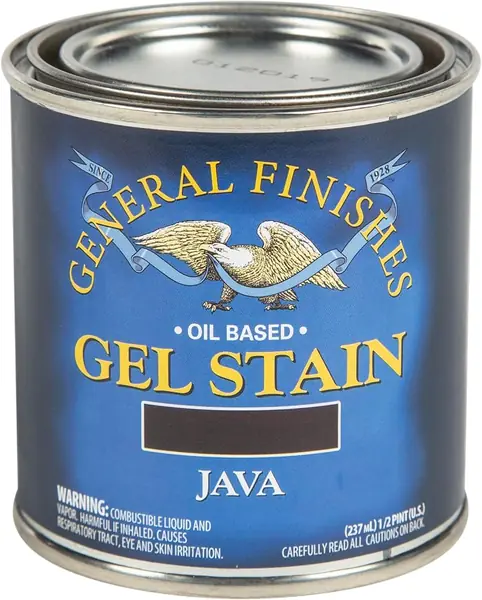
General Finishes Java oil-based gel stain in a half-pint bottle

Hung door panels

Shop Score 94/100
Base
Oil-based gel
Coverage
35-50 sq.ft.
Color
Java
Dry Time
6-12 hours
View on Amazon

Staining a door that is already hanging is a lesson in gravity. A liquid stain runs off a vertical panel in curtains, puddles along the rails, and leaves lap marks where two wet areas meet. General Finishes' gel is thick enough to sit where you put it: wipe it on with a cloth or a foam brush, work it into the corners, and it stays.

That body is also why it colors difficult woods so evenly. On pine or aspen, which blotch under a thin penetrating stain, the gel sits up on the surface and lays color down evenly instead of soaking in unevenly — and that is the caveat too, because this is closer to a colored film than a dye. If you want the grain wide open and visible, a liquid stain is the better tool. Coverage is 35 to 50 square feet from a half pint, roughly a door's worth.

Plan around the dry time: six to twelve hours between coats on the label, longer in a cool garage, so one coat an evening is a realistic pace. And gel stain is color, not protection. The door still needs a topcoat of polyurethane or a wiping varnish over it, and that film is what takes the knocks.

Worth Noting

  • Dark shades can dry streaky on wide panels
Our Verdict

Our pick for staining a door that is already hung — the gel stays put and builds Java depth without curtains of drip.

Check Latest Price
5.

Watco Danish Oil Wood Finish Best Natural Oiled Look

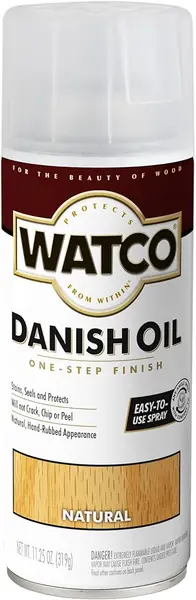
Watco Natural Danish oil finish in an 11.25-ounce aerosol spray can

Natural wood doors

Shop Score 93/100
Base
Oil and varnish blend
Coverage
50 sq ft/can
Color
Natural
Dry To Touch
30 minutes
View on Amazon

Some doors should not wear a film at all. A solid wood door finished with Danish oil feels like wood when you put your hand on it — no plastic edge, no sheen sitting on top of the grain — because Watco's blend of oil and varnish hardens inside the pores instead of building a coat you could peel. On a natural-wood door in an older house, that is the right look.

It is also the shortest path from bare wood to protected wood. The oil stains, seals, and protects in one step, dries to the touch in about 30 minutes, and a can covers roughly 50 square feet, so one can is about one door. We like the aerosol for stiles and panel grooves, where a cloth loads up and drips; mask the hinges, the lockset, and the floor first, because overspray travels.

An in-the-wood finish on a door that gets handled wants a refresh coat sooner than a film does — a wiped-on coat on the push side every year or two keeps it ahead of dry patches. That is the deal you make for the feel, and on the right door it is a good trade.

Worth Noting

  • Natural tone turns pale wood amber
Our Verdict

We choose Danish oil when the door is solid wood and the goal is grain you can feel rather than a film sitting on top of it.

Check Latest Price
6.

Varathane Triple Thick Polyurethane Best for Fast Glossy Topcoats

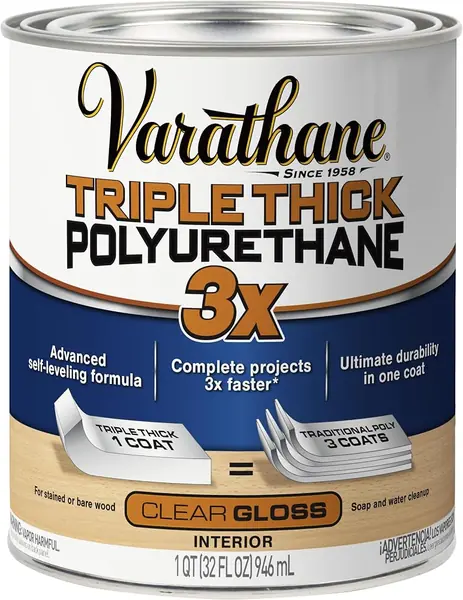
Varathane Triple Thick gloss water-based polyurethane in a one-quart can

Fast glossy topcoats

Shop Score 92/100
Base
Water-based polyurethane
Coverage
50 square feet
Sheen
Gloss
Cure Time
7 days
View on Amazon

One coat is the claim printed on the can, and it is why anyone picks this quart up. Triple Thick is a water-based polyurethane built at roughly three times the thickness of Varathane's standard water-based finish, so a single pass is meant to lay down the film that usually takes three. On a door, where every extra coat is another chance for dust to land, that is a real saving.

It is also the most demanding finish here to apply well. The liquid is white in the can and clears as it cures, and a coat laid on heavy, or worked after it starts to set, leaves white streaks and bubbles that do not level out. The self-leveling claim holds for one even, thin pass with a good synthetic brush, worked with the grain, and then left alone.

Time is the other thing the label is honest about: two hours to the touch, 48 hours before light use, seven days to a full cure. That is a door off its hinges for the better part of a week, so pick a week when the doorway can stay empty and the panel can sit somewhere warm and dust-free.

Where it earns its place is speed and gloss. For a closet door, a basement door, or a rental unit that has to look finished by Sunday, trading application fuss for fewer coats makes sense. On the front-hall door that takes the daily traffic, we choose a finish with a longer record of wear.

Worth Noting

  • A quart covers one door in one coat
Our Verdict

We like Triple Thick for a fast, glossy build on an interior door, as long as you lay it on in one thin, even pass.

Check Latest Price
7.

Minwax Paste Finishing Wax

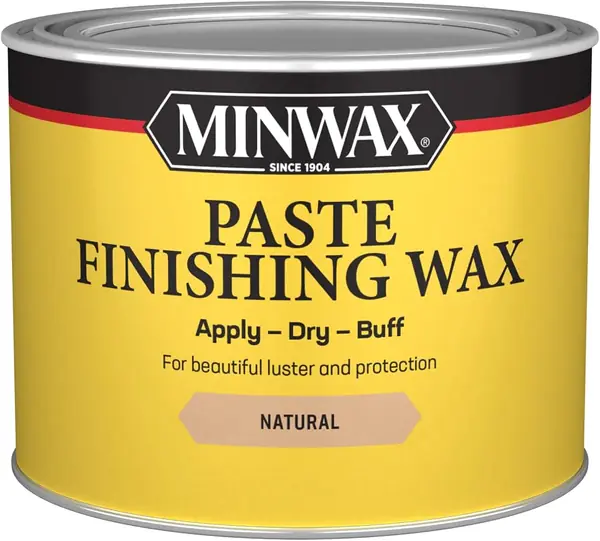
Minwax paste finishing wax in a natural one-pound tin

Low-luster final polish

Shop Score 91/100
Size
1 lb
Cleanup
Mineral spirits
Recoat Time
15 minutes
Form
Paste
View on Amazon

Wax is the last ten minutes of a door project, not the finish itself. Rubbed over a cured film of polyurethane, varnish, or shellac, Minwax's paste wax knocks the gloss back to a soft luster, slicks the surface so fingerprints wipe off with a sleeve, and makes a coated door feel smoother than the coating alone.

It is not protection on its own — wax is soft, it holds dust, and a shoulder bag wears through it — so this is the last step over a cured film, never a substitute for one. The label lists doors among the surfaces it is meant for, and that is fair in that role: a closet door, a paneled door, any door where the look matters more than armor.

Application is where it goes wrong. A thick coat dries to a chalky haze that takes real elbow grease to buff off. Take a thin smear on a cloth, let it sit the 10 to 15 minutes the label asks for, then buff with a clean rag. Two coats, 15 minutes apart, and the door is done.

Worth Noting

  • Cold paste is stiff and crumbly to load
Our Verdict

We use paste wax last, over a film that has already cured, to soften the sheen and make a door feel smoother under the hand.

Check Latest Price
8.

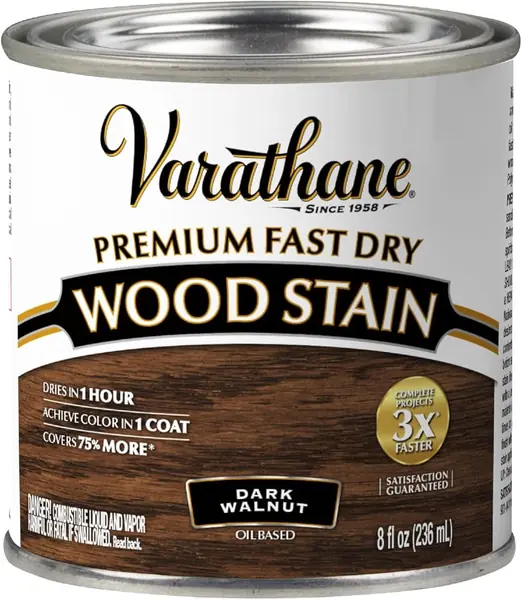
Varathane Premium Fast Dry Wood Stain Best for Single-Door Color Jobs

Varathane Premium Fast Dry Dark Walnut oil-based wood stain in a half-pint can

Single-door color jobs

Shop Score 90/100
Base
Oil-based
Coverage
70 square feet
Color
Dark Walnut
Dry To Touch
1 hour
View on Amazon

An hour to the touch is the number that reorganizes a door project. With a fast-dry oil stain you can color the faces in the morning and be laying clear coat by mid-afternoon, and Varathane's version also skips the pre-stain conditioner that blotch-prone woods otherwise need.

The technique matters more than the product. Brush or rag it on, wait five to ten minutes, then wipe the excess back along the grain — the stain left sitting on the surface is what turns a color coat into something that looks like paint. Work one panel at a time, because by the time you reach the bottom rail the top has already started to tack.

Coverage is a half pint to 70 square feet, a door and a half per can, and the label stops at one coat. Topcoat it with polyurethane once it is dry: a stain colors and seals the pores, but it does not leave a door the film it needs for daily handling.

The pace and the price of entry are what we like. This is the least expensive way here to put color on a door and the fastest, which keeps it in rotation for single-door jobs, color tests before a bigger order, and the door you decided to restain on a Saturday morning.

Worth Noting

  • Dark Walnut runs darker than the swatch
Our Verdict

We keep this half pint around for single-door jobs where one-coat speed matters and you are willing to test the color first.

Check Latest Price

How We Chose and Tested Interior Door Finishes

We built the shortlist from technical data sheets rather than label copy, sorting candidates by base — water, oil, alcohol, or wax — then by sheen, recoat window, coverage per can, and what cleanup takes. Finishes that couldn't go over an existing coat, or that demanded days of flat time, came off the list early. That left 14 products, all bought at retail.

Testing ran eight months, in a garage and a hallway. Some doors came off their hinges and went flat on sawhorses for brushed and wiped coats; the rest stayed hung so we could watch what a finish does on a vertical panel, where it sags, where it laps, and whether brush marks read in afternoon light raking across the slab. We coated white primed doors, bare oak, and doors carrying an old finish, and compared sheen on full panels rather than sample chips, since a sheen reads differently across a whole door than on a two-inch square.

Every coat went on the clock: touch-dry, sandable, recoat, and the day the door could go back on its hinges and close against the jamb without sticking or printing a mark. Clears over white were watched for weeks to see whether they stayed colorless. Stains and gels were judged on whether color went on evenly over blotchy grain, whether one pass covered an old tone, and how the surface felt under a hand afterward. Wear we tested the boring way: keys, rings, and a grocery bag against the edge, day after day.

Oil-soaked rags and pads were spread flat on the driveway to dry before they went in the trash, and solvent cans stayed clear of the water heater's pilot light with the garage door open. Finishing a door is mostly patience; the products that made the list are the ones that didn't punish us for having some.

How to Choose a Finish for Interior Wood Doors

Film or oil: pick the protection first

Film finishes — polycrylic, polyurethane, urethane varnish, shellac — sit on the surface and take the abrasion, which is what a door needs. Penetrating oils harden inside the wood and leave the grain open; they look and feel wonderful, and they need refreshing. Wax goes over a cured film as a luster step and nothing more. For a working door in a busy hallway we choose a film every time, and save the oil for a solid wood door that is mostly looked at.

Match the clear coat to the door's color

This is the mistake that shows up six months later. Water-based clear finishes dry and stay water-clear, so polycrylic is the safe choice over white paint, primed slabs, maple, ash, and birch. Oil-based urethane, shellac, and linseed oil all add warmth — flattering on oak, walnut, and cherry, wrong on anything pale.

A can marked clear or crystal clear describes the resin, not the color it leaves. Clear shellac still carries a faint golden cast, and an oil-based film will amber a gray door over time.

Finishing flat beats finishing hung

If the door comes off its hinges, lay it across sawhorses and finish one face at a time. Gravity then works with you: brushed films level, drips land on the floor instead of running down the stiles, and you can see the whole panel in raking light. If the door stays hung, choose a gel stain that stays where it is put or a wipe-on film applied in thin passes, and finish the top and bottom edges, where moisture gets in.

Read dry times as a schedule, not a spec

Recoat windows decide how long a door is off its frame. Polycrylic recoats in two hours, shellac in ten to fifteen minutes, gel stain in six to twelve hours. Those numbers set the pace: shellac means an afternoon, gel stain means a week of evenings.

Dry to the touch is not cured. One water-based polyurethane here asks for 48 hours before light use and seven days to full cure, so plan the rehanging for after that, not before.

Sheen, coats, and how much to buy

Satin hides the ripples in a flat slab; gloss picks them out along with every fingerprint, which is why gloss suits a paneled door better than a big flush one. For quantity, work in square feet rather than doors: the two faces of a standard door come to roughly 40 square feet, so three coats is about 120 square feet of coverage to hunt for on the can. Then add the edges and jambs, which is where a door takes its damage.

Frequently Asked Questions

Final Verdict

For most interior doors, we recommend Minwax Polycrylic. It goes on milky and dries clear, which is what a white, primed, or pale-wood door needs, it recoats in two hours, and it rinses out with water — the three things that decide whether a door project gets finished or stalls in the garage.

Spend more only for a reason. A stained oak or walnut door that deserves a satin, hand-rubbed film is a job for Arm-R-Seal. A door that has to be back on its hinges tonight is a job for shellac. Everything else here answers a narrower question than the one most doors are asking.