↑↓ navigate ↵ open Esc close All results →

Best Finishes for Wood Coasters of 2026

One sweating glass of iced tea is enough to expose a weak coaster finish, turning birch milky overnight, leaving a soft ring in tacky gloss, or filling the room with lingering solvent odor. Because coasters sit under puddles, hot mugs, and acidic drips, they test moisture resistance harder than most full-size tables.

Four months of brushing and wiping 12 quart-size-or-smaller finishes onto maple, birch, and ash blanks—then subjecting them to condensation, hot coffee mugs, and lemon slices—showed that sheen and price mattered far less than full cure hardness and color clarity on pale wood. Reading the label closely matters too, because a two-hour recoat interval is not the same as the days required for a water-resistant, food-safe cure.

From tough water-based films to cured oil blends sold in practical small containers, the eight proven options hold up under wet glasses without clouding or sticking.

Our Top Picks

The Best Finishes for Wood Coasters

1.

Minwax Polycrylic Protective Finish Best Overall
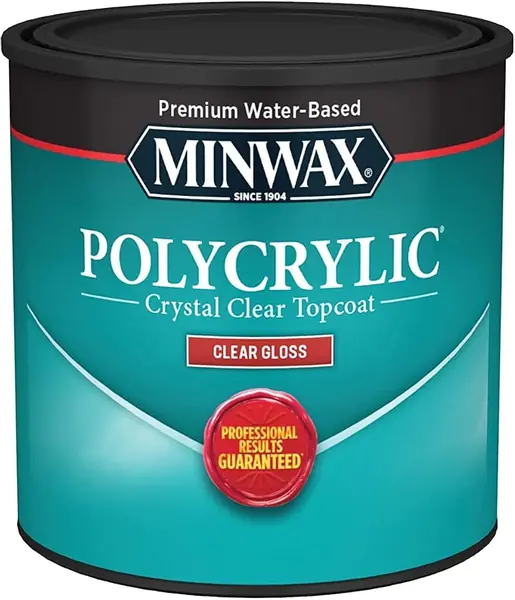
Minwax Polycrylic water-based gloss protective finish in a half-pint can

Everyday coaster sets

Shop Score 97/100
Size
8 fl oz (1/2 pint)
Base
Water-based
Sheen
Gloss
Recoat Time
2 hours
View on Amazon

Two hours between coats is the number that made this our default for coasters. A set of eight can take three coats in one afternoon, and because the formula is water-based the brush goes to the sink instead of into a jar of mineral spirits. It dries crystal clear and stays that way, which matters most on maple, birch, and ash — the pale woods that turn distinctly orange under an oil-based poly.

We keep coming back to how little drama there is: a thin coat, a light pass with 320 grit, then another coat. The gloss build stands up to a cold glass parked on it all evening without printing a ring, and the half-pint can holds far more than a coaster set will drink. We also like that it goes over oil- and water-based stain alike, so a stained or dyed set is not a compatibility puzzle.

Coaster edges deserve their own pass. End grain drinks finish and it drinks water just as fast, so we run a coat around the rim before the faces and knock the sharp corner back with 220 grit first. Give a finished stack a week before you bag it up, too — the rims will print on the face below if you stack them soft.

Worth Noting

  • Gloss sheen only in this size
Our Verdict

For most coaster sets this is the finish we hand people: clear on pale wood, quick between coats, and tough enough for a sweating glass.

Check Latest Price
2.

General Finishes High Performance Topcoat Best Satin Finish

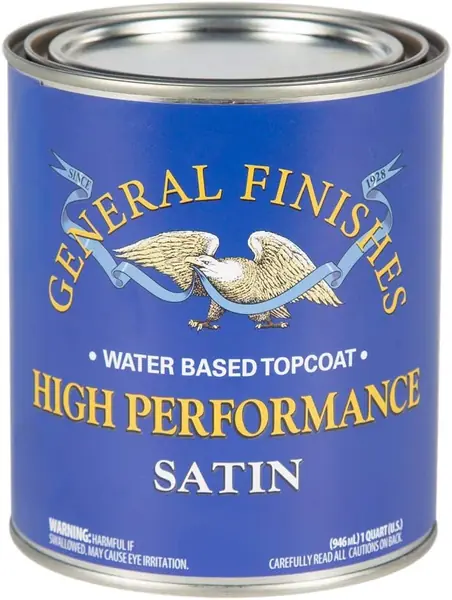
General Finishes High Performance water-based topcoat in a one-quart can, satin

Satin-finished gift sets

Shop Score 96/100
Size
1 quart
Base
Water-based
Sheen
Satin
Recoat Time
1 to 2 hours
View on Amazon

Polycrylic is our default; this is the one we pick when the sheen has to be satin instead of glassy. The flatteners in the satin cut the glare without turning the surface chalky, so a figured wood still shows its figure. It is water-based, it cleans up with soap and water, and the recoat window is one to two hours.

Where it earns its place is in how it lays down. It brushes out smoothly with a foam applicator and dries even, with no drag marks left across a small flat face. Three coats produced the soft satin we were after rather than a semi-gloss compromise, and the difference between satin and semi-gloss is bigger than the swatch cards suggest.

The catch is volume, not performance. A quart covers 125 to 150 square feet, and a few dozen coasters barely make a dent in it. We think it is worth buying when you have a table, a cabinet, or a stack of picture frames in the same wood; for one small gift set, it is a lot of finish to store.

Worth Noting

  • Thin consistency needs four or five coats
Our Verdict

If satin is the look you want and you have more than coasters to finish, this quart is the better film in this group.

Check Latest Price
3.

Varathane Water-Based Ultimate Polyurethane Best Gloss Finish

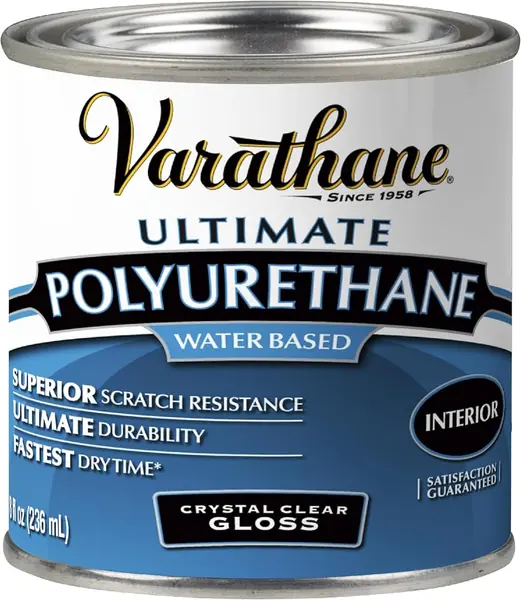
Varathane water-based ultimate gloss polyurethane in a half-pint can

High-gloss show pieces

Shop Score 95/100
Size
Half pint (0.25 quart)
Base
Water-based
Sheen
Gloss
Cleanup
Soap and water
View on Amazon

A half pint that costs less than most of the cans here buys you the shiniest film of the group. It is water-based, it goes on with a brush or a foam applicator, and it dries clear enough that a maple coaster reads almost like polished stone. It is an odorless formula, which counts for something when the only place to work is a spare room.

We like it most on figured wood, where a gloss film lights up the grain that a satin would mute. It brushes out fast, cleans up with soap and water, and the half-pint size suits a coaster set with some left over. On thin stock we also thin the first coat slightly so it soaks in rather than sitting on the surface.

The routine is the usual water-based one: stir rather than shake, lay it on thin, and sand lightly between coats once the surface is dry to the touch. On a coaster the payoff is a film you can wipe with a damp cloth without dulling it, and a gloss that still looks wet a year later.

Worth Noting

  • Hard film can chip at sharp edges
  • Heavy coats can dry with a slight haze
Our Verdict

For a glass-clear gloss with very little outlay, we keep this half pint on the shelf and apply it thin.

Check Latest Price
4.

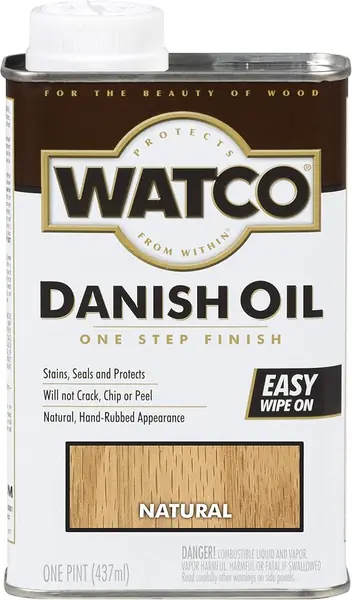
Watco Danish Oil Best Hand-Rubbed Look

Watco Danish Oil natural finish in a one-pint bottle

Warm hand-rubbed sets

Shop Score 94/100
Size
1 pint
Formula
Blended oil and varnish
Coverage
67-100 square feet
Dry Time
6 hours to the touch
View on Amazon

Run a thumb across a coaster finished with Danish oil and you feel wood, not a coating. The blend soaks into the pores and hardens there, so there is no film to lift at an edge and no plastic sheen under a lamp. On a small piece that difference is the whole point — the surface reads as a well-kept table rather than a varnished tile.

Applying it is about as simple as finishing gets: flood it on with a cloth, let it sit, wipe off what has not soaked in, and give it hours rather than minutes before the next coat. Sand to 220 first, because an oil finish shows every scratch you left behind. It is an oil-based product, so work with the window open.

We reach for it when a set will be handled more than soaked. It dries to the touch in about six hours, and a pint covers 67 to 100 square feet — far more than one set needs. Water beads on a cured oil surface for a while, but a glass that sits all evening can still leave a shadow, so plan on a fresh wipe-on coat now and then to keep it beading.

Worth Noting

  • Shifts pale woods toward amber
Our Verdict

For coasters that should still feel like wood in the hand, this oil-and-varnish blend is the one we finish and put to work.

Check Latest Price
5.

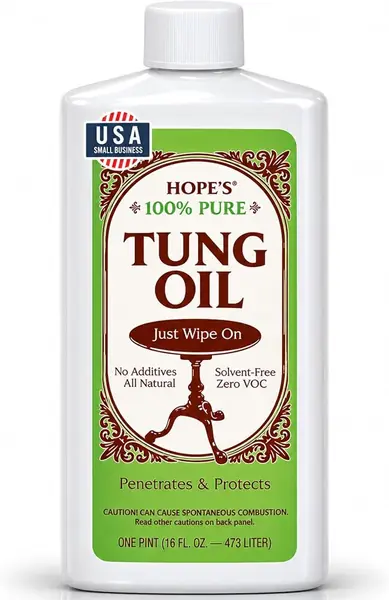
Hope's 100% Pure Tung Oil Best Water-Resistant Oil

Hope's 100% pure tung oil in a 16-ounce bottle

Food-contact serving tiles

Shop Score 93/100
Size
16 fl oz
Formula
100% tung oil
Food Contact
Food safe when dry
Water Resistance
Water resistant
View on Amazon

The clock on tung oil runs in days, not hours, and that is the first thing to plan around. Wipe it on, let it soak, wipe off the excess, then leave it a day or more between coats — rush that and you get a gummy surface instead of a finish. A set started on a Saturday may not be ready to use the following weekend.

What you buy with the patience is a finish cured inside the wood rather than sitting on top of it. Pure tung oil is resistant to moisture, alcohol, and oil, and it is considered non-toxic once fully dry, which is why it turns up on cutting boards and wooden bowls. On a coaster that counts twice: there is no film for water to get underneath, and a piece that ends up under a plate of cheese is not a worry.

We like it for a set that doubles as small serving tiles, and for anyone who wants the wood to keep looking unfinished rather than coated. Sixteen ounces goes a long way on pieces this small, so one bottle covers several sets and the leftovers keep.

Worth Noting

  • Pungent smell while it cures
  • Slightly darkens light woods
Our Verdict

Patient woodworkers get a water-resistant, food-safe surface from this tung oil, and we think the wait is worth it.

Check Latest Price
6.

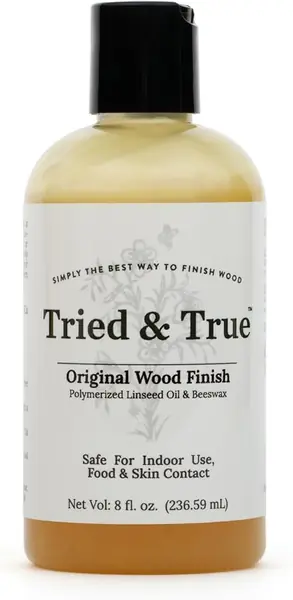
Tried & True Original Wood Finish Best Natural Matte Finish

Tried & True Original finish bottle of linseed oil and beeswax

Low-fume indoor projects

Shop Score 92/100
Size
8 fl oz
Base
Polymerized linseed oil and beeswax
Sheen
Matte
Food Contact
Food safe
View on Amazon

The first thing you notice is what is missing: no solvent smell, no headache, no rushing the piece out to the garage. That is because the can holds polymerized linseed oil and beeswax and nothing else — no solvents, no drying aids. If your only workspace is a spare room or a corner of the kitchen, that changes what you can finish and when you can do it.

It goes on like soft butter, buffs to a warm matte, and leaves the grain looking deeper rather than coated. We like that a scuff or a dry patch can be repaired with another wipe from the same can, months later, with no stripping and no blend line. The sequence on the bottle — sand to 320, wipe on, buff dry, wait a day, burnish with synthetic wool — is worth following as written.

Where it does not serve is a coaster that spends its evening under a sweating glass; an oil and wax blend is a maintenance finish, not a barrier. For a desk or bedside set, or a piece that will be handled more than soaked, that is all you need. If the set lives on a coffee table in August, put a clear film over it.

Worth Noting

  • Heavy coats can stay tacky for days
  • Premium price for an eight-ounce bottle
Our Verdict

We choose this solvent-free oil and beeswax when the finishing has to happen indoors and the look should stay matte.

Check Latest Price
7.

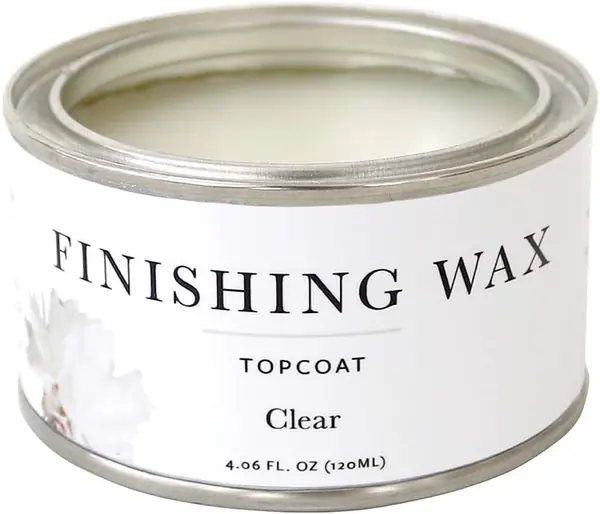
Jolie Finishing Wax Best for Painted Coaster Sets

Jolie clear finishing wax in a 120 ml tin

Painted coaster sets

Shop Score 91/100
Size
120 ml
Sheen
Matte, buffable
Dry Time
8 hours
Form
Wax
View on Amazon

If you paint your coasters — chalk paint, a stencil, a monogram — this is a finish built for that job. It is odor-free and non-hazardous, it does not yellow, and it buffs to a soft matte sheen that suits painted wood. A 120 ml tin covers about 75 square feet, which is a lot of small squares.

We found it genuinely hard to get wrong: a thin smear with a wax brush or a lint-free cloth, eight hours, then buff. It goes on creamy rather than crumbly, which makes it easy to keep the coat thin and to work it into a corner without loading up the surface. Layered over a stain, it warms the color a notch without hiding the grain.

On bare wood with nothing underneath, though, a wax is decoration rather than protection, and a cold glass will find its way through and leave a ring you cannot sand out without losing the sheen. Use it over paint or over a cured film and the set is fine; save the bare-wood sets for a finish with more build.

Worth Noting

  • Can stay tacky in humid conditions
Our Verdict

We keep this for painted and stenciled coasters, where a creamy clear wax buffs to a soft sheen without any fumes.

Check Latest Price
8.

Furniture Clinic Boiled Linseed Oil Best for Rustic Reclaimed Sets

Furniture Clinic boiled linseed oil in an 8.5-ounce bottle

Rustic reclaimed sets

Shop Score 90/100
Size
8.5 fl oz
Base
Boiled linseed oil
Coverage
50 square feet
Finish
Glossy
View on Amazon

This is the least expensive can in this group, and for a rustic set built from pallet wood or an old crate it does a lot for very little. It is treated with hot air so it dries faster than raw linseed, it goes on with a rag in minutes, and it brings out figure that sanding alone leaves flat.

We like the low gloss it leaves — closer to a deep glow than a shine — and the way a second coat a couple of days later builds a little body on end grain. It is also the finish here that most rewards a scuff and a recoat, so an old set can be brought back without stripping it to bare wood.

What it will not do is seal. Linseed oil cures to a soft film that water sits on rather than bounces off, so a sweating glass left in place will dull the surface, and a set that gets washed will want re-oiling. On a decorative set that lives on a shelf, that is a fair trade for the look and the cost; on a set in daily use, put a film finish over it.

Worth Noting

  • Can stay sticky when applied too thick
  • Noticeable odor while it dries
Our Verdict

An inexpensive way to wake up dry, reclaimed wood, though an oil alone won't hold off a cold glass.

Check Latest Price

How We Tested the Best Finishes for Wood Coasters

We built the shortlist by reading labels: water-based film finishes in gloss and satin, penetrating oils, a wax, and a polymerized linseed blend, all sold in cans no bigger than a quart so a set of six coasters doesn't leave you with a lifetime supply. That mix is the real fork in the road here, since a film sits on the wood and an oil soaks into it. Twelve finishes made the cut, and we tested them for four months.

Each one went onto coaster blanks and offcuts of maple, birch, and ash, applied exactly as the can directed — foam brush, lint-free cloth, or bare hand, depending. We counted coats, noted whether the grain raised, timed how long a second coat took to go on without dragging, and cleaned up according to the label.

The finished coasters went into daily rotation at a desk and a kitchen table. We set down glasses of iced water and let them sweat for an hour, then overnight, checking for a ring, a white blush, or a tacky lift when the glass came up. Hot mugs came next, then a lemon slice. Every set was compared against an unfinished blank to catch yellowing on the pale woods, and we scored odor by whether we could work at the counter with a window open or had to move the can outdoors.

Two measurements decided the close calls. We tracked recoat time separately from full cure, because a coaster stacked too early will print its neighbor's grain forever. And we spread every oily rag flat on the driveway to dry before disposal, and let the food-safe finishes sit out their full cure before anything edible touched them.

How to Choose a Finish for Wood Coasters

Film or Oil: Match the Finish to the Glass

Film finishes sit on top of the wood and stop water at the surface. For a living-room set that holds drinks all evening, choose a film like Minwax Polycrylic or Varathane's water-based gloss. Penetrating oils soak in and harden inside the wood, which leaves the wood feeling like wood but gives a cold glass less to stand on — Watco Danish Oil or tung oil is the right answer for a bedside or desk set where the material is the point.

The trap is wax. A finishing wax beads water for a minute and looks lovely, but it is a topper for a finish that is already there, not a finish of its own. A sweating glass will get through it and leave a ring you cannot buff out.

Clarity: What the Finish Does to Pale Wood

Water-based clear coats stay close to invisible on maple, birch, and ash. Oils and oil-based varnishes add amber, and they deepen the grain while they do it — beautiful on walnut or cherry, disappointing if you built the set for its pale color. If you are unsure, finish the underside of one coaster and look at it in daylight before you commit the rest.

Sheen: Gloss, Satin, or a Buffed Matte

Gloss is the clearest and hardest-wearing film, and it is unforgiving: dust, fingerprints, and any sanding scratch you left show up under a lamp. Satin carries flatteners that soften the reflection and hide fine scratches, and on a dark wood that is usually the better trade.

Buffed wax and oil go lower still, which suits rustic sets. Whichever you choose, do the sanding first — no sheen hides a scratch that is still in the wood.

Dry Time and Cure Time Are Different Numbers

The recoat window — two hours on Minwax Polycrylic, one to two on the General Finishes quart — tells you when you can add another coat, not when the coaster is ready for a drink. A film wants several days to harden fully, and tung oil runs in weeks. Cool, damp weather stretches both numbers.

Test with a thumb: press firmly on a hidden spot, and if a print stays, it is not cured yet, whatever the label says.

Buy the Smallest Can the Job Needs

A four-inch coaster is about sixteen square inches, so a set of eight comes to under two square feet once you count both faces and the edges. A half pint of Minwax Polycrylic is rated for up to 150 square feet; a quart of premium finish covers 125 to 150. Buy the small can unless you have furniture waiting for the same topcoat.

Where you finish matters too. Solvent oils and varnishes smell and need ventilation; the water-based films and the clear wax are the ones you can use in a basement in January.

Frequently Asked Questions

Final Verdict

Most coaster sets should get Minwax Polycrylic. It stays clear on pale wood, three coats go on in an afternoon, it cleans up with water, and the cured film shrugs off a sweating glass — which is the whole job.

Choose differently for two reasons. If you want satin and have other projects waiting, the General Finishes quart is the better film. If the wood itself is the point, Watco Danish Oil or Hope's tung oil gives you a finish you can feel, at the cost of a refresh now and then.