↑↓ navigate ↵ open Esc close All results →

Best Finishes for Wood Carvings of 2026

On a carving, what separates a dependable finish from a frustrating one happens inside the tightest gouge cuts: good formulas highlight crisp tool facets and grain, while heavy ones pool in undercuts, turn pale basswood orange, and stay tacky for days. Oil, wax, and film-forming topcoats all sit differently across curved relief and deep recesses.

Brushing, wiping, and spraying 14 penetrating oils, hardwax and paste waxes, and water-based clears over three months on spoon blanks, relief panels, and detailed figures confirmed that multiple thin passes outperform a single heavy coat almost every time. For spoons and bowls, waiting out the full cure rather than just dry-to-touch time is what makes a food-contact claim real.

Each of these eight tested finishes preserves delicate carving marks and natural hand feel without flooding fine detail.

Our Top Picks

The Best Finishes for Wood Carvings

1.

Birchwood Casey Tru-Oil Stock Finish Best Overall
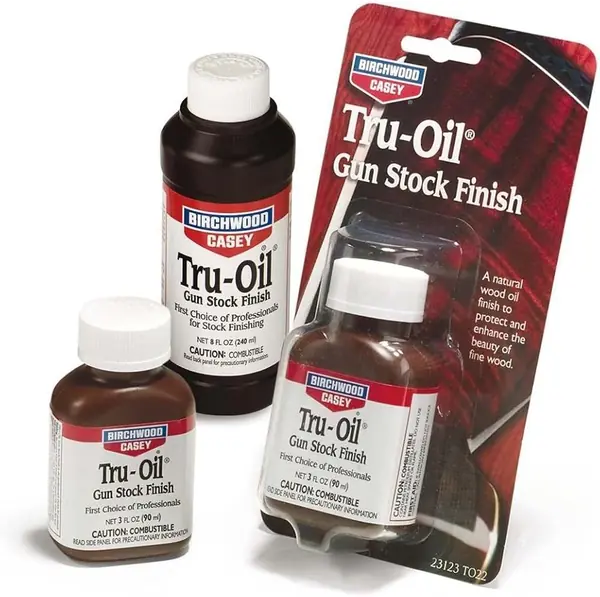
Birchwood Casey Tru-Oil stock finish in a three-ounce bottle of oil-based wood finish

Small detailed carvings

Shop Score 98/100
Size
3 fluid ounces
Finish Type
Oil blend of linseed and natural oils
Water Resistance
Water resistant
Application
Wipe or brush with the grain
View on Amazon

A film finish has one bad habit on a carving: it pools in the bottom of every gouge cut, and after a few coats those cuts look softer than the chisel left them. Tru-Oil goes on thin enough to work into the tightest part of a cut with a rag and then buff back out before it sets, so what cures is in the wood rather than a puddle sitting over it. It is a blend of linseed and natural oils, and it behaves like an oil right up until it hardens.

What sold us is how much of the carving survives the process. Thin coats bring up the grain, cure hard, and stay clear rather than clouding or yellowing, so from arm's length a finished piece still reads as carved rather than dipped. It is also one of the cheapest finishes here, which matters when you are running through a lot of small blanks and do not want to think about cost per piece.

Three fluid ounces does not sound like much, but a spoon or a knife handle barely touches it, and a bottle outlasts a winter of small projects. Thin coats also mean you can build the sheen slowly and stop exactly where you like it, which is not something a brushed film lets you do once the last coat is on.

Worth Noting

  • No food-contact claim for spoons and bowls
Our Verdict

We reach for Tru-Oil first on carvings because thin wiped coats deepen the grain and cure hard without filling in the tool marks that make the piece worth looking at.

Check Latest Price
2.

Odie's Universal Oil Best Food-Safe Finish

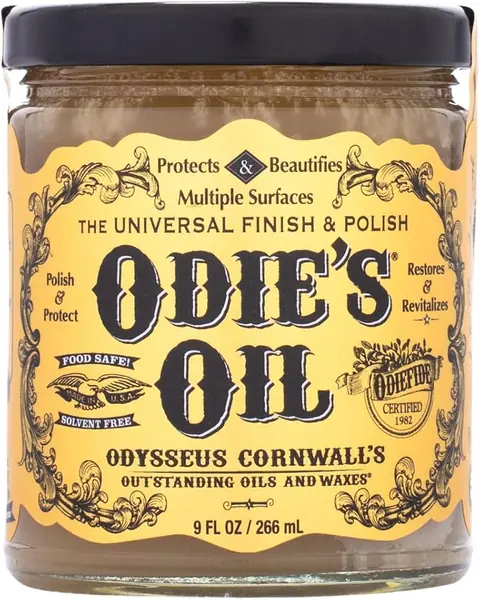
Odie's Universal Oil hardwax oil in a nine-ounce jar for wood and stone

Food-safe kitchen carvings

Shop Score 97/100
Size
9 oz
Finish Type
Hardwax oil
Food Contact
Safe once cured
Coverage
Up to 270+ square feet
View on Amazon

Nine ounces covering more than 270 square feet sounds like a label claim rather than something a carver can use, and then you spread it. Odie's is a hardwax oil, a solvent-free blend of natural oils and waxes with nothing to evaporate away, so nearly everything you wipe on stays in the piece. We were looking for a catch the first time we used it and did not find one.

On the carving it leaves a satin sheen that reads as wood rather than coating, and the grain comes up the way it does under oil. Buff it once it sets and it feels silky under a thumb, which matters on a piece people are going to pick up and turn over. There is no separate sealer to think about and no sanding between coats.

The trade-off is money. A jar costs more than anything else here, and our argument for it is coverage: with no solvent to evaporate, what you apply stays on the piece, so nine ounces finishes far more carving than its size suggests. On a shelf of spoons and small bowls it works out quickly.

Worth Noting

  • Can stay tacky until buffed firmly
Our Verdict

For spoons, bowls, and anything that meets food, this is the finish we trust: food-safe once cured, satin rather than glossy, and crisp on detail.

Check Latest Price
3.

Hope's 100% Pure Tung Oil Best Pure Oil Finish

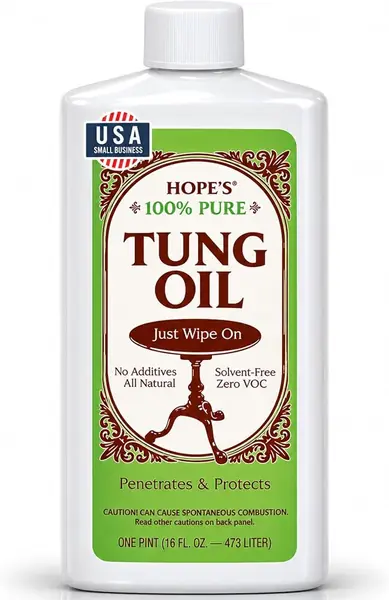
Hope's pure tung oil in a sixteen-ounce bottle of food-safe wood finish

Large hand-rubbed pieces

Shop Score 96/100
Size
16 fluid ounces
Finish Type
100% pure tung oil
Food Contact
Non-toxic when dry
Water Resistance
Water resistant
View on Amazon

Pure tung oil asks for patience in a way nothing else here does. It soaks into the fibers, cures to a flexible solid inside the wood, and wants days rather than hours between coats before it stops feeling sticky. That schedule is the whole decision: a piece on the bench is a piece you are not carving.

What you get for the wait is the most natural-looking finish in this group. There is no film to catch the light, so fine detail stays exactly as cut, and the wood takes on a soft satin glow instead of a shine. On a guitar neck, an axe handle, or a spoon that gets handled daily, that is the look most carvers are after.

It is food-safe when dry, which is why it turns up on cutting boards, bowls, and utensils, and it penetrates rather than coats, so there is no build-up to sand back if you change course later. Sixteen ounces goes a long way on small work and covers a large piece without a second bottle.

We rate it the best pure-oil choice here for a big carving you can leave alone between coats, and the wrong tool for a deadline piece. Where Tru-Oil lets you build and stop in an afternoon, tung oil asks you to plan the week around the carving, and the result is worth it when you can.

Worth Noting

  • Darkens pale wood toward amber
Our Verdict

If you want the finish in the wood rather than on it, this is the one, provided you can leave the carving alone for days between coats.

Check Latest Price
4.

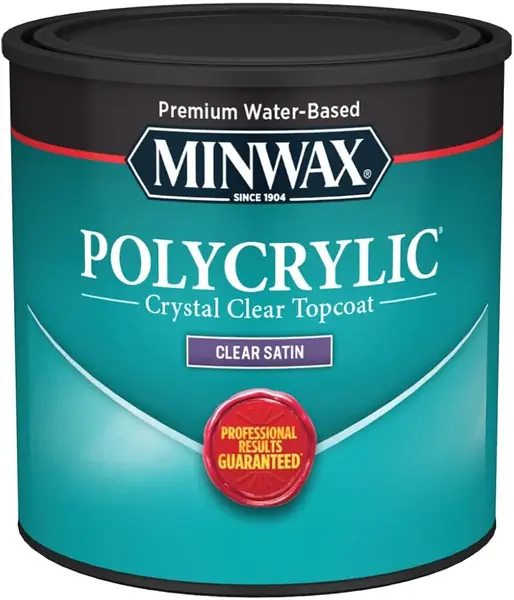
Minwax Polycrylic Protective Finish Best Clear Protective Topcoat

Minwax Polycrylic clear satin water-based protective finish in a half-pint can

Sealing painted carvings

Shop Score 95/100
Size
Half pint (8 fluid ounces)
Finish Type
Water-based clear topcoat
Sheen
Satin
Recoat Time
2 hours
View on Amazon

The brush rinses out in the sink. That is the detail that decided it for us on indoor carvings, where the real question is often which finish you can live with in a spare room. Polycrylic is water-based, so there is no solvent haze, no mineral-spirit cleanup, and a recoat in two hours instead of tomorrow.

On the piece it dries crystal clear and stays that way, which is why we take it over pale woods like maple, ash, and birch where an oil would push everything amber. Satin is the right sheen for carving: it knocks down the shine that makes a clear coat look like plastic while still leaving a surface you can wipe clean after handling.

Worth Noting

  • Rated for interior wood only
  • Half-pint can is small for large panels
Our Verdict

We use Polycrylic when a carving needs a wipeable surface, because it brushes out water-thin, dries clear, and does not tint the wood underneath.

Check Latest Price
5.

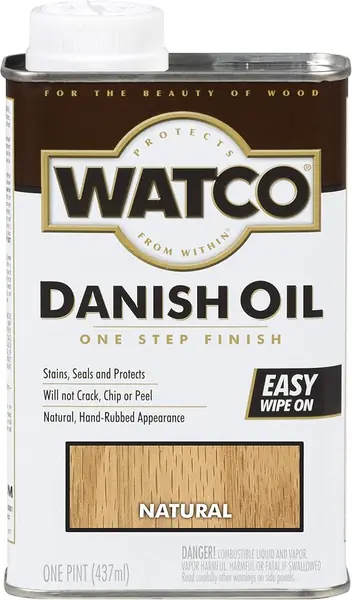
Watco Danish Oil Best One-Step Oil and Varnish

Watco Danish Oil natural finish in a one-pint can for interior wood

Handled carved pieces

Shop Score 94/100
Size
1 pint
Finish Type
Oil and varnish blend
Coverage
67-100 square feet
Dry To Touch
6 hours
View on Amazon

Pure oils leave a carving looking oiled, and film finishes leave it looking coated. Danish oil lands between them: a blend of oil and varnish that soaks into the pores and hardens there, so you get the grain and warmth of an oil with a little resistance to spills and abrasion from the varnish.

One wipe-on, wipe-off step stains, seals, and protects, and it is dry to the touch in about six hours, quick enough to get a second coat on a carving over a weekend. The look is the warm hand-rubbed glow people mean when they say a piece looks like wood rather than like a finish.

We pick it for pieces that will be turned over in the hand, like a bowl, a letter opener, or a decoy, where we want more protection than tung oil gives without the sheen of a clear coat. It warms the wood toward amber as it goes on, which is lovely on walnut and a real change on maple, so test it on an offcut from the same board first.

Worth Noting

  • Formulated for interior wood only
  • Solvent smell lingers while it cures
Our Verdict

We like Danish oil for carvings that get handled but not eaten from, since it adds warmth and some protection without the plastic look of a topcoat.

Check Latest Price
6.

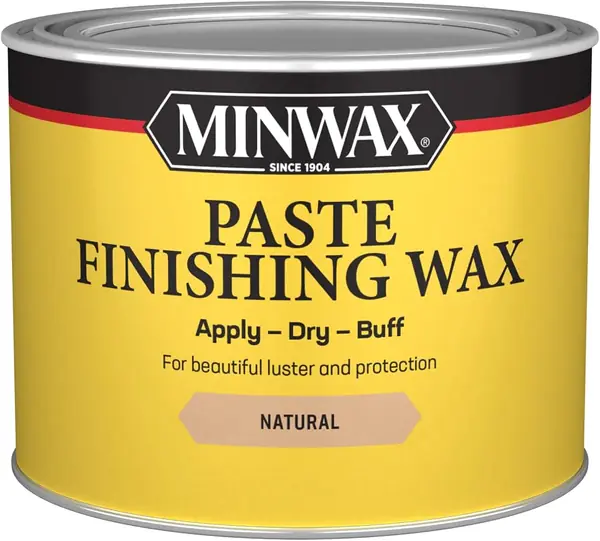
Minwax Paste Finishing Wax Best Hand-Rubbed Wax

Minwax paste finishing wax in a one-pound tin for finished wood surfaces

Hand-rubbed satin sheen

Shop Score 93/100
Size
1 lb
Finish Type
Paste wax
Recoat Time
15 minutes
Use
Interior finished wood
View on Amazon

A tin of paste wax and a scrap of old T-shirt is the oldest finishing ritual there is, and it still works. Rub on a thin coat, wait ten or fifteen minutes, buff it out with a clean cloth, and a flat-looking surface comes up to a soft luster that looks like hand work rather than a product.

On carvings it is a topcoat rather than a standalone finish: it protects an existing oil, stain, or film and adds depth without laying down a layer that fills detail. That makes it the last step instead of the only one, which is exactly what we want when the color underneath is already right.

It is also the most useful can in the shop after the carving is done. A rub on a plane sole, a table saw top, or a handsaw blade cuts friction and makes the tools feel slicker, and one tin lasts through years of that kind of use.

Where it earns its place in our kit is the last five minutes of a project, when a dull carving needs to look finished and there is no time left for another coat of anything. Thin, buffed hard, and it is done.

Worth Noting

  • Stiff paste needs warming to spread thin
Our Verdict

Our pick for topping off an already-finished carving, since a thin coat buffed out adds depth and a low sheen without building up in the detail.

Check Latest Price
7.

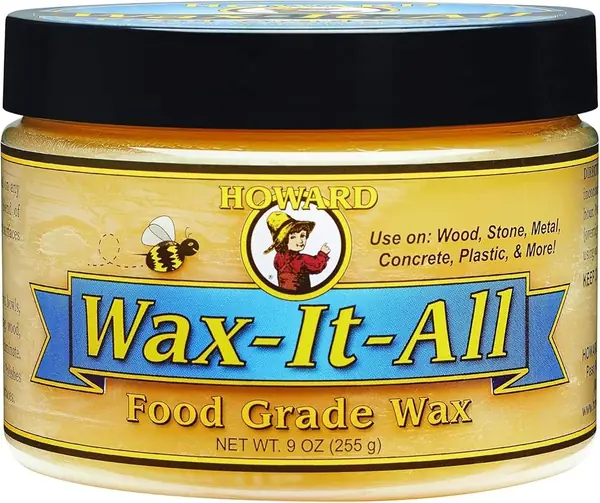
Howard Wax-It-All Best for Spoons and Boards

Howard Wax-It-All food-grade beeswax paste in a nine-ounce jar

Spoons and boards

Shop Score 92/100
Size
9 oz
Finish Type
Food-grade paste wax
Food Contact
Safe for food-contact surfaces
Surfaces
Wood, stone, metal, paint
View on Amazon

Spoons, spreaders, and small bowls have a different set of requirements, and this is the jar we hand people for those pieces. Wax-It-All is a food-grade beeswax paste, safe for food-contact surfaces, and it works as a barrier rather than a coating: rub it on thin, let it absorb, and buff off whatever sits on top.

Because it never builds a film, the facets left by a knife stay exactly as cut, and water beads instead of soaking in. It is also labeled for stone, metal, paint, and plastics, so it earns shelf space well beyond the carving bench, and it goes on with no smell worth mentioning.

Worth Noting

  • Needs reapplying on often-washed pieces
Our Verdict

We keep this one for pieces that touch food: it seals the grain, shrugs off water, and buffs to a low sheen that still shows the knife work.

Check Latest Price
8.

Aleene's Spray Acrylic Sealer Best for Deep Undercuts

Aleene's spray acrylic sealer in a six-ounce aerosol can with a clear gloss finish

Deep undercuts

Shop Score 91/100
Size
6 fluid ounces
Finish Type
Acrylic spray sealer
Water Resistance
Water resistant
Sheen
Gloss
View on Amazon

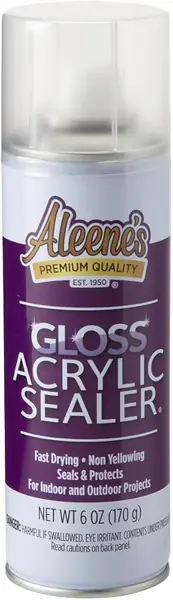
An undercut is a problem no cloth can solve. Where a gouge turns back on itself, a rag drags the finish out and leaves the deep part dry, and a brush floods it with more liquid than the cut can hold. A spray gets in there in one pass and does not need to be touched afterward.

Aleene's is the only aerosol in this group: an acrylic sealer that dries clear and glossy, does not yellow, and sets fast enough that a small ornament is handleable the same session. Two light passes beat one wet one, and thin passes are also what keep the gloss even instead of runny at the low points.

The cost is the smell. This is a solvent acrylic, and the odor is strong enough that we only use it outdoors or with the garage door rolled up, and it hangs around on the piece for a while afterward.

We keep a can for carvings with deep undercuts and for small painted pieces where a brush would lift the color, and we treat it as a workshop-day product rather than a living-room one.

Worth Noting

  • Gloss can cloud with long sun exposure
Our Verdict

For a carving full of undercuts, this spray gets finish where a rag cannot, as long as you plan to use it outside and keep the piece out of long sun.

Check Latest Price

How We Tested Finishes for Wood Carvings

We started with a shortlist of more than 40 finishes sold for woodworking and carving, then narrowed it by finish type, container size, food-contact claims, and whether the product made sense on small carved surfaces. We tested 14 over three months, including penetrating oils, hardwax and paste waxes, a water-based topcoat, an oil-and-varnish blend, and a spray sealer.

Each finish went onto maple and walnut test boards cut with deep gouges and undercuts, plus spoon blanks, bowls, and small relief panels. We applied it with a brush, cloth, or spray as the product directed, then watched whether it pooled at the bottom of a cut, bridged an undercut, or left a gummy edge. We compared coated boards against unfinished offcuts for color shift and sheen, timed recoat windows, and noted how much buffing it took to even out the surface. We also ran a thumb across each cured sample to judge whether it felt like wood or like a plastic coating, and checked whether brushes and rags cleaned up with soap and water or needed solvent.

Odor and workspace were part of the test. We applied finishes in a garage workshop, noted which ones demanded open doors or a respirator, and took the spray sealer outside. We measured coverage by seeing how far a small amount went on a carved surface—and judged value by how many carvings a container would realistically finish. We checked water resistance by leaving a damp cloth on a handled piece. Rags soaked with oil were spread flat outdoors to dry or submerged in a lidded metal can. To judge food-contact finishes, we coated spoons and bowls, let them cure for the full label time, then used them with food.

How to Choose a Finish for Wood Carvings

Film, Oil, or Wax

A film finish, whether a water-based clear coat or a spray acrylic, lays a protective skin over the wood. It shrugs off moisture and scuffs better than oil, but it bridges the recesses instead of following them, so a heavy coat rounds off the crisp edges that make a carving read. Oils and hardwax oils cure inside the wood and leave nothing standing to pool. Waxes sit lightly on top and buff out of crevices with a brush.

We choose by detail first. Deep undercuts, fine facets, and anything you want to look carved get an oil, a hardwax oil, or a wax. A piece that will be handled constantly and needs a wipeable surface gets a thin satin film, applied in coats thin enough that the recesses stay dry.

Thin Coats and What to Do With the Recesses

Carved surface area is far larger than the footprint of the block, and every cut holds a little finish. Apply as if you were trying not to fill the detail: wipe or brush it on, then come back with a dry brush or a clean cloth and lift the excess out of the deepest cuts before it sets. Two thin coats beat one flooded one every time, and thin coats are also what keep a film from pooling into shiny puddles at the bottom of a gouge.

Food-Safe Finishes for Spoons and Bowls

Once a carving is going to hold food, the question changes from appearance to what is left on the surface. Cured oils and food-grade waxes are the usual answer, since pure tung oil, hardwax oil, and beeswax pastes carry food-contact or non-toxic-when-dry claims, while a film finish can chip at the rim of a bowl. Read the label for the claim rather than assuming it, and let the piece cure completely before it meets dinner.

Cure Time, Smell, and Where You Will Work

Water-based clear coats and thin oil blends let you recoat in hours, while pure oils want days. That schedule decides more projects than people expect, because a piece sitting wet on the bench is a piece you are not carving. Smell matters too: an aerosol acrylic belongs outdoors, and oil finishes are best in a ventilated shop. Whichever you use, lay oil-soaked rags flat outside to dry or drown them in a lidded metal can, since bundled rags can self-ignite.

How Much Finish a Carving Takes

Coverage numbers are measured on flat panels, and a carving is not one. Expect a carved surface to drink noticeably more finish per square foot of footprint, and buy small the first time. A three-ounce bottle is plenty for spoons and handles, a pint covers a lot of flat work, and a jar of hardwax oil stretches further than its size suggests. Picking up a second bottle beats storing half a can that skins over.

Frequently Asked Questions

Final Verdict

Tru-Oil is the finish we hand most carvers first: it wipes into cuts a brush cannot follow, cures hard, and costs less than most of the others here. Reach for Odie's when the piece will meet food or when you want a satin hardwax look and do not mind paying for it, and Polycrylic when a painted carving needs a clear, wipeable coat that will not shift the color.

If the carving is large and you can leave it alone for a week, pure tung oil gives the most honest look of the bunch.