↑↓ navigate ↵ open Esc close All results →

Best Finishes for White Oak of 2026

Keeping white oak's pale, straight-grained look intact means resisting finishes that amber on contact, because one warm coat can turn a cool dining table honey-yellow and force a full sand-back to bare wood. Choosing between a water-based film that locks in raw color and a penetrating oil that deepens the rays trades tone stability for spot-repair convenience.

Eight months of testing 12 film-forming and penetrating finishes on white oak boards, a dining table, cabinet doors, and a butcher block counter proved that warm oils always deliver the ambering their labels promise. Minimal color shift and forgiving recoat behavior separated the cleanest performers from formulas that darkened or flashed between passes.

From scrub-resistant kitchen counters to food-safe slicing boards and crisp cabinetry, the eight recommended finishes protect against spills and sunlight without burying oak's open grain.

Our Top Picks

The Best Finishes for White Oak

1.

Rubio Monocoat Oil Plus 2C Best Overall
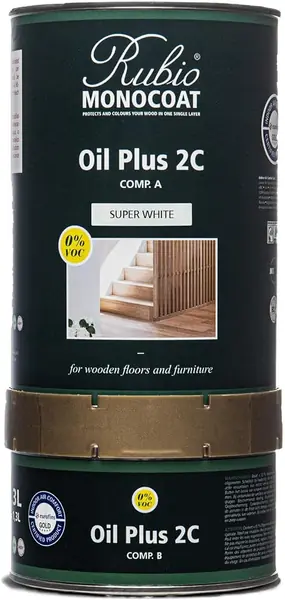
Rubio Monocoat Oil Plus 2C hardwax oil can in Super White for wood finishing

Pale white oak

Shop Score 96/100
Size
1.3 liters
Sheen
Matte
Coverage
390-650 sq ft
Color
Super White
View on Amazon

One coat is the promise, and for white oak it is the reason we reach for Rubio first. Oil Plus 2C is a linseed-based hardwax oil that colors and seals in a single application, so you are not building a thick film over the grain. The Super White tint is especially useful on white oak because it holds the wood's cool, pale tone instead of pushing it yellow. We like that on a vanity, a tabletop, or a floor where the wood itself is the feature.

The application is a wipe-on, buff-off routine, and the 1.3-liter can covers a large project on paper. In our testing, it laid down evenly and buffed to a matte sheen that felt closer to bare wood than a polyurethane film. The 0% VOC formula also made it easier to use indoors, though we still opened a window and wore gloves.

There is a learning curve in the buffing. If you leave too much oil on the surface, it can dry with a slight tack, so work in small sections and wipe off the excess before it sets. The one-coat method saves time, but surface prep still decides the result; sand white oak evenly and remove every swirl mark before the oil goes on.

The Super White version is a pigmented finish, so it adds a subtle white tint rather than disappearing into the wood. That is exactly what we want when white oak has gone a little too golden. For a pale, modern white oak finish that still feels like wood, this is the one we choose.

Worth Noting

  • Premium price for a large can
Our Verdict

We recommend Rubio Monocoat when you want white oak to stay pale and natural, with one coat doing the coloring and protection.

Check Latest Price
2.

General Finishes Oil Base Gel Stain Best for Cabinet Color

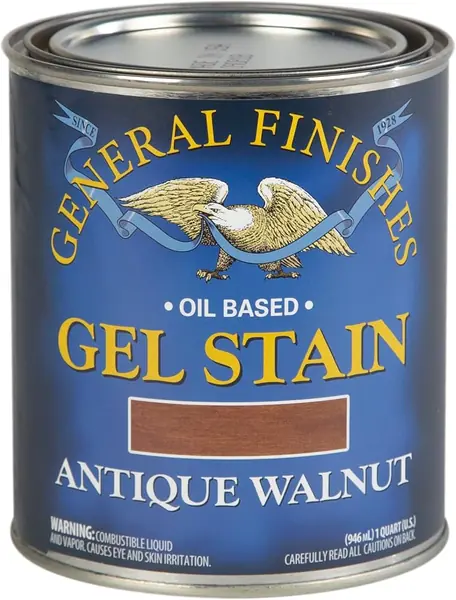
General Finishes oil-based gel stain can in Antique Walnut for wood cabinets

Cabinet color

Shop Score 95/100
Size
1 quart
Coverage
35-50 sq ft
Type
Oil-based gel stain
Color
Antique Walnut
View on Amazon

On a cabinet door, a stain that runs is a problem you wear on your shirt and your finish. General Finishes' heavy-bodied gel stays where you put it, which is why we like it for white oak cabinets and trim. The Antique Walnut quart is a deep, dark color, and the gel consistency lets you wipe on a controlled coat without the grain drinking up uneven patches.

We found it behaves more like a colored film than a penetrating stain, which is why it stays put on vertical surfaces. The coverage is 35 to 50 square feet per quart, so a large run of cabinets will take more than one can. Heavy coats can stay tacky, so thin layers and patience matter. If you want a dark, even color, this is a strong tool.

The color is a committed dark brown, not a subtle wash, so it reads as a solid finish rather than a transparent stain. We keep it for cabinets, built-ins, and furniture that need to look uniform. If you want a lighter, more transparent look, a penetrating stain or a clear oil is the better route.

Application is simple: wipe it on with a cloth or a foam brush, let it sit, and wipe off the excess. It does not need a pre-stain conditioner on most white oak, though a test board is still smart. For a dark, even, painted-ish look on white oak, it is a strong choice; for a natural look, skip it.

Worth Noting

  • Can obscure white oak grain
Our Verdict

We reach for this gel stain when you need even, dark color on white oak cabinets, especially on vertical surfaces where a runny stain is hard to control.

Check Latest Price
3.

Minwax Polycrylic Protective Finish Best Clear Topcoat

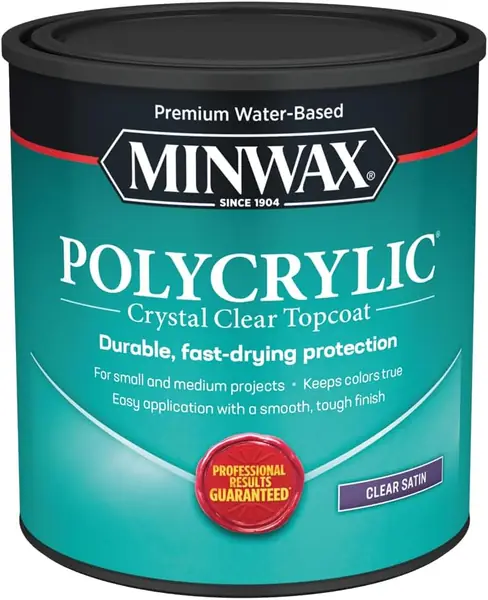
Minwax Polycrylic satin clear water-based finish in a one-quart can

Clear protection

Shop Score 94/100
Size
1 quart
Sheen
Satin
Base
Water-based
Recoat Time
2 hours
View on Amazon

If you want white oak to stay white, the topcoat matters as much as the stain. Minwax Polycrylic is a water-based clear finish that dries crystal clear and stays that way, so it does not add the amber cast that oil-based polyurethane will. The satin sheen is the version we reach for on white oak furniture because it knocks down the shine without making the grain look flat.

The working properties are friendly. It brushes out smoothly, levels without much fuss, and cleans up with soap and water. The two-hour recoat window keeps a small project moving, and the low odor makes it easier to use in a basement shop or a spare room.

We like it best as a clear coat over bare white oak or a light stain, where the goal is to protect the wood without changing its color. It lets the grain read clearly, and the satin finish has enough sheen to look finished without looking plastic. On a bookshelf, bed frame, or cabinet face, it is an easy default.

For a white oak piece that needs a harder film or a warmer tone, an oil-based polyurethane is the better fit. For pale, clean furniture that you want to keep pale and clean, this is our clear coat of choice.

Worth Noting

  • Not tough enough for floors
  • Can yellow over white paint
Our Verdict

Pick this clear satin topcoat when you want white oak's pale color to stay put without the amber cast of an oil-based finish.

Check Latest Price
4.

Hope's 100% Pure Tung Oil Best Natural Oil

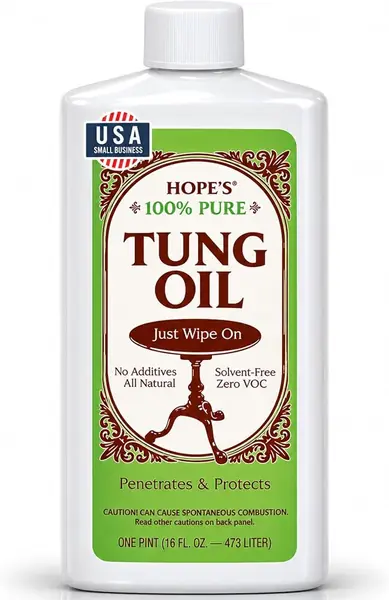
Hope's 100% pure tung oil bottle for food-safe wood finishing

Hand-rubbed grain

Shop Score 93/100
Size
16 fl oz
Type
100% pure tung oil
Food Contact
Food safe when dry
Water Resistance
Water resistant
View on Amazon

The first coat of pure tung oil is when white oak's grain starts to glow. Hope's 100% Pure Tung Oil is a wiping oil that soaks into the fibers and leaves the wood feeling like wood. We like it for a hand-rubbed, low-sheen look on furniture and trim, and because it is considered food safe when fully dry, it is also a sensible choice for a butcher block or a cutting board.

Application is straightforward: wipe it on, let it soak, and wipe off the excess. Thin coats are the ones that cure cleanly, so do not flood the surface. The oil darkens white oak slightly and brings out the ray fleck, which is either the point or a dealbreaker depending on the look you want. It has an odor while wet that fades as it cures, so work in a ventilated space.

On a table that sees daily drinks, we top it with a clear coat after it cures. On a picture frame, a tool handle, or a piece where touch matters more than bulletproof protection, the oil alone is enough. The result is a soft, natural sheen that deepens over time rather than sitting on top of the wood.

We reach for this when we want white oak to look older and warmer, not glossy or plastic. It is a patient finish, but the grain payoff is worth it on the right piece. If you need a finish that can go on and be done in an afternoon, choose a film-forming topcoat instead.

Worth Noting

  • Needs multiple coats and long cure
Our Verdict

We like this pure tung oil for a slow, hand-rubbed finish that deepens white oak's grain without building a plastic film.

Check Latest Price
5.

Minwax Fast Drying Polyurethane Best Oil-Based Topcoat

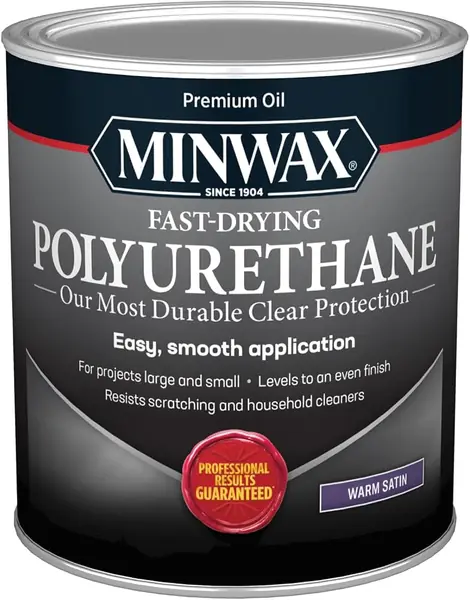
Minwax Fast Drying Polyurethane warm satin clear finish one-quart can

Warm topcoat

Shop Score 92/100
Size
1 quart
Sheen
Warm satin
Base
Oil-based
Recoat Time
4-6 hours
View on Amazon

Oil-based polyurethane adds a warm amber tone to white oak, and that is either the finish you want or the one you don't. Minwax Fast Drying Polyurethane in Warm Satin leans into the warmth: it builds a durable film, flows out with fewer brush marks than many water-based coats, and gives white oak a traditional furniture look. We like it for tabletops, dressers, and trim where the wood can handle a little color shift.

The practical case is the recoat schedule. You can sand lightly and recoat in four to six hours, so a weekend project stays on track. The film is tougher than a wipe-on oil and resists water and household wear well. It also has enough build to fill minor surface texture, though you still need a smooth base.

Application is familiar: stir, brush with the grain, and keep the coats thin. It is not a wipe-on product, and a bad brush can leave marks, so use a good synthetic brush and avoid overworking the finish. The quart covers about 250 square feet, which is enough for a table and a few chairs.

This is the finish we choose when white oak should look like an heirloom rather than a pale Scandinavian table. If you want the wood to stay as light as possible, a water-based clear coat is the better route. For warmth and a durable film, this is a reliable workhorse.

Worth Noting

  • Strong solvent odor while wet
  • Can yellow white paint
Our Verdict

We choose this oil-based poly when you want a warmer, traditional look and a durable film, and you don't mind a little amber tone.

Check Latest Price
6.

Tried & True Original Wood Finish Best Oil-Wax Finish

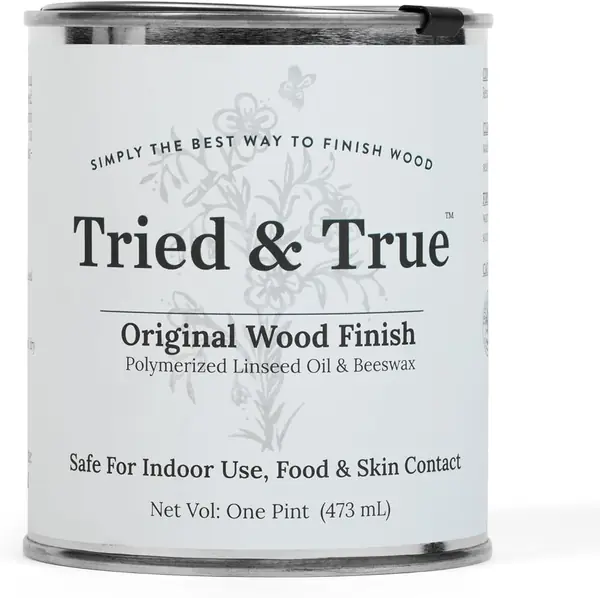
Tried & True Original oil and beeswax wood finish pint can

Soft matte feel

Shop Score 91/100
Size
16 fl oz
Sheen
Matte
Base
Linseed oil and beeswax
Coverage
Up to 125 sq ft
View on Amazon

The ingredient list is short: polymerized linseed oil and beeswax, with no solvents or metallic driers. That simplicity is why we reach for Tried & True Original on white oak pieces that will be touched—a stool, a cutting board, a child's toy. It leaves a soft matte sheen and a slightly waxed hand, so the wood feels finished rather than sealed under plastic.

Application is a wipe-on, buff-off routine, and a little goes a long way; the pint covers up to 125 square feet. We found the first coat drinks in quickly, and the second builds a little more depth without turning glossy. The finish is food safe, which is a real advantage for kitchen items and toys. On white oak, the oil brings out the grain without the yellow-orange push of an oil-based poly, and the wax leaves a low luster that fits the wood's quiet look.

The finish is not a film, so it will not give you the same protection as a polyurethane on a dining table that takes daily abuse. We keep it for pieces where touch and repairability matter more than bulletproof wear. A light refresh with more oil brings the surface back without stripping.

If you want a finish that feels close to bare wood and you do not mind a slower rhythm, this is a lovely choice. For a floor or a heavily used table, step up to a film-forming topcoat.

Worth Noting

  • Needs thin coats and days to cure
Our Verdict

Go with this oil-wax blend when you want a soft, matte, food-safe finish that feels close to bare white oak.

Check Latest Price
7.

Furniture Clinic Danish Oil

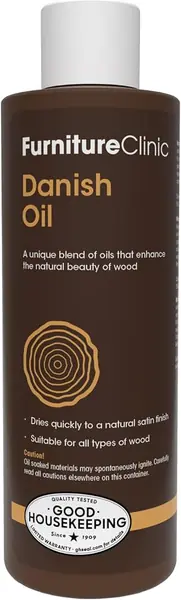
Furniture Clinic Danish oil bottle for satin wood finishing

Budget oil finish

Shop Score 90/100
Size
8.5 fl oz
Sheen
Satin
Type
Danish oil
Use
Interior and exterior
View on Amazon

For a small white oak project, a big can of finish is often more than you need. Furniture Clinic's Danish Oil comes in an 8.5-ounce bottle, which is a sensible size for a side table, a box, or a set of coasters. It is a wipe-on oil-and-varnish blend that leaves a satin sheen and adds depth to the grain without building a thick film.

Putting it on is simple: wipe a coat onto the wood, let it soak in, and wipe away what stays on the surface. It dries to a warm, natural look that does not shout 'finished.' The 8.5-ounce bottle goes further than you might expect on a small project, though a large table will take more than one.

We like it as an affordable step up from a simple oil for furniture that needs a little more protection. It is not a floor finish and it is not a replacement for a hard polyurethane, but it makes a white oak piece look cared for. For a budget refinish or a first project, it is a useful middle ground.

If you want a completely clear, pale look, test it on an offcut first; Danish oil can add warmth. If you want a soft satin sheen with minimal fuss, it is an easy product to live with.

Worth Noting

  • Strong solvent odor while wet
Our Verdict

We keep this Danish oil for small white oak projects that need a quick, affordable satin sheen and a simple wipe-on application.

Check Latest Price
8.

Littlefair's Water Based Wood Stain

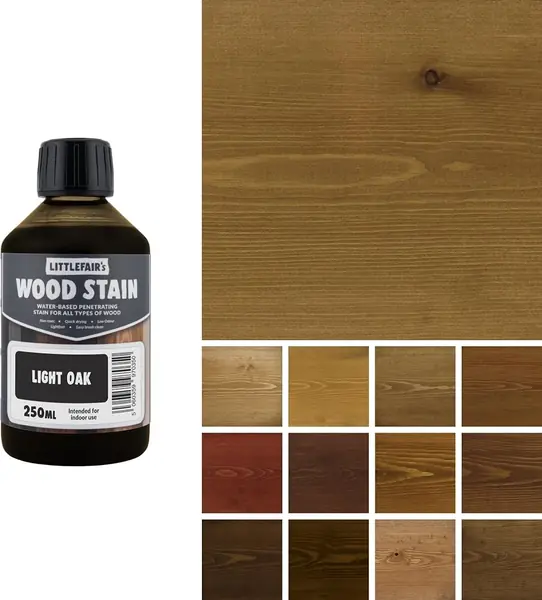
Littlefair's water-based Light Oak wood stain bottle for furniture

Light oak tone

Shop Score 89/100
Size
8.5 fl oz
Base
Water-based
Coverage
Up to 3 m²
Color
Light Oak
View on Amazon

If you want white oak to read as light oak rather than golden oak, a water-based stain is a useful tool. Littlefair's Light Oak is a thin, water-based dye that adds a pale, slightly washed color without the solvent smell of an oil stain. We like it for furniture and trim where you want to nudge the tone without hiding the grain. It dries fast and cleans up with water, which makes it friendly for a small shop or a first refinishing project.

The working time is short. You need to apply it quickly and wipe it evenly, or you can leave overlap lines; one pass with a cloth is better than fussing. The 8.5-ounce bottle covers up to three square meters, so it is sized for a small project, not a floor. On white oak, the light oak tone is subtle and a little cool, which is what we want when the wood already has a nice pale color.

It is non-toxic and low-odor, which matters if you are finishing in a basement or a small apartment. The color is easy to control with the amount you wipe off, and it does not add the yellow cast of an oil-based stain. For a quick color change on a small white oak project, it is an easy product to work with.

We keep it for interior furniture and trim, not a front door or a large table. For a small white oak piece that needs a light wash of color, it is a practical choice that does not overwhelm the wood.

Worth Noting

  • Can fade in direct sun
Our Verdict

We like this water-based stain when you want a light oak tone on white oak without the smell and cleanup of a solvent-based stain.

Check Latest Price

How We Tested White Oak Finishes

We built the shortlist by research first, sorting every candidate by base and format (water-based film, oil-based film, hard wax oil, pure tung or linseed oil, oil-wax blends), then comparing sheen, stated coverage, recoat interval, and whether the maker states food-contact safety once fully cured. Anything that came only in a high-gloss amber or listed no coverage figure at all got cut before we bought a can. That left 12 finishes, and eight of them held up well enough to recommend.

Testing happened where the wood actually lives. We refinished a dining table and wiped it down after dinner for weeks, finished kitchen cabinet doors in the garage and hung them back up, and oiled a butcher block counter and a cutting board that both got hand-washed. A pair of pieces went outside onto a bench that gets rained on. Every product went on in a ventilated shop with gloves, eye protection, and the respirator the label called for, and every oil-soaked rag was laid flat outdoors to dry.

We held each finished board next to an unfinished control in the same window light to watch for the amber shift that creeps in on pale oak, and timed both dry-to-touch and the first safe recoat. We logged streaks where a rag or brush left them, ranked odor in the first hour and again the next morning, and counted the square feet each can actually covered against its label claim. Durability got tested the boring way: water rings, a scuff, a dropped tool, then a spot repair to see how well it blended. On anything headed for food contact, we only used finishes the maker states are food safe after full cure, and we washed those pieces as directed.

How to Choose a Finish for White Oak

Decide whether you want a film or an oil

A film finish—polyurethane, polycrylic, or a hardwax oil—sits on or in the surface and builds protection. A penetrating oil like tung or Danish oil soaks in and leaves the wood feeling open. For white oak, we start with the look: if you want a soft, hand-rubbed surface that gains character, choose an oil. If you want a wipe-clean tabletop or cabinet, choose a film. Rubio Monocoat bridges the two with a one-coat hardwax oil that colors and protects without a plastic sheen.

Match the finish to the wear

White oak furniture and cabinets do not need the same film as a floor. A water-based clear coat like Minwax Polycrylic is easy to apply and keeps the wood pale, but it is not our choice for a floor. An oil-based polyurethane such as Minwax Fast Drying Polyurethane builds a tougher film and adds warmth. For a table that sees daily drinks, plan on a film topcoat over any oil. For a bookshelf or bed frame, a satin clear coat is enough.

Keep the color pale or let it warm

White oak's cool tone is easy to lose under an amber finish. Water-based clears and Super White hardwax oil keep it pale; oil-based polyurethane and many Danish oils add warmth. If you want a light stain, a water-based dye like Littlefair's Light Oak adds a subtle wash, but test it in a sunny spot because lightfastness varies. We test every finish on an offcut of the same white oak before committing to a whole project.

Plan for application and cure

Gel stains are forgiving on vertical surfaces because they stay put, but they can mute grain and need thin coats. Wiping oils are easy to apply but need time between coats, and a heavy coat can stay tacky. Water-based topcoats recoat in about two hours; oil-based polyurethane needs four to six. Read the recoat window as a minimum, not a target, and do not rush the final cure.

Buy for coverage and the full schedule

Finish is a system, not a single can. A quart of gel stain covers 35 to 50 square feet; a pint of oil-wax covers up to 125; a small water-based stain covers about three square meters. Buy enough for the number of coats you plan, and keep a small can for samples. The cheapest can is not a bargain if you run out mid-project and change sheen between batches.

Frequently Asked Questions

Final Verdict

We reach for Rubio Monocoat when the goal is a pale, natural white oak finish that still feels like wood. Its one-coat application and matte hardwax oil are worth the premium on a showpiece, and the Super White tint keeps the wood cool rather than amber.

If you want a simple clear coat over bare or stained white oak, Minwax Polycrylic is the easier, more affordable choice; it stays clear and cleans up with water. For dark, even color on cabinets, choose General Finishes Gel Stain.