Howard Citrus Shield Paste Wax Best Overall
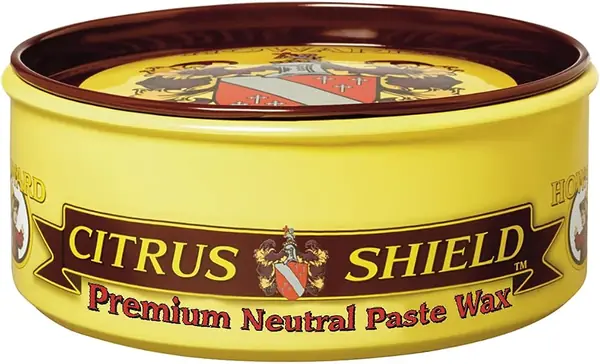
- Size
- 11 oz
- Form
- Paste
- Surfaces
- Finished and unfinished wood
- Wax Blend
- Carnauba, beeswax, orange oil
Carnauba is the hardest of the natural waxes used in a furniture paste, and it's why this tin sits at the top of our list. The film it leaves is dry and slick rather than greasy, so a table apron or a cabinet door feels polished rather than tacky the next day. It's a soft paste, so a cloth picks it up with almost no pressure.
Orange oil carries the wax and lifts light grime as you rub, which means a dusty chair or a fingerprinted door doesn't need a separate cleaning step first. What we like most is how far a thin smear goes: a little on a cloth covers a drawer front, and the tin keeps working through a whole run of trim and cabinets. Buff it clear and the grain reads through rather than under a coat of shine.
Indoors, it's the most forgiving of the hard waxes here — the smell is orange peel, not solvent, so a winter project doesn't require every window open. And it's honest about what it is: a top coat. On a tabletop that already has a finish it adds depth and slip; on bare pine it leaves the grain readable instead of sealed under plastic.
What We Like
- Hard carnauba film dries slick, not greasy
- Orange oil lifts light grime while you rub
- Neutral paste buffs clear without clouding grain
Worth Noting
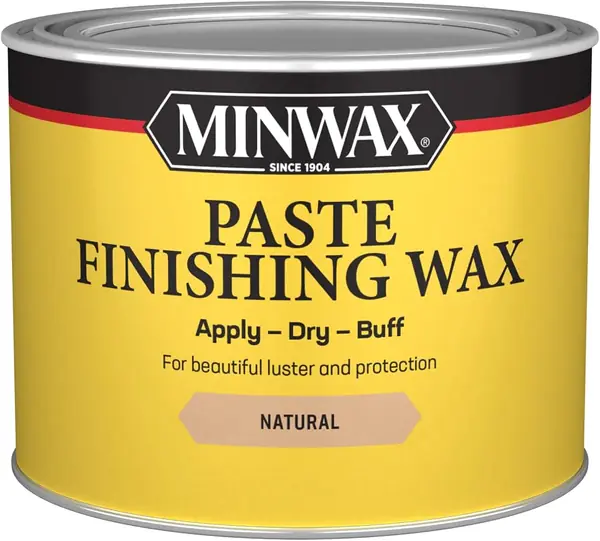
- Tin is smaller than the Minwax can
For everyday furniture and woodwork, this is the paste wax we recommend: a hard carnauba film, an easy thin spread, and a clear buff.
Check Latest Price