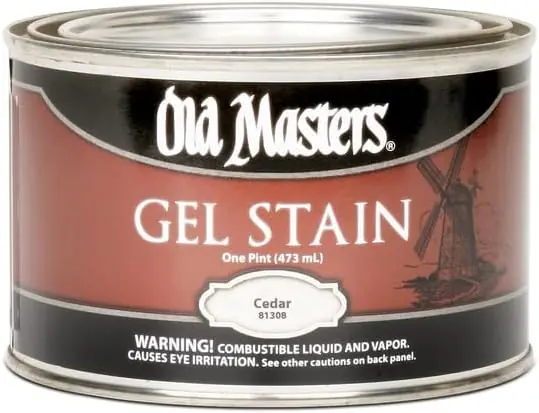
Old Masters Gel Stain, Cedar Best Overall
- Size
- 1 pint (16 fl oz)
- Color
- Cedar
- Base
- Oil-based gel
- Use
- Interior and exterior
Cedar is the reason we reach for a gel before anything else. The wood alternates between soft, thirsty earlywood and hard latewood ring by ring, and a thin stain soaks into the soft bands first, leaving a striped, patchy panel that sends people back to the sander. Old Masters' gel is thick enough to sit on the surface and color both bands at the same rate, which is why it is our pick for anyone finishing bare cedar.
It is rated for interiors and exteriors, which is unusual enough in this group to matter: the same pint handles a cedar chest, closet lining, a front door, or a pair of planter boxes. The maker lists it as suitable for difficult-to-stain woods and notes adhesion to fiberglass and composite surfaces, so it also works for refreshing a cedar-look door that is not cedar at all.
Two things to plan around. It is oil-based, so open the windows and expect the smell to hang on for a day. And a pint, while it stretches further than you think across trim and rails, is furniture-scale work — if you are looking at a deck, you want one of the gallons below.
Topcoat it with something that will not shift the color. A water-based polyurethane keeps the Cedar tone where you set it; an oil-based clear coat over this gel can push the brown toward amber, and on a warm wood like cedar that reads as yellowing rather than depth.
What We Like
- Gel body colors cedar's uneven rings evenly
- Rated for interior and exterior cedar projects
- A little goes a long way on trim
Worth Noting
- Pint covers trim and furniture scale jobs only
- Oil-based fumes need real ventilation
If you are staining bare cedar and want the grain to color evenly the first time, this is the one we recommend — indoors or out, on anything from a chest to a front door.
Check Latest Price