Wooster Q3211-2 Shortcut Angle Sash Brush Best Overall
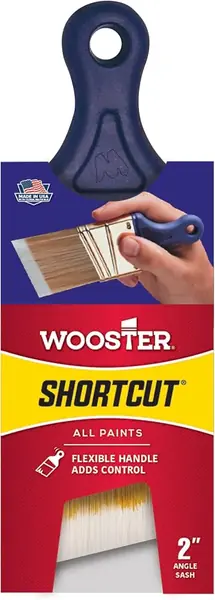
- Handle
- 2-inch flexible Shergrip
- Bristle Type
- White nylon and gold polyester angle sash
- Brush Width
- 2 inches
- Ferrule
- Brass-plated steel
Two inches is the entire handle, and that is the point. On a full-length brush you paint from the shoulder; here your hand sits just above the ferrule, so the tip goes where your fingers aim. We noticed the difference on the fussy parts — the return of a window casing, the inside corner where casing meets baseboard — where a long handle had us bracing a knuckle against the wall to steady it. That control is why this is the brush we recommend first for wood trim.
The 2-inch angle sash head carries a white nylon and gold polyester blend in a brass-plated steel ferrule, and it is happy in latex or a water-based stain. The blend has enough spring to push paint into the cove of a molding profile without the tip curling, and it lets go of the paint evenly enough that a pass down a door casing comes out with the brush marks laid off rather than standing. The soft rubberized grip is the part we did not expect to care about; it is the difference between a comfortable afternoon and a cramped hand.
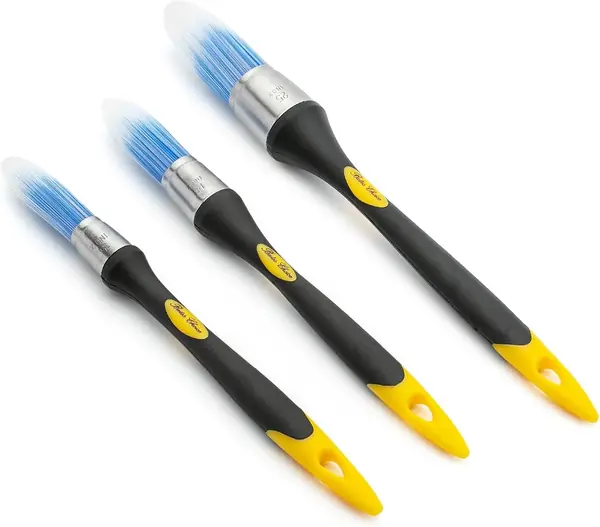
We keep two of them — one on latex, one on oil-based enamel — because at this price a fresh brush is easier to justify than a thorough cleaning on a Tuesday night. The 2-inch head is the right default for casing, baseboard, and door faces. For muntins and beads you will want something narrower, which is exactly what the Bates trim set is for.
What We Like
- Two-inch handle keeps your hand at the line
- Soft rubberized grip stays comfortable through long runs
- Blend has enough spring for molding profiles
Worth Noting
- Short handle limits reach on broad surfaces
We recommend the Shortcut first for wood trim because its stubby handle puts your hand right at the cut line and the 2-inch angle covers most casing in a pass.
Check Latest Price