↑↓ navigate ↵ open Esc close All results →

Best Paint for MDF

MDF cuts clean, routes beautifully, and costs less than solid wood — then you paint it and meet the material's two personalities. The faces are pressed so smooth that paint sits on them like a decal; the cut edges are thirsty fiber that soaks up coat after coat. A good paint for MDF does both jobs at once, gripping the slick face and sealing the raw edge so the finished panel reads as one surface instead of two.

We tested 14 paints on MDF over four months, brushing and spraying scrap panels, a cabinet door, and a pile of small craft blanks. We timed recoat windows in a shop that stayed cold most mornings, counted square footage per container against a bookcase, and sanded between coats to see which films powder up and which gum the paper. Gloss shows every swirl; matte forgives them.

The picks below cover the whole job: brush-on for flat panels, aerosols for edges and routed profiles, small pots for touch-ups and craft pieces. Whatever you choose, seal every cut edge, even the hidden ones.

Our Top Picks

The Best Paint for MDF

1.

Rust-Oleum Painter's Touch Latex Brush-On Paint Best Overall
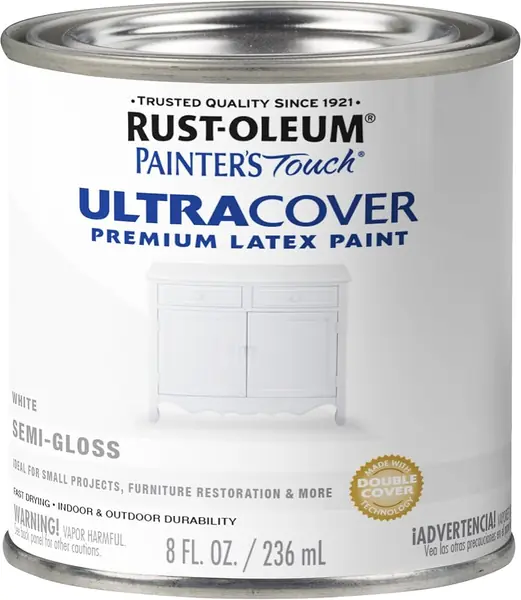
Rust-Oleum Painter's Touch brush-on latex paint in semi-gloss white, half-pint can

Furniture and trim

Shop Score 97/100
Size
8 fl oz (half pint)
Finish
Semi-gloss
Coverage
30 sq ft
Dry To Touch
30 minutes
View on Amazon

A half pint covers about 30 square feet, which is the honest way to read this can: one nightstand, a set of cabinet doors, or a run of window trim rather than a wall of built-ins. Rust-Oleum also sells the same formula in a 32-ounce can, and that is the one we point to when the project is a bookcase or a bank of closet doors.

The formula is what earns the space. It is a water-based acrylic that brushes out flat on MDF's uniform face and cleans up with soap and water, and water-based acrylic is the friendlier family to sand: a light pass between coats knocks down dust nibs without loading the paper. Semi-gloss is a deliberate choice here. MDF has no grain to hide, so a sheen that reflects light evenly reads smoother than dead matte, and this one is built to minimize surface imperfections on a flat panel.

What we keep coming back to is how well it suits the material. MDF is a flat, stable panel that rewards a thin, sandable film, and this paint builds one in coats you can knock back with 220 grit and recoat the same afternoon. Cut edges still drink the first pass, so give them an extra coat before the faces catch up, and that is where a brush beats a spray: you can work paint into the porous core instead of dusting it from above.

Worth Noting

  • Color can land off from the swatch
Our Verdict

Our default for MDF furniture and trim: a water-based semi-gloss that brushes out flat, sands between coats, and dries to the touch in about half an hour.

Check Latest Price
2.

FolkArt Home Decor Chalk Paint Best Matte Furniture Finish

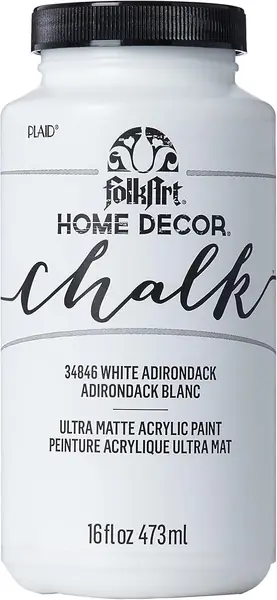
FolkArt Home Decor Chalk furniture paint in White Adirondack, 16-ounce bottle

Furniture makeovers

Shop Score 96/100
Size
16 fl oz
Finish
Ultra-matte
Dry Time
1 hour
Surfaces
Wood, glass, metal
View on Amazon

Chalk paint earns its following on surfaces that are hard to sand, and MDF is the easy version of that job: a flat, uniform panel with nothing to hide. FolkArt's version is a 16-ounce bottle of ultra-matte acrylic that needs only minimal prep, layers over itself, and sands back at the edges when you want a worn look.

We like it best for a piece that is more about the look than hard wear. Sixteen ounces is real furniture volume, and two coats is the realistic expectation for an even, opaque white over MDF even though the label points at one. It dries in about an hour, reads as a clean bright white rather than a cream, and distresses the way chalk should: sandpaper takes paint off an edge instead of smearing it. What it will not give you is a wipeable film, so plan on wax or a clear protective coat anywhere hands land daily.

White Adirondack is the shade to pick when you are matching existing white trim and do not want a warm cast sitting next to it. On built-ins, small tables, and craft pieces where a flat, chalky surface is the whole point, we think it is the better buy than a semi-gloss, as long as you budget for the topcoat and accept a finish that is meant to look handmade.

Worth Noting

  • Thickness varies from bottle to bottle
Our Verdict

When the look you want is chalky and flat, this is the bottle we reach for: sixteen ounces of ultra-matte acrylic that covers a dresser in two coats.

Check Latest Price
3.

Krylon Fusion All-In-One Spray Paint Best for Recoating Finished MDF

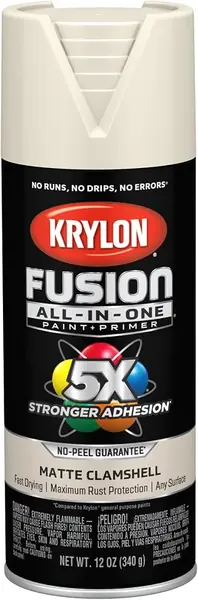
Krylon Fusion All-In-One matte spray paint can in off-white Clamshell

Recoating finished MDF

Shop Score 95/100
Size
12 oz
Finish
Matte
Coverage
Up to 25 sq ft
Form
Aerosol spray
View on Amazon

The case for this can is the piece you did not build: MDF that already wears a factory laminate, an old coat of enamel, or a finish you cannot sand back without wrecking a profile. Krylon formulates Fusion to bond without sanding or priming, and on a slick face that is the difference between a recoat and a strip-and-start-over, which is why it is the spray we name for that job.

Clamshell is an off-white matte, the right sheen for a flat panel with no grain to distract from a lap mark. It covers up to about 25 square feet a can, roughly double the other spray here. The label's conditions are worth reading before you start: it sprays best between 55 and 75 degrees with humidity under 60 percent, so a cold garage in November is the wrong workshop for it.

Shaped and routed MDF is where the can earns its keep. A brush leaves a ridge on a roundover that no amount of sanding fixes; light spray passes wrap it evenly and build color slowly. Keep the coats thin on vertical faces, start with a fresh can for anything bigger than a shelf, and this is the most forgiving recoat spray in the roundup.

Worth Noting

  • Matte white can read grayer than the cap
  • Nozzle can fail partway through a can
Our Verdict

For MDF that already wears paint or a factory laminate, we hand you this can: it grips without sanding or priming and lays down a flat matte.

Check Latest Price
4.

Rust-Oleum Painter's Touch 2X Ultra Cover Spray Paint Best Spray for Edges and Profiles

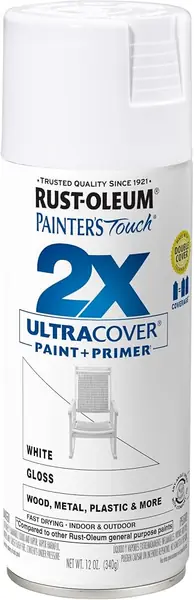
Rust-Oleum Painter's Touch 2X Ultra Cover gloss white spray paint can

Edges and profiles

Shop Score 94/100
Size
12 oz
Finish
Gloss
Coverage
12 sq ft
Dry To Touch
20 minutes
View on Amazon

An exposed MDF edge is compressed fiber with the ends of the fibers facing out, and it drinks paint the way a sponge does: the first pass disappears while the faces are still wet. Sealing those edges before you touch anything else is what keeps a painted MDF panel looking flat, and a spray can is the fastest way to get there.

Painter's Touch 2X is an oil-based gloss that dries to the touch in about 20 minutes, and the any-angle tip lets you spray up under a shelf or into a recess without turning the piece over. Gloss is doing real work on an edge: the sheen tells you at a glance where the fiber is still thirsty, so a second light pass reads obviously different from the first.

The comfort tip matters more than the spec sheet suggests. A wider pad takes less finger pressure, and on a long run of edges that is the difference between a steady pass and a cramping hand. Light coats a few minutes apart build a film you can sand back with 220 grit without cutting through to bare fiber.

We reach for this on edges, routed profiles, and small cut parts, and we buy more than one can for anything larger than a shelf. As a finish for a whole cabinet it is a detail tool rather than an economy: a brushed acrylic covers more ground for the money and leaves you less overspray to manage.

Worth Noting

  • Oil-based smell lingers until the coat cures
Our Verdict

We keep this oil-based gloss for sealing cut edges and spraying small parts, where a brush fights the shape and speed matters more than cost per square foot.

Check Latest Price
5.

Kolor Kingdom Acrylic Paint Set, 24 Colors Best for Craft Projects

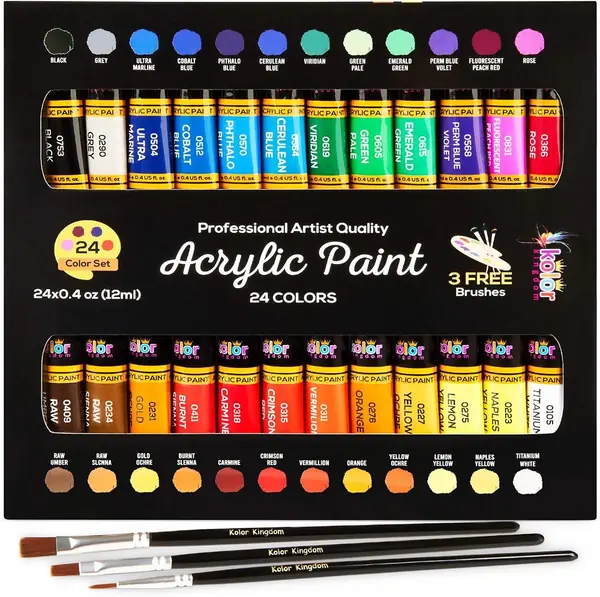
Kolor Kingdom acrylic paint set with 24 color tubes and three brushes

Small MDF crafts

Shop Score 93/100
Colors
24
Brushes Included
3
Tube Size
0.41 fl oz (12 ml)
Certification
ASTM D-4236 and EN71-3
View on Amazon

Twenty-four tubes at 0.41 ounces each, plus three brushes, for about what a furniture-sized can costs. That arithmetic is the whole pitch: a batch of MDF ornaments, letters, or cutouts that each want a different color is exactly the job this set was built for.

The listing names MDF among the surfaces it covers, which none of the other sets here does, and the pigment load backs it up: a small tube goes a long way on a coaster or a six-inch letter. Coverage is honest for what it is, glossy color that builds in two thin coats, and the brushes in the box mean you can start the same afternoon you open it.

For a rainy-afternoon project with kids, or a set of MDF shapes that need eight different colors, the value is obvious, and we like that nobody has to negotiate over who gets the blue. It is a craft kit, though, and we treat it that way: for a shelf or a cabinet door, the half-pint of brush-on acrylic is the better purchase.

Worth Noting

  • Tubes are small for anything beyond detail work
  • Dry time varies from color to color
Our Verdict

We like this set for a batch of small MDF shapes: twenty-four colors and three brushes, sized for cutouts and ornaments rather than furniture.

Check Latest Price
6.

FolkArt Multi-Surface Paint Best for Touch-Ups and Detail

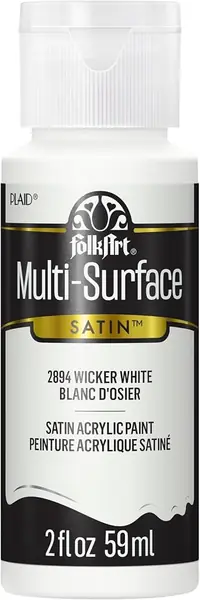
FolkArt Multi-Surface acrylic paint in Wicker White, two-ounce bottle

Touch-ups and detail

Shop Score 92/100
Size
2 fl oz
Finish
Satin
Dry Time
1 hour
Use
Indoor and outdoor
View on Amazon

Two ounces next to the half-pint above is the whole story, and for a chipped MDF edge, a pair of drawer pulls, or detail work on a piece that is already painted, it is the size we want: no can to reseal, no brush load to waste, and a bottle that lives in a tool bag. Wicker White is a satin white that suits trim and small profiles better than the broad flat face of a big panel.

Drying runs about an hour, and the formula is rated for indoor and outdoor use and bonds to glass, fabric, and ceramic as well as wood, which makes it the bottle to grab when a repair crosses materials. It also stays put on a vertical face instead of sagging, so touch-ups on door frames and cabinet stiles do not turn into a masking job.

Worth Noting

  • Tiny 2-ounce bottle suits touch-ups rather than big panels
Our Verdict

We keep this satin white on the shelf for touch-ups and detail work, where a half-pint can is more paint than the job needs.

Check Latest Price
7.

GOTIDEAL Acrylic Paint Set, 18 Colors Best for Group Craft Sessions

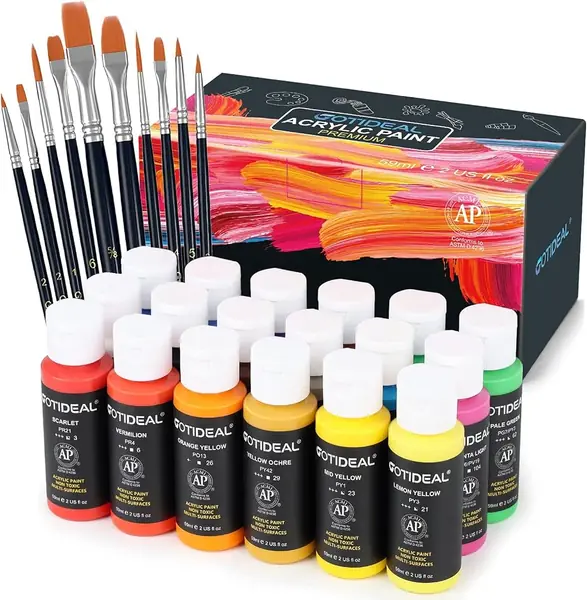
GOTIDEAL acrylic paint set with 18 two-ounce bottles and ten brushes

Group craft sessions

Shop Score 91/100
Coverage
99 sq ft
Colors
18
Brushes Included
10
Bottle Size
2 fl oz
View on Amazon

Eighteen bottles at 2 ounces each adds up to 36 ounces of paint, more total volume than any single container in this roundup, divided across a palette that covers the primaries and a few useful mixes besides.

Ten brushes come in the box, which matters more than it sounds when a classroom or a birthday table is involved: brushes wear out, get dropped, and disappear, and a set sized to be handed out solves that. The listed coverage runs to 99 square feet, the largest figure here, though that total is spread across eighteen small bottles rather than sitting in one can.

The paint is matte and mixes predictably, and the bottles are labeled clearly enough that a kid can find the color they want without help. For an afternoon of small MDF shapes it behaves: color goes down opaque in a couple of passes, and cleanup is water before it sets.

Where this earns its place is a group project or a shop that wants a whole palette without buying twelve bottles one at a time. For a single MDF piece in a single color, a half-pint of brush-on paint covers more surface with far less waste, and that is the swap we make whenever the job is furniture rather than crafts.

Worth Noting

  • Bottles are stiff enough to make squeezing a chore
Our Verdict

This is the set we hand to a class or a workshop table: eighteen bottles, ten brushes, and enough total paint for an afternoon of small projects.

Check Latest Price
8.

Apple Barrel Acrylic Paint Best for Small Craft Pieces

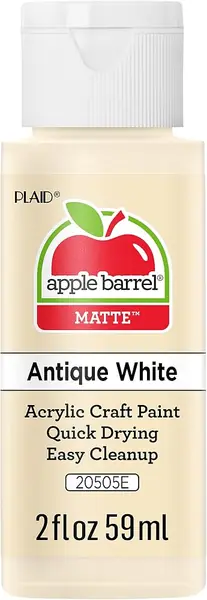
Apple Barrel acrylic craft paint in Antique White, two-ounce squeeze bottle

Small craft pieces

Shop Score 90/100
Size
2 fl oz
Finish
Matte
Coverage
8 sq ft
Paint
Water-based acrylic
View on Amazon

A hundred and one colors, sold one bottle at a time, in the least expensive containers in this roundup. That range is why the line turns up in so many craft rooms: you buy the one odd green a project needs instead of a set that leaves you with four blues you never open.

Treat it as craft paint rather than a furniture finish and it does its job well. The matte film brushes thin, touches up invisibly over a dry coat, and dries quickly enough that small pieces do not sit overnight. We like it most for MDF cutouts, frames, and toy parts where a warm white is the goal and a furniture-grade film would be overkill.

What we appreciate beyond the color is the working quality: it is creamy enough to thin with a drop of water, and it holds its color from wet to dry, which is not something every craft bottle manages. On bare MDF, plan two passes over cut edges, because the first one always looks patchy and that is the fiber, not the paint.

Worth Noting

  • Bottle covers only about 8 square feet
Our Verdict

We reach for this when a small MDF project needs one exact color: it is the cheapest bottle in this roundup and the range runs to a hundred options.

Check Latest Price

How We Tested Paint for MDF

We built a shortlist from spec sheets, sheen options, stated coverage, and whether each product claims to need a separate primer, then narrowed it to 14 paints spanning brush-on, aerosol, chalk, and small craft bottles. Every one went onto half-inch MDF panels we cut and routed ourselves, plus a cabinet door and a batch of small craft blanks, including cove and round-over profiles, because a flat face tells you almost nothing about how a paint handles an edge. Panels were sanded outdoors with dust extraction and a respirator on, and any cut edge we weren't deliberately testing got sealed first.

Each paint went on per its label, some over bare MDF and some over primer, and we noted how a brush dragged across the slick face versus how an aerosol misted into a routed profile without runs. Spray cans were used outdoors, well away from the shop's water heater and anything else that could ignite a wet film. We measured coverage by marking square-foot sections on scrap and counting how far a container actually stretched, how much film each coat built, and how long the recoat window ran in a shop sitting near 60 degrees most mornings.

After curing, we sanded between coats with 220-grit to see whether the film powdered or gummed the paper, and wiped finished panels with a damp cloth to check for burnishing or color that rubbed away. Sheen was judged on a flat, sanded panel in daylight, where gloss exaggerates swirl marks and matte hides them. We held each dried color against its swatch under daylight and shop light, then divided square feet covered by cost per container — the math that stops small craft pots from looking like a bargain.

How to Choose Paint for MDF

Seal the Cut Edges First

A cut MDF edge is raw, uncompressed fiber, and it absorbs far more paint than the faces do, which is why so many home-painted MDF panels show dull, sunken edges after two coats. Seal the edges first with the paint you plan to use, let them dry, then sand the raised grain back with 220 grit. Two thin passes on the edge before you touch the faces will save you a third coat over the whole piece.

Ignore any no-primer-needed claim as permission to skip this step. It usually means the paint bonds without a primer, not that a porous edge will suddenly behave like a flat face.

Brush, Spray, or Chalk Finish

Brush-on acrylic gives you the most control on flat panels, shelves, and cabinet doors, and it is the only option that lets you work paint into a cut edge instead of dusting it from above. Spray earns its place on routed profiles, small parts, and pieces with details a brush cannot reach; expect 12 to 25 square feet of coverage per can, so the cost per square foot is far higher. Chalk is a finish decision rather than a shortcut: ultra-matte, easy to distress, and best with wax or a clear topcoat on anything handled.

One trap worth knowing: aerosols have a temperature window. Krylon's Fusion sprays best between 55 and 75 degrees with humidity under 60 percent, and a cold garage will leave you with a soft, dull film no matter how careful your passes are.

Match the Sheen to the Piece

Sheen on MDF is less about hiding grain, because there is none, and more about how the piece gets used. Satin and semi-gloss wipe clean and suit trim, cabinets, and kids' furniture; semi-gloss also minimizes the look of surface imperfections on a dead-flat panel. Ultra-matte chalk is the furniture-makeover look and marks more readily, so keep it for pieces that skip daily handling or plan a topcoat. Small craft pieces can be matte, since they touch up in seconds.

Do the Coverage Math Before You Buy

A 2-ounce craft bottle is rated around 8 square feet, a half-pint of brush-on paint around 30, and a 16-ounce chalk bottle covers a full dresser. Those numbers are per coat, not per project, and two to three thin coats is normal on MDF, so halve the figure before deciding how much to buy. Buying a second container mid-project is the classic way to end up with a batch mismatch, so round up and keep one spare.

Frequently Asked Questions

Final Verdict

For most MDF projects we reach for the Rust-Oleum Painter's Touch brush-on latex. It is the one product here that lets you build a film, sand it flat, and recoat the same afternoon, and the larger 32-ounce can makes the jump from a nightstand to a bookcase an easy one.

Change the pick when the look changes. FolkArt Home Decor Chalk is the better finish for a chalky furniture makeover, and Krylon Fusion is the spray to use when the MDF already carries paint or a laminate you do not want to sand.