↑↓ navigate ↵ open Esc close All results →

Best Brushes for Wood Stain of 2026

Treating the brush as an afterthought is one of the easiest ways to spoil a staining project, because a single shed bristle in the final coat can mean sanding a tabletop back to bare wood. Even though it is the least expensive item on the bench, the brush governs how evenly stain loads, how cleanly it releases, and whether the grain reads crisp or muddy.

Sixteen brushes worked through six months of oil- and water-based staining on a cedar fence, a deck floor, cabinet doors, trim, and a kitchen table, where sizing the applicator to the surface mattered as much as filament quality. A 7-inch head covers fence boards quickly yet cannot navigate a cabinet rail, while a 1.5-inch brush turns a deck into constant dipping — and wide blocks with threaded extension-pole sockets take the strain out of big floors.

Spanning assorted multi-packs for furniture and trim to broad flat applicators for exterior boards, the eight options below finished full projects without leaving loose filaments behind.

Our Top Picks

The Best Brushes for Wood Stain

1.

Bates Choice 4-Pack Paint Brush Set Best Overall
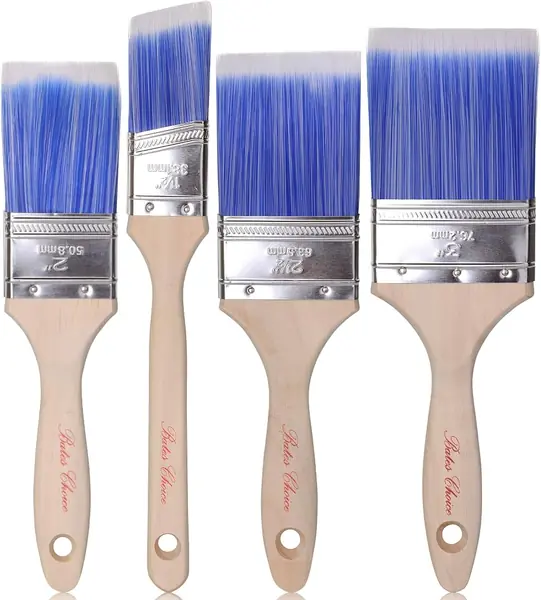
Bates Choice four-piece paint brush set with wood handles and soft synthetic bristles

Furniture and fences

Shop Score 96/100
Handle
Treated wood
Set
4 brushes
Bristle Type
Soft synthetic filament
Brush Widths
1.5, 2, 2.5, and 3 inches
View on Amazon

A three-inch flat brush is why this set earns the top spot. It's wide enough to coat a cabinet side or a fence board in a couple of passes, and the 1.5-inch angled brush in the same pack takes the rails, edges, and inside corners where stain has to stop cleanly. Four brushes, four jobs, one small purchase.

What we appreciate most is how the filaments behave with stain. They're soft at the tip and dense enough to pick up a real load, and they let it go evenly along the stroke instead of dumping it in a puddle at first contact. That even release is the difference between a finish that looks brushed and one that looks wiped on in patches, and it's the reason we reach for this set before anything else here.

The handles are plain sanded wood, comfortable over a long afternoon, and the stainless ferrules shrug off soap and water as readily as mineral spirits. Wash the brush the day you use it, comb the bristles straight, and it comes back for the next coat. For furniture, cabinet frames, and fence boards this is the set we hand people first; for a deck floor, go wider.

Worth Noting

  • Only one angled brush in the four-pack
Our Verdict

We recommend this set first for most staining: four widths of soft synthetic brush that load stain evenly and clean up without fuss.

Check Latest Price
2.

Magimate 5-Inch Deck and Fence Stain Brush Best for Fences and Sheds

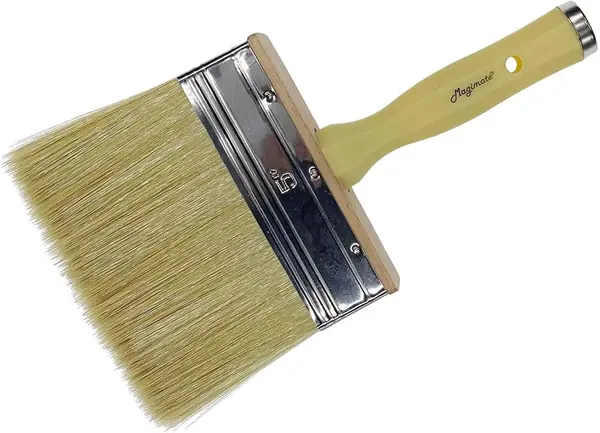
Magimate five-inch deck and fence stain brush with a threaded pole handle

Fences and sheds

Shop Score 95/100
Handle
Threaded for extension poles
Bristle
Synthetic and natural blend
Brush Width
5 inches
Head Thickness
1 inch
View on Amazon

A fence is the job this brush was designed around, and the threaded hollow handle is why: screw it onto an extension pole and you can work a run of pickets without moving a ladder every ten feet, then switch back to the beavertail grip for railings and the corners around posts. We think that mount alone earns it a place in the shop.

The head is 5 inches wide and a full inch thick, a flagged blend of synthetic and natural bristle that's soft enough to work stain into rough sawn boards and dense enough to hold a serious load. It carries that load to the wood without dripping, lays the coat on even, and back-brushes between boards in a way a roller or a pad can't match.

Cleanup is unremarkable in the best way. The blend shrugs off mineral spirits and washes out with soap and water, and the bristles dry straight if you comb them back into shape. At just over 7 ounces it's also light enough to use overhead on siding without your shoulder filing a complaint.

Worth Noting

  • Bristles can work loose into the finish
Our Verdict

A pole-ready 5-inch brush we like for long fence runs, where carrying a heavy load matters more than precision.

Check Latest Price
3.

Bates 7.5-Inch Deck Stain Brush Best for Deck Floors

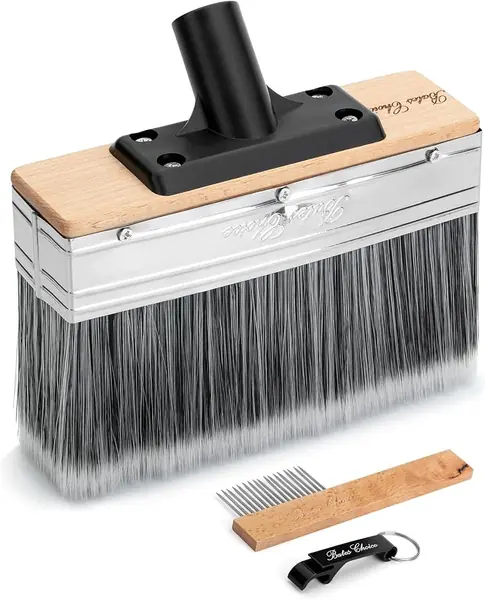
Bates 7.5-inch deck stain brush with black synthetic bristles and threaded base

Deck floors

Shop Score 94/100
Handle
Threaded for extension poles
Brush Width
7.5 inches
Bristle Type
Flagged synthetic
Includes
Cleaning comb and can opener
View on Amazon

Deck boards eat a brush. Seven and a half inches of width is the answer: the head spans a board and its gap in a single pass, so you spend the afternoon laying stain rather than reloading, and the finish goes down in long overlapping strokes instead of dabs.

The part that sold us is how much stain the flagged synthetic bristles hold. The head stays wet across a full board, drips are rare on the carry, and the release is even enough that overlapping passes blend rather than band. Next to the smaller deck brushes here, this is the one that makes a floor-sized job feel routine.

Two small extras earn their keep: a metal comb that straightens the bristles after washing, and a can-opening keyring that saves the walk back to the kitchen drawer. The threaded base takes an extension pole, which is the sane way to do a floor, so pair it with a 2-inch angled brush for spindles and post trim.

Worth Noting

  • Small screws can work loose from the head
Our Verdict

For deck floors, this is the brush we pick: the widest head here, with the stain capacity to make long boards quick work.

Check Latest Price
4.

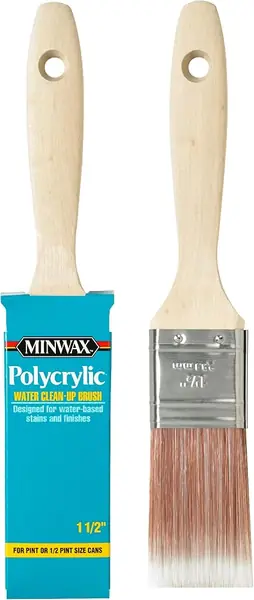
Minwax 1.5-Inch Wood Stain Brush Best for Water-Based Stain and Clear Finish

Minwax 1.5-inch wood stain brush with pale bristles and a hardwood handle

Water-based finishes

Shop Score 93/100
Handle
Natural hardwood
Bristle
Nylon and polyester blend
Brush Width
1.5 inches
Ferrule
Stainless steel
View on Amazon

A detail that matters more than it sounds: this brush is sized for pint and half-pint cans. Dip a 3-inch brush into a half-pint of stain and you spend the job scraping the rim; at 1.5 inches the head goes in clean and comes out loaded. We reach for it whenever the project is small and the whole point is a coat with no brush marks in it.

The bristles are a nylon-polyester blend, soft and flagged, and they lay stain and clear finish down flat. On a tabletop or a cabinet face that softness turns into long, level strokes rather than the tick-tick-tick of a stiff brush, and the stainless ferrule comes through a season of soap-and-water cleanup without rusting. It's happiest with water-based products, which is what the label calls for.

The hardwood handle is shaped for a light grip and stays comfortable when you're working a small area at an angle. This is a precision tool rather than a workhorse, and it rewards being kept for the pieces you'll actually look at.

Worth Noting

  • Only one brush in the pack
Our Verdict

Keep this one for pint cans and water-based topcoats, where its soft blend leaves a level, mark-free finish.

Check Latest Price
5.

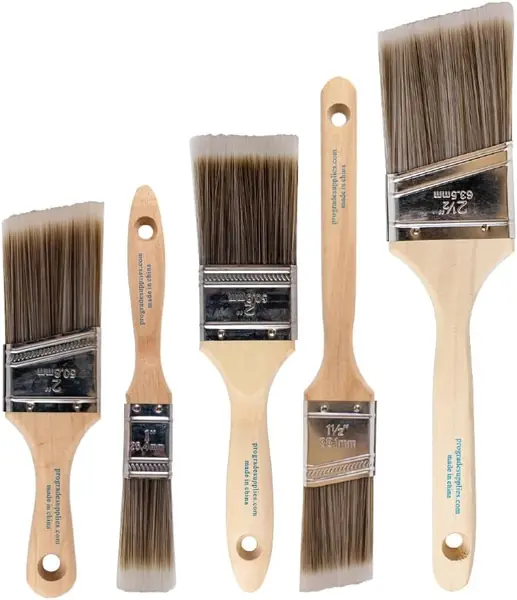
Pro Grade 5-Piece Paint Brush Set Best Budget Set

Pro Grade five-piece paint brush set with solid wood handles and synthetic filaments

Furniture and trim

Shop Score 92/100
Handle
Solid wood
Set
5 brushes including an angle stubby
Bristle Type
SRT synthetic filament
Brush Sizes
1 to 2.5 inches
View on Amazon

The odd brush in this five-piece set is the one worth talking about: a 2-inch angled stubby with short bristles that gets into cabinet interiors, window sashes, and inside corners where a long sash brush just bends against the wood. Most budget sets leave it out.

Around it you get a 1-inch flat, a 1.5-inch angle, a 2-inch flat, and a 2.5-inch angle, which is enough range for a dresser, a set of doors, or a run of fence pickets. The synthetic filaments are soft and long, which we like for stain: they carry a wet load and lay it out with fewer visible lap lines than a stiff brush.

The limit we keep running into is width. At 2.5 inches on the biggest brush, this is a furniture and picket kit rather than a deck brush. Inside that lane it's the lowest cost per brush of the sets here, and at that price you won't agonize over retiring one after a messy oil job.

Worth Noting

  • Bristles can shed into the finish
Our Verdict

Five soft brushes plus a stubby angle for very little money make this the set we suggest for furniture and touch-up work.

Check Latest Price
6.

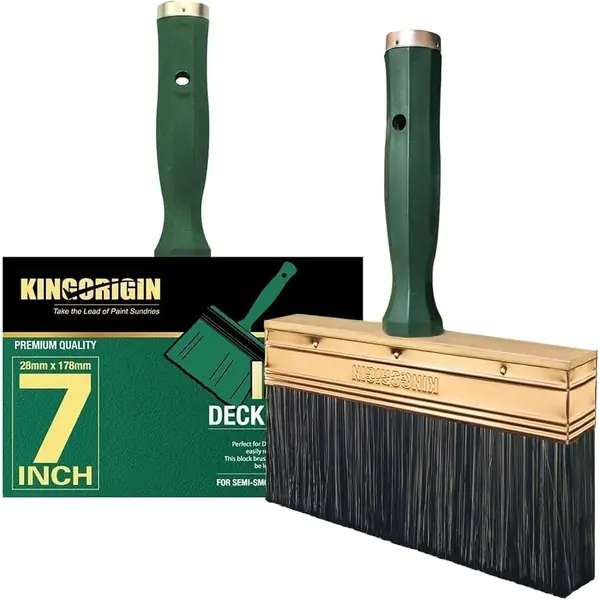
King Origin 7-Inch Deck Stain Brush Best for Fence Stain Jobs

King Origin seven-inch deck stain brush with a green threaded handle and wide head

Fence stain jobs

Shop Score 91/100
Handle
Threaded wood handle
Bristle
Synthetic polyester
Brush Width
7 inches
Head Thickness
1.1 inches
View on Amazon

A 7-inch head that mounts on a broom handle or an extension pole is the fastest way across a fence line, and this is the least expensive of the wide brushes we recommend. The head is 1.1 inches thick and holds a lot of stain per dip, which is the whole game on a long run of boards.

Flat work is where it makes sense: siding, a garage door, a fence, a shed. The polyester filaments are dense enough to push stain into weathered grain instead of skating over it, and the threaded handle puts your legs and shoulders into the stroke rather than your wrists.

Where it fits is a job measured in square footage and weather protection — a rental fence, a shed, a long run of privacy panels. Where it doesn't is furniture or a front door, where a 7-inch head is simply too much brush for the surface. We reach for it when speed is the goal and nobody will be running a hand over the finish.

Worth Noting

  • Bristles shed on rough sawn wood
Our Verdict

A wide, pole-ready head that covers fence runs fast; we think it suits weather protection more than furniture-grade work.

Check Latest Price
7.

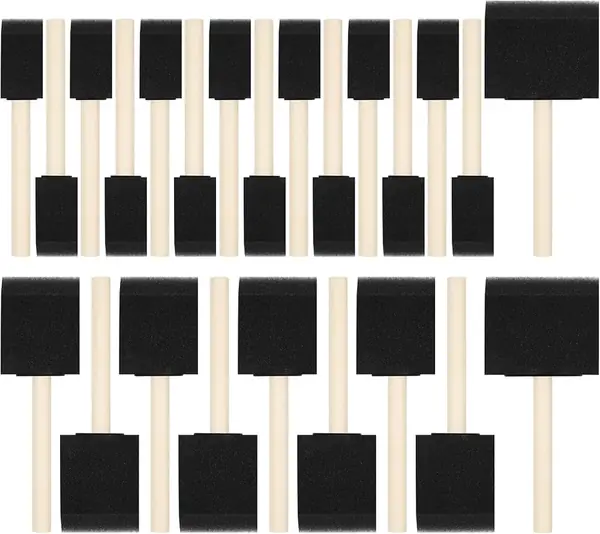
Phinus 24-Pack Foam Paint Brushes Best for Small One-Coat Projects

Phinus foam paint brushes with wood handles in one two and three inch widths

Small one-coat projects

Shop Score 90/100
Handle
Wood
Count
24 brushes
Sizes
1, 2, and 3 inches
Head Material
Foam
View on Amazon

Some staining jobs don't deserve a brush you have to clean. A foam brush goes into a can of water-based stain, lays a level coat with no bristle marks, and goes in the trash when you're done, and this box gives you 24 of them in 1-, 2-, and 3-inch widths.

Foam is the underrated tool for small, flat, smooth work: cabinet frames, drawer fronts, a tabletop, the inside of a bookcase. There are no bristles to leave texture, the edges cut a reasonably clean line, and a fresh brush per coat means you're never fighting a stiff, half-cleaned tool.

Anything with texture is a different story. On rough sawn boards and weathered decks the foam skims the surface instead of working stain into the grain, and the coat ends up thinner and less even than what a bristle brush leaves behind.

We keep a box on the shelf for sealer on plywood shelves, stain on a small cabinet, glue cleanup, and touch-ups, and we don't expect more than a job or two from any single brush. That's the deal with foam: buy it by the box and don't ask it to be the last brush you own.

Worth Noting

  • Foam heads can pull away from the handle
Our Verdict

We treat these as shop consumables: ideal for small, smooth, one-coat jobs you would rather not clean a brush for.

Check Latest Price
8.

Genixart 5-Pack Chip Paint Brushes Best for Fence Stain Jobs

Genixart five-pack chip paint brushes with sanded wood handles and natural-looking bristles

Fence stain jobs

Shop Score 89/100
Handle
Sanded wood
Bristle
Synthetic and nylon blend
Set
5 brushes
Brush Sizes
1, 1.5, 2, and 2.5 inches
View on Amazon

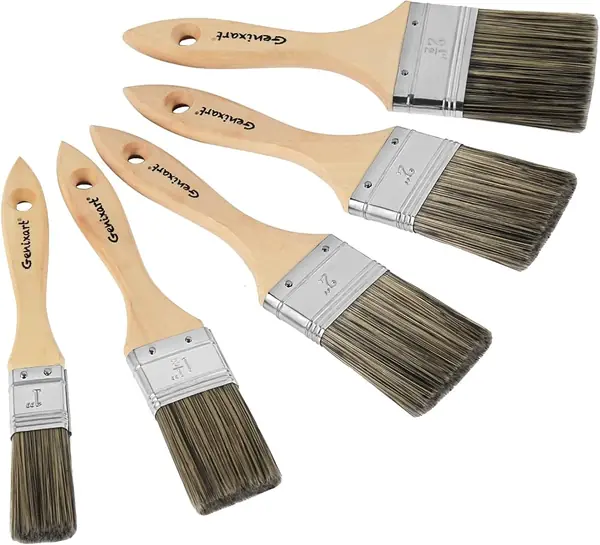
Chip brushes are the ones you buy by the handful and don't mourn. This five-pack is the double-thick version, with more bristle per brush, so it carries a working load of stain instead of dribbling it down the handle.

The sizes handle stain and sealer on a fence, a shed, a set of stairs, or a piece of shop furniture: 1, 1.5, 2, 2, and 2.5 inches, with smooth sanded handles and tin-plated ferrules that wipe clean. The filaments are a synthetic-nylon mix, soft enough to lay a coat flat and stiff enough to push it into grain.

What we like is that reuse is actually realistic. The bristles stay put well enough to rinse, dry, and drop back in the bag for the next coat, and nothing about the brush feels too precious to throw away when a job turns ugly.

If you're staining a fence rather than a dining table, or you're new enough to staining that you don't want to learn on a good brush, this is a sensible first buy. We keep a set for sealer and shop projects and reach past them when a visible topcoat has to be perfect.

Worth Noting

  • Widest brush is 2.5 inches
Our Verdict

Double-thick chip brushes that hold their bristles and take abuse, which is why we keep a set for fence and shop work.

Check Latest Price

How We Tested Brushes for Wood Stain

We built the shortlist by reading listings and customer reviews for brushes that named their bristle material and their job, then filtering by width, cut, and price. That left 16 brushes: narrow ones for furniture and trim, wide flat heads for fences and decks, threaded handles for extension poles, a couple of sets, and foam.

Testing ran six months, spring into fall, across real projects: a cedar fence, a deck floor, cabinet doors, a kitchen table, trim, and a shed, half in oil-based stain, half in water-based. On the fence and deck we counted how many boards one dip covered before the stain ran thin, and watched the wet line for streaks and lap marks. The wide brushes went up an extension pole to see whether the threaded joint stayed tight at full reach and whether the head lay flat against the boards.

Shedding and bristle feel got separate checks. We felt each brush dry first, since a soft filament carries and releases stain differently than a stiff one, then tugged at the tufts to see how much let go before the brush ever touched stain. After every coat dried, we dragged a gloved hand across it and counted the bristles left in the finish. Cleanup came next: each brush was rinsed in whatever its stain called for, combed, and dried flat, then inspected a week later for splay, stiffness, and stain left up in the heel.

We tracked how many jobs each brush survived before it lost its shape, because a chip brush that dies after a fence panel costs more over a summer than a synthetic that cleans up and comes back. Brushes and rags used with oil-based stain were spread flat to dry or submerged in solvent, never packed into a closed bin.

How to Choose a Brush for Wood Stain

Start With the Surface, Then Pick a Width

The most common mistake is buying one brush for a whole project. A 1- to 2.5-inch flat or angled sash brush is right for furniture, cabinet frames, doors, and trim; a 4- to 5-inch brush covers fences, railings, and shed siding at a reasonable pace; a 7-inch block or stain applicator is for deck floors and other big flat runs you can work on a pole.

Two traps follow. A 7-inch block brush inside a cabinet is a wrestling match, and a 2-inch sash brush on a large deck will cost you a weekend. Expect to own two widths for any job that spans structure and detail.

Match the Bristle to the Stain

Synthetic filaments — polyester, nylon, or a blend — are the safe default: they don't swell, they tolerate water-based products, and they clean up with soap and water or mineral spirits. Natural bristle carries oil-based stain beautifully and goes limp in water-based products, which is why several brushes here blend the two.

Foam gives a perfectly level, mark-free coat on smooth work but skims across rough grain instead of working stain into it. Read the stain can first, then choose: water-based points to synthetic or foam, oil-based and penetrating oils point to a synthetic blend or natural bristle.

Shedding Is What Ruins a Finish

The fault that ruins a coat isn't a stiff bristle, it's a brush that drops filaments into wet stain. They show up as hairs you find with your fingertips after the finish dries, and by then the only fix is sanding back.

Before the first dip, flex the bristles against your palm, look for loose filaments, and comb them out. Give any new brush a test pass on scrap wood. On a wide, pole-mounted head, also check the fasteners holding the block, since that joint takes the pressure when you lean into a stroke.

Poles, Cleanup, and the Cost of Reuse

A threaded handle is worth paying for on anything wider than 5 inches. On a pole you work a deck floor standing up, with better pressure and a lot less back strain. Cleanup follows the stain: soap and water for water-based, mineral spirits for oil-based, and a metal comb to keep a wide head from frizzing.

Foam and chip brushes are meant to be consumables. A good synthetic set should come back for the next project if you wash it the same day, and that math usually beats buying cheap brushes by the dozen.

Frequently Asked Questions

Final Verdict

For most people staining furniture, a fence, or a set of doors, the Bates Choice four-pack is the right first buy: four widths, soft synthetic bristles that carry stain evenly, and a low enough cost that a second brush is no decision at all. If the job is a deck floor, buy the Bates 7.5-inch block brush instead and put it on a pole.

And for small cans and water-based topcoats, the Minwax 1.5-inch brush is the one we keep coming back to — the narrow head and soft blend leave the kind of level finish you can't get from a wide brush you're fighting.