↑↓ navigate ↵ open Esc close All results →

Best Brushes for Water-Based Polyurethane of 2026

Fast recoat times are the main appeal of water-based polyurethane, yet that quick dry comes with a narrow working window: a ridge or stray filament that sets inside ten minutes stays until it is sanded flat. Because water-based finish flows thinner than paint, the applicator carries more responsibility for a smooth film than most woodworkers expect.

To see which tools lay down a thin, uniform coat without shedding into a second pass, we ran 16 synthetic brushes and foam applicators over four months on tabletop panels, cabinet doors, baseboards, and built-ins. Stiff bristles plow furrows in thin clear coats, whereas soft, finely flagged tips release the finish evenly and avoid fraying at the edges.

While no brush compensates for overworking a tacky coat, the six options below keep debris and lap lines out of broad panels, tight cabinet rails, crisp cut-ins, and quick single-use touch-ups.

Our Top Picks

The Best Brushes for Water-Based Polyurethane

1.

Wooster Silver Tip Angle Sash Best Overall
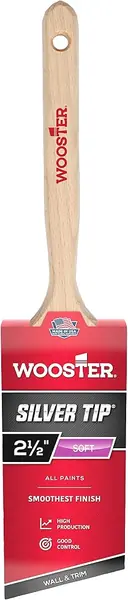
Wooster Silver Tip angle sash paintbrush with polyester bristles and wood handle

Furniture and trim

Shop Score 96/100
Bristle Material
100% CT polyester
Paint Compatibility
All paints
Brush Width
2.5 inches
Bristle Type
Flagged
View on Amazon

The Silver Tip's soft 100% polyester filaments are the reason it is the first brush we reach for with water-based polyurethane. Water-based finishes are thin and fast-drying, and a stiff brush can drag through them before they level; these flagged filaments spread the coating instead. The 2.5-inch angle gives us enough width for a cabinet door or tabletop while keeping a usable tip along edges, which is the combination we want for furniture, trim, and built-ins.

The stainless-steel ferrule and hardwood handle make the brush feel balanced rather than top-heavy, and the angle is shallow enough to follow a rail without constant correction. We paid attention to how the filaments release finish: they let us lay a thin coat and tip it off without the ridges we get from stiffer bristles. It also rinses clean with soap and water before the finish sets.

The 2.5-inch head is our pick for broad panels. For narrow face frames or inside corners, a smaller detail brush is easier to steer, so we pair this one with a 1-inch brush rather than forcing it into the corner. If you finish a lot of trim, that two-brush setup is more useful than expecting one brush to do everything.

Worth Noting

  • Can shed an occasional loose bristle
Our Verdict

We recommend the Silver Tip as the default for water-based polyurethane because its soft polyester filaments level the finish and hold a clean edge.

Check Latest Price
2.

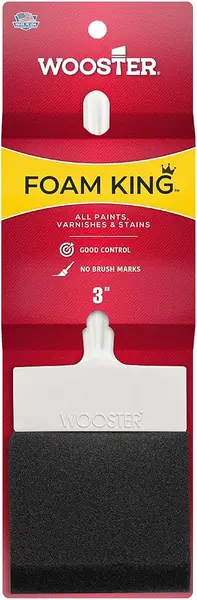
Wooster 3103-3 Foam Brush Best Foam for a Smooth Finish

Wooster 3103-3 foam paintbrush with white plastic handle and thick polyurethane pad

Smooth flat panels

Shop Score 95/100
Handle
White plastic with stiffener
Paint Compatibility
All paints, varnishes, and stains
Brush Width
3 inches
Foam Type
Open-cell polyurethane
View on Amazon

A foam brush is not a compromise for water-based polyurethane; it is a different tool for a different surface. The Wooster 3103-3 has thick, open-cell foam that holds a useful amount of finish and releases it in a thin, even film, which is why we keep one on hand for flat cabinet doors and tabletops. The white plastic handle includes a stiffener blade, so the pad flexes consistently instead of folding over on a vertical face.

That stiffener is the detail that separates this foam brush from the disposable ones we use for craft projects. We like the 3-inch width for broad panels because it covers quickly without leaving a lap mark, and the foam resists crumbling through a normal coat. It is not the brush we reach for when we need a crisp line along a frame; the pad is too soft for that kind of control.

Cleanup is straightforward with warm soapy water, and the pad can be reused if you rinse it before the finish cures. We treat it as a reusable brush for furniture and a disposable one for messy jobs. Either way, it earns its place when the goal is a smooth coat with no bristle marks.

Worth Noting

  • Soft foam pad cannot cut crisp lines along frames
  • Must be rinsed before finish cures to be reused
Our Verdict

We reach for this Wooster foam brush when a glass-smooth clear coat matters more than cutting a sharp line.

Check Latest Price
3.

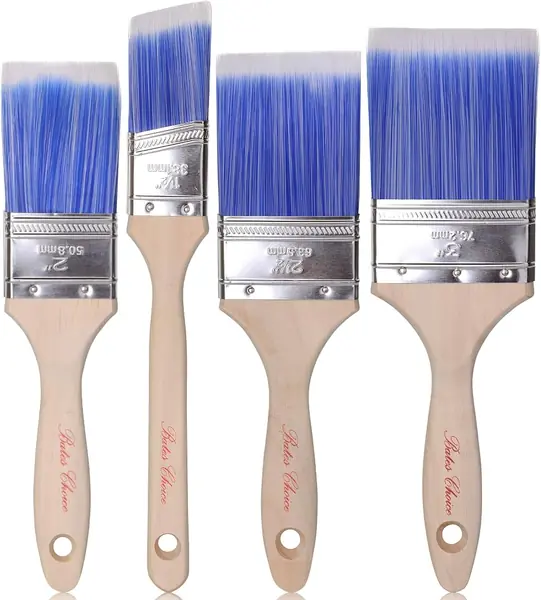
Bates 4-Pack Paint Brush Set Best Budget Set

Bates four-piece paint brush set with wood handles and synthetic filaments

Budget furniture work

Shop Score 94/100
Handle
Treated wood
Bristle Material
Synthetic filaments
Paint Compatibility
Water-based or acrylic
Largest Brush Width
3 inches
View on Amazon

A four-brush set that costs less than a single premium brush is the reason this Bates pack stays in our budget bin. The set runs from a 1.5-inch angle up to a 3-inch flat, so it covers cabinet frames, doors, and trim without making you choose one size. The synthetic filaments are soft enough for water-based polyurethane, and the treated wood handles are light in the hand.

We reach for the 2.5-inch angle for face frames and the 3-inch flat for door slabs; that pair does most of a furniture project. The bristles are not as fine as the Silver Tip's, but they lay down a respectable coat and rinse clean with soap and water. We also like that the set does not feel precious: if you are finishing a rental kitchen or a first furniture build, you can work without babying the brush.

The gap is a compact stubby brush. For tight inside corners, the 1.5-inch angle is the smallest option here, and it is longer than a stubby. If your project is mostly cabinet interiors, the Pro Grade set is the better shape. For everything else, this is the budget set we recommend.

Worth Noting

  • Lacks a compact stubby brush
Our Verdict

We think this four-brush set is the smart budget buy for a homeowner finishing furniture or trim with water-based poly.

Check Latest Price
4.

Purdy Clearcut Glide Best for Precision Cut-Ins

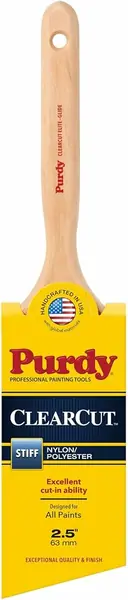
Purdy Clearcut Glide angular paintbrush with alderwood handle and stainless ferrule

Crisp cut-in work

Shop Score 93/100
Handle
Alderwood
Bristle Material
Nylon/polyester blend
Paint Compatibility
Latex paints and primers
Brush Width
2.5 inches
View on Amazon

A stiff brush is usually the wrong tool for a clear coat, but stiffness is exactly what makes the Purdy Clearcut useful at the edges. The Tynex nylon and Orel polyester blend is firm enough to steer a straight line along a cabinet frame or door panel, and the 2.5-inch angled head gives you a clean tip without a lot of extra width.

The alderwood handle is light and comfortable, and the stainless ferrule keeps the brush from feeling sloppy when you choke up for detail. We like it for the places where water-based poly meets a hard edge: stiles, rails, and trim returns. It holds a useful amount of finish, so you are not constantly dipping, and it releases the coating with control rather than flooding the corner.

On a broad tabletop or a wide flat door, the stiff filaments can leave ridges that a softer brush smooths out, so we do not make it our default for open panels. It is the precision brush in our kit, not the volume brush. If your project is mostly cut-in work and crisp edges, the Clearcut earns its premium.

Worth Noting

  • Stiff filaments can leave ridges on broad flat panels
  • Higher price for a brush aimed mainly at cut-in work
Our Verdict

We trust the Clearcut for crisp cut-ins along trim and corners, especially when one durable brush has to last through a whole project.

Check Latest Price
5.

Pro Grade 5-Piece Brush Set Best for Tight Cabinet Work

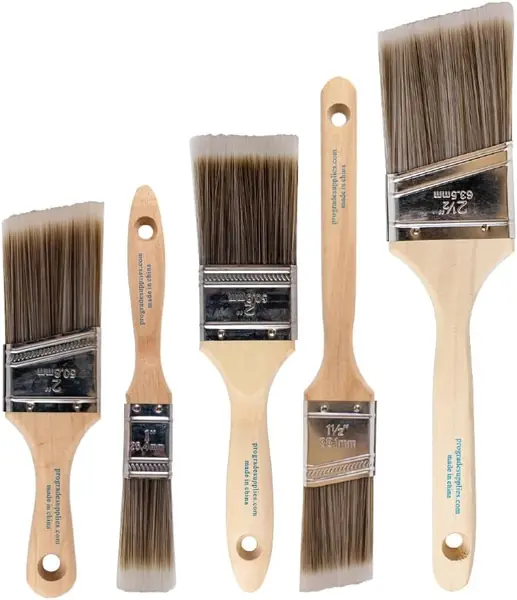
Pro Grade five-piece paint brush set with wood handles and synthetic bristles

Tight cabinet work

Shop Score 92/100
Bristle Material
SRT synthetic filaments
Number Of Brushes
5
Paint Type
Acrylic, decorative, oil, specialty
Brush Size Range
1 to 2.5 inches
View on Amazon

The 2-inch angle stubby is the reason this Pro Grade set earns a place in the cabinet-finishing conversation. A long-handled 2-inch angle is awkward inside a face frame or a window sash; the stubby gets your hand closer to the work. The five-piece set also includes 1-inch, 1.5-inch, 2-inch flat, and 2.5-inch angle brushes, so you can keep a dry brush for each stage of a project.

The synthetic SRT filaments are soft and hold a useful load of water-based finish, and the solid wood handles are comfortable for detail work. Shedding is the caveat with this set: we reserve the first coat for a less visible area and keep tweezers nearby. A minute of prep is worth it if the alternative is picking a filament out of a wet clear coat.

The set stops at 2.5 inches, so it is not the one we grab for a full door slab or a long tabletop; that is a job for a 3-inch brush or a foam pad. Where it shines is the tight, fussy work that makes a cabinet job look finished. We keep it for interiors, sashes, and corners rather than broad surfaces.

Worth Noting

  • Lacks a wide 3-inch brush
Our Verdict

We keep this five-piece set for tight cabinet interiors and detail work, where the stubby angle brush earns its place.

Check Latest Price
6.

Bates Foam Brush 20-Pack Best for Quick Disposable Jobs

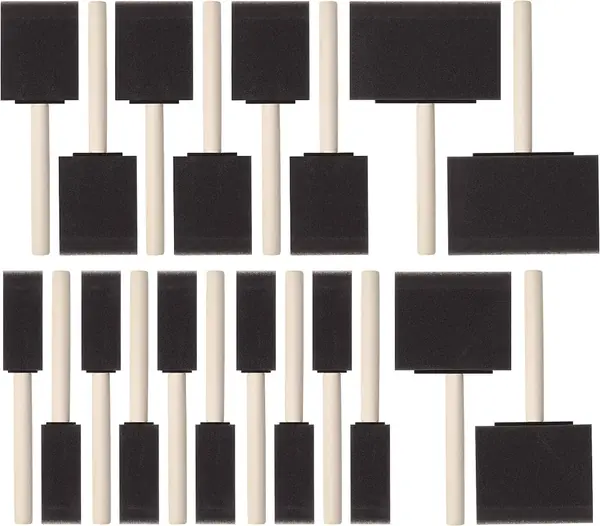
Bates foam paint brushes in four sizes with wooden handles and black foam pads

Quick disposable jobs

Shop Score 91/100
Handle
Wooden
Foam Type
Absorbent foam
Largest Brush Width
4 inches
Number Of Brushes
20
View on Amazon

A twenty-pack of foam brushes is not trying to be the last brush you own; it is trying to save you from cleaning between coats. The Bates foam pack gives you ten 1-inch, six 2-inch, two 3-inch, and two 4-inch pads, which is a useful spread for small panels, edges, and craft-scale touch-ups. The absorbent foam holds finish well enough to lay down an even coat on a quick project.

We use them for disposable work: a single cabinet door, a shelf, a small repair, or a craft finish where a fresh pad between coats is more convenient than rinsing. The wooden handles are sturdy, and the foam is securely glued to the handle. The absorbent cells load evenly, and the pads are easy to cut down for narrow edges.

That makes this a bulk utility pack rather than our first choice for a showpiece tabletop. We reach for it when speed, size variety, and easy cleanup matter more than a reusable pad. If you finish furniture regularly, keep a dense foam brush for the final coat and use these for the build coats and odd jobs.

Worth Noting

  • Not as durable as dense foam brushes
Our Verdict

We use these sponge brushes for quick, disposable clear-coat jobs where changing applicators between coats is the priority.

Check Latest Price

How We Tested Brushes for Water-Based Polyurethane

We started with the applicator rather than the label. Every brush on the shortlist had to be synthetic filament or foam — natural bristle goes limp the moment it touches a water-based finish — and we compared angled heads against flat ones, widths from 1 to 4 inches, and open-cell foam against polyester and nylon blends. That narrowed the field to 16 brushes and applicators, which we used over four months on a kitchen table, a set of cabinet doors, baseboards, and built-in shelving.

Each one got the same job on the same water-based polyurethane: three thin coats on a flat panel, a cut-in along an inside corner, and a run down a baseboard. After every coat we wiped the dry film with a lint-free cloth and counted the filaments left behind, and we checked the tip by fanning the bristles before the first dip and again after the last wash. Bristle firmness we judged by pressing the brush flat against a panel to see how far the filaments splayed and whether they sprang back, and long afternoons of recoating told us which handles stayed comfortable and which ones we kept readjusting.

Durability and cleanup got their own passes. We washed each brush in warm water and a drop of dish soap, combed it back into shape, dried it flat, and looked at the tip the next morning to see if it had curled or frayed. On the foam brushes we tugged the head gently to check the bond to the handle and watched the edges for crumbling after a few coats. Sets were judged by how many of the widths got picked up again on the second project, and the throwaway ones by whether binning them cost less than the time to wash them out.

How to Choose Brushes for Water-Based Polyurethane

Start with the applicator, not the brand

Synthetic filaments and foam do the same job by different means. A soft nylon or polyester brush gives you control and a useful tip for edges; foam gives you the smoothest, most mark-free film on flat panels. We keep both on hand for furniture projects: a good synthetic brush for frames and trim, and a dense foam pad for doors and tabletops. The trap is cheap foam. If a pad feels dry and crumbly, test it on scrap before it touches a finish.

Match the width and shape to the surface

A 2- to 2.5-inch angle sash brush is the most useful all-around size for cabinets, trim, and furniture. The angle lets you cut a line along an edge, while the width covers a rail or a small panel without repeated strokes. For a full door slab or tabletop, a 3-inch flat brush or foam pad is faster. For inside corners and face frames, a 1- to 1.5-inch brush or a stubby is easier to steer. Wider is not better if it slops finish over an edge.

Look for soft tips and a secure bristle bond

Water-based polyurethane dries quickly, so a stiff brush can leave drag marks before the finish levels. We look for soft, flagged filaments and a ferrule that holds them tightly. Shedding is the defect that matters most in a clear coat: work the bristles with a comb before the first dip and inspect the first pass. With foam, check the bond between pad and handle; a loose pad can come off mid-stroke. A brush that passes those checks is worth more than a set that does not.

Plan for cleanup and reusability

Water-based polyurethane cleans up with warm soapy water, but only before it cures. A synthetic brush with a stainless ferrule is the easier tool to rinse and reuse; a foam pad can be washed and dried, though it may not survive many cycles. We decide up front whether a brush is reusable or disposable. For a multi-coat furniture project, one good synthetic brush plus a few foam pads covers both control and speed without turning cleanup into the whole job.

Frequently Asked Questions

Final Verdict

For most furniture, cabinet, and trim projects, we recommend the Wooster Silver Tip. Its soft polyester filaments level water-based polyurethane without the drag of a stiff brush, and the 2.5-inch angle gives you enough control at edges. If a glass-smooth coat on flat panels is the priority, choose the Wooster foam brush. For a budget set that covers several sizes, the Bates four-pack is the practical alternative.