↑↓ navigate ↵ open Esc close All results →

Best Water-Based Polyurethanes of 2026

Water-based polyurethane used to force an ugly compromise—chosen for indoor ventilation, then tolerated despite a milky haze and brush marks you could catch with a fingernail. Modern formulas behave very differently over pale maple and white paint, drying clear, cleaning up with soap and water, and standing up to cabinet doors opened forty times a day.

Brushing 12 cans across an oak dining table, kitchen cabinet fronts, a stair railing, painted trim, and closet doors over six months made the temperature and humidity limits on the label hard to ignore; a sticky July afternoon quickly reveals why those numbers exist. Two details catch first-time finishers off guard: satin forgives surface flaws that gloss highlights, and a short recoat window matters more than fast dry-to-touch times because it decides how many coats go down in a single session.

Clarity and non-yellowing performance come first here, followed by leveling, coverage per can, and resistance to daily wear.

Our Top Picks

The Best Water-Based Polyurethanes

1.

General Finishes High Performance Topcoat Best Overall
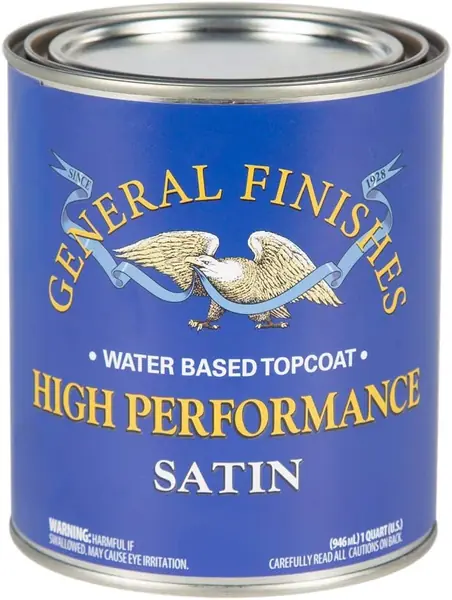
General Finishes High Performance water-based topcoat quart can with satin sheen label

Furniture and cabinets

Shop Score 95/100
Size
1 quart
Sheen
Satin
Coverage
125-150 sq. ft.
Recoat Time
1 to 2 hours
View on Amazon

Two hours between coats is the number that decides how a finishing weekend goes, and this topcoat lists one to two. A tabletop can take three coats in a single day rather than stretching across three evenings, which is the main reason it became our default for furniture and cabinet work. A quart covers 125 to 150 square feet, so a dresser or a run of cabinet doors comes out of one can.

Satin is the sheen we want on a dining table, because it softens the small scratches that show up after a year of dinners. The film builds smoothly with a foam applicator or a sprayer, both of which keep brush marks out of the picture, and as a water-based product it keeps the smell mild enough to work in a basement with a window open. It's the finish we hand to someone who wants a professional-looking result on a first attempt.

One caution is printed in the maker's own instructions: don't apply it over bright white paint, because the clear coat can react with the substrate and turn the white dingy. On stained or bare wood that isn't a concern, and that's where we point people. For a white-painted dresser, the Minwax Polycrylic below is the safer call.

Where it gives up ground is heavy traffic. This is a furniture and cabinet finish; for a floor or a mudroom bench, the two-gallon Varathane is the one built for that job.

Worth Noting

  • Premium price for a single quart
Our Verdict

We recommend it as the default for furniture and cabinets: a smooth satin build, a recoat window you can work with, and a quart that covers a dresser.

Check Latest Price
2.

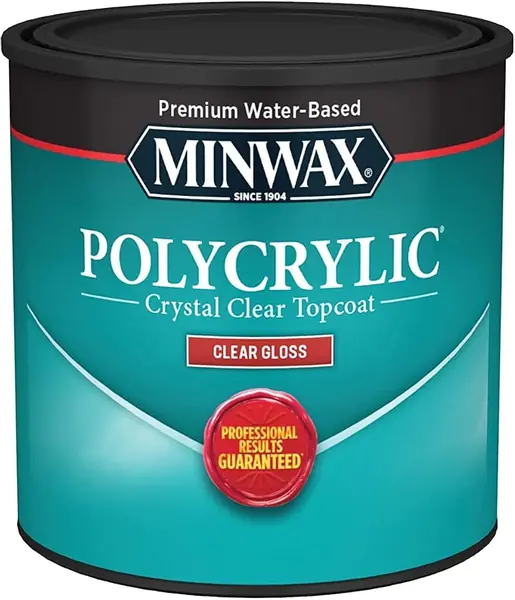
Minwax Polycrylic Protective Finish Best Budget

Minwax Polycrylic protective finish half-pint can in clear gloss

Small painted pieces

Shop Score 94/100
Size
8 fl oz (half pint)
Sheen
Gloss
Recoat Time
2 hours
Cleanup
Soap and water
View on Amazon

Polycrylic is the name a lot of woodworkers use for a water-based clear coat, and this is the can they mean. Over maple, ash, or birch it doesn't add the amber warmth an oil-based finish brings, and it goes over both oil- and water-based stain without muddying the color underneath. For a painted piece that has to stay bright white, we keep this one on the shelf.

The working rhythm is friendly: two hours between coats, soap and water on the brush, and no mineral spirits at the end of the day. We like a foam brush for a glassy film on flat panels, and the gloss version gives trim and shelves a bright finish that reads as new. It doubles as a sealer for ornaments, frames, and small repairs.

Where it gives ground to the General Finishes is armor. This is a finish for shelves, trim, picture frames, and painted furniture that doesn't get dragged around; for a table taking daily abuse, we go with the harder film. The clarity is the trade we're happy to make on pieces where looking right matters more than bulletproofing.

Worth Noting

  • Half-pint can runs out on furniture-size jobs
Our Verdict

We reach for this on painted pieces and light woods, where its water-clear film keeps colors true and soap-and-water cleanup ends the day easy.

Check Latest Price
3.

Varathane Ultimate Satin Polyurethane Best for Large Projects

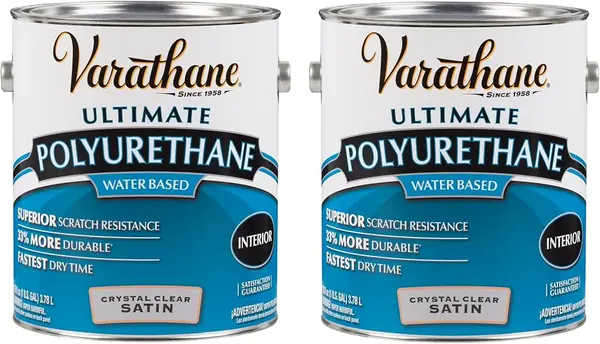
Two Varathane Ultimate water-based polyurethane gallon cans in satin clear

Whole-room trim work

Shop Score 92/100
Size
2 gallons (2-pack)
Sheen
Satin
Coverage
Up to 500 sq. ft.
Cleanup
Soap and water
View on Amazon

Two gallons is a statement of intent. This is the can for a kitchen's worth of cabinets, a whole room of trim, or a set of doors, and the listed coverage backs it up: up to 500 square feet. Satin is the sheen most built-ins want, and buying the work in one pack means you aren't changing cans halfway through a run of baseboard.

Dry time is where it earns its keep. The maker's schedule allows three coats a day, and even at a cautious pace you can build a full film between breakfast and dinner, with soap-and-water cleanup at the end. It goes on evenly with a brush or a pad, and the low-odor formula means an interior room stays workable while you finish.

We reach for it on the big, unglamorous surfaces — cabinet interiors, door slabs, long runs of baseboard — where the satin sheen flattens the surface and the volume means you stop worrying about running short mid-project. It's also the one here sold as a floor finish, which is the clearest signal of the kind of beating it was formulated for.

Worth Noting

  • Can yellow over white paint and pale finishes
  • Scratch resistance is inconsistent
Our Verdict

Buy this one when the job is bigger than a quart: two gallons, a satin sheen, and a coat schedule that fits a weekend.

Check Latest Price
4.

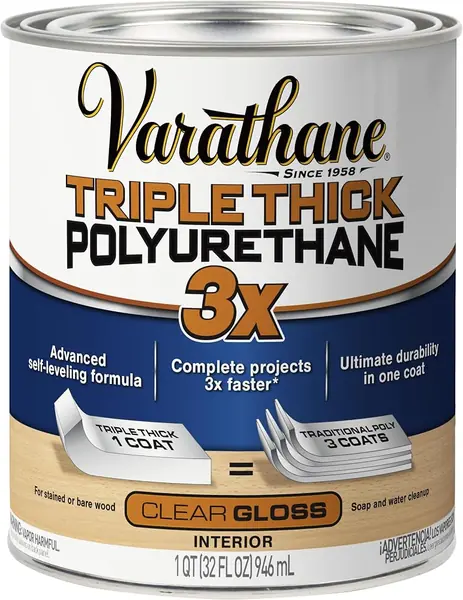
Varathane Triple Thick Polyurethane Best One-Coat Finish

Varathane Triple Thick gloss polyurethane quart can with one-coat formula label

Doors and trim

Shop Score 91/100
Size
1 quart
Sheen
Gloss
Coverage
50 sq. ft.
Dry To Touch
2 hours
View on Amazon

One coat is the pitch, and the arithmetic behind it is 50 square feet per quart. That's an entry door, a set of shutters, a small table, or a few runs of trim — not a room. Read it that way and the thick formula makes sense: you trade coverage for build, and a single pass leaves a film that would otherwise take two or three passes of a thinner finish.

We like it on doors and trim, where a gloss coat looks deliberate and the surface is small enough to keep a wet edge across. It dries to the touch in about two hours, cleans up with soap and water, and the maker's schedule asks for 48 hours before light use and a full week to cure — worth putting on the calendar before the door goes back on its hinges.

A film this thick asks more of the applicator. A tired brush or a hurried pass can leave bubbles sitting in the gloss, and the fix is simple: a good synthetic brush, a light hand, and long strokes with the grain. Interior doors and painted trim reward that care; a big dining table is where this one stops being the right tool.

Worth Noting

  • Adds a soft amber tone to pale wood
Our Verdict

For doors and trim, we let one thick gloss coat do the work of three, on a surface small enough to cover.

Check Latest Price
5.

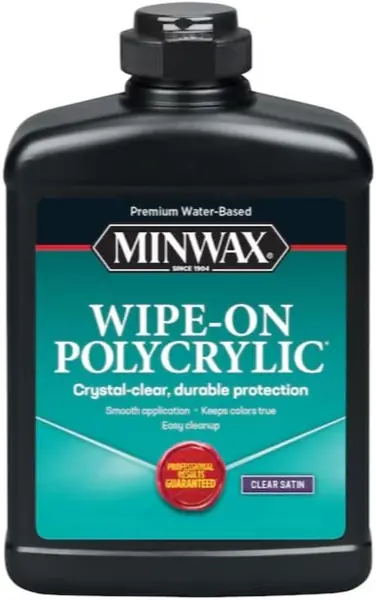
Minwax Water-Based Wipe-On Polyurethane Best for Railings and Spindles

Minwax water-based wipe-on polyurethane pint can in satin finish

Railings and spindles

Shop Score 88/100
Size
1 pint
Sheen
Satin
Recoat Time
2 to 3 hours
Application
Wipe-on with cloth
View on Amazon

A cloth does what a brush can't on turned legs, spindles, and stair rails: it follows the shape without loading a corner and leaving a drip behind. That's where we like this one. The pint sits in one hand, the satin sheen lies flat on the wood, and cleanup is a rag and warm water.

Two to three hours between coats is short enough to build three thin passes after work, and wiping lets you control how much goes down. On open-grain woods that control matters, because a thin first coat keeps the finish from pooling in the pores. It's also close to odorless, which is why it turns up on railings and doors inside occupied rooms.

The boundary is large flat work. Wiping a big, level tabletop is where smears show up and where a wet edge starts to tack before you reach the far side; keep this for vertical surfaces, small boxes, and anything with curves, and put a brushed finish on the dining table.

Worth Noting

  • Warms pale woods with an amber cast
Our Verdict

A cloth, a pint, and no brush marks: we like this one for railings, spindles, and other shapes a brush fumbles.

Check Latest Price

How We Tested Water-Based Polyurethane

We started by gathering every water-based clear finish we could find in quarts, pints, and gallons, then narrowed by the things that actually decide a project: whether the can promises clarity over pale wood, which sheen it comes in, the stated recoat interval, coverage per can, and whether it goes on with a brush, a foam pad, or a cloth. That left 12 cans, which we used over six months.

The work happened where these finishes actually live. We sanded an oak dining table back to bare wood and coated it, recoated kitchen cabinet fronts in a kitchen that was still being used, and wiped finish onto a stair railing and its spindles where a brush wouldn't reach cleanly. Painted trim and closet doors got the same treatment, and we brushed each can onto pale maple and white-painted pine sample boards that sat in daylight so we could compare clarity and yellowing side by side.

At every step we watched how the finish lay down under a raking light — streaks, brush marks, foam-pad edges, drips — and counted how many coats fit into one session before the recoat window closed. We checked dry-to-touch with a finger, then kept each piece out of service until the label's stated cure time had passed, running a fingernail scratch and a wet-cup ring test only after that. Cans were opened and used within the temperature and humidity range on the label, with fans going and windows open.

We measured coverage by marking off square footage and tracking how much came out of each can, then weighed that against can size for the job at hand — a pint for spindles, gallons for a room of trim. Cleanup was soap and water every time, and ease came down to how the finish flowed out, how forgiving it was of a heavy hand, and how the cured film looked a month in.

How to Choose a Water-Based Polyurethane

Start With Clarity

A water-based finish is supposed to disappear over the wood, and most do until they meet a pale surface or bright white paint. Some formulas carry a soft amber cast that warms maple and ash more than you expect, and a few can leave white paint looking dingy rather than bright. That shift shows up over months, not minutes, so the color of the wet film tells you very little.

Our rule is to finish a scrap of the actual wood or the actual painted piece and look at it in daylight before committing a whole can. Water-clear films are the safe choice for birch, maple, and painted furniture; a warmer film is fine on walnut or stained oak, where the shift reads as depth rather than discoloration.

Pick the Sheen for the Surface

Gloss reflects everything. A tabletop under a window will show every sanding mark you left and every speck of dust that settled into the wet film, which is why a bright finish on a big flat surface is the most demanding thing you can attempt. Satin and matte scatter that light instead and are far kinder to pieces that actually get used.

We keep satin for tables, cabinets, and built-ins, and save gloss for trim, doors, and small pieces where a bright film looks intentional. Don't shop for durability by sheen here — that decision sits with the formula, not the shine.

Plan Around Recoat and Cure

Recoat windows run from about an hour to a full day depending on the product, and that number sets how many coats you can build in one sitting. Dry to the touch is a different milestone from cured. One of our picks asks for 48 hours before light use and a week before the film is fully hard, and that week is when a table shouldn't be dragged across a floor or wiped with a wet rag.

We schedule the calendar around the cure, not the recoat: finish early, let the piece sit somewhere out of the way, and put it into service after the stated window rather than the moment it feels dry.

Match the Can to the Square Footage

Coverage is where an economical can turns expensive. One quart here covers 125 to 150 square feet, another quart covers 50, and a two-gallon pack claims up to 500. Multiply the can's number by the coats you plan and compare it with the surface in front of you — a dresser might be 30 square feet, a full kitchen of cabinet doors is many times that.

Buying short means switching cans mid-project and hoping the sheen matches. Buying long leaves a partly used can to store, which is fine for touch-ups but wasted if the finish isn't one you reach for again.

Choose the Application Method

Brush, foam pad, sprayer, or cloth — the finish has to suit your hand and the shape in front of you. Brushes are right for big flat panels and thick one-coat formulas; foam pads leave a smoother film on cabinet doors; a cloth is the only sensible tool for spindles, rails, and curved legs where a brush loads a corner and drips.

Water-based films dry quickly, so work in one direction and keep a wet edge moving. All five finishes here clean up with soap and water, which is the whole reason to use one indoors in the first place.

Frequently Asked Questions

Final Verdict

The General Finishes High Performance topcoat is the one we recommend first: it builds a smooth satin film, lets you recoat in an hour or two, and covers a furniture-sized project from a single quart. The exception is anything painted bright white — that's where the Minwax Polycrylic's water-clear film belongs, and it's the lower-cost way into small pieces besides.

For a whole kitchen of cabinets or a room's worth of trim, the two-gallon Varathane pack is the smarter buy, and one thick gloss coat of the Triple Thick handles a door or a set of shutters without a second pass.