↑↓ navigate ↵ open Esc close All results →

Best Varnish for Wood of 2026

A finish is the one step in a wood project that cannot be quietly undone. A bad stain job sands back out, whereas a varnish that turns pale maple the color of weak tea overnight or stays tacky on day three forces a choice between living with the flaw and stripping the piece to bare wood. The right clear coat seals against water rings, shrugs off daily handling, and cures into a film that disappears into the work.

Across nine months of brushing 12 water-based and oil-based formulas onto interior furniture, a butcher block countertop, and exterior trim, two shop rules held steady: three thin coats beat one heavy pour almost every time, and satin sheen hides light sanding marks that gloss puts on display.

Different jobs still demand different chemistry, from clear interior topcoats that keep pale wood bright to an oil-based spar varnish for outdoor exposure, a penetrating sealer for butcher block, and a half-pint can sized for small repairs.

Our Top Picks

The Best Varnish for Wood

1.

General Finishes High Performance Topcoat Best Overall
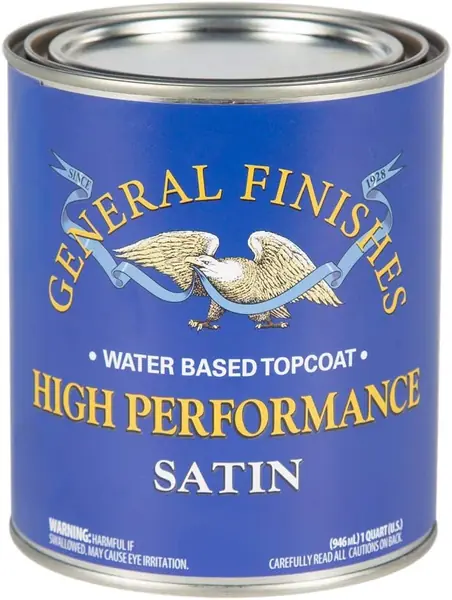
General Finishes High Performance water-based topcoat in a one-quart can, satin finish

Interior furniture

Shop Score 96/100
Base
Water-based
Finish
Satin
Coverage
125-150 sq. ft.
Recoat Time
1 to 2 hours
View on Amazon

Watching this one flow out behind the brush is what put it at the top of our list. It goes on thinner than an oil-based finish, and that thinness is the point: it levels instead of holding brush marks, so a foam applicator leaves a surface that reads as sprayed rather than brushed. Coverage runs 125 to 150 square feet per quart, enough for a dresser and a set of chairs with some left in the can.

Here is why we hand it to furniture makers first: it dries hard quickly and it stays colorless. Three coats over a light stain came out even and clear, and the one-to-two-hour recoat window turns that schedule into a single afternoon rather than a whole weekend. Of everything in this group, it is the film we trust most over maple and over a stain whose color we do not want shifted.

Two things to know before you open the can. The label warns against using it over bright white paint, and light colors can shift too — a reaction with the substrate rather than a flaw in the finish, but enough of a risk that we keep it off painted white furniture. It also wants a clean room, since dust that settles into the first coat has to be sanded back out before the second. Both are small prices to pay for a film that never turns a pale wood amber.

What the quart buys beyond coverage is consistency — the fourth coat behaves like the first, with no grittiness to sand out. If the budget is tight or the piece is small, Minwax Polycrylic covers the same clear, water-cleanup ground for less money; we reach for General Finishes when the furniture has to look sprayed and take daily use. Buy the quart rather than the pint, because three coats in an afternoon empties a small can fast.

Worth Noting

  • Interior use only, not for exterior wood
Our Verdict

Our default clear coat for interior furniture: it brushes out flat, dries hard within hours, and stays colorless over pale wood.

Check Latest Price
2.

Minwax Polycrylic Protective Finish Best Value

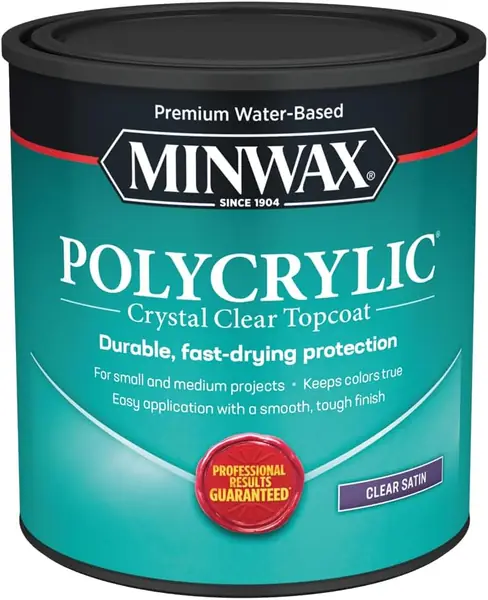
Minwax Polycrylic protective finish quart can labeled clear satin for interior wood

Pale interior wood

Shop Score 95/100
Base
Water-based
Finish
Satin
Size
1 quart
Recoat Time
2 hours
View on Amazon

Pale woods are unforgiving. Maple, ash, and birch show every bit of amber a finish adds, which is why the crystal-clear claim does more work on this can than any other line on it. This one dries clear and stays clear, and it is the reason we point people finishing light-toned furniture toward it before anything else.

Brushing it is about as forgiving as a finish gets. It flows out, cleans up with soap and water, and a two-hour recoat lets a set of cabinet doors take three coats between lunch and dinner. Sand lightly between coats and keep the brush moving; bubbles come from overworking a coat that has already leveled. Expect three or four passes before a tabletop looks protected — a film this thin builds slowly.

Where we get careful is paint. Over bright white or cream, yellowing can show up, and that is the job we hand to a different can. On bare or stained wood it is a different story: this is the value pick of the group, and for someone finishing a first piece it makes the fewest demands — no mineral spirits, no respirator, no waiting until tomorrow. Check the lid when it arrives; a can that ships badly can turn up with a wet seam and a sticky box.

Worth Noting

  • Softer film than an oil-based finish
  • Interior use only
Our Verdict

For a first-time finisher or a tight budget, this is the can to start with — clear over maple, soap-and-water cleanup, and no solvent fumes in the house.

Check Latest Price
3.

Rust-Oleum Marine Spar Varnish Best for Outdoor Wood

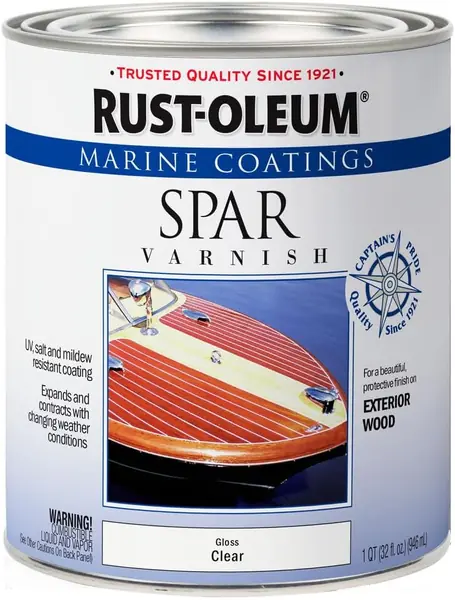
Rust-Oleum Marine Spar Varnish quart can for exterior wood above the waterline

Exterior wood projects

Shop Score 94/100
Base
Oil-based
Finish
Gloss
Coverage
75-150 sq. ft.
Where It Works
Exterior wood above the waterline
View on Amazon

Wood that lives outdoors asks a different question than furniture does. Sun and rain move the wood, and a finish that cures glass-hard cracks instead of flexing with it. Spar varnish is the old answer — an oil-based film flexible enough to expand and contract through the seasons — and this is the can we reach for when the project is a gate, a railing, or a porch table.

Brushing it is straightforward. It goes on like a traditional varnish, levels on its own, and builds a warm golden gloss that deepens cedar and makes ordinary pine look like something. A quart covers up to 150 square feet, and three coats leaves a film worth having. The label's limit matters: exterior wood above the waterline, so trim, rails, and outdoor furniture — nothing that stays submerged.

Curing is where you plan. In cool or damp weather it can stay soft far longer than the two hours it takes to touch dry, and a heavy coat applied in a hurry can stay tacky well past the point where you want to handle it. Thin coats, a dry day, direct sun, and the full interval on the label solve almost all of it.

Color is the other consideration. This is a golden film, and it is the wrong choice for white or pale gray paint, where the warmth reads as a stain. On bare exterior wood the warmth is most of the appeal, and it stands up to sun, rain, and salt spray in a way an interior finish does not. An exterior film only protects while it is intact, so plan a fresh coat when the surface starts to look dull.

Worth Noting

  • Cleanup requires mineral spirits
Our Verdict

If the wood lives outside, this is the varnish to buy: a flexible golden film for railings, trim, and porch furniture, provided you can wait out the cure.

Check Latest Price
4.

Waterlox Original Sealer and Finish Best for Butcher Block

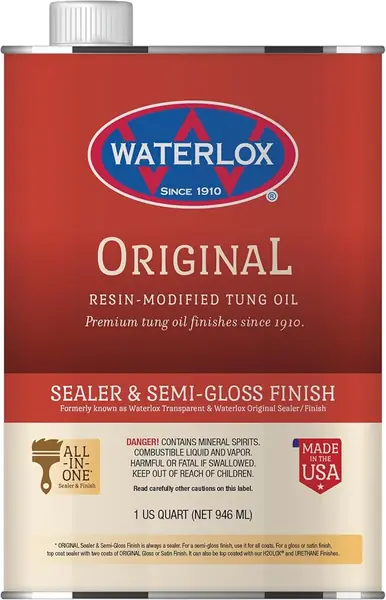
Waterlox Original sealer and finish quart can, a clear penetrating finish for wood

Butcher block countertops

Shop Score 93/100
Coverage
Up to 125 sq. ft. per coat
Size
1 quart
Type
Penetrating sealer and finish
Sheen
Medium sheen
View on Amazon

Wipe it on with a rag and leave the sandpaper in the drawer. Waterlox Original is a penetrating sealer and finish that builds a film over multiple coats, and the method is half the appeal: a thin coat, a wait, another thin coat, and no sanding between them. Five or six passes gets butcher block to the point where water beads and keeps beading.

It is also unusually good on difficult wood. Oily, dense species like teak, rosewood, and ipe are where finishes struggle to hold on, and this one is built for them. The sheen starts at a medium gloss — around 75 degrees when fresh — and settles flatter over the first few months, which is why a finished counter ends up looking like an old workbench rather than a plastic sheet.

The schedule is what we weigh against all that. Coats go on a day apart, so a countertop becomes a week-long project, and the solvent smell is strong enough that we plan for open windows and a respirator rather than a quick job before dinner. On butcher block and bar tops the trade is worth making: the finish is elastic enough to move with the wood instead of cracking at the seams, and a scratched surface takes another coat without a strip.

Worth Noting

  • Darkens pale woods noticeably
Our Verdict

We keep it for butcher block and bar tops: wiped on in thin coats, it beads water and can be renewed with another coat instead of stripped.

Check Latest Price
5.

Minwax Fast Drying Polyurethane Best Oil-Based Warmth

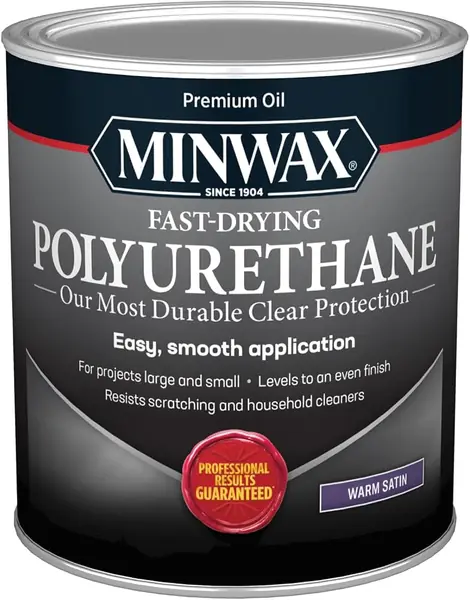
Minwax Fast Drying Polyurethane quart can in warm satin for interior wood

Warm-toned furniture

Shop Score 92/100
Base
Oil-based
Finish
Warm satin
Coverage
250 sq. ft. per quart
Recoat Time
4 to 6 hours
View on Amazon

Amber is the whole point here, and it is the reason we reach for this can over a water-based clear when oak or walnut is on the bench. A water-based film leaves oak looking pale and a little flat, while this oil-based one warms it toward honey — the change most people mean when they say they want wood to look like wood. On walnut it deepens the grain and gives it a finish you can see from across the room.

Working with it is undemanding for an oil-based finish. The consistency is thin enough to spray, it brushes out and levels, and the coverage is the best in this group at 250 square feet per quart, so one can finishes a table and its chairs. It also tacks up quickly enough that dust has less time to land than it does on a slower varnish.

Stacked against the rest of the set it is the middle path: warmer than General Finishes, faster than Waterlox, and we like it for ordinary furniture that could use the color. Sand lightly between coats, keep the room dust-free, and it does what an oil-based finish is supposed to do — makes a plain board look like furniture.

Worth Noting

  • Four to six hours between coats
  • Yellowing over white and cream paint
Our Verdict

Buy this one when you want oak and walnut to glow amber — an oil-based film with real depth at a price that undercuts the premium cans.

Check Latest Price
6.

Varathane Ultimate Gloss Polyurethane Best for Small Interior Projects

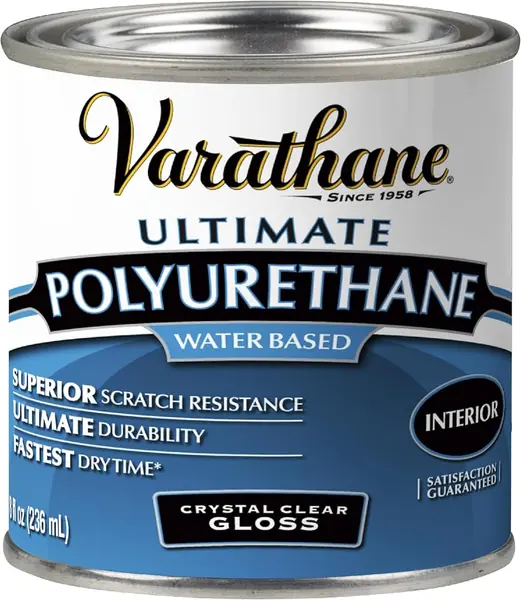
Varathane water-based ultimate gloss polyurethane half-pint can for interior wood

Small interior projects

Shop Score 91/100
Base
Water-based
Finish
Gloss
Coverage
Up to 62 sq. ft.
Size
Half pint
View on Amazon

Half a pint is a sensible amount of varnish. A picture frame, a shop-made shelf, or the worn front edge of a chair does not need a quart, and a small can means less left over to skin over in the garage between projects. This one brushes out clear and thin, and it stays that way instead of picking up a yellow cast.

The finish is a clean, water-clear gloss — no amber, no haze — and it is formulated without a strong odor, which matters when the only place to work is a basement. Water cleanup keeps the whole job simple, and the half pint is the size we keep on the shelf for touch-ups rather than full pieces. Gloss is unforgiving of surface prep, so sand to a uniform grit and wipe the dust off before the first coat; on a small piece that extra ten minutes is the difference between a mirror and a mess. For anything bigger than a chair, buy a quart.

Worth Noting

  • Half-pint can covers only about 62 square feet
Our Verdict

A half pint of water-clear gloss for frames, shelves, and touch-ups, where a quart would dry out in the garage before you used it again.

Check Latest Price

How We Tested the Best Varnishes for Wood

We started with every clear finish we could find that a homeowner could actually buy — quarts, half-pints, water-based and oil-based — then narrowed the field to 12 that covered the jobs people ask us about: interior furniture, pale wood that can't take an amber shift, outdoor trim and boats, and butcher block. We bought every can at retail so nothing arrived from a manufacturer's warehouse.

Testing ran nine months, mostly in a garage shop with a box fan in the window and in a kitchen where the countertop gets used every night. Oil-based products went on with cross-ventilation and a respirator or outdoors on a breezy afternoon, and every oily rag was laid flat on the driveway to dry rather than dropped in a pile.

At each step we wrote down what we saw, not what the can promised: how the film leveled under a brush in raking light, how soon a second coat actually accepted a brush, whether the smell was gone by morning, and whether cleanup meant soap and water or a solvent-soaked rag. Pale maple and white-painted trim got a coat next to an uncoated control so any amber shift was obvious, and we taped off a square foot on each board, divided it by the price, and compared cost per square foot rather than per can.

Then we lived on the finishes — wet glasses, hot mugs, keys dropped on a tabletop — and on the countertop we waited out the label's full cure before anything touched food. What separated the six that made the list wasn't a headline spec; it was that nothing went wrong.

How to Choose a Varnish for Wood

Water-Based or Oil-Based Comes First

Water-based finishes such as General Finishes High Performance and Minwax Polycrylic dry clear and stay clear, recoat in one to two hours, clean up with soap and water, and barely smell. What they give up is build: the film goes on thin, so you brush more coats, and it never adds warmth. Oil-based varnishes take longer between coats and need mineral spirits and ventilation, but they lay down a harder, warmer film.

Choose water-based for pale wood, painted pieces, and indoor work in winter. One trap worth naming: clear on an oil-based can means no pigment, not colorless. It will still add amber.

Match the Finish to Where the Wood Lives

Interior furniture wants a hard film that resists scratches and spills. Exterior wood wants a flexible one that moves with the seasons and shrugs off ultraviolet light, and the two are not interchangeable. The mistake runs both ways: an interior finish on a porch rail cracks as the wood swells and shrinks under it, while a spar varnish indoors stays softer than a table wants and smells like a boatyard for days.

Rust-Oleum Marine Spar Varnish is our exterior pick and is rated for wood above the waterline. Indoors, buy an interior-rated can and ignore the outdoor claims on the front.

Count Coats, Not Products

Film thickness comes from the number of coats, not from the price of the can. A water-based topcoat that pours like water needs four or five coats to look like protection; an oil-based finish gets there in two or three. One thick coat is not a shortcut — it skins over, traps solvent, and stays soft underneath.

Sheen is a separate decision. Satin and matte hide sanding scratches and dust nibs, while gloss shows every one of them and rewards careful prep. On anything bigger than a chair, buy a quart.

Plan Around Recoat and Cure Times

The recoat window sets your weekend. The cure time sets when you can put the piece back into service. They are different numbers. General Finishes and Polycrylic let you recoat in one to two hours, Minwax Fast Drying Polyurethane wants four to six, Waterlox wants a day, and a spar varnish that touch-dries in two hours can stay soft for days in cool, damp air.

Read the recoat interval before you open the can and multiply it by the number of coats. A finish that stays tacky usually went on too thick, in the wrong weather, with too little time between coats.

Cleanup, Ventilation, and the Room You Have

Water-based cans rinse in the sink. Oil-based ones need mineral spirits, and that changes where you can work. A basement shop in January is a water-based job — solvent vapors want cross-ventilation and a respirator, not a box fan in a closed room.

Wherever you finish, sand in a different session from the one where you lay down the final coat so the dust settles out of the air first. And lay oil-soaked rags flat outdoors to dry, because a crumpled pile can heat up on its own.

Frequently Asked Questions

Final Verdict

For most interior wood, General Finishes High Performance is the can we put in people's hands. It levels flat, dries fast enough to build three coats in an afternoon, and stays colorless over light wood — the only thing to swallow is the premium-quart price.

Two requirements change the answer. If the wood stays outside, on a gate, a railing, or porch furniture, switch to Rust-Oleum Marine Spar Varnish and accept the slower cure for a film that flexes with the weather. If the piece is a countertop or butcher block, Waterlox Original wiped on in thin coats gives you a surface you can renew instead of strip.