↑↓ navigate ↵ open Esc close All results →

Best Primers for Raw Wood of 2026

Sand a pine board smooth, roll on two coats of white paint, and check back a week later: amber rings begin bleeding through the knots, or an edge peels where the finish never bonded to the timber. Primer prevents both failures by locking down porous grain, blocking wood tannins before they reach the surface, and giving the topcoat a stable anchor.

Six months of brushing, rolling, and spraying 14 bare-wood formulas across raw pine, oak, and salvaged dressers showed how often label coverage falls short on thirsty stock. Absorbent grain routinely consumes twice the stated volume, while a primer that levels flat cuts out an entire round of corrective sanding.

Cleanup chemistry and fumes proved decisive for basement and unheated winter-garage work, where ventilation is limited. Matching oil, shellac, water-based, or acrylic-urethane formulas to the species and topcoat determines which of these seven cans belongs on the bench, though each dries to an even, sandable film.

Our Top Picks

The Best Primers for Raw Wood

1.

Zinsser Bulls Eye 1-2-3 Primer & Sealer Best Overall
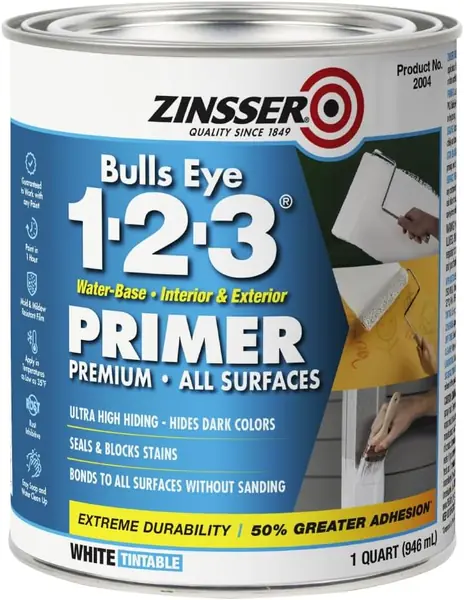
Zinsser Bulls Eye 1-2-3 white primer-sealer in a quart can

Bare wood projects

Shop Score 95/100
Base
Water-based
Size
1 quart
Coverage
100 sq ft
Dry Time
1 hour
View on Amazon

A water-based primer that dries in about an hour is the one we reach for when a bare-wood project needs to move. The Bulls Eye 1-2-3 goes on white, seals the grain, and cleans up with soap and water, which makes it friendly for indoor trim, furniture, and shop projects.

What makes it our top pick is how little it asks of you: no solvent smell, no special cleanup, and a coverage rate around 100 square feet per quart. On bare wood, it gives the topcoat a uniform surface and blocks light stains. We also like that it can go under or over both latex and oil paints, so it fits whatever topcoat you already bought.

It is not magic on glossy or sealed surfaces; a scuff sand is still the right move there. For raw wood, that is less of an issue because the open grain gives the primer something to bite. The bigger practical point is coverage: porous end grain and rough-sawn boards drink more than the label suggests, so keep extra on hand.

We keep the quart size because it is enough for a dresser or a small run of trim without leaving half a gallon to store. The white color also makes thin spots easy to see before you open the topcoat.

Worth Noting

  • Porous end grain and rough boards reduce stated coverage
  • Glossy or sealed surfaces still need scuff sanding first
Our Verdict

We recommend this as the default primer for bare wood because it seals, blocks light stains, and cleans up with water at a budget price.

Check Latest Price
2.

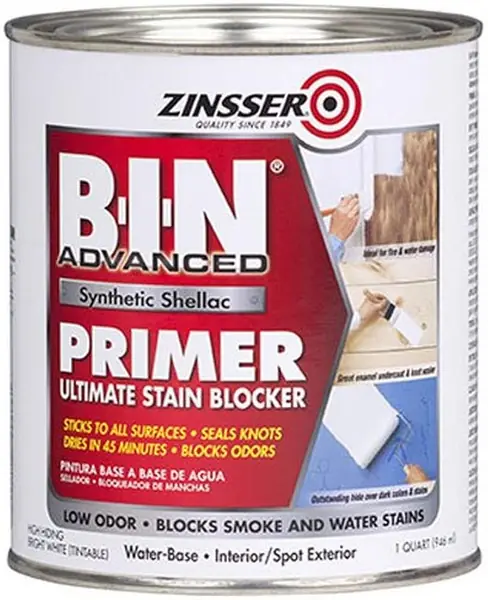
Zinsser B-I-N Advanced Shellac Primer Best for Knotty Pine

Zinsser B-I-N Advanced synthetic shellac primer in a white quart can

Knotty pine

Shop Score 94/100
Base
Synthetic shellac
Size
1 quart
Dry Time
2 hours
Stain Blocking
Knots, sap and tannin
View on Amazon

Knots in pine and cedar can bleed through a white topcoat no matter how carefully you paint. The B-I-N Advanced Synthetic Shellac Primer is the product we reach for when that is the risk: it seals knots, sap, and tannin and leaves a bright white base that hides dark wood.

The shellac-based formula dries to the touch in about two hours and levels into a matte film that is easy to read under shop light. We like it for furniture and trim because it blocks odors as well as stains, which matters on old pieces that smell like smoke or pets. It also bonds well to bare wood, and the bright white makes thin spots obvious before you open the topcoat.

We keep it for knotty pine, cedar trim, and any bare wood with a history of staining. It is also useful when you need to seal an odor before paint. For a whole room of plain pine, the water-based Bulls Eye 1-2-3 is easier to live with.

We save it for the pieces that need its specific talents rather than using it as a general-purpose base coat. The extra hiding is real, too: it cuts down the number of topcoats on dark or resinous wood.

Worth Noting

  • Premium price for a quart
Our Verdict

We reach for this shellac-based primer when bare pine or cedar has knots that would bleed through paint.

Check Latest Price
3.

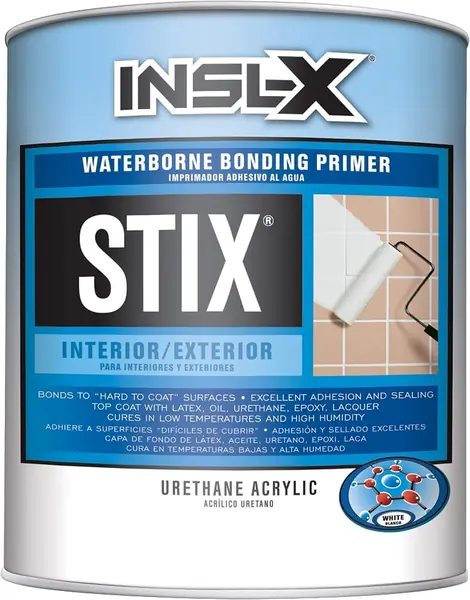
INSL-X Stix Bonding Primer Best for Cold Shops

INSL-X Stix white acrylic bonding primer in a quart can

Cold workshops

Shop Score 93/100
Base
Acrylic urethane
Size
1 quart
Coverage
75-100 sq ft
Low-temp Cure
35°F
View on Amazon

An unheated garage or shop limits which primers you can use, especially in late fall. INSL-X Stix is formulated to cure at temperatures as low as 35°F, so we keep it in mind for cold-weather furniture and trim projects when a standard water-based primer would be risky.

It is a waterborne acrylic-urethane bonding primer with a reputation for gripping hard-to-coat surfaces, but it also works on bare wood. One quart covers 75 to 100 square feet, and the white flat finish gives you a uniform base for almost any topcoat. We like that it can go under alkyd, acrylic, urethane, epoxy, or lacquer finishes, which makes it a flexible choice for a mixed shop. On a bare board, it builds a hard film once cured, which is what you want under a demanding topcoat.

For raw wood in a warm room, the water-based Bulls Eye 1-2-3 is easier to justify. Stix earns its place when the workspace is cold or the surface is fussy, and the extra adhesion is the reason to choose it. We also appreciate the low-temperature window because it extends the painting season instead of forcing a wait for spring.

Worth Noting

  • Premium price for a quart
  • Longer full cure than water-based primers
Our Verdict

We like this for unheated shops because it bonds and cures at 35°F, though it costs more than our top pick.

Check Latest Price
4.

Rust-Oleum Professional Primer Spray Best Spray for Shop Projects

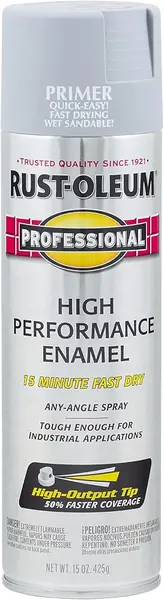
Rust-Oleum Professional gray primer spray can with high-output tip

Small shop projects

Shop Score 92/100
Base
Oil-based enamel
Size
15 oz
Coverage
12 sq ft
Dry Time
15 minutes
View on Amazon

This can is built for spot work, not a whole bookcase. Rust-Oleum Professional Primer Spray is an oil-based enamel primer for small wood and metal projects, and we like it when a quick base coat matters more than stretching a quart.

The high-output tip sprays from any angle, which helps on turned legs, brackets, and other awkward shapes. It dries to the touch in about 15 minutes and is ready for a topcoat almost immediately, so you can finish a small project in one session. On bare wood, it builds a hard base that resists chipping and rust. The gray color is also forgiving under both light and dark topcoats.

The spray performance is the weak point: some cans clog or sputter, so we keep a spare can and clear the nozzle between passes. A quick wipe of the tip keeps the session moving.

We reach for it when the project is small enough to hold in one hand and the next coat needs to go on today. The fast recoat is the real payoff on a small repair, where waiting overnight would stall the whole job. It is a shop convenience, not a substitute for a brush-on quart on a full piece of furniture.

Worth Noting

  • Small 12-square-foot coverage per can
Our Verdict

We use this spray when a small wood or metal project needs a fast primer coat and an immediate topcoat.

Check Latest Price
5.

Rust-Oleum Painter's Touch Brush-On Primer Best Small Can for Furniture

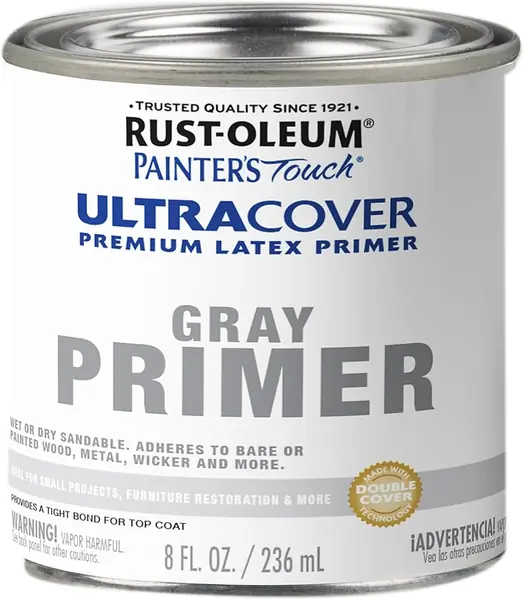
Rust-Oleum Painter's Touch flat gray brush-on primer in a half-pint can

Furniture touch-ups

Shop Score 91/100
Base
Water-based acrylic
Size
8 fl oz
Coverage
30 sq ft
Dry Time
30 minutes
View on Amazon

A half-pint can is the right size for a nightstand, a picture frame, or a small repair. Rust-Oleum Painter's Touch Brush-On Primer is a water-based acrylic primer that brushes on with low odor and cleans up with soap and water, which makes it easy to keep on a shelf for furniture touch-ups.

It covers about 30 square feet and dries to the touch in half an hour, so you can prime a small piece and topcoat it the same day. The flat gray finish is forgiving under paint and shows where you have coverage. We like the small can because it avoids opening a quart that will skin over before the next small project.

The acrylic formula can raise the grain on raw wood, so we sand lightly between coats. A light scuff with 220-grit keeps the finish smooth without cutting through the primer.

We reach for it on raw wood furniture and craft pieces where a full quart would be more than the job. The gray tint is also a useful guide: it lets us see thin spots without a bright white glare. It is the can we grab for a quick repair before the topcoat goes on.

Worth Noting

  • Small 8-ounce can limits larger projects
Our Verdict

We keep this half-pint around for small furniture and craft pieces where a full quart is more than we need.

Check Latest Price
6.

Dixie Belle Bonding BOSS Primer Best for Furniture Flips

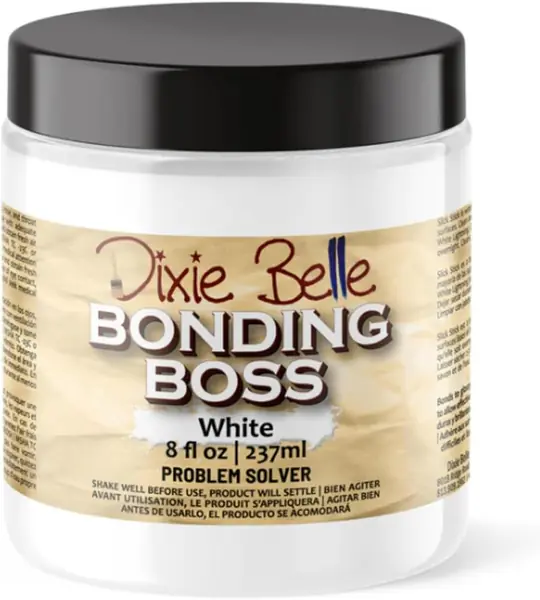
Dixie Belle Bonding BOSS white water-based primer in an 8-ounce bottle

Furniture flips

Shop Score 90/100
Base
Water-based
Size
8 fl oz
Stain Blocking
Odors, stains and bleed-through
Use
Interior
View on Amazon

Stain blocking is the reason to pick up Bonding BOSS. Dixie Belle makes this water-based primer for problem surfaces, and it is formulated to block odors, stains, and bleed-through before you paint.

The 8-ounce bottle is aimed at furniture flips and craft pieces rather than walls, and a little goes a long way on small areas. It works on wood, plastic, brick, glass, and more, so it is handy when a project mixes materials. We like it for pieces with a stubborn stain or a smell that you want to seal before a topcoat. The white color gives you a clean base for light or dark topcoats.

We use it where the stain or odor problem is local, then switch to a quart-size primer for the broad panels. It is not a whole-room primer; the 8-ounce bottle is built for furniture and craft pieces. The water-based formula also keeps indoor work comfortable.

For a small piece with a dark stain or a lingering odor, this is a focused problem-solver rather than a general base coat. We reach for it when the issue is the reason the piece has not been painted yet.

Worth Noting

  • High price for an 8-ounce bottle
Our Verdict

For small furniture and craft pieces that need stain or odor blocking, this is the one we reach for, not a whole-room primer.

Check Latest Price
7.

Krylon ColorMaxx Primer Spray Best for Small Craft Projects

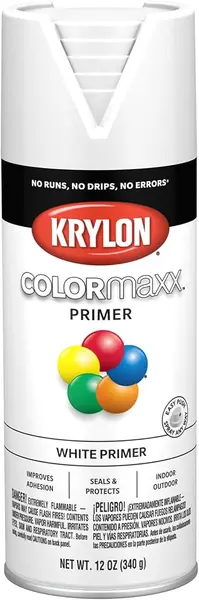
Krylon ColorMaxx white acrylic primer spray can for wood and crafts

Small craft projects

Shop Score 89/100
Base
Acrylic
Size
12 oz
Coverage
25 sq ft
Dry Time
10 minutes
View on Amazon

A ten-minute dry time is the appeal here. Krylon ColorMaxx White Primer is an acrylic spray primer for small wood and craft projects, and its quick dry time makes it convenient for quick base coats. The can is easy to grab for a small repair, and the white color makes coverage easy to read.

It covers about 25 square feet and dries to the touch in 10 minutes, so it works for small boxes, frames, and craft cuts. The white finish is opaque enough to give paint a uniform start, and the spray can reaches areas that a brush would struggle with. We like it for quick shop experiments and small pieces where a full quart is overkill. The acrylic formula also works on metal, wicker, glass, and plaster, so it earns shelf space beyond wood.

It is not the product we choose for a fine furniture finish; for that, a brush-on primer gives more control. On raw wood, a light sanding and a wipedown help the primer grip, and thin coats are safer than one wet pass.

We keep a can for quick craft projects and test panels, where speed matters more than a flawless film. It is a utility primer, and that is exactly how we use it.

Worth Noting

  • Some cans sputter or clog
Our Verdict

We see this as a convenient spray for small wood crafts, as long as you test adhesion on your surface first.

Check Latest Price

How We Tested Primers for Raw Wood

We began by gathering every primer we could find that named bare wood among its uses, then narrowed the field by base type — water-based, shellac, acrylic-urethane, oil — by can size, and by whether it was sold as a bonding or stain-blocking formula. That left 14, which we used over six months.

Most of the work happened in a garage shop and on sawhorses in the driveway, on boards of pine and oak plus a few salvaged dressers and cabinet doors. We brushed and rolled the brush-on cans, sprayed the aerosols outdoors or in an open garage with a fan running, and kept every flammable can well clear of the water heater and its pilot light.

On each board we timed how long the film stayed tacky and how soon it could be sanded and recoated, then pressed painter's tape across a scored patch to see whether the primer lifted with it or held. We tracked square feet per can on porous pine versus tight-grained oak, checked that each white laid down evenly enough for the topcoat color to read the same across the whole panel, and watched for knots, sap, and tannin bleeding through in the weeks after the finish coat went on.

We also noted brush marks and whether the primer sanded out to a flat, even film, how strongly each one smelled in a closed room and how easily it cleaned up, and how the sample boards held up on a covered porch through a wet spring.

How to Choose a Primer for Raw Wood

Start With the Wood, Not the Brand

Most bare wood is forgiving: a water-based primer-sealer such as Bulls Eye 1-2-3 gives you adhesion, a uniform white base, and easy cleanup. Knots, sap, and tannin are the exception. On pine, cedar, and redwood, a shellac-based primer like B-I-N pays for itself by sealing the resin before it can bleed through a light topcoat. If the wood has an odor or a stubborn stain, choose a stain-blocking primer rather than a plain sanding sealer. We prioritize stain blocking whenever the finished color is white or pale.

Choose Brush, Roll, or Spray for the Shape

Spray primer is tempting because it reaches turned legs and recesses quickly, but the cans are small: our spray picks list 12 to 25 square feet of coverage, while a quart covers 75 to 100. That makes spray best for brackets, frames, and small assemblies; a brush or roller is more economical on a dresser, cabinet, or long board. If you spray, build thin coats and keep the nozzle clean. If you brush, use a foam roller or a quality synthetic brush and watch for drips on vertical surfaces. The format should follow the shape of the piece, not the other way around.

Weigh Water-Based Against Shellac and Oil

Water-based primers are the easiest indoor choice: low odor, soap-and-water cleanup, and a one-hour recoat on many products. Shellac-based primers dry fast and block stains and odors, but they cost more. Oil-based primers can be tough and water-resistant, though they need solvent cleanup and more ventilation. If your shop is unheated, check the label: Stix is formulated to cure at 35°F, while many water-based primers need warmer conditions. Choose the chemistry that fits your workspace as well as your wood.

Buy Enough for Porous Wood and Plan the Topcoat

Coverage figures are a starting point, not a promise. Bare wood, especially end grain and rough-sawn boards, absorbs more primer than a sealed surface, so a quart that covers 100 square feet on drywall may cover less on a porous project. Buy one extra can or quart when you are close to the edge, and plan two thin coats on knots, sap pockets, and end grain. Sand lightly between coats if you want a smooth film, and follow the label's recoat window before the topcoat. A primer that is still tacky will not save you time.

Frequently Asked Questions

Final Verdict

For most bare-wood projects, we recommend Zinsser Bulls Eye 1-2-3. It seals the surface, blocks light stains, and cleans up with water, and its quart size is enough for a dresser or a small run of trim without a premium outlay. If the wood is knotty pine or cedar with resin that keeps bleeding, switch to the shellac-based B-I-N. If you are working in an unheated shop, Stix is the one that earns its higher price by curing at 35°F.