↑↓ navigate ↵ open Esc close All results →

Best Finishes for Workbench Tops

A workbench top meets chisels, glue drips, and tipped solvent jars every week, which quickly exposes whether a finish suits real shop abuse. Hard surface films wipe clean of glue and finishes until a deep gouge forces a fussy spot repair, while penetrating oils soak in and refresh with a rag in minutes yet stain faster under spills.

Brushing 12 finishes—from wiping varnishes to two-part epoxies—onto identical maple panels finished flat on sawhorses and worked on for six months changed early assumptions about oil being the default choice. Recoat windows often mattered more than sheen, deciding whether three coats wrapped up in a weekend or dragged on for weeks, and low-odor water-based options made indoor garages livable when a bench shares a wall with the house.

Applying the finish flat with steady airflow sets up any of these eight options to handle anything from a light assembly table to a heavily hammered joinery bench.

Our Top Picks

The Best Finishes for Workbench Tops

1.

Waterlox Original Sealer and Finish Best Overall
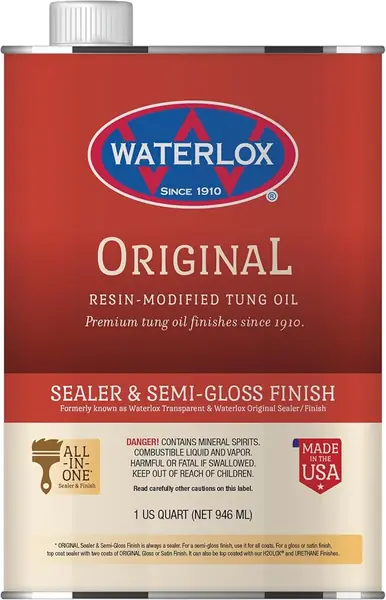
Waterlox Original Sealer and Finish one-quart can of satin interior wood finish

Benches and counters

Shop Score 97/100
Sheen
Satin (medium)
Size
1 quart
Coverage
Up to 125 sq. ft. per coat
Finish Type
Penetrating sealer and finish
View on Amazon

A workbench top is going to get gouged — that is the point of it. The question is what happens the morning after: sand the whole surface back to bare wood, or scuff the damage and lay down another coat. Waterlox Original builds its protection in thin, penetrating layers, which is what makes the second answer realistic; a spot repair blends into the surrounding finish instead of leaving a patch.

We keep it at the top of this list because of the way the cured film behaves. It is a medium satin that stays slightly elastic, so it moves with the top instead of cracking along a glue seam, and it is genuinely water-resistant — a puddle left sitting on the surface wipes up without leaving a ring. The listed coverage runs to 125 square feet per coat, more than a bench top needs across four coats.

The schedule is the part to plan around. This is a multi-coat finish with roughly a day between coats, so seal the top flat on sawhorses before the base goes on, not the weekend you want to be using the bench. Buy the quart: you will have finish left over for a shelf or two.

Worth Noting

  • Strong solvent odor while it cures
Our Verdict

We recommend Waterlox for a bench you plan to use hard for years — it builds a water-resistant film you can spot-repair instead of stripping.

Check Latest Price
2.

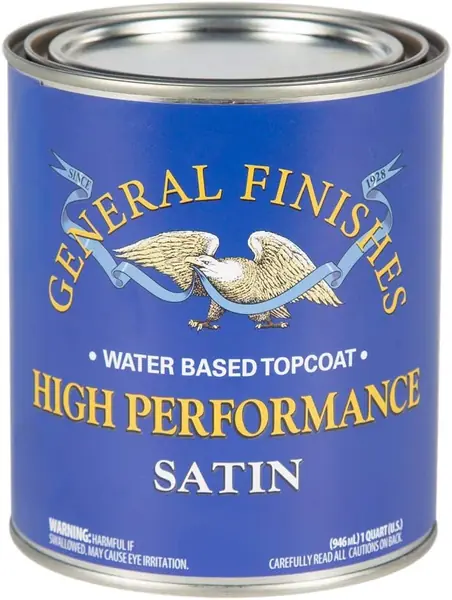
General Finishes High Performance Topcoat Best Water-Based

General Finishes High Performance water-based topcoat quart can in satin finish

Low-odor shop work

Shop Score 96/100
Sheen
Satin
Coverage
125-150 sq. ft. per quart
Base
Water-based
Recoat Time
1 to 2 hours
View on Amazon

The first thing you notice is what is not there. Uncapping a water-based finish in a basement shop does not fog the room the way an oil-based polyurethane does, and that alone changes when and where you can coat a bench top. Among the water-based options here, this is the one we rank first: it lays down like a real film finish without demanding open doors.

Applied with a foam applicator, satin builds into a smooth, even film that stays clear — the kind that does not turn maple yellow a year later. The recoat window is only one to two hours and everything cleans up with water, so a top can go from bare sanded wood to handled in a day. Coverage runs 125 to 150 square feet per quart, which is generous for a bench.

Two things to check before you commit. The satin reads closer to semi-gloss than you might expect across a big flat surface, so lay a test patch on scrap if sheen matters to you. And it costs more per quart than the oil-based polys here, which we think is a fair trade for the odor and the cleanup. If you own a spray gun, this is the finish to put in it.

Worth Noting

  • Thin film that needs three to five coats
Our Verdict

For a shop you cannot ventilate, this is the topcoat we reach for — it builds a hard satin film with almost no smell and cleans up with water.

Check Latest Price
3.

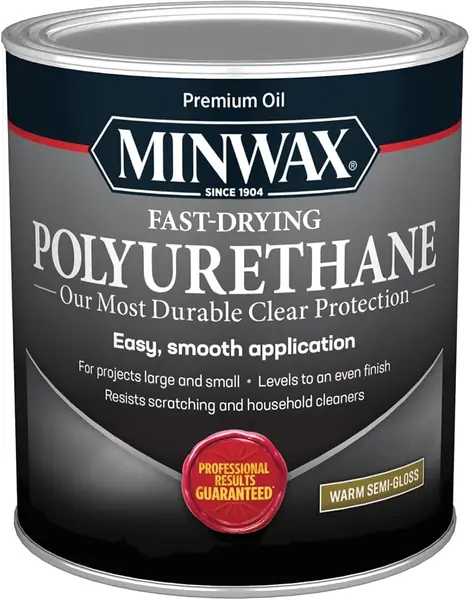
Minwax Fast Drying Polyurethane Best Value

Minwax Fast Drying Polyurethane one-quart can in clear semi-gloss

First bench builds

Shop Score 95/100
Sheen
Semi-gloss
Coverage
125 sq. ft. per quart
Base
Oil-based
Recoat Time
4 to 6 hours
View on Amazon

A quart of oil-based polyurethane for a bench top is about as unglamorous as finishing gets, and this is the least expensive quart in this group. It is also the classic answer to the job: semi-gloss, oil-based, and thin enough to brush out across a wide flat surface without leaving a lap mark.

A decent brush or a foam pad is all the equipment it asks for, and the four-to-six-hour recoat window means three coats fit into a weekend without taking Monday off. One quart covers 125 square feet, so a bench top barely dents the can.

What we like most is how little drama it brings: no learning curve, no special gear, and a film that stands up to water and heat on a surface that gets used. Two coats is a working finish, four is a bench you can hand down. Sand lightly between coats — dust nibs are the one thing that will show through a semi-gloss.

Worth Noting

  • Ambers pale wood and painted surfaces
Our Verdict

This is the one we buy when the bench needs a hard oil-based film and the budget is tight — the least expensive quart here that still does the job.

Check Latest Price
4.

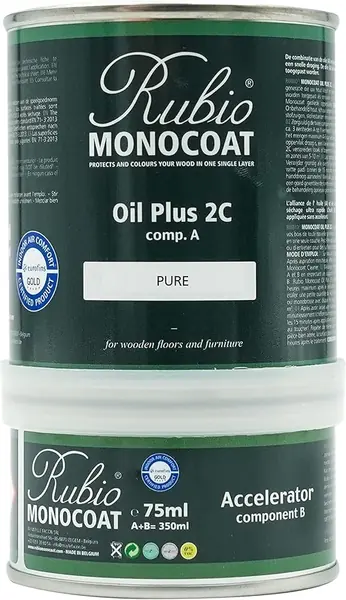
Rubio Monocoat Oil Plus 2C Best Hard Wax Oil

Rubio Monocoat Oil Plus 2C 350 ml can of matte hard wax oil

Furniture-grade benches

Shop Score 94/100
Sheen
Matte
Coverage
105-175 sq. ft. per 350 ml
VOC
0% VOC
Coats
One
View on Amazon

One coat is the whole pitch, and on a bench top it is the difference between a Saturday project and a three-weekend one. Rubio Monocoat goes on as a hard wax oil, gets buffed back, and cures in the wood rather than sitting on top of it — no sanding between coats, no film to trap dust, no solvent smell chasing you out of the shop. We keep a can on the shelf for tops that have to look good.

The coverage figures hold up: 105 to 175 square feet from a 350 ml can, more than a bench top takes even with a second pass on the end grain. It is also the finish here that looks least like a finish — matte, close to the grain, and warm rather than glossy, so a bench that lives in a kitchen or a finished basement reads as furniture instead of shop equipment.

It carries food-contact certification and a zero-VOC formula, which matters if the bench sits in a room with kids or a dinner plate. Maintenance is the quiet advantage: when the top goes dull, another thin coat goes on over the old one without stripping anything back.

Worth Noting

  • Premium price for a 350 ml can
Our Verdict

One coat, no sanding between, and a matte finish that feels like wood rather than plastic — we pick it when the bench is also furniture.

Check Latest Price
5.

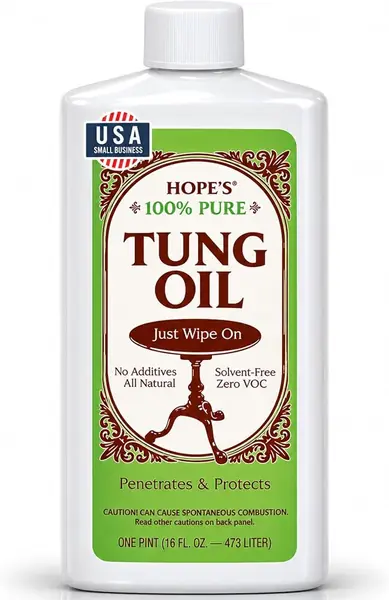
Hope's 100% Pure Tung Oil Best Penetrating Oil

Hope's 100 percent pure tung oil in a 16-ounce bottle

Re-oiled bench tops

Shop Score 93/100
Size
16 fl oz
Type
100% pure tung oil
Food Contact
Food safe when fully dry
Resistance
Moisture, alcohol, and everyday wear
View on Amazon

Oil does not sit on a workbench top, it lives in it. Soak pure tung oil into the wood and it cures inside the fibers, leaving a surface that is still wood — no plastic skin to chip at an edge, no brush marks to sand out, nothing to peel if the top flexes under a heavy vise.

The practical case is straightforward. It resists moisture, alcohol, and everyday wear, it is food safe once fully dry, and it darkens the wood slightly, which reads as depth on most bench lumber rather than damage. Application is a rag and some patience: flood it on, let the wood take what it wants, then wipe off what is left.

Because it is a pure oil rather than a thinned oil-varnish blend, the protection is proportional. A solvent spill will cut through it, and a bench used for finishing wants something harder on top. For hand-tool work — planing, chiseling, joinery — it is plenty, and it never shows a repair the way a film does.

Where it earns its place in the lineup is the bench you would rather maintain than refinish: a coat in the fall, another when the top starts looking dry. Of everything here it changes the wood the least, and we like that the grain reads deeper while the surface stays satin instead of glossy.

Worth Noting

  • Slow cure with days between coats
  • Noticeable oil smell while curing
Our Verdict

For a bench top you will refresh rather than refinish, this is our pick — pure tung oil soaks in, cures flexible, and never chips at an edge.

Check Latest Price
6.

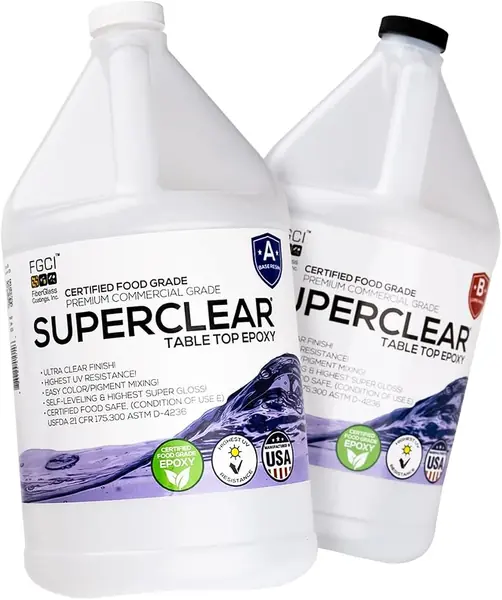
Superclear Table Top Epoxy Best for Heavy-Use Tops

Superclear two-gallon table top epoxy kit with resin and hardener

Heavy-use tops

Shop Score 92/100
Food Contact
Food safe after full cure
Finish
High-gloss, self-leveling
Kit Size
2 gallon
Mix Ratio
1:1 by volume
View on Amazon

Pour it on and walk away. Mixed one-to-one by volume, a tabletop epoxy self-levels across a bench top into a glass-gloss slab, filling small voids and sealing end grain in a single pass. If you have ever fought brush marks across a wide flat surface, the pour is a genuine relief.

This listing is the two-gallon kit, so it is a lot of resin — sensible if you are also coating a bar top or a counter, more than you need if the bench is your only project. What cures out is water clear, hard, and UV-stabilized against yellowing, and the cured surface is food safe, which is more than a brushed film can usually offer.

We recommend it for the top that has to shrug off spills, solvents, and the occasional dropped chisel. Nothing else here is that impervious, and nothing else looks quite so much like a bar top. It is a coating you choose for a bench that mostly holds things rather than one that gets cut on.

Bubbles are the thing to plan for. Warm resin flows and degasses better, so work in a warm room, mix slowly, and pass a heat gun over the surface after the pour; do that and it comes out as clear as the product photos. UV stabilizers slow yellowing, though no epoxy stays perfectly clear forever, so keep the top out of direct sun if the look matters.

Worth Noting

  • Permanent coating that must be sanded off
Our Verdict

Choose this when you want a poured, glass-smooth slab of a top: it levels itself, glosses like a bar top, and shrugs off spills.

Check Latest Price
7.

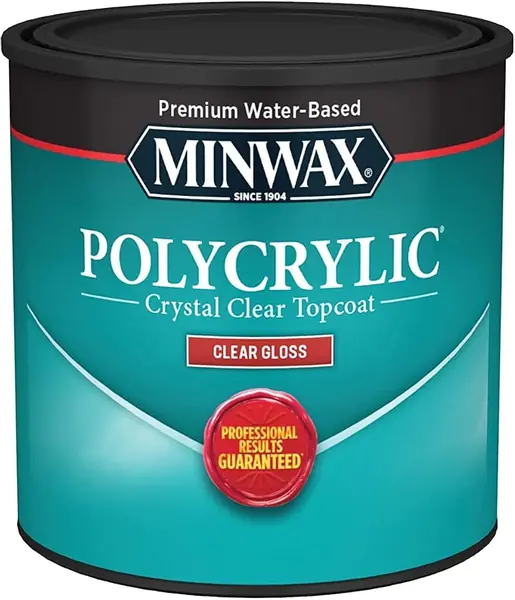
Minwax Polycrylic Protective Finish Best for Light-Use Benches

Minwax Polycrylic clear gloss water-based finish in a half-pint can

Light-use benches

Shop Score 91/100
Sheen
Gloss
Size
8 fl oz (1/2 pint)
Base
Water-based
Recoat Time
2 hours
View on Amazon

Two hours between coats is the whole argument. Minwax Polycrylic goes on milky and dries crystal clear, and you can lay the next coat down before lunch, which makes it the easiest finish here to fit around a working day. It is water-based, cleans up with soap and water, and stays clear over light woods like maple and ash instead of pulling them amber.

We treat it as the light-duty pick in this group. On a bench that sees hand tools, layout, and light assembly it is genuinely pleasant — clear enough to keep pale wood pale, hard enough for daily use. It is not what we reach for when solvents get spilled or glue gets scraped off with a putty knife.

Practical notes: a half pint goes a long way on a bench top, a foam brush leaves the fewest marks, and a light scuff between coats keeps the film flat. Sanding dust wipes off with a damp rag, which is more than you can say for an oil-based film.

Worth Noting

  • Softer film than an oil-based polyurethane
Our Verdict

It is the quick, low-odor seal we use on a light-use bench — crystal clear, dry enough to recoat in two hours, and easy to clean up.

Check Latest Price
8.

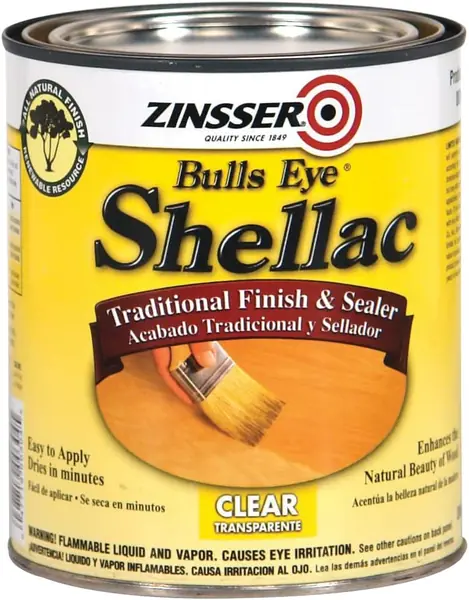
Zinsser Bulls Eye Clear Shellac Best for Sealer Coats

Zinsser Bulls Eye clear shellac one-quart can for sealing wood

Sealer coats

Shop Score 90/100
Size
1 quart
Type
Clear shellac, alcohol-based
Use
Sealer and finish for interior wood
Cleanup
Ammonia and water
View on Amazon

Shellac is the finish you can put on in an afternoon and sand out by evening. It is alcohol-based, so it flashes off in minutes rather than hours; thin coats go on with a rag or a pad, and several of them stack up before the day is out.

It is also the best sealer in this group. Clear shellac locks down knots and sap, blocks odors coming out of the wood, and gives a harder finish something to grab. On a bench top built from pine or reclaimed lumber, a coat of it underneath saves you from resin bleeding through the topcoat six months later.

As a finish on its own it dries with a faint golden cast rather than the heavy amber of an oil-based varnish, and it buffs to an even sheen. Cleanup is ammonia and water, and there is no sanding between coats if you work thin.

We keep it on the shelf as a sealer first and a finish second. Layered under Waterlox or a polyurethane, it is the cheapest insurance against a blotchy pine top; used alone, it is the right call for a bench that only ever sees wood and where a fresh coat is minutes away.

Worth Noting

  • Softens under alcohol and standing water
Our Verdict

Shellac earns its place as the fastest sealer here — minutes between coats, and a warm, clear base under a harder topcoat.

Check Latest Price

How We Tested Workbench Top Finishes

We started by gathering the finishes working woodworkers actually keep on the shelf, then cut anything that came only in quantities far larger than a bench top or that needed spray equipment to apply. That left 12, which we brushed onto panels of the same maple, planed and sanded identically, and finished flat on sawhorses with the shop door open. Testing ran six months, long enough to see how each one aged under real work instead of a week of careful handling.

While the panels cured, we timed how long each coat stayed tacky and how soon a second could go on without dragging, since that window sets the pace of a whole finishing job. We noted the odor at application and again the next morning, with and without a fan moving air, and we cleaned up each one the way its label directed. We also measured how far a container went against a bench-top-sized area, so we could compare cost per square foot rather than cost per can.

Then we used them. Panels took glue squeeze-out left to harden overnight, a sweating glass, spilled mineral spirits and denatured alcohol, and a plane dragged across the surface, and we clamped and unclamped work on them daily. When a gouge appeared, we tried to spot-repair it with that same finish and recorded whether the patch blended or left a ring that meant stripping the whole top.

We set panels side by side under the same light at one month and again at six to catch amber shift and sheen change, and for the two-part pours we mixed by volume, wore gloves in a ventilated space, counted bubbles as the coating leveled, and checked clarity at the end. Nothing touched food until it had cured completely.

How to Choose a Finish for a Workbench Top

Film or penetrating: choose by how you repair it

A film finish — polyurethane, polycrylic, epoxy, shellac — builds a layer on the surface that takes the abuse instead of the wood. It wipes clean and sheds spills best, but damage is repaired by sanding back to a feathered edge and recoating, and a deep gouge can mean redoing the whole top. A penetrating finish — pure tung oil, hard wax oil, or a thin varnish worked into the grain — sits in the fibers and is refreshed with another application over the old coat. If your bench doubles as an assembly and finishing table, we lean toward the second kind; if it has to wipe clean, the first.

Match the finish to what actually lands on the top

Water is the easy test — almost everything here handles a spilled cup. Solvents are the hard one: lacquer thinner, acetone, and denatured alcohol lift shellac and soften most water-based acrylics, while an oil-based polyurethane, a varnish like Waterlox, and epoxy shrug them off. Glue squeeze-out matters too, since a hard film lets a dried bead pop away with a chisel where an oiled top can bond to it. If you do finishing or solvent work on the bench itself, buy for chemical resistance rather than sheen.

Count the coats, not just the can

The finish that dries fastest usually needs the most coats, and the total time the bench is out of service is what you will actually feel. A water-based topcoat recoats in one to two hours; an oil-based polyurethane wants four to six; a hard wax oil is a single application. Pure oils are the slowest by a wide margin. Plan the work around assembly — coat the top flat on sawhorses before the base goes on, and none of these schedules costs you a working day.

Buy the small can, and think about where you are finishing

A bench top runs about 12 square feet. At three or four coats that is under 50 square feet of coverage, and a quart of most finishes here covers 125 square feet or more per coat, so buy the quart and not the gallon. Where you finish matters as much as what: oil-based varnish and polyurethane need open doors and a fan, while a water-based topcoat or a zero-VOC hard wax oil lets you work in a basement shop without driving everyone upstairs.

Frequently Asked Questions

Final Verdict

For a workbench top that will be cut on, glued on, and wiped down for years, Waterlox Original Sealer and Finish is the one we put first: it builds a water-resistant film you can scuff and recoat instead of stripping, and it forgives the damage a real bench takes.

If you finish indoors or spray, General Finishes High Performance gets you a hard, clear film with almost no odor. If the bench has to look like furniture in a finished room, one coat of Rubio Monocoat is the faster and better-looking route.