↑↓ navigate ↵ open Esc close All results →

Best Brushes for Polyurethane of 2026

Shoppers often buy a polyurethane brush by the brand name on the handle instead of matching the filament to the finish chemistry. Soft natural bristle pairs well with oil-based poly, synthetic filaments handle water-based formulas without going limp, and foam works cleanly on small flat pieces — picking the wrong match leads to cured-in stray filaments that force sanding back and recoating.

During four months of finishing a stripped dresser, kitchen cabinet doors, trim, and deck boards with 16 brushes, load capacity proved just as decisive as bristle type. Holding more finish per dip cuts down on passes and lap marks on broad panels, though an overly wide head turns awkward on a narrow rail, and cleanup effort quickly separated repeatable brushes from single-coat throwaways.

Covering tight edges, wide decking, small glass-smooth tops, and multi-brush convenience, the eight options below match each stage of a poly job without demanding a full solvent wash after every quick coat.

Our Top Picks

The Best Brushes for Polyurethane

1.

Wooster Silver Tip Angle Sash Brush Best Overall
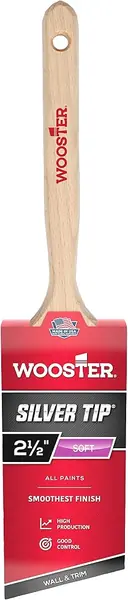
Wooster Silver Tip angle sash paintbrush with soft white polyester bristles and a hardwood handle

Furniture and trim

Shop Score 97/100
Handle
Hardwood
Bristle
100% CT polyester, flagged
Width
2 1/2 inches
Rated For
Latex and oil-based
View on Amazon

Soft filaments are why this brush ends up in our hands whenever a can of polyurethane is open. The polyester tips are flagged and fine, so they lay the finish down flat and let it flow out behind the stroke instead of dragging ridges through it. At 2 1/2 inches, the angled head covers a dresser top in three or four passes and still cuts a clean line down a leg or a cabinet stile.

Control is where it surprised us. The hardwood handle is light enough to choke up on for a small repair, and the angled tip works a rail without taping off the panel beside it. It carries a generous load for its size, which matters with a clear finish, because every extra dip is another chance to drag a bubble across the surface. It's rated for latex and oil-based coatings, so it can follow a water-based topcoat or an oil-modified one, provided you clean it properly in between.

The habit we've built before a first dip takes thirty seconds: flex the bristles across a palm and pull out anything loose. A stray filament in a tacky coat is the one flaw you can't sand out without leaving a witness mark, and the check is cheaper than a re-coat. Wash it in warm soapy water or mineral spirits, spin it dry, and it comes back for the next project.

Worth Noting

  • Soft filaments need a light hand along edges
Our Verdict

We reach for this one first on furniture and trim: soft polyester filaments lay a level clear coat without ridge lines, and the angled head cuts an edge without tape.

Check Latest Price
2.

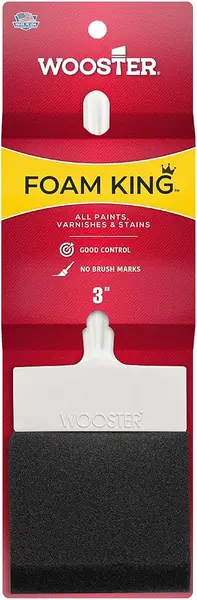
Wooster Deluxe Foam Brush Best for Water-Based Polyurethane

Wooster deluxe foam brush with a thick 3-inch white foam pad and white plastic handle

Water-based topcoats

Shop Score 96/100
Handle
White plastic with stiffener blade
Width
3 inches
Foam
Thick open-cell polyurethane
Made For
All paints, varnishes and stains
View on Amazon

Where our top pick needs a light hand to keep a coat even, this pad of foam needs no technique at all. It's thick, open-cell polyurethane cut square across three inches, and it leaves nothing behind: no ridges, no lint, no line where a stroke ended. Press it into the surface and the finish simply sits there.

We were surprised by how much it takes. Cheap sponge brushes soften at the edge and start dropping crumbs into a wet coat halfway through a cabinet door; this one holds its shape through a full set of shelves. The white handle has a stiffener blade molded into it, which keeps the pad flexing the same way from the first stroke to the last, so the coat goes on as evenly at the end of a panel as at the start.

Water-based polyurethane on flat stock is the job we hand it, and it repays that with a coat that needs no sanding back. Rinse it under warm water the moment a coat ends, work a little soap through the cells, and stand it on its handle to dry. It comes back for the next coat rather than going in the trash.

Worth Noting

  • 3-inch pad is clumsy on spindles and narrow rails
Our Verdict

For water-based polyurethane on flat panels, we think this foam brush is the easiest route to a streak-free coat you never have to sand back.

Check Latest Price
3.

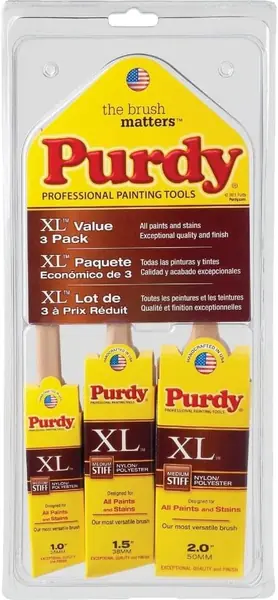
Purdy XL 3-Pack Best Set for a Whole Project

Purdy XL three-brush set with natural wood handles and flagged nylon-polyester bristles

Whole-room refinishing

Shop Score 95/100
Handle
Rattail natural hardwood
Bristle
Nylon and Orel polyester blend
Count
3 brushes
Brushes Included
1, 1 1/2 and 2 inch
View on Amazon

This is the most expensive way to buy brushes here, and it's also the order we place when a whole piece of furniture or a run of trim needs finishing. Inside are three brushes — a 1-inch XL Dale, a 1 1/2-inch XL Glide and a 2-inch XL Sprig — so you aren't stopping mid-project for the size you forgot.

The filaments are a nylon and Orel polyester blend flagged at the tips and rated for all paints and stains. That range is the point: one set can follow a stain coat into a water-based topcoat without a change of tool, and the stiffness retention Purdy builds into the XL line is meant for hot, humid outdoor work, where soft brushes lose their edge.

We like the balance of the set. The rattail handles taper into a grip you can choke up on for detail, the stainless ferrules stay tight, and all three come out of a soap-and-water wash with their shape intact. If you only ever coat small pieces, one brush does the work of three, and a single 2 1/2-inch sash brush covers more ground than this whole pack.

Worth Noting

  • Two-inch brush is straight-cut, not angled
Our Verdict

When a whole project needs more than one brush, we point people here: three sizes, one soft blend, and enough quality to clean and reuse.

Check Latest Price
4.

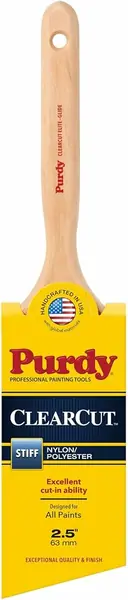
Purdy Clearcut Glide Best for Edges and Trim

Purdy Clearcut Glide 2-1/2 inch angular paintbrush with stiff bristles and alderwood handle

Cutting in edges

Shop Score 94/100
Handle
Moisture-wicking alderwood
Bristle
Stiff Tynex nylon and Orel polyester
Width
2 1/2 inches
Built For
Latex paints and primers
View on Amazon

Stiff bristles are both the point of this brush and the reason we don't hand it to everyone. The Clearcut Glide is built for latex paint and primer, where a firm flagged tip snaps a straight line along a baseboard and stops exactly where you want it to. Load it with an oil-based varnish and that same stiffness works against you, pushing the finish around instead of letting it flow out.

For a polyurethane job, edges are where it earns its place. The 2 1/2-inch angular head reaches into a corner and along the shoulder of a casing, and the stiffness lets you push a water-based coat right up to a seam without it bleeding over. The alderwood handle is light and wicks moisture, so it doesn't turn slick in a warm room.

We treat it as the detail half of a two-brush setup: this one for cut-in work, something softer over the flat field. It washes out completely in warm water and comes back with its edge intact, coat after coat.

Worth Noting

  • Stiff filaments fight an oil-based finish that needs flow
Our Verdict

We keep one for edges: stiff filaments push a coat into corners and along casing without slopping onto the wall behind it.

Check Latest Price
5.

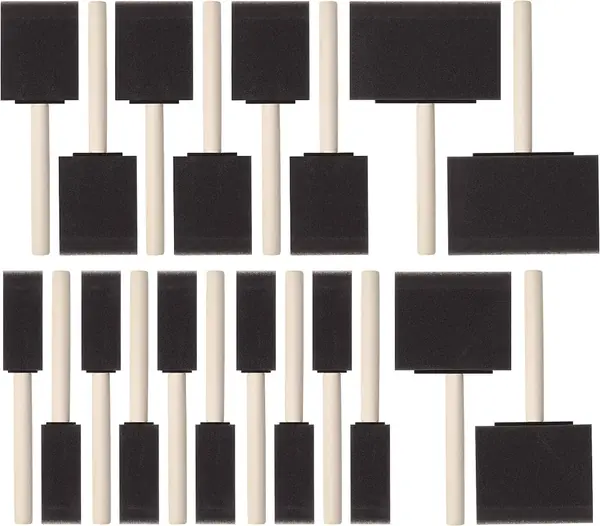
Bates Foam Brushes 20-Pack Best Disposable Foam

Bates 20-pack of foam paint brushes with wooden handles in four sizes from 1 to 4 inches

Multi-coat jobs

Shop Score 93/100
Count
10 at 1 in, 6 at 2 in, 2 each at 3 and 4 in
Foam
Absorbent foam cells
Handles
Wooden
View on Amazon

There's a version of a multi-coat job where the brush never gets cleaned: load a fresh foam pad, lay the coat, drop the used one in the trash with the masking paper. That's what a 20-pack is for, and the four sizes run from 1 inch up to 4.

The foam is absorbent and the tips are glued on square, so a full load doesn't run down onto your knuckles. The small sizes are the useful ones: louvered doors, drawer grooves, the inside corners of a frame, the gap between a rail and a panel where a bristle brush won't fit. They handle glue, craft paint and decoupage just as well.

Quality is a step below the Wooster foam we recommend first, and the foam is the part that gives out. Give each pad a firm tug before loading it; one that's going to separate from its handle usually tells you straight away, while the handle is still dry and your hands are still clean.

We keep a pack in the shop for sealer on fence boards, stain on a shutter, glue-ups and the occasional school project. As a disposable brush it's the sensible buy. As the brush for a tabletop's final clear coat it isn't, and we don't ask it to be.

Worth Noting

  • 1-inch brushes make up half the pack
Our Verdict

We buy these by the pack for multi-coat jobs where tossing the brush beats cleaning it, and the small sizes reach inside frames.

Check Latest Price
6.

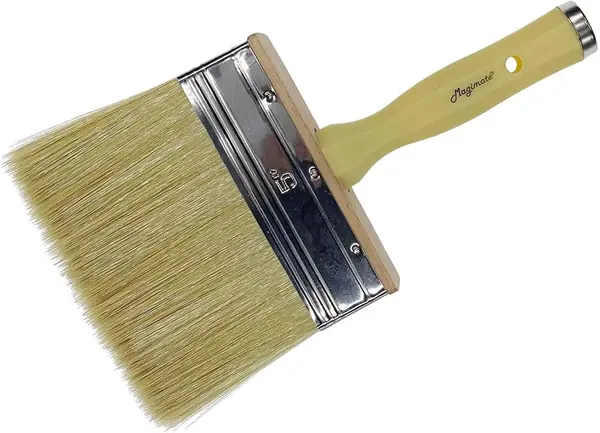
Magimate Deck Stain Brush Best for Floors and Decks

Magimate 5-inch wide stain brush with a threaded handle for an extension pole

Decks and floors

Shop Score 92/100
Handle
Threaded for extension pole
Bristle
Synthetic filament blended with natural bristle
Width
5 inches
Thickness
1 inch
View on Amazon

Five inches of bristle, an inch thick, is a lot of brush, and on a floor or a deck that is exactly what you want. The blend of soft synthetic filament and natural bristle holds a serious charge of finish and spreads it in long, even passes instead of the short, choppy strokes a two-inch sash brush forces on you.

The handle is hollow and threaded, so it screws onto a standard extension pole. Standing upright with a pole instead of kneeling beside the boards changes the job: the passes get longer, the finish goes down more evenly, and you stop crawling along the project.

We like it best on tabletops, shelving, plank floors and any long run of flat grain. It also earns its keep as a back-brushing tool behind a roller or a pad, working finish down into the wood instead of leaving it sitting on the surface, which is the difference between a coat that seals and one that peels.

Two things we check before the first coat: flex the bristles to shake out anything loose, and give the block a firm tug on the handle. Ten seconds of that is what keeps a loose head out of a floor coat. Clean it with whatever solvent the finish calls for, comb the bristles straight, and it comes back for the next deck.

Worth Noting

  • Wide head overloads narrow rails and spindles
Our Verdict

Our pick for anything wider than a plank: five inches of soft bristle covers a floor or deck fast and takes an extension pole.

Check Latest Price
7.

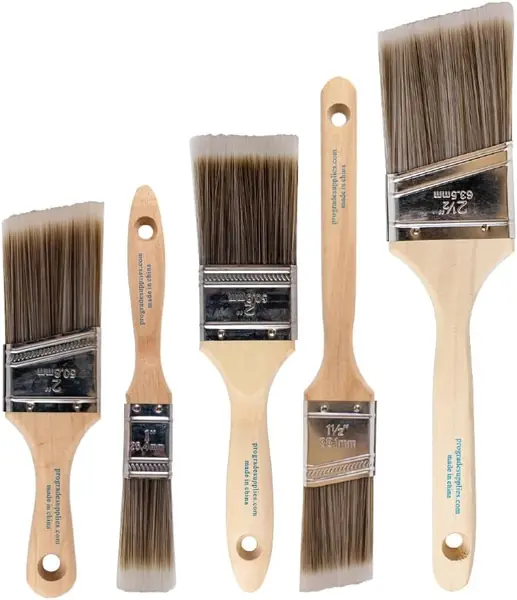
Pro Grade 5-Piece Paint Brush Set Best for Detail and Corners

Pro Grade five-piece paint brush set with wood handles and soft synthetic bristles

Detail and corners

Shop Score 91/100
Handle
Solid wood
Bristle
SRT synthetic filaments
Brushes Included
1 in flat, 1.5 in angle, 2 in flat, 2 in angle stubby, 2.5 in angle
Paint Compatibility
Acrylic, oil and decorative
View on Amazon

Most sets this size leave the stubby out, and the 2-inch angle stubby here is the brush that earns the set its place: short enough to work inside a cabinet carcass, along a bottom rail and into an inside corner, where a full-length handle stops you. The rest of the box is a 1-inch flat, a 1 1/2-inch angle, a 2-inch flat and a 2 1/2-inch angle.

We reach for the stubby constantly on face frames and inside corners. The soft synthetic filaments splay just enough to push finish into a tight corner without gouging it, and the solid wood handles stay light over a long run of trim. Five shapes for the price of one good brush is the honest pitch, and it holds.

What these are is utility brushes. Rinse them the same day and they hold their shape for a season of small jobs; leave one loaded overnight and it's a loss you won't mourn. We use them for priming, sealing, a first build coat and craft work, and keep the good brush for the coat people will actually touch.

Worth Noting

  • Bristles can shed into a wet coat
  • Largest brush is 2.5 inches wide
Our Verdict

A cheap way to get five sizes at once, and the stubby angle brush earns its drawer space on cabinet interiors.

Check Latest Price
8.

Bates Paint Brushes 6-Pack Best for Oil-Based Finishes

Bates six-piece paint brush set with three flat and three angled wood-handled brushes

Oil-based finishes

Shop Score 90/100
Handle
Treated wood
Bristle
Natural bristle blended with synthetic filament
Count
6 brushes
Brushes Included
3 flat and 3 angled, 1 to 2.5 in
View on Amazon

If the can in your hand says oil-based, this is the set we point to when the budget is tight. The bristle blend includes natural filament, which carries a thicker oil finish and flags out at the tip, and the six brushes run from 1 inch to 2 1/2 inches in both flat and angled heads.

The angled heads matter more than the sizes here. The long tip lays finish into a corner and the short side keeps it off the surface next door, and the two smaller angled brushes are the ones we reach for on spindles and chair legs. The treated wood handles are light and stay comfortable through a fence panel.

What the set won't do is a wide flat field. Two and a half inches is the ceiling, so a tabletop or a door slab takes more passes than it would with a wider brush, and these are happiest on rails, stiles, trim and shelves.

Six brushes for about what one premium brush costs is the whole pitch, and it holds as long as you match the set to the job. We like them for stain, sealer and a first coat of oil-based poly on a fence or a set of shelves. For a tabletop that will be judged in raking light, we still want the softer flagged tip of our top pick.

Worth Noting

  • Bristles can shed into the first coats
Our Verdict

The set we suggest when the can says oil-based and the budget is tight, though you'll want to check for loose bristles as you go.

Check Latest Price

How We Tested Brushes for Polyurethane

We started with specs rather than reviews: we sorted the field by bristle material, width, and shape, then pulled brushes from across the price range — singles and multi-packs both — so we could compare cost per brush instead of cost per package. Foam earned a place in the running because a small, flat surface doesn't always want filament. From that list, 16 brushes went into testing over four months.

Every brush went through both water-based and oil-based polyurethane on a stripped dresser, a run of kitchen cabinet doors, trim, and deck boards. After each pass we counted the filaments left sitting in the wet finish and noted whether the coating leveled out behind the brush or kept the grooves where individual filaments dragged. Firmness we judged at the corners: too soft and the finish puddled along the edge, too stiff and the brush skipped. We worked with the garage door open, kept solvent cans clear of the water heater, and laid used brushes and rags flat outside to dry.

Load capacity we timed: how many linear feet of trim one dip covered before the brush started to drag. Cleanup told us as much as application did — we rinsed water-based brushes in warm soapy water, cleaned oil-based ones with mineral spirits, combed both back into shape, and recorded which ones returned for a second and third coat with bristles still tight in the ferrule and edges intact. Value per brush showed up right there. Anything that dropped filaments on the first pass went to sealer and primer duty rather than a topcoat.

How to Choose a Brush for Polyurethane

Match the bristle to the finish

Water-based and oil-based polyurethane want different brushes, and the difference is the filament. Water swells natural bristle and makes it limp and prone to shedding, so a water-based finish gets synthetic — nylon, polyester, or a blend of the two — or foam. Oil-based finishes are the opposite case: a natural-bristle brush or a soft synthetic blend carries the heavier finish and flags out at the tip. Our top pick is polyester and rated for both, which is why it is the one we recommend first.

The trap is the cheap chip brush. It's usually natural bristle, it's usually sold as fine for everything, and it sheds into a clear coat. Buy one good 2- to 2 1/2-inch angled brush before you buy three cheap ones.

Shedding is the flaw you can't fix

A loose bristle in a wet coat is not the disaster; a loose bristle in a tacky coat is. Once the finish starts to pull, picking the filament out leaves a ridge you have to sand back to bare wood to remove, and the recoat never quite matches. That is why we weight shedding above almost everything else when choosing a brush for clear finishes.

Break a new brush in before it touches the work: flex the bristles across your palm, comb them out, then load the brush and wipe it once on scrap. The first coat is where loose filaments show up, not the third, so watch the surface as you go and stop the moment something lands in it.

Foam or bristle

Foam leaves no brush marks and no lint, costs little, and can be thrown away after a coat, which makes it the easiest route to a clean result on flat panels in a water-based finish. It also can't be tipped off into a corner, and it gives up sooner in a hot solvent finish. Bristle carries more material, reaches into profiles and rails, and is the sensible choice for oil-based poly on furniture.

The decision follows the project. Cabinet doors, shelves and a tabletop in water-based poly: buy foam. A chair, a bed frame or a run of trim in oil-based poly: buy a 2- to 2 1/2-inch angled bristle brush. If you're doing both, buy both; together a good one of each still costs less than a single premium brush.

Width and shape follow the surface

One inch for spindles, slats, louvered doors and the inside of a cabinet. Two to two and a half inches with an angled tip for rails, stiles, dresser tops and trim, where the angle lets you cut an edge without taping. Three to five inches for tabletops, floors and decks, ideally with a threaded handle so the brush can go on a pole.

The trap is buying one brush for everything. A 2-inch sash brush on a floor project means hours of short strokes, lap marks where the finish sets before you get back to it, and a sore wrist. A 5-inch deck brush on a chair rail does the opposite damage: too much finish in too small a space, and drips running down the leg.

Cleanup that keeps a brush alive

Water-based polyurethane cleans up with warm soapy water, but only before it dries — once it hardens in the heel of the brush, the brush is done. Oil-based needs mineral spirits worked through the bristles, then soap and water, then a comb and a spin dry, hanging bristle-down.

Our rule is that a good bristle brush gets cleaned the same day, every coat, and a foam brush goes in the trash the moment it starts to soften. Lay used rags and the wet brush flat outdoors to dry; a bundle of oily rags in a bucket indoors is how fires start.

Frequently Asked Questions

Final Verdict

If we were buying one brush for polyurethane today, it would be the Wooster Silver Tip angle sash. Soft flagged polyester lays a level coat, the 2 1/2-inch head covers furniture panels and cuts an edge without tape, and it handles water-based and oil-based finishes alike.

Built differently? Pair it with the Wooster foam brush when the finish is water-based and the work is flat, step up to the Purdy XL set when a whole room needs finishing, and take the five-inch Magimate if the project is a floor or a deck.