↑↓ navigate ↵ open Esc close All results →

Best Rollers for Polyurethane of 2026

Shed fibers, trapped micro-bubbles, and dry lap bands where a roller runs dry mid-panel often hide in wet polyurethane until the coat cures hard, turning a finishing step into a full sand-back. Choosing the right roller cover prevents those flaws by holding enough finish for a complete pass, releasing it evenly, and leaving zero lint behind.

Coating a dining table, cabinet doors, a garage floor, and stacks of test panels with 16 covers over four months confirmed that nap height and fabric weave govern results far more than label claims. High-pile wall covers aerate clear coats with foam and bubbles, whereas high-density foam and tight woven sleeves level flat; cheap cardboard cores also swell in oil-based solvents and slip sideways on the cage mid-stroke.

Reusable sleeves that rinse clean between coats sit beside economical single-job covers for tabletops, cabinet doors, trim, and touch-ups, with all seven rollers laying down clear finish without shedding.

Our Top Picks

The Best Rollers for Polyurethane

1.

Wooster Epoxy Glide R232 Roller Cover Best Overall
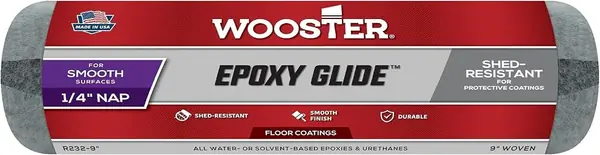
Wooster Epoxy Glide dark gray 9-inch roller cover with 1/4-inch nap

Tabletops and panels

Shop Score 95/100
Size
9 inches
Nap
1/4 inch
Cover Material
Non-woven fabric
Core
Double-thick polypropylene
View on Amazon

Wooster labels this cover for epoxies and urethanes, waterborne or solvent borne, and backs it up with a 1/4-inch non-woven face on a double-thick polypropylene core. That combination is why it is our default for polyurethane: the fine fabric lays finish down thin and even, and the core is built to resist the solvents in an oil-based product.

It rewards a light hand. A thin cover cannot flood a surface, so heavy loading just puts more finish in one spot than the fabric can spread; roll it out on the tray and keep the coat lean and it levels into a flatter film than any napped cover here. That is also why it does its best work on a tabletop, a shelf, or a set of frames rather than a garage floor.

Cleanup is the easy part. Rinse it, spin it dry, and the fabric comes back smooth for the next coat — no special cleaner, nothing fussy about it. Pair it with a good frame that grips the core firmly, because a cover this thin will show every wobble you put into it.

Worth Noting

  • Holds little finish, so you reload often
Our Verdict

We default to the Epoxy Glide for clear topcoats: a 1/4-inch non-woven cover built for urethane lays a flatter coat than any wall cover here.

Check Latest Price
2.

Wooster Pro/Doo-Z RR723 Roller Cover Best All-Around

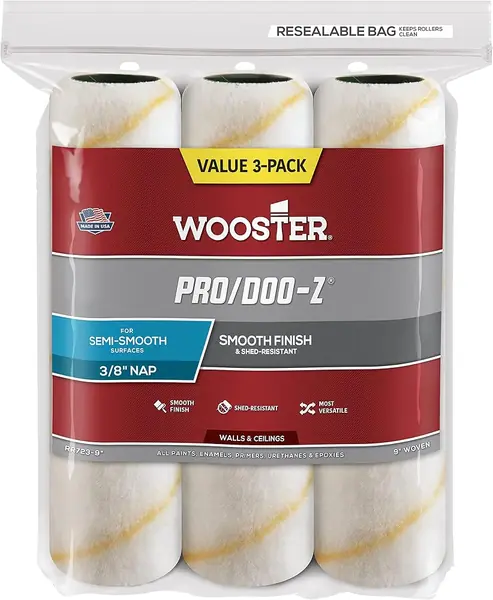
Wooster Pro/Doo-Z white woven 9-inch roller cover with 3/8-inch nap

Large flat panels

Shop Score 94/100
Size
9 inches
Nap
3/8 inch
Cover Material
Woven shed-resistant fabric
Core
Double-thick polypropylene
View on Amazon

Where the Epoxy Glide is 1/4 inch of non-woven, the Pro/Doo-Z is 3/8 inch of woven fabric on the same double-thick polypropylene core. That extra nap carries noticeably more finish per dip, which is what you want when you are coating a full sheet of plywood or a long run of shelves and would rather not walk back to the tray every few feet.

What we like is that the fabric stays put. It comes out of the bag clean, and the woven face does not fuzz into a clear coat the way cheaper microfiber does — on polyurethane, that is the difference between a finish you can leave and one you have to sand back and redo. It also handles enamels, primers, epoxies, and urethanes, so it is not a single-purpose tool taking up drawer space.

It is the priciest single cover here, and worth it if you will finish more than one piece: it rinses out, dries fast, and comes back for the next project. For one coat on one small panel, a foam cover does the job for less.

Worth Noting

  • Leaves more texture than a 1/4-inch cover
Our Verdict

For big panels, this is the cover we reach for: it carries more finish per load than the Epoxy Glide and still comes up clean.

Check Latest Price
3.

Mister Rui 4-Inch Foam Roller Covers Best for Cabinets and Furniture

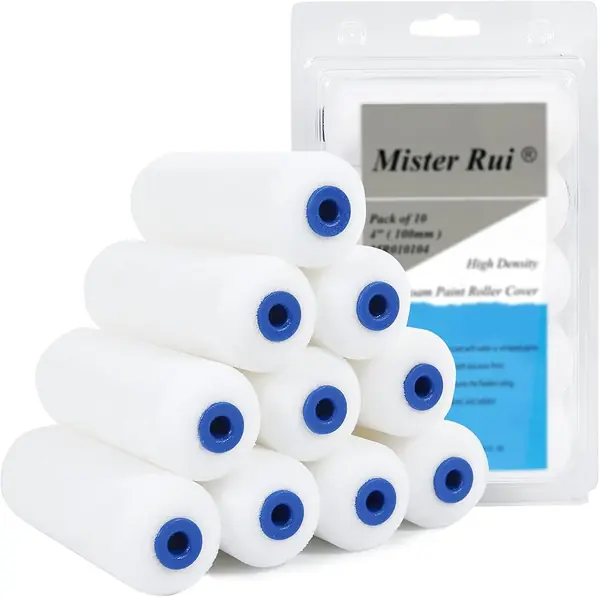
Mister Rui high-density foam 4-inch roller covers in a ten-pack

Cabinet doors

Shop Score 93/100
Size
4 inches
Cover Material
High-density foam
Covers Per Pack
10
Paint Compatibility
Oil- and water-based
View on Amazon

A cabinet door is small, flat, and awkward to brush without leaving lines, which is why we keep a pack of these 4-inch foam covers around. High-density foam has no nap to leave texture, so a door or a drawer front comes out smooth, and the cover is narrow enough that you are not wrestling a 9-inch roller in a 12-inch space.

Foam rewards a light touch. It soaks finish into the core, and a cover dunked and dragged straight to the work goes on foamy; roll it out on the tray until it stops dripping, then lay the coat down thin. Keep a brush at hand for edges and recessed panels, where foam cannot reach.

The pack size is the real argument. Ten covers get you through a kitchen's worth of doors and drawer fronts without stopping to wash anything, and there is always a dry one ready for the next coat.

Worth Noting

  • Foam breaks down after a use or two
Our Verdict

For cabinet doors, drawer fronts, and furniture, these foam covers lay down a texture-free coat, and ten to a pack means you can toss the messy ones.

Check Latest Price
4.

Mister Rui 2-Inch Foam Roller Kit Best for Trim and Tight Spots

Mister Rui blue 2-inch foam roller kit with tray, liners, and frame

Detail and trim

Shop Score 92/100
Roller Width
2 inches
Foam Covers
6
Tray Liners
2
View on Amazon

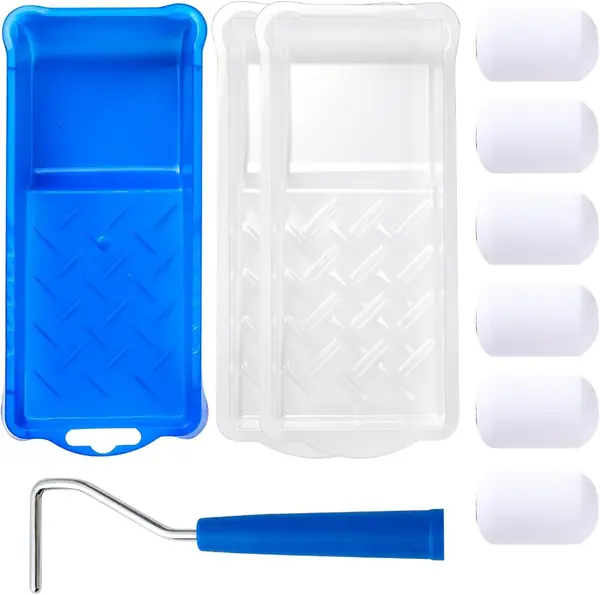
There is a category of polyurethane work that never sees a 9-inch roller: the inside of a bookcase, the rails on a chair, the strip between a cabinet stile and the wall. That is the job this 2-inch kit is for.

It arrives as a complete little setup — frame, tray, two liners, six foam covers — and the liners are the detail we appreciate most, because you peel one out and toss it instead of rinsing a tray in the sink. The foam gives the same texture-free coat it does at 4 inches, just in a width you can steer into a corner.

The tray is deliberately small, a few ounces, enough to wet a 2-inch cover without drowning it, though you will refill more often on a long run. For rails, corners, and touch-ups, that is the right trade — this is a detail tool, and it behaves like one.

Worth Noting

  • Covers can work loose on the frame
Our Verdict

For rails, spindles, and the inside of a case, this little kit has the frame, tray, and covers to get polyurethane where a 9-inch roller cannot.

Check Latest Price
5.

Edward Tools 7-Piece 4-Inch Roller Kit Best Small-Job Kit

Edward Tools 4-inch roller kit with rubber-grip frame, foam and polyester covers, gray tray

First kits

Shop Score 91/100
Roller Width
4 inches
Cover Types
Polyester and foam
Covers Included
5
View on Amazon

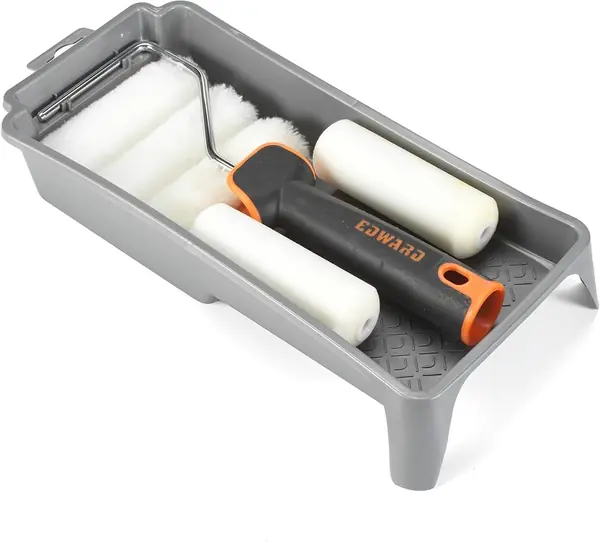
The rubber grip is what separates this kit from the pile of inexpensive 4-inch sets: a molded handle that stays comfortable through a run of doors. Around it you get three polyester covers, two foam covers, and a plastic tray.

Having both cover types in one box is genuinely useful on a first project. The foam goes on flat panels where you want no texture at all; the polyester has a little more bite, which suits trim and edges where finish needs to grab. The frame swaps between them in seconds, and the handle does not fight you when you choke down on it for control.

The covers are the weak point — both types can start dropping fibers during the first job, so tape off a new one or run it on scrap before you trust it under a topcoat. That is a five-minute check that protects a finish you spent an hour on, and it is the one habit this kit should teach you.

Worth Noting

  • Smaller in person than the photos suggest
Our Verdict

A good first kit for trim, doors, and furniture: two cover types, a comfortable frame, and a tray in one box.

Check Latest Price
6.

Bates 9-Inch Microfiber Roller Covers Best for Shop Utility Work

Bates yellow-striped 9-inch microfiber roller covers in a five-pack

Shop utility work

Shop Score 90/100
Size
9 inches
Nap
1/2 inch
Covers Per Pack
5
Material
Microfiber
View on Amazon

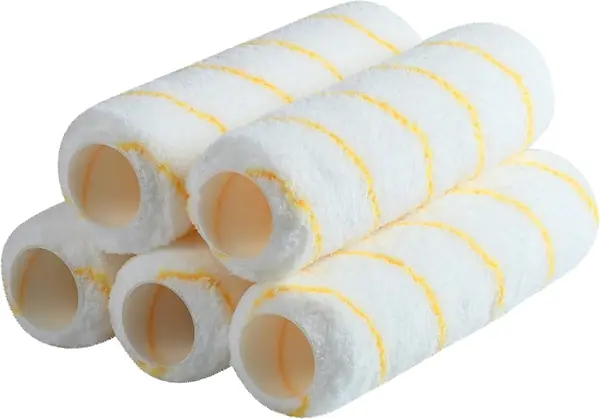
Five 9-inch covers for less than one premium cover costs — that is the pitch, and for utility work it holds up. Sealing a jig, coating the back of a panel, rolling finish onto shop fixtures: these load fast and you do not wince when one goes in the trash.

Shedding is the thing to plan around. These drop fibers, and in a clear finish those fibers are visible, so knock the loose ones off before the first dip and keep a scrap of the same wood nearby to test on.

They are not heirloom covers. You may lose one mid-project to shedding or a torn nap, and buying them in fives is the honest answer to that.

We keep them for sealing and shop work and reach for something finer on a tabletop. That is not a knock on the value — it is just what half an inch of microfiber is for.

Worth Noting

  • 1/2-inch nap leaves texture in a clear coat
Our Verdict

Five workhorse 9-inch covers for sealers and shop projects, as long as you knock the loose fibers off before a clear coat.

Check Latest Price
7.

Pro Grade 10-Piece Roller Kit Best for New Shop Setups

Pro Grade 10-piece roller kit with 9-inch and 4-inch frames, tray, and brushes

New shop setups

Shop Score 89/100
Frames
9-inch and 4-inch
Cover Nap
1/2 inch
Pieces Included
10
View on Amazon

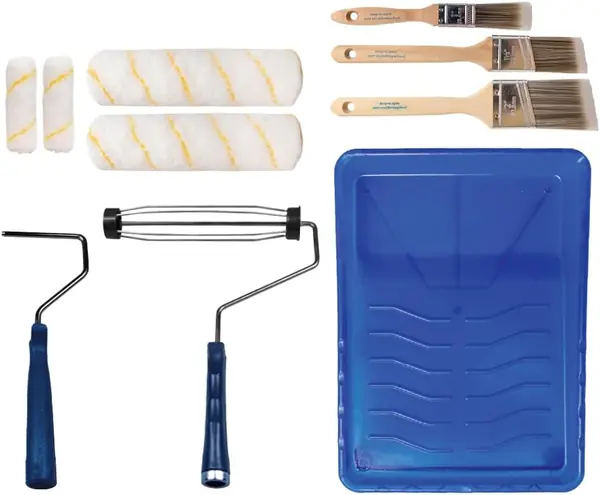
Two frames in one box is the reason this kit earns a spot: a 9-inch frame for panels and a 4-inch mini frame for doors, rails, and edges. Add a plastic tray, a pair of microfiber covers, and brushes, and you have a starting box for a shop that owns nothing.

Buy it for the frames and the tray, then add a proper finish cover before you open the polyurethane. On that basis it makes sense as a one-time purchase, and the mini frame alone is worth having — it is the size that actually gets used on cabinet work.

Worth Noting

  • Included covers are too thick for a topcoat
Our Verdict

Buy this kit for the two frames and the tray, then add a finer cover for the finish coat.

Check Latest Price

How We Tested Rollers for Polyurethane

The shortlist started with labels rather than listings: what the cover was made of, how thick the nap was, what the core was molded from, whether the maker stated compatibility with solvent-based finishes, and whether the width matched a frame most people already own. We ordered 16 covers — nine-inch for panels and floors, four-inch for cabinet doors, two-inch for trim and touch-ups — and passed on anything that named only water-based acrylics or arrived with no stated core material.

For four months, those covers ran on real work: a red oak dining table in the garage, a set of cabinet doors laid flat on sawhorses in the basement, a concrete slab, and enough scrap panels that a ruined coat cost nothing. We counted shed fibers on each panel under a raking work light and dragged a gloved finger over the cured film to feel what stood up. Bubbles were penciled as they appeared in the first coat and tallied once it set, and we timed how far a freshly loaded cover could travel before it started skipping — the reload interval, in practice.

Between coats we checked whether each cover seated tight on the frame or wobbled, and after each job we rinsed it in a utility sink, noting how much finish came out and whether the nap matted. Covers that came back for another coat stayed in rotation until they shed or the core went soft; the rest we logged as one-job consumables and weighed against the price per cover in the pack.

Coats of oil-based finish went on with the garage door up and a fan moving air, following the label's respirator guidance. Any rag or cover soaked with oil-based product was spread flat outdoors to dry before disposal — never balled up in a bucket, since those can self-ignite.

How to Choose a Roller for Polyurethane

Start With Nap and Fiber

A 1/2-inch knit or microfiber cover is a wall tool: it loads fast, covers ground quickly, and leaves a texture you can see under a raking light. Polyurethane wants the opposite — a 1/4-inch non-woven cover like the Wooster Epoxy Glide, a 3/8-inch woven one like the Pro/Doo-Z, or foam. Fine nap carries less finish and lays it down flatter, which is the whole game with a clear coat.

Foam has no nap at all, which is why it is our pick on cabinet doors and drawer fronts where there is nothing to hide behind. The trade-off is life span: foam breaks down faster than fabric, so buy it in packs and treat it as disposable.

Match the Width to the Piece

Nine inches is for tabletops, shelves, and full panels — surfaces where the cover can run in long passes without wandering off an edge. Four inches is the cabinet-door and furniture size; it gives you control on a rail or a stile and does not load more finish than a small panel needs. Two inches is for everything else: inside a bookcase, between a stile and a wall, around a spindle.

Covers only fit the frame they are sized for. A standard 9-inch frame takes 9-inch covers and nothing else, and a 4-inch cover needs a 4-inch mini frame — so check what is in your drawer before you order a five-pack of covers you cannot mount.

Oil-Based or Water-Based Changes the Cover

Oil-based polyurethane is thin and carries strong solvents. A cover with a double-thick polypropylene core, which Wooster builds into both of our fabric picks, is the safer bet; the core resists water, solvents, and cracking rather than going soft in the tray while you work.

We keep separate covers for oil- and water-based finishes. Once a cover has been in a solvent-based product, getting it truly clean is a chore, and residue left in the fibers can show up in the next coat. Mark the cores or store each cover in its own labeled bag.

Decide Up Front Whether You Are Reusing

Foam covers are usually a one-job purchase, especially with oil-based finishes. A woven or non-woven cover rinses out, spins dry, and comes back. That changes the math: a pack of ten foam covers is the cheaper way through a run of doors, while one good 9-inch cover is the better buy if you will be coating panels for years.

Our rule is to buy consumables for the job in front of you and one good cover for the work you do every winter.

Frequently Asked Questions

Final Verdict

The Wooster Epoxy Glide is what we hand someone who asks which roller to use on polyurethane. It is built for urethane, the 1/4-inch non-woven face lays a flat coat, and the polypropylene core stands up to solvent-based finishes — the three things that decide whether a clear coat comes out smooth.

If you are coating panels rather than a single tabletop, the Pro/Doo-Z holds more finish per dip and covers ground faster. If the job is cabinet doors and drawer fronts, take the foam covers instead.