↑↓ navigate ↵ open Esc close All results →

Best Brushes for Oil-Based Polyurethane of 2026

What separates a dependable polyurethane brush from a frustrating one shows up only after the coat cures: oil-based poly flows out and levels, then permanently locks in any stray filament or bristle ridge left behind. Checking filament type and ferrule construction tells far more about how a brush will lay finish on a hallway table or cabinet door than the marketing copy on the wrapper.

Over three months, we brushed oil-based polyurethane onto cabinet doors, stair treads, deck boards, and shop panels with 14 brushes and sets. Natural bristle carries solvent-based finish smoothly, though it can shed and soften during mineral spirits cleanups, while polyester and synthetic blends hold their snap and rinse predictably. Brush geometry matters just as much, separating angled sash heads for rails from wide blocks for decking and foam for flat panels.

The eight brushes and multi-packs ranked here cover fine trim, heavy deck work, cabinet doors, and disposable one-offs without leaving debris or heavy tracks to sand out later.

Our Top Picks

The Best Brushes for Oil-Based Polyurethane

1.

Wooster Silver Tip 2 1/2" Angle Sash Brush Best Overall
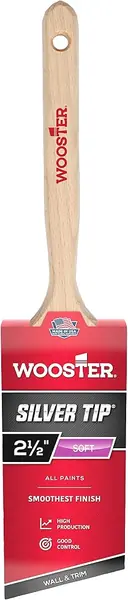
Wooster Silver Tip 2.5-inch angle sash paintbrush with white polyester bristles and a wood handle

Trim and furniture

Shop Score 96/100
Paint Compatibility
Latex and oil-based paints
Bristle Type
100% CT polyester, flagged
Brush Width
2.5 inches
Ferrule
Stainless steel
View on Amazon

What earns this brush its place is the filament: 100% CT polyester, soft, and flagged at the tips so every bristle splits into finer ends. That is exactly the property that matters with oil-based polyurethane, because the finish has to flow out behind the brush before it starts to tack. We get a flatter, more even coat from the 2 1/2-inch Silver Tip than from a stiffer brush, with fewer lap marks where one pass meets the next.

The angle sash shape handles the other half of the job. Along a cabinet face frame, a door stile or a run of baseboard, the angled tip cuts a clean line into a corner and then turns flat for the open field. We paid close attention to the ferrule, since polyurethane means mineral spirits again and again, and the stainless collar here does not rust or work loose the way a painted steel one can.

Soft cuts both ways. If the job is a crisp line where a wall meets a ceiling, a stiffer brush gives you more control, and this one feels limber for that work. On bare or stained wood, where the goal is a level film rather than a straight edge, the softness is the whole reason to buy it.

Cleanup is what you would expect from a brush at this level: mineral spirits first, then soap and water, combed straight and wrapped to hold its shape. Two and a half inches is the wrong width for a floor or a big tabletop, though — that scale belongs to the five-inch Magimate.

Worth Noting

  • Occasional loose filament early in the brush's life
Our Verdict

We reach for this one whenever a clear coat has to come out clean: its soft flagged polyester levels oil-based polyurethane better than anything else in this group.

Check Latest Price
2.

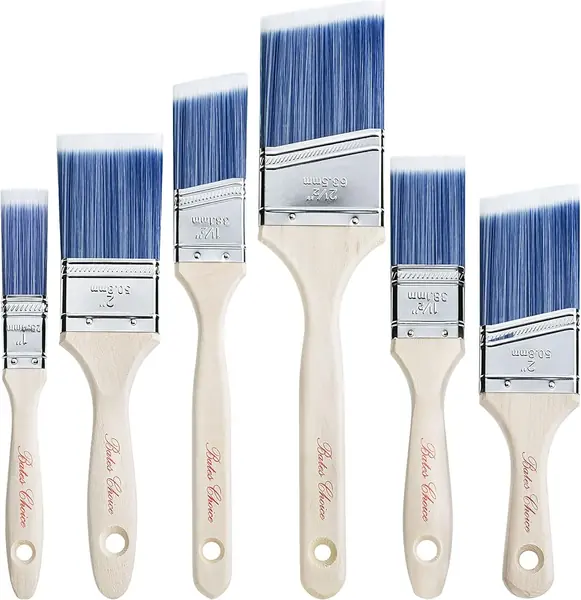
Bates 6-Piece Paint Brush Set Best Budget Set

Bates six-piece paint brush set with wooden handles in flat and angled shapes

Budget refinishing

Shop Score 95/100
Set Contents
Six brushes, flat and angled
Paint Compatibility
Oil-based and latex
Bristle Material
Natural bristle and synthetic
Brush Sizes
1 to 2.5 inches
View on Amazon

Every finishing job has a brush you are willing to ruin, and a six-piece set is how you avoid ruining the good one. These are natural bristles blended with synthetic filament, which is the mix we like for solvent finishes: the natural ends carry a load of polyurethane into the wood and let it go as you stroke out.

Three flats and three angles, from 1 inch to 2 1/2, cover more ground than the money suggests. The 1-inch angle reaches into a chair back or a drawer front, the 2 1/2-inch angle covers a tabletop in a few passes, and the flats handle rails and panels where you want even pressure across the width. That is the range a beginner needs rather than one heroic brush.

What we like most is how little the set asks of you. Load a brush badly, leave it sitting too long, forget it overnight — with six of them, a mistake costs a brush instead of an evening. The handles stay comfortable through a long session, and the natural blend holds a heavier load than a thin synthetic, which means fewer dips across a big panel.

Keep water out of the ferrule when you clean up. Rinse in mineral spirits, wash with soap and water, and dry the metal collar thoroughly, because a wet ferrule is where rust starts on a brush at this level.

Worth Noting

  • Bristles can shed into the first coat
Our Verdict

Our pick for a first refinishing project: six natural-bristle brushes in useful sizes, cheap enough that a mistake costs you a brush and not a weekend.

Check Latest Price
3.

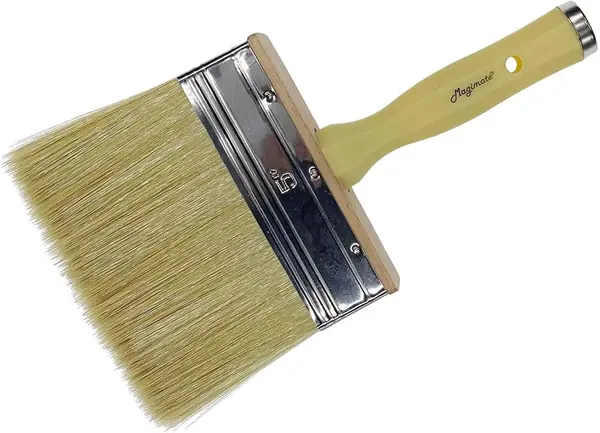
Magimate 5-Inch Deck & Stain Brush Best for Floors and Decks

Magimate five-inch deck and stain brush with tan bristles and a threaded wood handle

Decks and floors

Shop Score 94/100
Handle
Threaded for extension pole
Brush Width
5 inches
Weight
7.2 oz
Bristle Blend
Synthetic filament and natural bristle
View on Amazon

Five inches of brush sounds like deck-staining equipment, and that is what it is sold as, but the same width is what we want on a hardwood floor or a big tabletop, where the real enemy is a dry edge between passes. The head is an inch thick and blended — synthetic filament with natural bristle — so it loads heavily and lets go of the finish slowly as you pull it out.

The threaded handle is the detail that sells it. Screw on an extension pole and you finish a porch floor standing up, working back toward a door instead of crawling across a wet coat. We also like the flagged tips, which soften the edge of each pass enough that a lap mark does not set up before you get back to it.

On furniture this brush is simply too much. Five inches will not fit a face frame or a chair rail, and the heavy load that helps on a floor will flood a small panel if you are not careful. That is a boundary rather than a fault — bring it out for anything measured in square feet and reach for a sash brush for everything else.

Worth Noting

  • Bristles can shed into a wet coat
Our Verdict

For a floor or a deck this is the brush we load up: five inches wide, thick enough to hold a wet edge, and threaded for a pole so you are not on your knees.

Check Latest Price
4.

Genixart Double-Thick Chip Brush Set Best Disposable Option

Genixart five-piece chip brush set with wooden handles and tan synthetic bristles

One-off projects

Shop Score 93/100
Handle
Wood
Set Contents
Five brushes, 1 to 2.5 inches
Bristle Material
Synthetic and nylon filament
Finish Compatibility
Polyurethane, varnish and stain
View on Amazon

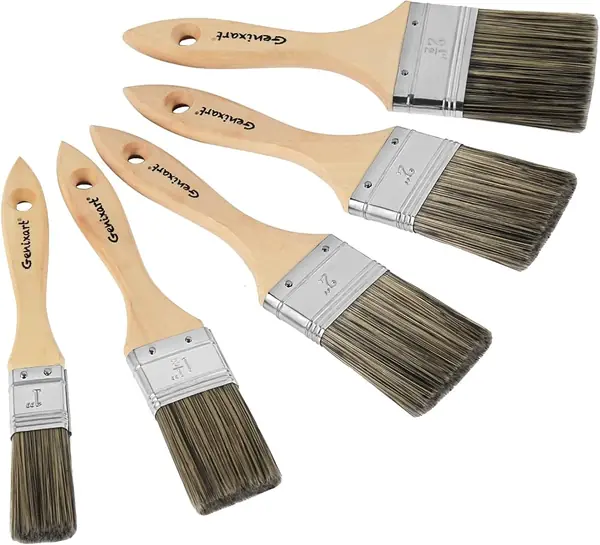
Plenty of brushes list all paints and leave it there. This set names polyurethane and varnish on the package, which is a small thing that tells you the maker expects it to be used the way you are planning to use it. Five chip brushes, 1 inch up to 2 1/2, with a double-thick head of synthetic and tapered nylon filament.

The extra thickness is what we notice. A standard chip brush holds so little finish that you spend the whole job dipping; these carry enough for a cabinet door face in one or two loads, and the tapered tips lay it down without the scrubby texture you get from a coarse bargain bristle. For the money, this is the pack that sits on the shelf for the jobs that do not deserve the good brush.

We reach for them where cleanup costs more than the brush: a coat of polyurethane on a set of shop shelves, a small piece you will never touch again, paste or epoxy where the brush is part of the mess. Not every finishing job deserves your best sash brush, and these handle that work without a second thought.

Worth Noting

  • No angled brush for cutting in
Our Verdict

The pack we buy when a job needs a decent coat and we have no intention of spending the evening cleaning a brush.

Check Latest Price
5.

Pro Grade 5-Piece Paint Brush Set Best for Cabinets and Corners

Pro Grade five-piece paint brush set with solid wood handles in flat and angled shapes

Cabinets and corners

Shop Score 92/100
Handle
Solid wood
Set Contents
Five flat and angled brushes
Paint Compatibility
Oil-based, acrylic and specialty
Bristle Type
SRT synthetic filaments
View on Amazon

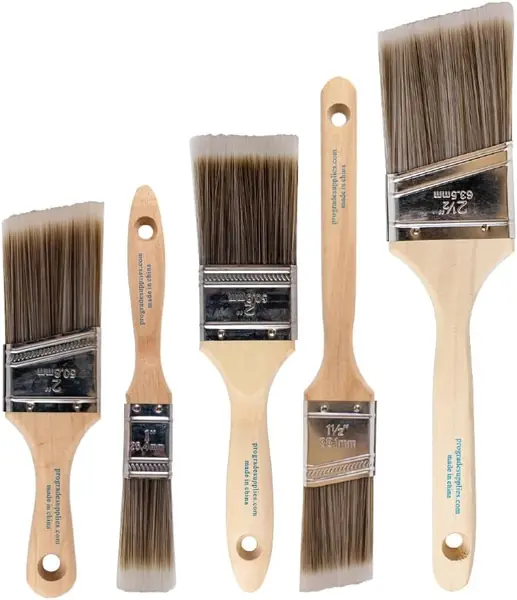
The brush that makes this set interesting is the one most five-packs leave out: a 2-inch angle stubby, with a short handle and a squat head that fits inside a cabinet carcass, along a window sash, or into an inside corner where a full-length sash brush bottoms out against the wood.

We like the whole set for cabinet work. The 1-inch and 2-inch flats cover face frames and shelves, the 1 1/2 and 2 1/2-inch angles handle rails and stiles, and the SRT filaments are soft enough to lay polyurethane out without dragging it back up. Solid wood handles stay comfortable through an afternoon of doors and drawers.

Five brushes for roughly what a single good sash brush costs is the honest summary, and it is why we keep the set around for cabinet work rather than for a showpiece topcoat. The stubby alone justifies it — nothing else here gives you a brush shaped for the inside of a box.

Worth Noting

  • Filaments can shed into the first coat
Our Verdict

The set that finally puts a stubby in your hand: five soft synthetic brushes for cabinet interiors, sashes and corners at a price that does not sting.

Check Latest Price
6.

Coltree 5-Piece Paint Brush Set

Coltree five-piece paint brush set with wood handles in flat and angled shapes

Starter set

Shop Score 91/100
Set Contents
Five brushes, flat and angled
Bristle Type
Soft thick bristles
Ferrule
Stainless steel
Brush Sizes
1 to 2.5 inches
View on Amazon

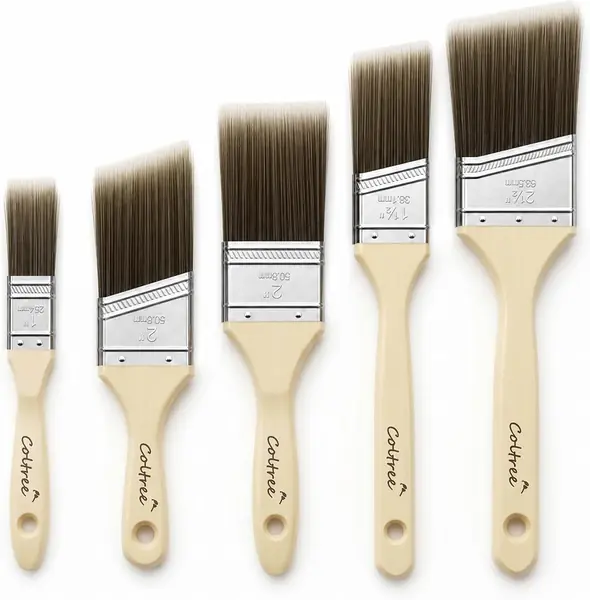
Three angled brushes to two flats is the right ratio for finish work. The 1 1/2, 2 and 2 1/2-inch angles take the trim, rails and panel edges, while the 1 and 2-inch flats handle shelves, doors and anything wide. It is a more useful mix than the even split most five-packs ship with.

The soft, thick bristles and stainless ferrules are the parts that matter for polyurethane: a soft brush lays the finish out, and a stainless collar shrugs off the mineral spirits you clean it in. The handles are lightweight solid wood, so a long session does not wear on your grip.

We think it is the value pick of the group on paper: five brushes, three of them angled, for less than the Wooster costs on its own. Nothing about the design gives us pause — soft bristles, stainless ferrules, sensible sizes — and if you are stocking a bench from nothing, it is the fastest way to get brushing tonight.

Worth Noting

  • Largest brush in the set measures 2.5 inches wide
Our Verdict

The least expensive way into a proper set: three angled sash brushes, two flats and stainless ferrules, sized for trim and furniture.

Check Latest Price
7.

Great Andrew 30-Piece Bulk Brush Pack Best for Bulk Project Work

Great Andrew bulk pack of thirty paint brushes with black plastic handles

Bulk project work

Shop Score 90/100
Handle
Plastic beavertail
Set Contents
30 brushes, 2 and 3 inch
Paint Compatibility
Oil-based and latex
Bristle Material
Polyester
View on Amazon

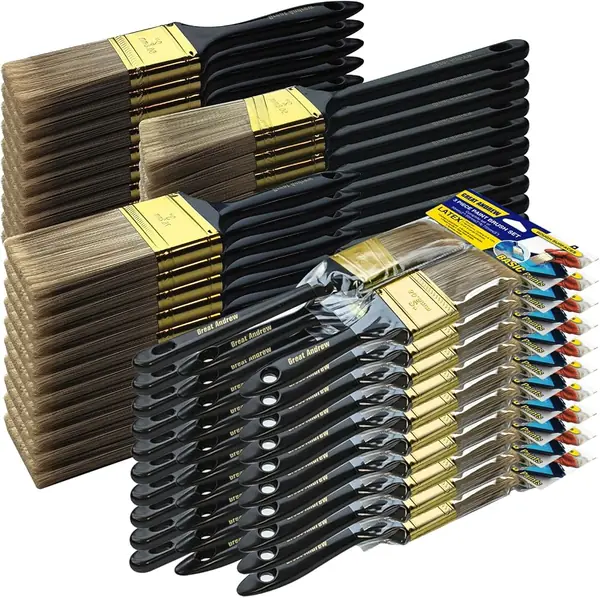
Thirty brushes from one factory are not thirty identical brushes, and that is the first thing to know about a pack this size. A few will be denser and better shaped at the tip than others, so sort them before a job instead of grabbing one at random and discovering it halfway through a coat.

Ten packs of three: a 3-inch flat, a 2-inch flat and a 2-inch angle, repeated. That spread covers a job that runs from a fence to a set of shutters to the trim around a garage door, and the plastic beavertail handles are shaped to fill your palm, which matters when you are holding one for an afternoon.

Polyester filament is the right call for a bulk brush. It does not swell the way natural bristle can, it rinses out in mineral spirits, and it holds enough finish for a flat surface without drooling down the side of the can. We keep this pack for the rough, wide work and leave the final coat to a sash brush.

Where the pack earns its place is scale. Thirty brushes means a fresh one for every stage of a big job, no stopping to clean, and no agonizing over the brush that goes in the trash at the end. For a fence, a deck rail or a whole house of trim, that convenience is worth more than the finish quality of any single brush in the box.

Worth Noting

  • Quality varies from brush to brush
Our Verdict

Buy it when the job is measured in square feet rather than square inches: thirty brushes you can use hard and toss without a second thought.

Check Latest Price
8.

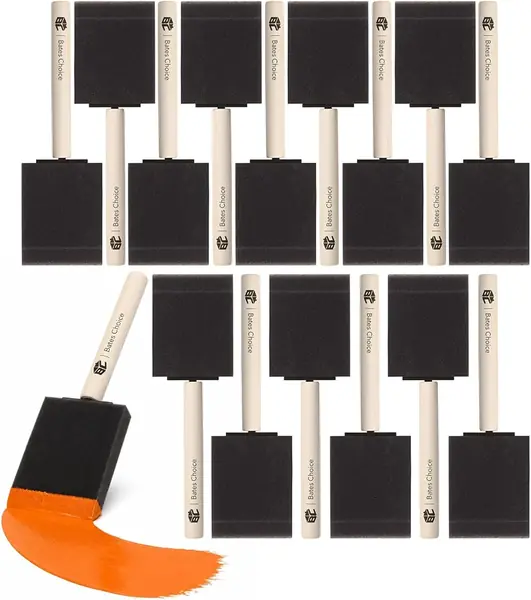
Bates 2-Inch Foam Brush 16-Pack Best for Flat Panel Coats

Bates sixteen-pack of two-inch foam paint brushes with wooden handles

Flat panel coats

Shop Score 89/100
Handle
Wood
Brush Width
2 inches
Pack Size
16 brushes
Applicator
Poly foam
View on Amazon

Foam does not behave like bristle, and on the right surface that is the point. There are no filaments to shed into a clear coat and no brush marks to chase out, so a 2-inch foam brush lays oil-based polyurethane on a flat panel in a thin, even film that stays where you put it.

The surfaces that suit it are the flat ones with no grain to work into: cabinet sides, plywood shelf faces, the inside of a drawer box, a painted door. Work in long strokes from the middle outward, keep a wet edge, and the film goes down even.

Sixteen to a pack is the other half of the appeal. Foam brushes can be rinsed and reused — warm soap and water does the job — but at this quantity you do not have to baby one through a whole project, and saving a fresh brush for the final coat costs you nothing but a trip to the shelf.

Where it does not belong: bare open-grained wood, where a bristle brush works finish into the pores, or any edge where a torn piece of foam would show. On flat stock with a film finish, it is the tool we hand someone who has never brushed polyurethane before.

Worth Noting

  • Foam head can separate from the handle
Our Verdict

The applicator we keep for flat panels: no bristles to shed, no marks to chase, and enough of them that a fresh one goes on the last coat.

Check Latest Price

How We Tested Brushes for Oil-Based Polyurethane

We built the shortlist by reading listings for two things first: whether the maker named oil-based or solvent compatibility, and whether we could identify the filament and the ferrule. From there we ordered a spread of sizes, from a narrow sash brush up to a five-inch block, plus a few multipacks and a foam set, and put 14 brushes and brush sets through three months of refinishing.

Most of the work happened in a garage over several weekends of recoating cabinet doors laid flat on sawhorses, with the rest spread across stair treads, deck boards, and a scrap plywood panel we used as a test bed for every brush. We loaded each one the same way, dipping about a third of the bristle, tipped off along the length of the board, and watched whether the finish leveled on its own before it began to set. After each coat cured, we ran a gloved hand over the panel and counted the filaments left sitting in the film.

Cleaning got its own check: within an hour of the last stroke we worked each brush in mineral spirits, combed the bristles straight, dried it flat, and looked at whether the filament had splayed or stiffened before the second coat. We noted how much finish each brush held and how evenly it released it, since a soft brush that drools is no bargain. Cost per brush went into the notes beside the number of coats each one stayed usable for, because a cheap brush that dies mid-project costs more than one you can save.

Because oil-based polyurethane and the mineral spirits used to clean it are flammable, finish-soaked rags were laid flat on the ground outdoors to dry or soaked in a bucket of water before disposal, never balled up in a trash can. We'll keep using the brushes that survived the rotation and update this list if any of them start shedding.

How to Choose a Brush for Oil-Based Polyurethane

Match the applicator to the finish, not the shelf label

Oil-based polyurethane is a solvent finish, and that opens up more of the shelf than a water-based product does. Natural bristle is the traditional choice: the split ends carry a heavy load of finish into the wood and let it go as you stroke out. Polyester and nylon filaments are extruded and flagged to imitate that, and the soft ones level a coat beautifully.

What we avoid is a brush sold only for latex and water-based paint. If solvent compatibility is not on the label, do not assume it — a water-only brush can soften and shed once it meets mineral spirits, and that is a bad discovery to make over a wet topcoat.

Shedding is what ruins a clear coat

One filament left in a wet coat means sanding back and re-coating, which is the whole reason we rank one brush above another in this category. Before the first dip, comb the bristles across your palm and look for loose hairs; between passes, sight along the surface at a low angle so a hair shows up before the finish sets.

A cheap brush can still do a good job on a rough deck or a sealer coat. The final coat on a piece of furniture is not where you test a bargain.

Width and shape should follow the surface

Two to two and a half inches with an angled tip handles most furniture and trim: narrow enough to stay off the next surface, angled enough to cut a line into a corner. Wide work — a floor, a deck, a big tabletop — wants a 5-inch block brush that carries a heavy load, and a threaded handle saves your knees.

The trap is buying one wide brush to do everything. Five inches will flood a cabinet face frame, and it cannot cut in along a wall. A 2.5-inch angle sash and a wide block cover the whole job between them.

Cleaning decides whether the brush has a second life

Oil-based finish does not wash out with water. Work the bristles in mineral spirits first, then wash with soap and water, comb straight and wrap the brush to hold its shape. A stainless ferrule survives that routine; a painted one starts to rust at the crimp, which is the first place a cheap brush shows its age.

This is where one good sash brush pays you back. Bought once and cleaned properly, it outlasts a drawer of brushes you replace every project — and it keeps laying a smoother coat, which is the part you actually see.

Frequently Asked Questions

Final Verdict

Buy the Wooster Silver Tip if you want one brush that makes oil-based polyurethane look like it was sprayed on: soft flagged filaments, an angle that cuts in, and a stainless ferrule that survives the cleanup. It is the brush we reach for first on furniture and trim, and the one we would hand a friend who is about to finish a table.

If the job is a floor or a deck, swap to the Magimate and a pole. If you are buying your first set and would rather not spend much, the Bates six-piece gets you brushing tonight.